Malaysia Airlines Flight MH370
The aircraft left Kuala Lumpur on 8 March 2014 and was never found. Before a single family could be compensated, someone had to be declared dead — 239 times, in more than a dozen legal systems. This is the paperwork behind a disappearance, and it is still running in 2026.

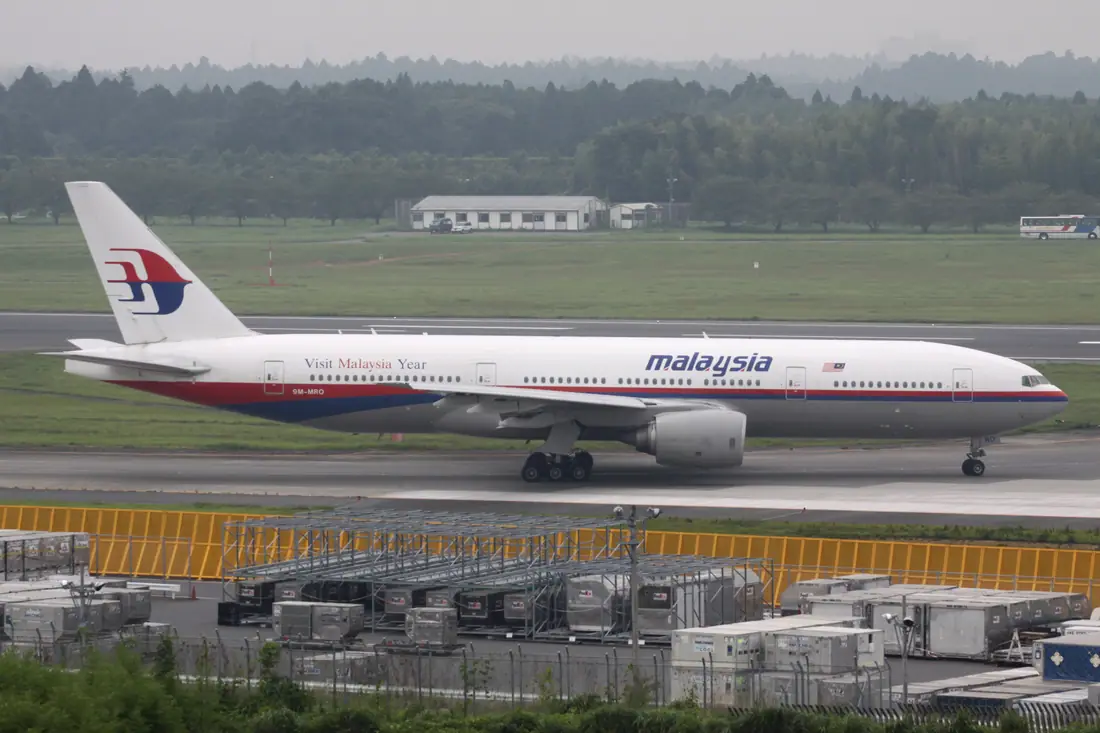
Malaysia Airlines Flight MH370 left Kuala Lumpur shortly after midnight on 8 March 2014, bound for Beijing, with 239 passengers and crew aboard. It did not arrive. Satellite data later placed its final hours in the southern Indian Ocean. Despite the largest seabed search ever mounted for a missing aircraft, the wreckage has not been found, and as of August 2026 that remains true.
The search itself has been extraordinary and is not over. Since 2018 the marine robotics company Ocean Infinity has spent roughly 151 days at sea and mapped more than 140,000 square kilometres of seafloor. A renewed campaign ran from March 2025 to January 2026, covering about 7,571 square kilometres in two phases, and Malaysia's air accident investigation bureau confirmed on 8 March 2026 that it found no confirmed wreckage. Malaysia's cabinet has extended the “no-find, no-fee” agreement to 30 June 2027 to cover a remaining area of about 7,428 square kilometres.
This page is not about what happened to the aircraft. It is about what had to happen to 239 estates in the meantime, in more than a dozen legal systems, none of which will do anything at all until somebody produces a death.
January 2015: Malaysia calls it an accident
On 29 January 2015, Malaysia's civil aviation authority formally declared the disappearance of MH370 an accident and its passengers and crew presumed dead. Officials said at the time that the purpose was to open the compensation process, so that families could obtain the assistance available to them.
The declaration was not universally welcomed. Many relatives of Chinese passengers publicly objected, asking that the statement be retracted and saying they would not accept a conclusion of death without physical evidence. Some declined to begin compensation claims. Those positions were reported at the time and are a matter of record; this page takes no view on them.
There is a genuine legal tension underneath, and it is worth naming plainly rather than sentimentally. A determination of death is not a factual claim about what happened. It is a decision about who may act on someone's property and on their behalf. A family may be entirely certain that the question of what happened is unanswered, and still need the determination, because without it nothing can be paid to anyone.
What the Montreal Convention actually provides
International carriage by air is governed by the Convention for the Unification of Certain Rules for International Carriage by Air, done at Montreal in 1999 — the Montreal Convention. It is a treaty, it displaces national law within its scope, and it is not intuitive.
Article 17 makes the carrier liable for damage sustained in the case of death or bodily injury of a passenger, where the accident took place on board or in the course of embarking or disembarking.
Article 21 creates the two-tier structure that defines the whole system. Up to a limit fixed in Special Drawing Rights — the IMF's unit of account, 113,100 SDR per passenger at the time of MH370 — the carrier's liability is strict: it cannot exclude or limit it, and fault is not in issue. Above that limit, the carrier is liable for provable damages unless it proves that the damage was not due to its negligence or wrongful act, or was solely due to a third party. The limits are revised periodically; they rose to 128,821 SDR and, from 28 December 2024, to 151,880 SDR.
Article 28 requires advance payments where national law requires them, to meet immediate economic needs. Under the European regime that figure is not less than 16,000 SDR per passenger in the case of death, and it is paid without any admission of liability.
Article 33 sets out where a claim may be brought — the carrier's domicile, its principal place of business, the place where the contract was made, the place of destination, and, for death or injury only, the “fifth jurisdiction”: the passenger's principal and permanent residence, subject to conditions about the carrier's operations there.
Article 35 is the one that ends cases. An action must be brought within two years, reckoned from the date of arrival at the destination, the date the aircraft ought to have arrived, or the date on which the carriage stopped. Courts have construed it strictly. It is generally treated as a condition on the right itself, not an ordinary limitation period to be tolled — which is why the claims in this case had to be filed by March 2016, two years after a flight that never landed.
- Article 17 — carrier liability for death or bodily injury of a passenger.
- Article 21 — strict liability up to the SDR limit; above it, liability unless the carrier disproves negligence.
- Article 28 — advance payments to meet immediate needs, without admission of liability.
- Article 33 — five possible forums, including the passenger's principal and permanent residence.
- Article 35 — two years. Strictly construed, and generally not subject to tolling.
Washington, Kuala Lumpur, Beijing
From early 2016 — the Article 35 deadline drove the timing — roughly forty lawsuits were filed in United States district courts and consolidated for pretrial proceedings in the US District Court for the District of Columbia as In re Air Crash Over the Southern Indian Ocean on March 8, 2014. Three US citizens were aboard.
After threshold discovery, the defendants moved to dismiss on forum non conveniens. In November 2018 the district court dismissed, finding Malaysia an adequate alternative forum and the public and private interest factors weighing in favour of litigating there. On 10 January 2020 the D.C. Circuit affirmed, holding the district court had not clearly abused its discretion. The American cases went to Malaysia.
In China, families of 75 missing passengers filed suits in 2016 against Malaysia Airlines and Malaysia Airlines Berhad and others, producing 78 cases. Through court-hosted mediation, 47 were settled and withdrawn.
On 8 December 2025 a Beijing court delivered a first-instance judgment in eight of the remaining cases, ordering the defendants to pay 2.9 million yuan — reported at about US$409,800 — to each family. A first-instance judgment in that system is subject to appeal, and this page states only what was reported.
And then the sentence that explains why this case belongs in a probate archive. Of the cases still outstanding, 23 involve families who had not completed the legal procedures to have the passenger declared dead. Eleven years after the flight, the obstacle was not liability, or causation, or the treaty. It was the determination of death.
Compensation is not the same thing as an estate
There is a distinction that gets lost every time a mass-casualty settlement is reported, and it decides who actually receives money.
A wrongful-death claim belongs, in most systems, to a defined class of survivors — a spouse, children, sometimes parents — and is measured by their losses: support, services, companionship, mental pain and suffering. It is usually brought by the deceased person's personal representative, but it is not an asset of the estate and it is not distributed by the will.
A survival or estate claim belongs to the estate and is measured by the deceased person's own losses — earnings from injury to death, medical and funeral expenses, and in some systems the net accumulations the person would have built. That money is an estate asset, and it is distributed by the will or by intestacy.
So a single settlement figure per passenger is not a single pot going to a single place. Part of it may go to a spouse under a wrongful-death formula regardless of what the will says. Part of it may go into the estate and be divided among people the survivor formula would never have reached. Getting that split wrong is how a family that agreed on everything at the settlement conference ends up in court two years later.
And all of it requires the same precondition: someone appointed, by a court that has determined the person is dead.
Timeline
- Mar 8, 2014MH370 departs Kuala Lumpur for Beijing with 239 passengers and crew aboard and does not arrive. Satellite analysis later places its final hours in the southern Indian Ocean.
- Jan 29, 2015Malaysia's civil aviation authority declares the disappearance an accident and all on board presumed dead, stating the purpose is to open the compensation process. Many relatives of Chinese passengers publicly object.
- Early 2016Driven by the Montreal Convention's two-year deadline in Article 35, roughly forty US suits are filed and consolidated in the District of Columbia. In China, families of 75 passengers file suits producing 78 cases.
- Nov 2018The US district court dismisses the consolidated cases on forum non conveniens, finding Malaysia an adequate alternative forum.
- Jan 10, 2020The D.C. Circuit affirms the dismissal, holding the district court did not clearly abuse its discretion.
- Dec 28, 2024The Montreal Convention's Article 21 liability limit is revised to 151,880 SDR per passenger. It stood at 113,100 SDR when MH370 disappeared.
- Dec 8, 2025A Beijing court issues a first-instance judgment in eight cases, ordering 2.9 million yuan — reported at about US$409,800 — to each family. Forty-seven earlier cases had settled and been withdrawn. Twenty-three remain where the families have not completed the declaration-of-death procedures.
- Mar 8, 2026Malaysia's air accident investigation bureau confirms that Ocean Infinity's renewed March 2025–January 2026 seabed search, covering about 7,571 square kilometres, found no confirmed wreckage.
- As of Aug 2026The “no-find, no-fee” search agreement is extended to 30 June 2027, covering a remaining area of about 7,428 square kilometres. No wreckage has been recovered.
What actually went wrong
- The determination of death was the bottleneck, not the liability. Eleven years after the flight, twenty-three claims were still waiting on declaration-of-death procedures. The treaty question was settled long before the probate question was.
- A treaty deadline that does not wait for grief. Article 35's two years runs from the date the aircraft ought to have arrived, and courts construe it strictly. Families who had not yet accepted a death still had to decide whether to file by March 2016.
- Compensation crossing thirteen legal systems at once. Passengers of many nationalities meant many different rules on who counts as a survivor, who may be appointed, and how a payment is divided — applied to one set of facts and one aircraft.
- Two different claims, reported as one number. A wrongful-death recovery for survivors and a survival recovery for the estate go to different people under different rules. Settlements announced as a lump sum per passenger conceal a division that families then have to make.
- No remains, and therefore no ordinary certificate. Every downstream institution — banks, insurers, pension schemes, land registries — is built to read a death certificate. Where none exists, each of them becomes a separate problem to be solved.
Would it have gone that way in Florida?
Florida would have declared these passengers dead quickly. The harder Florida question is not whether — it is who gets the money, because Florida splits it two ways.
On the determination itself, Florida is fast. Fla. Stat. §731.103(3) allows a court to find death at any time after exposure to a specific peril of death, with no minimum period, and §731.103(4) preserves proof of death by direct or circumstantial evidence before the five-year presumption ripens. A boarding manifest, a departure record, satellite data placing the aircraft over open ocean, and a terminated international search is about as strong a circumstantial record as this area of law ever sees. §731.103(2) brings the official material in directly: a record or report of any governmental agency, domestic or foreign, that a person is missing or presumed dead is prima facie evidence of what it discloses — which would include Malaysia's January 2015 determination.
Then the order of operations. §733.209 allows any interested person to petition to administer a missing person's estate but bars appointment of a personal representative until the court determines death. On that determination §382.012 produces a presumptive death certificate from the Department of Health, signed off by the judge. That certificate is what unlocks the banks, the insurers and the pension administrators — and it is precisely the document that families in this case spent years without.
Now the part Florida does differently from almost everywhere. Under the Florida Wrongful Death Act, §§768.16–768.26, §768.20 provides that the action is brought by the decedent's personal representative, who recovers for the benefit of the decedent's survivors and the estate — and that where a personal injury results in death, no action for the personal injury survives. There is one action, brought by one person, but it carries two different sets of recoveries.
§768.21 splits them. The surviving spouse may recover lost support and services, loss of companionship and protection, and mental pain and suffering. Minor children — and all children where there is no surviving spouse — may recover lost support and services and lost parental companionship, instruction and guidance, and mental pain and suffering. Parents of a deceased minor may recover mental pain and suffering, and parents of a deceased adult may where there are no other survivors. Separately, the estate may recover the decedent's lost earnings from injury to death, prospective net accumulations in the circumstances the statute allows, and unreimbursed medical and funeral expenses. Survivor recoveries are not estate assets and are not distributed by the will. Estate recoveries are.
The honest caveat, and it is a large one. For an international flight, the Montreal Convention governs and displaces inconsistent state law within its scope. Florida law does not set the carrier's liability. What Florida law does supply is the machinery the treaty presupposes: who may be appointed, who counts as a survivor, and how the recovery is characterised and divided. And the treaty's Article 35 two-year limit would control the filing deadline regardless of any Florida period.
The practical instruction. In any aviation death, do two things at once and do not let one wait for the other. Open the estate — a determination of death where needed, then letters of administration, because nothing can be settled or released without an appointed personal representative. And calendar the treaty deadline from the scheduled arrival date, not from the date anyone accepted what had happened. Then, before any settlement is signed, have the allocation between survivor claims and estate claims written down and agreed. That allocation, not the headline number, is what each person actually receives.
What people ask us about this.



Further reading
Third-party sites. Not ours, not endorsed, not kept current by us — just the places worth going next.
Sources
- Malaysia Airlines Flight MH370 officially declared an accident, all on board presumed dead — CBC News, Jan 2015
- Malaysia declares MH370 crash an accident to clear compensation claims — Inquirer / AFP, Jan 2015
- In re Air Crash Over the Southern Indian Ocean on March 8, 2014 — US Court of Appeals for the D.C. Circuit, Jan 10 2020 (via FindLaw)
- D.C. Circuit affirms forum non conveniens dismissal of Flight MH370 claims — Holland & Knight, Jan 2020
- Beijing court awards MH370 families compensation — China Daily, Dec 2025
- Montreal Convention 1999 — full text — IATA
- 2024 revised limits of liability under the Montreal Convention 1999 — ICAO
- Ocean Infinity ends 2026 MH370 search phase without success — New Straits Times, Mar 2026
- Fla. Stat. §768.20 — Parties (wrongful death) — The Florida Senate
If this is your situation
Free 30-minute consult. Plain English. No pressure.
Nearly every case in this archive turned on something ordinary — an unwitnessed page, a stale beneficiary line, a document nobody could find. Those are cheap to fix while you're alive and expensive to fix afterward.