Amelia Earhart
She vanished over the Pacific on July 2, 1937. The rule then said seven years of absence before a court would call someone dead. Her husband did not wait. On January 5, 1939 a Los Angeles judge declared her dead and opened an estate reported at just over $10,000 — for the most famous woman in aviation.
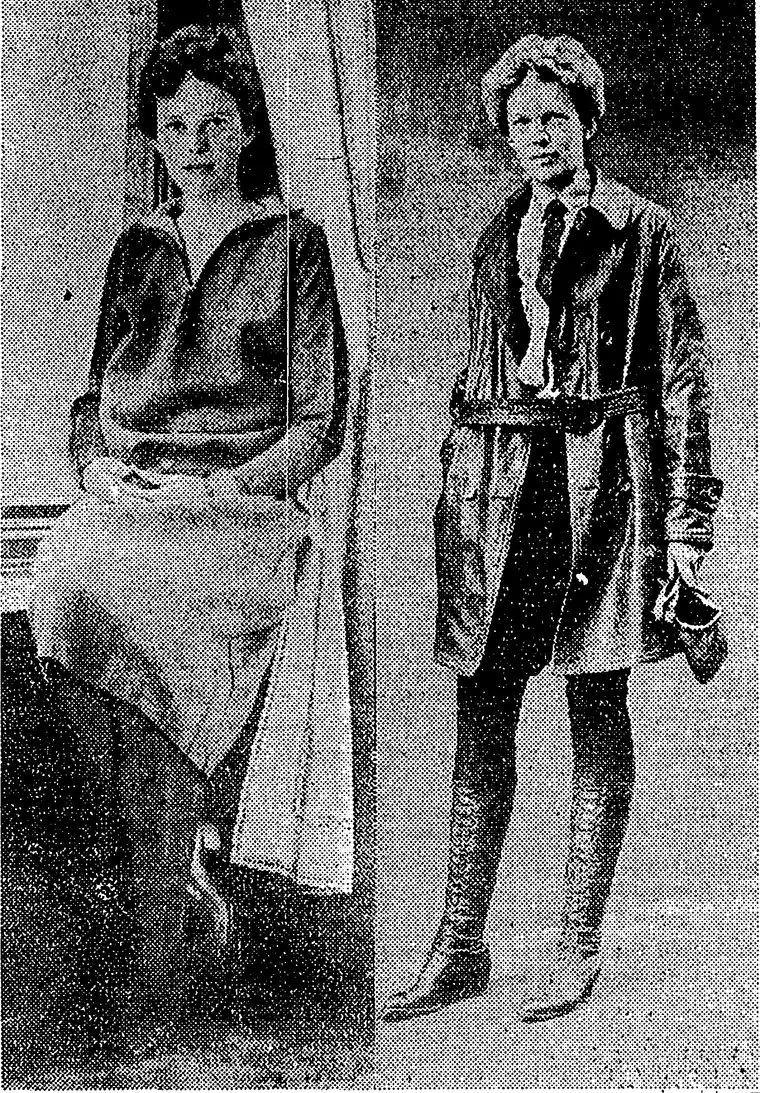
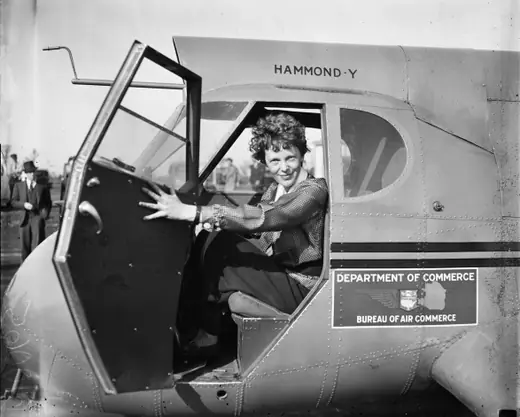
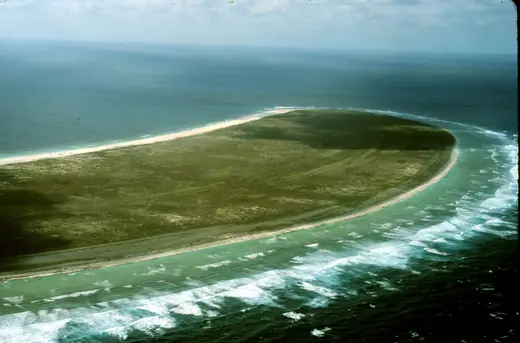
On July 2, 1937, the Coast Guard cutter Itasca lay at anchor off Howland Island, a coral speck in the central Pacific, listening for a Lockheed Electra 10E that had left Lae, New Guinea, and was running out of fuel somewhere to the north-west of the ship. The last transmissions came in strong and then stopped. Amelia Earhart and her navigator Fred Noonan were never seen again.
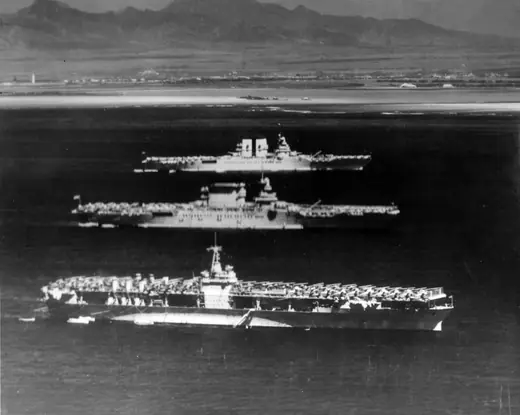
What followed was one of the largest air-and-sea searches in history. The Itasca got under way immediately. The battleship USS Colorado arrived and put its three float-planes up from July 7, covering some 25,490 square miles. The seaplane tender USS Swan worked the approaches. On July 12 the aircraft carrier USS Lexington took over with 63 aircraft aboard and worked a rectangle of ocean roughly 600 miles by 400. On July 18 the search was suspended. Nothing was found — no wreckage, no debris field, no bodies. Nearly ninety years later, that is still true.
Which left an estate belonging to a person the law was not yet willing to call dead.
Seven years was the rule. He asked after eighteen months.
Her husband was George Palmer Putnam, the publisher who had made her a public figure and whom she had married on February 7, 1931. He did not wait out the traditional seven-year absence period. He petitioned the Superior Court of Los Angeles County to declare her dead.
On January 5, 1939 — about eighteen months after the disappearance — Judge Elliott Craig declared Earhart dead in absentia and appointed Putnam as sole executor. The matter was filed as probate case 181709.
It is worth being precise about what the court did, because it is the single most useful thing in this case. A seven-year presumption is a device for when you have no evidence. Putnam's petition did not ask the court to presume anything. It asked the court to find a fact — that a woman last heard from over open ocean, with fuel for a few more hours, after the largest search the Navy could mount had covered the ocean around her and found nothing, was dead. Courts have always been able to make that finding on evidence. The waiting period is what you use when there is no evidence to make it on.
That distinction is now written into most modern statutes. Florida's, at §731.103(4), says it in as many words: the five-year presumption does not prevent establishing death by direct or circumstantial evidence before the period runs.

More than $10,000, and everything that was not money
Her will was dated April 1, 1932, and executed at Rye, New York. It named Putnam executor. It left him all of her personal property, with the remainder passing into a trust fund whose income went to her mother, Amy Otis Earhart of Medford, Massachusetts, paid quarterly. Contemporary reporting put the estate at more than $10,000.
Ten thousand dollars. She was, at the time she disappeared, one of the most commercially exploited names in the country — a clothing line sold at Macy's built around washable, wrinkle-proof fabrics and “simple, natural lines,” endorsements, a luggage line, three books, a lecture circuit that filled halls. The Purdue Research Foundation had raised roughly $50,000 through its Amelia Earhart Fund for Aeronautical Research to buy the Electra she was flying, an aircraft she intended to return to the university afterwards as a “flying laboratory.”
The aircraft was at the bottom of the Pacific. The lecture fees stopped the day she stopped. What survived her was almost entirely intangible: copyrights in her books, her name, her image, and the licences attached to them. The probate inventory captured the smaller number, and Putnam spent the following years working the larger one — publishing Last Flight in 1937 from letters and memoranda he compiled after she vanished, and a biography, Soaring Wings, in 1939.
A fire at the Rye house later destroyed many of her personal effects. What was left, Putnam gave to Purdue and to the Women's Archives in New York, where the papers remain.
- In the inventory: cash, personal property, a trust for her mother. Reported at just over $10,000.
- Not in the inventory: the name, the image, the licences, and the copyrights — which produced income for decades and are still producing it.
- Not hers at all: the Electra, bought with Purdue Research Foundation money and intended to go back to the university.
The estate closed. The search did not.
Putnam remarried on May 21, 1939, four and a half months after the declaration — a divorce followed in 1945, and a third marriage after that. He died on January 4, 1950, at 62.
The estate was, by the standards of this archive, uneventful: a valid will, an uncontested appointment, a modest inventory, a trust for a surviving parent. Nothing about it required a judge to weigh a competing document or a disappointed heir. The whole legal difficulty was compressed into the threshold question, which is the point of the case.
The searching never stopped. Expeditions have gone out for decades on competing theories — the crash-and-sink hypothesis, the Nikumaroro castaway hypothesis, and others — and as of August 2026 no wreckage of the aircraft has been confirmed. Purdue Research Foundation, which paid for the Electra, has continued to back expeditions to identify it.
The declaration of death did not depend on any of that, and never has. That is the design. A finding of death is a legal conclusion about the balance of the evidence, made so that the living can settle affairs and move. It is not an archaeological claim, and it does not close the question of what happened.
Timeline
- Feb 7, 1931Earhart marries publisher George Palmer Putnam. She keeps her own name.
- Apr 1, 1932She executes a will at Rye, New York — Putnam as executor, personal property to him, the remainder in trust with income to her mother.
- 1936The Purdue Research Foundation raises roughly $50,000 through the Amelia Earhart Fund to buy a Lockheed Electra 10E, the “flying laboratory.”
- Jul 2, 1937Final radio contact with the Coast Guard cutter Itasca off Howland Island. The Electra disappears with Earhart and navigator Fred Noonan aboard.
- Jul 7–12, 1937USS Colorado's float-planes search some 25,490 square miles. USS Swan works the approaches. On July 12 the carrier USS Lexington takes over with 63 aircraft.
- Jul 18, 1937The search is suspended. No wreckage, no debris, no bodies.
- Jan 5, 1939Judge Elliott Craig of the Superior Court of Los Angeles County declares Earhart dead in absentia and appoints Putnam sole executor of an estate reported at more than $10,000. Probate case 181709.
- May 21, 1939Putnam remarries. He publishes Soaring Wings, a biography of Earhart, the same year.
- Jan 4, 1950Putnam dies at 62. Earhart's papers pass to Purdue University and the Women's Archives in New York.
What actually went wrong
- Nothing, procedurally — and that is the lesson. She had a valid will, executed six years before she disappeared, naming an executor. The estate opened the day the court found she was dead and closed without a fight. Almost every other case in this archive would have gone better with those two facts.
- The inventory missed the actual asset. A little over $10,000 in property, against a name and a body of copyrights that generated income for the rest of the century. Intangibles are where celebrity estates live, and they are the hardest thing for a probate inventory to catch at the moment of death.
- No plan for the interval. Between July 1937 and January 1939 nobody had authority to act for her. Eighteen months of contracts, royalties and obligations sat in limbo because the only person who could have authorised anyone to handle them was missing.
- A will written in one state, probated in another. Executed at Rye, New York in 1932; admitted in Los Angeles in 1939. It worked. It works far less reliably when the will is handwritten, or when the state of death is Florida.
Would it have gone that way in Florida?
Same result, and probably faster. Florida's specific-peril clause was built for exactly this — a court could have declared her dead well inside eighteen months.
Florida's rule is §731.103(3), and it has two speeds. The default is five continuous years of absence from the place of last known domicile, unexplained after diligent search and inquiry. But the same subsection provides that evidence the absent person was exposed to a specific peril of death may be a sufficient basis for the court to determine, at any time after that exposure, that death occurred less than five years after the absence began. There is no minimum.
Earhart's disappearance is the textbook specific peril: a single identified aircraft, a documented departure, a known fuel state, a final radio contact logged by a Coast Guard cutter, and a suspended federal search of a defined ocean area. Under §731.103(2), the Itasca's log, the Navy's search reports and the suspension order all come in as prima facie evidence of what they disclose, because they are records of governmental agencies. A Florida petitioner would not have needed anything Putnam did not already have.
§731.103(4) removes the last obstacle: nothing in the section prevents establishing death by direct or circumstantial evidence before the five years elapse. That is precisely what the Los Angeles court did in 1939, and Florida would do the same on the same record.
The order of operations still applies. §733.209 provides that any interested person may petition to administer the estate of a missing person, but no personal representative shall be appointed until the court determines the missing person is dead. Putnam's appointment as executor and the declaration of death happened on the same day for a reason. In Florida they would happen in the same sequence: determination first, letters second. Then §382.012 produces a presumptive death certificate from the Department of Health, signed off by the judge, which is the document the banks and the publishers would actually want.
The honest caveat. Her will was executed in New York in 1932. Florida would admit it under §732.502(2), which honours a will executed in compliance with the law of the place where it was made — except a holographic or nuncupative will. If Earhart had scrawled her wishes in a flight log rather than executing a formal document at Rye, Florida would not have taken it, no matter how genuine, and the estate would have passed by intestacy under §732.102 and §732.103.
The practical instruction. If someone in your family is missing after an identifiable event — a crash, a capsizing, a collapse — do not assume you have to wait out five years. Gather the governmental records first: the incident report, the search log, the suspension notice, the agency's status determination. That file is what converts a five-year wait into a hearing. And while you are gathering it, note the thing that would have helped most in 1937 and would help most now: a durable power of attorney, signed while the person was still here, is the only document that gives anyone authority during the interval.
What people ask us about this.
Further reading
Third-party sites. Not ours, not endorsed, not kept current by us — just the places worth going next.
Sources
- Amelia Earhart — Wikipedia
- George P. Putnam — Wikipedia
- 5 January 1939 — Earhart declared dead in absentia — This Day in Aviation (quoting contemporary Los Angeles Times reporting and LA Superior Court probate case 181709)
- Naval Aviation and the Search for Amelia Earhart — National Naval Aviation Museum
- George Palmer Putnam collection of Amelia Earhart papers — Purdue University Archives and Special Collections
- Purdue Research Foundation — Amelia Earhart aircraft identification project — Purdue Research Foundation
- Fla. Stat. §731.103 — Evidence as to death or status — The Florida Senate
- Fla. Stat. §733.209 — Estates of missing persons — The Florida Senate
- Fla. Stat. §732.502 — Execution of wills — The Florida Senate
If this is your situation
Free 30-minute consult. Plain English. No pressure.
Nearly every case in this archive turned on something ordinary — an unwitnessed page, a stale beneficiary line, a document nobody could find. Those are cheap to fix while you're alive and expensive to fix afterward.