Pan Am Flight 103
A bomb destroyed the aircraft over Lockerbie in December 1988. A Brooklyn jury found the airline guilty of willful misconduct in 1992, which removed the treaty cap on damages. Libya's $10 million per family took until 2008. Twenty years is long enough for the heirs to need heirs of their own.
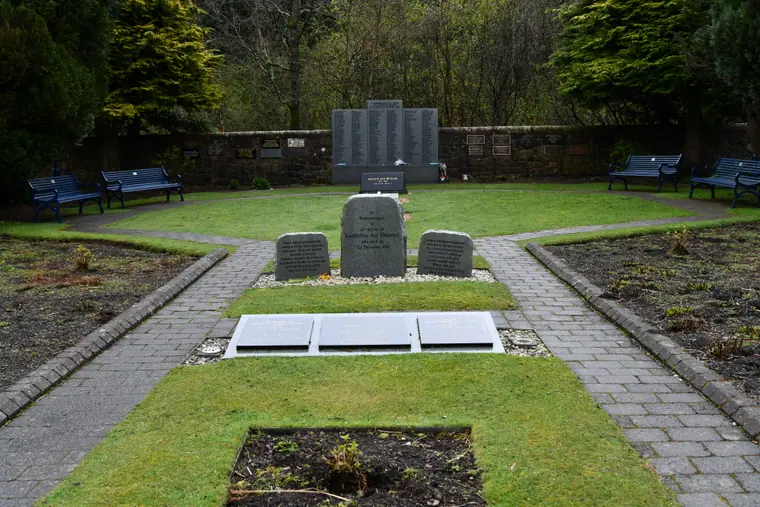
On 21 December 1988 a bomb destroyed Pan Am Flight 103, a Boeing 747 en route from London to New York, over the Scottish town of Lockerbie. 259 people aboard and 11 people on the ground were killed.
What followed, over the next twenty years, was two entirely separate compensation processes running on different legal theories against different defendants in different forums — and both of them had to pass through probate courts before a single family received anything.
Track one was ordinary aviation litigation against the carrier, governed by a 1929 treaty. Track two was a claim against a sovereign state, resolved by diplomacy, statute and executive order rather than by any court. They are worth separating, because families and their lawyers had to make different decisions in each.
The treaty cap, and the finding that removed it
International carriage in 1988 was governed by the Warsaw Convention, the predecessor to today's Montreal Convention. Its central bargain was a liability limit — for these plaintiffs, $75,000 per passenger — which applied whether the carrier had been careless or not.
But Article 25 of the Convention contained an escape hatch: the limit does not apply where the damage resulted from the carrier's wilful misconduct. Prove that, and the cap disappears and the carrier is exposed to unlimited compensatory damages.
Wrongful-death actions against Pan American World Airways and Alert Management Systems, its security affiliate, were consolidated in the US District Court for the Eastern District of New York as In re Air Disaster at Lockerbie, Scotland. After a three-month trial, on 10 July 1992 a Brooklyn jury found that the defendants had engaged in wilful misconduct and that it was a substantial factor in causing the disaster. The finding rested on failures in the security screening the carrier was required to provide.
The Second Circuit affirmed the liability verdict — In re Air Disaster at Lockerbie, Scotland, 37 F.3d 804 (2d Cir. 1994). Damages were then tried or negotiated case by case. By 1996, more than 250 cases against the airline defendants had been resolved for a reported total of over $500 million.
That is the whole architecture of aviation liability in one case. The cap is the default. The exception is a factual finding a jury has to make. And the difference between the two, per passenger, was about two orders of magnitude.

$2.7 billion, paid in three instalments tied to sanctions
In August 2003 Libya sent a letter to the United Nations Security Council accepting responsibility for the actions of its officials, and agreed to pay $2.7 billion — $10 million for each of the 270 people killed — into an escrow account at a Swiss bank.
The money was not simply handed over. It was released in three tranches, each conditioned on a step Libya wanted from the international community:
The first two arrived. The third did not, for years. When Libya was not removed from the list of state sponsors of terrorism on the timetable it expected, it took the position in 2006 that it was no longer obliged to pay the balance, and withdrew the money from the escrow account.
Resolving that took an Act of Congress. The Libyan Claims Resolution Act, Pub. L. 110-301, was signed on 4 August 2008. The US–Libya Claims Settlement Agreement was concluded on 14 August 2008. On 31 October 2008 the President issued Executive Order 13477, and the administration certified receipt of $1.5 billion as sufficient to meet the settlements for the Pan Am 103 families and other claimants. The final payments went out on the twentieth anniversary of the bombing.
- $4 million per family — on the lifting of United Nations weapons and travel sanctions, late 2003.
- $4 million per family — on the lifting of US trade sanctions, months later.
- $2 million per family — conditioned on removal from the US list of state sponsors of terrorism. This one stalled for years, and was ultimately delivered through the 2008 statute, agreement and executive order.
It is worth being exact about what Libya's letter did and did not say. It accepted responsibility for the actions of its officials. That is a formula, negotiated word by word, and it is not the same as a confession, an admission of state authorship, or a judicial finding. Settled is not the same as admitted, and this is the case that proves it.
How a mass settlement actually reaches a family
A mass-casualty settlement is always reported as a number per victim. It never arrives that way.
It arrives as a payment to an estate's representative. Somebody must be appointed by a probate court, with authority to prosecute and settle the claim and to receive the money. In a case like this that appointment happens in whichever of dozens of jurisdictions the person was domiciled in, under whichever set of rules that jurisdiction uses.
Then it has to be split. Compensation for a death is not one thing. Part of it answers the survivors' own losses — support, services, companionship, grief — and belongs to a statutory class of relatives regardless of what the will says. Part of it answers the deceased person's losses and belongs to the estate, where it passes under the will or by intestacy. Those two sets of people overlap and are not identical, and the allocation decides who actually gets paid.
And twenty years is a long time. Between 1988 and 2008, some parents of victims died. Some spouses remarried, and some died. Children who were minors in 1988 were adults with children of their own. Estates that had been closed had to be reopened to receive money that did not exist when they closed. A settlement that arrives two decades after the death is not distributed to the family that existed at the death — it is distributed to whoever the law says stands in their place now.
That is the quiet cost of a long compensation process, and no amount of money fixes it. The people the payment was meant for are not all still there to receive it.
Timeline
- Dec 21, 1988A bomb destroys Pan Am Flight 103 over Lockerbie, Scotland. 259 people aboard and 11 on the ground are killed.
- 1989–1992Wrongful-death actions against Pan Am and its security affiliate Alert Management Systems are consolidated in the Eastern District of New York.
- Jul 10, 1992After a three-month trial, a Brooklyn jury finds the airline defendants engaged in wilful misconduct that was a substantial factor in causing the disaster — removing the Warsaw Convention's $75,000 per-passenger cap under Article 25.
- 1994The Second Circuit affirms the liability verdict. In re Air Disaster at Lockerbie, Scotland, 37 F.3d 804.
- By 1996More than 250 cases against the airline defendants are resolved for a reported total of over $500 million.
- Jan 31, 2001Abdelbaset al-Megrahi is convicted at a Scottish court sitting at Camp Zeist in the Netherlands. His co-accused is acquitted.
- Aug 2003Libya writes to the UN Security Council accepting responsibility for the actions of its officials and places $2.7 billion — $10 million per person killed — in escrow at a Swiss bank, released in three tranches tied to sanctions relief.
- 2006With the third tranche unpaid, Libya takes the position that it is no longer obliged to pay the balance and withdraws the funds from escrow.
- Aug–Oct 2008The Libyan Claims Resolution Act (Pub. L. 110-301) is signed Aug 4; the US–Libya Claims Settlement Agreement is concluded Aug 14; Executive Order 13477 issues Oct 31 and the administration certifies receipt of $1.5 billion. Final payments follow on the twentieth anniversary.
- As of Aug 2026A prosecution of Abu Agila Mohammad Mas'ud is pending in the District of Columbia before Judge Dabney L. Friedrich. He has pleaded not guilty; no verdict has been returned.
What actually went wrong
- Twenty years between the death and the last payment. Heirs died, estates were closed and had to be reopened, and the family the settlement was designed for was not the family that received it.
- A liability cap that turned on a jury finding. Under the Warsaw Convention the recovery was $75,000 per passenger unless wilful misconduct was proved. Everything above that number depended on a factual verdict in Brooklyn in 1992.
- Instalments conditioned on foreign policy. Tying the third tranche to a diplomatic step gave the paying state a reason to stop paying, and it did. It took a statute, a bilateral agreement and an executive order to finish.
- One number per victim, two categories of recovery. Survivor claims and estate claims go to different people under different rules. A headline figure of $10 million per family says nothing about who within that family receives what.
- Nobody appointed, nothing paid. Every track — the airline litigation, the Libyan settlement, the 2008 fund — required a personal representative appointed by a probate court. That is the first step, and it is the one families are least prepared for.
Would it have gone that way in Florida?
Florida is unusually well built for this. Its wrongful-death statute forces the split into the open, requires court approval where anyone objects or a minor is involved, and lets a closed estate be reopened when money arrives twenty years later.
One action, brought by one person. Under §768.20 the wrongful-death action is brought by the decedent's personal representative, who recovers for the benefit of the decedent's survivors and the estate; where a personal injury results in death, no separate action for that injury survives. So the appointment comes first, always, in every track of a case like this. §733.301 sets who has preference to be appointed and the court issues letters; §733.612 lists what a personal representative may do without a court order, including prosecuting and defending claims.
Florida makes the split visible, by statute. §768.21 allocates recoveries: the surviving spouse takes loss of support and services, loss of companionship and protection, and mental pain and suffering; minor children — and all children where there is no surviving spouse — take loss of support and services, lost parental companionship, instruction and guidance, and mental pain and suffering; parents of a deceased minor take mental pain and suffering, and parents of a deceased adult may where there are no other survivors. Separately, the estate takes lost earnings from injury to death, prospective net accumulations where the statute allows, and unreimbursed medical and funeral expenses.
And then §768.22, which is three lines and does more work than any of them: the amounts awarded to each survivor and to the estate shall be stated separately in the verdict. Florida refuses to let a death recovery be a single undifferentiated pot. The consequence for a negotiated settlement is that the same discipline should be applied voluntarily — allocate on paper, survivor by survivor, before the money moves.
Where the allocation is contested, the court decides. §768.25 provides that while an action is pending, no settlement as to amount or apportionment among the beneficiaries that is objected to by any survivor, or that affects a survivor who is a minor or incompetent, is effective unless approved by the court. §733.708 separately allows the probate court to authorise a compromise of a claim by or against the estate where it is in the best interest of the interested persons — and court approval protects the personal representative from later liability over it.
On the twenty-year problem, Florida has an answer most people have never heard of. §733.903 provides that the final settlement of an estate and the discharge of the personal representative do not prevent further administration. An estate closed in 1990 can be reopened in 2008 to receive and distribute a settlement that did not exist when it closed. The order of discharge is not revoked; a subsequent administration is opened alongside it.
The honest caveat. Reopening does not freeze the family in time. The people who take are determined by the statute as it applies to the facts — including deaths, births and changes among the survivors since the original administration — and the money is distributed to whoever now stands in their place. Long-delayed settlements almost always reach a different set of hands than the ones the case started with.
The practical instruction. If your family has a pending claim from a disaster, an exposure, or a mass-casualty event, do three things: confirm there is a currently appointed personal representative with unrestricted authority to settle; get the allocation between survivor recoveries and estate recoveries in writing before any settlement is signed, in the format §768.22 would require of a verdict; and if any survivor is a minor, an incompetent person, or objecting, take it to the court under §768.25 rather than around it. Settlements undone years later are almost always undone on the allocation, not the amount.
What people ask us about this.


Further reading
Third-party sites. Not ours, not endorsed, not kept current by us — just the places worth going next.
Sources
- In re Air Disaster at Lockerbie, Scotland, 37 F.3d 804 (2d Cir. 1994) — US Court of Appeals for the Second Circuit (via Justia)
- In re Air Disaster at Lockerbie, Scotland, 811 F. Supp. 84 (E.D.N.Y. 1992) — US District Court, E.D.N.Y. (via Justia)
- The bombing of Pan Am Flight 103 over Lockerbie — Kreindler & Kreindler (plaintiffs' counsel account of the litigation)
- On 20-year anniversary of Lockerbie, Pan Am 103 victims' families compensated — Police1 / wire reporting, Dec 2008
- Libyan Claims Resolution Act, Pub. L. 110-301 (Aug 4, 2008) — US Government Publishing Office
- Executive Order 13477 — Settlement of Claims Against Libya — Federal Register, Nov 2008
- Judge in Lockerbie trial tells prosecutors “proceed at your own peril” — The National, Aug 19 2026
- Fla. Stat. §768.22 — Form of verdict — The Florida Senate
- Fla. Stat. §733.903 — Subsequent administration — The Florida Senate
If this is your situation
Free 30-minute consult. Plain English. No pressure.
Nearly every case in this archive turned on something ordinary — an unwitnessed page, a stale beneficiary line, a document nobody could find. Those are cheap to fix while you're alive and expensive to fix afterward.