The presumption of death
Probate needs a dead person. When there is no body, no death certificate and no explanation, Florida supplies one by presumption: five continuous years of unexplained absence after a diligent search. Exposure to a specific peril can cut the five years to nothing.
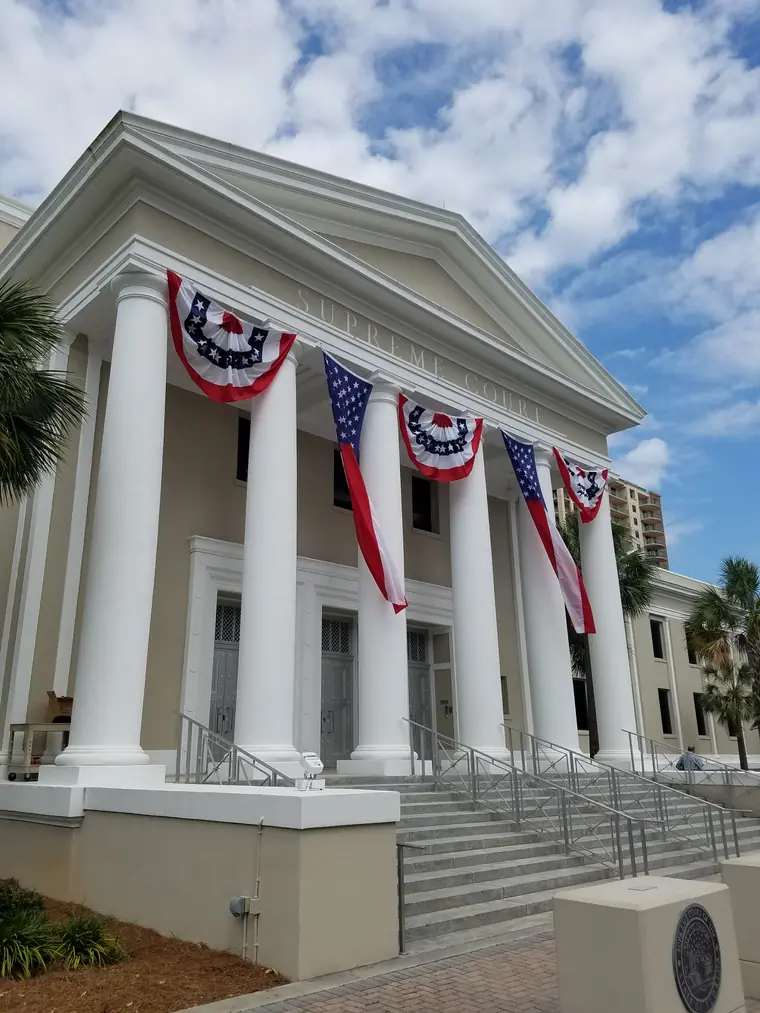
Every probate proceeding starts with the same document, and it is not the will. It is the death certificate. Under Fla. Stat. §731.103(1) an authenticated copy of a death certificate is prima facie proof of the fact, place, date and time of death and of the identity of the decedent. Hand it to the clerk and the machinery starts. Without it nothing moves: no personal representative, no letters of administration, no authority to touch a bank account, sell a house, or pay a mortgage.
Which leaves a specific and awful category of family. The plane did not arrive. The boat did not come back. Someone walked out of a house in 1998 and has not been seen since. There is no body, no certificate and no explanation — and meanwhile the mortgage is still due, the business still has employees, and the missing person's name is still on the deed.
Florida's answer is §731.103(3). A person absent from the place of his or her last known domicile for a continuous period of 5 years, whose absence is not satisfactorily explained after diligent search and inquiry, is presumed to be dead. Death is presumed to have occurred at the end of that period unless there is evidence establishing that it occurred earlier.
Exposure to a specific peril collapses the five years
The five-year rule is the default for the ordinary disappearance, where the last verified fact is that someone stopped answering the phone. It is not the rule for the plane that went into the ocean.
The same subsection provides that evidence showing the absent person was exposed to a specific peril of death may be a sufficient basis for the court to determine, at any time after that exposure, that he or she died less than 5 years after the absence began. There is no floor. A court can make that determination in months, or in weeks, if the evidence supports it.
“Specific peril” is doing precise work there. It does not mean the person lived a dangerous life. It means a particular, identifiable event the person is shown to have been inside of: the aircraft that departed with them aboard and never landed, the vessel that broke up in a named storm, the building that collapsed while they were at work in it.
Fla. Stat. §731.103(4) then makes the obvious point explicit: nothing in the section prevents establishing death by direct or circumstantial evidence before the five years run. The presumption is a fallback for when you have nothing. Where you have wreckage, a flight manifest, a Coast Guard search log and a National Transportation Safety Board report, you are not relying on a presumption at all. You are proving a death the ordinary way, without a body.
- Five years, unexplained. The default. Requires a diligent search that came back empty.
- Specific peril. A named event the person was demonstrably exposed to. The court may find death at any time after it.
- Direct or circumstantial proof. §731.103(4) — where the evidence is strong enough, no presumption is needed and no waiting period applies.

How a Florida court actually opens the estate
The sequence matters, because it is not the sequence people expect. You do not get a personal representative first.
Fla. Stat. §733.209 is one sentence long and it controls the whole thing: any interested person may petition to administer the estate of a missing person, but no personal representative shall be appointed until the court determines the missing person is dead. The determination of death is a threshold the petition must clear before anyone gets authority over anything.
Venue is set inside §731.103(3) itself. The petition goes to the circuit court in the Florida county where the missing person maintained his or her domicile — or, if the person was not a Florida resident when the absence began, in any county of the state.
The evidentiary showing is the part that takes work. “Diligent search and inquiry” is not a defined checklist, and courts assess it against the circumstances of the particular disappearance. In practice a petitioner assembles what a reasonable person would have assembled: the law-enforcement missing-person report and its case number, searches of Social Security and tax records, credit and banking activity, employment records, driver-licence and voter records, contact with the people most likely to have heard from the absent person, and — where relevant — the official record of the peril.
§731.103(2) helps here more than most petitioners realise: a copy of a record or report of any governmental agency, domestic or foreign, that a person is alive, missing, detained or presumed dead is prima facie evidence of the status, dates, circumstances and places it discloses. A military missing-in-action determination, a Coast Guard report, an NTSB finding, a foreign authority's certificate — all of it comes in on the face of the document.
Interested persons are served and heard. If the court is satisfied, it enters an order determining death. Then the paperwork catches up: Fla. Stat. §382.012, titled “Presumptive death certificate,” authorises the Department of Health to file a death certificate on the order of a court that has determined a death occurred or is presumed to have occurred where the body has not been located or recovered, with the judge signing the medical certification. From that point the estate is an ordinary estate. Letters issue, notice to creditors publishes, and the deadlines in §733.702 and §733.710 run from the ordinary dates.
What happens if they come back
It happens. Rarely, and usually in one of three flavours: a medical or amnesia case, a person who left deliberately, or a mistaken identification. The law has thought about it for longer than you would guess.
Start with what a presumption is. §731.103(3) creates a rebuttable presumption, not a fact. Proof that the person is alive defeats it, whenever that proof arrives. The person's legal existence was never actually extinguished; a court acted on the best available inference, and the inference was wrong.
The procedural route is §733.109, revocation of probate. A proceeding to revoke goes to the court with jurisdiction over the administration, and while it is pending the personal representative continues to administer but the court may restrain distributions — including on its own motion. Revocation does not by itself undo everything the personal representative lawfully did beforehand, which is the whole problem, because by then the house may be sold and the money distributed.
That is where it gets genuinely hard, and where Florida's answer is less tidy than the question deserves. The Probate Code has no single provision that runs the clock backwards. Recovery of distributed property falls back on ordinary principles — restitution against the people who received it, subject to whatever protection a good-faith purchaser for value has. A buyer who bought the house from a duly appointed personal representative under an order that was valid when made stands in a very different position from a beneficiary still holding the cash.
The oldest statute on the subject is more direct than the modern ones. The English Cestui que Vie Act 1666 — passed in the years of the plague and the Fire, when a great many people simply stopped being heard from — provided that a person absent seven years with no evident proof of life should be accounted as naturally dead, and then provided in the same Act that if that person afterwards returned or was proved living, they might re-enter their estate and recover the profits taken in the interim, with lawful interest. Three and a half centuries later that is still roughly the shape of the remedy: your property back where it can be traced, and money from the people who took the benefit.
Seven years, then five
The number was seven for a very long time. The Cestui que Vie Act fixed seven years' absence for the specific problem of life estates in 1666, and English courts generalised it over the following century and a half into a rule of evidence — the presumption arising where a person had been absent seven years and had not been heard from by those who would ordinarily have heard from them.
Seven survived the crossing and is still the period in a good many American states. Others shortened it. Florida's is five, and it sits in the Probate Code that took effect on January 1, 1976. England and Wales eventually went the other way and replaced the common-law presumption with a statute — the Presumption of Death Act 2013, which lets an applicant go to the High Court for a single declaration good for all purposes, and which is why Lord Lucan's family finally obtained a death certificate in 2016, forty-two years after he vanished.
The direction of travel in all of these systems is the same: away from a fixed waiting period as the only route, and toward letting a court find the fact of death on the evidence in front of it. The waiting period is what you fall back on when the evidence is silence.
Timeline
- 1666The Cestui que Vie Act fixes seven years' absence with no evident proof of life as grounds to account a person naturally dead — and lets a returning absentee recover their estate and the profits taken, with lawful interest.
- 19th centuryEnglish courts generalise the seven-year absence rule into a presumption of death applied as a matter of evidence. It crosses into American law with the rest of the common law.
- Jul 2, 1937Amelia Earhart disappears near Howland Island in the Pacific.
- Jan 5, 1939On George Putnam's petition, a Los Angeles court declares Earhart legally dead — about 18 months after the disappearance, well short of the usual absence period.
- Jan 1, 1976
- Feb 15, 2008An Illinois court declares Steve Fossett dead about five months after his aircraft disappeared over Nevada. Wreckage is located later that year.
- 2013England and Wales replace the common-law presumption with the Presumption of Death Act 2013 — one High Court declaration, effective for all purposes.
- Feb 3, 2016Under the 2013 Act, a death certificate is issued for Lord Lucan, 42 years after he disappeared, allowing his son to succeed to the earldom.
What actually went wrong
- Waiting instead of searching. The statute requires five years and a diligent search and inquiry that failed. Years of silence with no documented search is a petition that has met half the test.
- Assuming five years is always the wait. Where the absent person was exposed to a specific peril, §731.103(3) lets a court find death at any time after that exposure, and §731.103(4) allows proof of death by direct or circumstantial evidence with no waiting period at all. Families sit out years they did not have to sit out.
- Trying to act before the determination. §733.209 is explicit: no personal representative is appointed until the court determines the missing person is dead. Nobody has authority over the assets in the meantime — which is exactly the gap a durable power of attorney would have covered while they were alive.
- No documentary trail of the search. “Diligent” is assessed on what the petitioner can show. Law-enforcement report numbers, agency records and dated correspondence are the evidence. Recollection is not.
- Nothing planned for the interim years. Between the disappearance and the determination, mortgages, insurance, taxes and businesses go unattended. That interval is the real damage in most missing-person estates, and it is the one thing planning can fix in advance.
Would it have gone that way in Florida?
This IS the Florida rule. Five continuous years of unexplained absence after a diligent search — or far less where the person was exposed to a specific peril. And no personal representative until the court says the word.
Fla. Stat. §731.103(3) carries the substance. A person absent from the place of his or her last known domicile for a continuous period of 5 years, whose absence is not satisfactorily explained after diligent search and inquiry, is presumed to be dead, with death presumed to have occurred at the end of the period unless evidence establishes an earlier date. Evidence that the person was exposed to a specific peril of death may support a court determination, at any time after that exposure, that death occurred less than five years after the absence began. The petition is filed in the county of the missing person's Florida domicile, or in any Florida county if they were not a resident when the absence began.
§731.103(4) is the release valve, and it is underused. The section does not prevent establishing death by direct or circumstantial evidence before the five years elapse. A family holding a flight manifest, a search-and-rescue termination report and recovered wreckage is not asking for a presumption at all. They are proving a death on evidence, and the waiting period is irrelevant to them.
§733.209 sets the order of operations: any interested person may petition to administer a missing person's estate, but no personal representative shall be appointed until the court determines the missing person is dead. Read that as a warning as much as a procedure. Until the determination, nobody has authority to sell the property, refinance the note, sign for the business or move the money — not the spouse, not the children, nobody.
§382.012 finishes it. On the court's order determining death, the Department of Health files a presumptive death certificate, with the judge signing the medical certification. That certificate is the document the banks, the title company, the insurer and the Social Security Administration will actually want to see, and it is what turns a missing-person case into an ordinary probate.
The honest caveat, in two parts. First, “diligent search and inquiry” has no statutory checklist, and how much is enough depends on the disappearance; a petition resting on the passage of time alone can fail. Second, the presumption is rebuttable. If the person is later shown to be alive, §733.109 provides the route to revoke, and distributions can be restrained while that proceeding is pending — but the code has no clean unwinding mechanism for distributions already made, and recovery falls back on restitution against the recipients, subject to the rights of good-faith purchasers.
The practical instruction, and it is not the one people expect. The most useful document in a missing-person case is one signed years earlier by the person who went missing: a durable power of attorney, and a funded revocable trust. A durable power of attorney does not require anyone to be dead, and a successor trustee can act on trust assets without a probate court's permission — so the mortgage gets paid and the business keeps running during the years the presumption is still ripening. If you are already inside a disappearance, do two things this week: open a law-enforcement missing-person report and get the case number, and start a dated file of every search step you take. That file is the petition.
What people ask us about this.

Further reading
Third-party sites. Not ours, not endorsed, not kept current by us — just the places worth going next.
Sources
- Fla. Stat. §731.103 — Evidence as to death or status — The Florida Senate
- Fla. Stat. §733.209 — Estates of missing persons — The Florida Senate
- Fla. Stat. §382.012 — Presumptive death certificate — The Florida Senate
- Fla. Stat. §733.109 — Revocation of probate — The Florida Senate
- Chapter 731, Florida Statutes — including §731.011, effective date of the Code — The Florida Senate
- Missing person. Now, what's next — probate court and the impact of intestacy — Florida Probate Litigation Lawyer Blog, Feb 2019
- Proposed amendments to Florida Probate Rules 5.171 and 5.205 — The Florida Bar News
- Cestui que Vie Act 1666 — legislation.gov.uk
- Presumption of death — the seven-year rule and modern statutes — Wikipedia
If this is your situation
Free 30-minute consult. Plain English. No pressure.
Nearly every case in this archive turned on something ordinary — an unwitnessed page, a stale beneficiary line, a document nobody could find. Those are cheap to fix while you're alive and expensive to fix afterward.