Ted Williams
His will said cremate him and scatter the ashes off the Florida coast. Two days after he died in Florida, his son had the body flown to a cryonics facility in Arizona — on the strength of a note scrawled on a scrap of paper. The family went to war over it for two years.
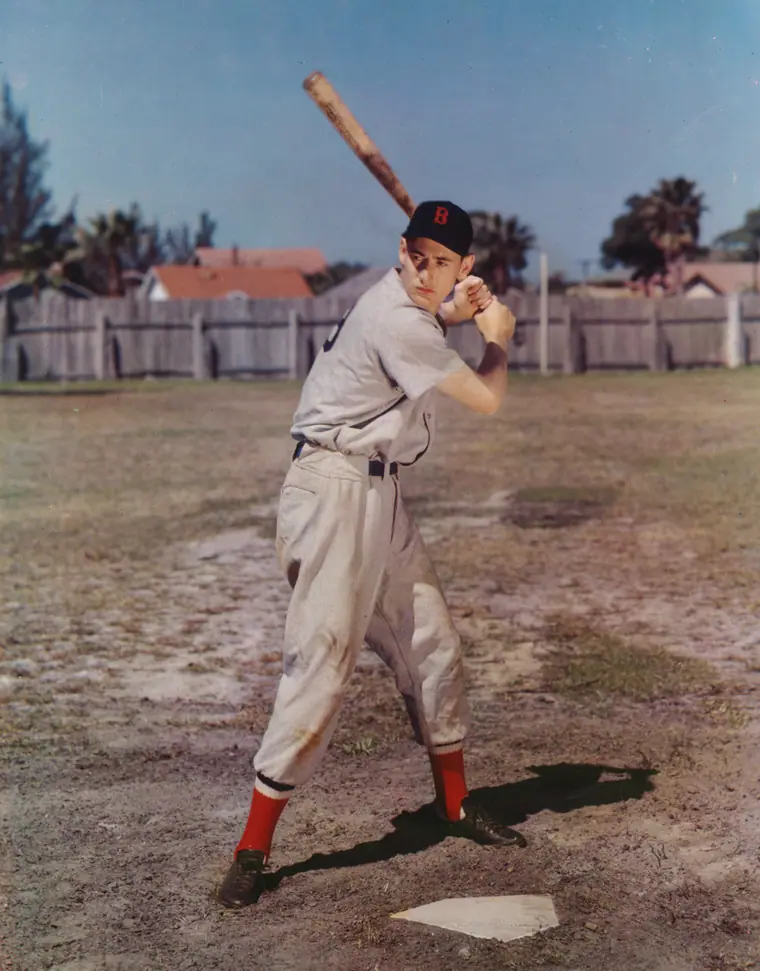
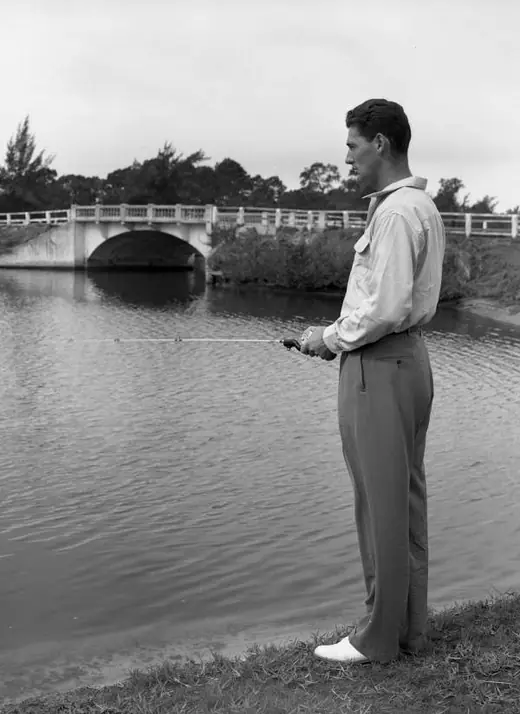
Ted Williams — the last man to hit .400 in a season, a Marine combat pilot in two wars, and by broad agreement the greatest pure hitter who ever lived — died on July 5, 2002, at a hospital in Inverness, Florida. He was 83, and he had lived out his last years in Citrus County, fishing.
His 1996 will was not ambiguous. It directed that his body be cremated and his ashes scattered off the coast of Florida, where he had spent much of his life on the water.
Within about two days, his body was on a plane to Scottsdale, Arizona, and into the tanks of the Alcor Life Extension Foundation for cryonic suspension. It is still there.
A note, on a piece of scrap paper
Williams's son, John Henry Williams, and daughter Claudia Williams said their father had changed his mind. Their evidence was a handwritten note dated November 2, 2000, signed by all three of them, stating that they wished to be placed into biostasis after death so that they might have a chance to be together in the future.
It was not witnessed in the manner of a will. It was not notarized. It was written on a scrap of paper and it was, by the accounts of everyone who saw it, stained.
His eldest daughter, Bobby-Jo Williams Ferrell, from his first marriage, said flatly that her father had wanted to be cremated and that the will said so. She and two of Williams's nephews sued.
Two states, two years, and no ruling on the merits
The litigation ran in two directions at once. Bobby-Jo and the Ferrells sued Alcor in Maricopa County Superior Court in Arizona, demanding the organization produce paperwork showing Williams had actually wanted this. The estate — through executor Al Cassidy — sued the Ferrells to stop them.
It never reached a judgment on whether the note was good enough. It ended the way most of these end: money ran out on one side. Bobby-Jo dropped her challenge in late 2002, and in June 2004 the parties settled. She agreed to stop objecting, and to stop encouraging others to object, to the cryonic preservation. Cassidy dropped the estate's suit.
So the answer to which document controlled was never given by a court. The answer was given by possession. The body was already in Arizona, and the party who wanted it back could not afford to keep asking.
A former Alcor executive later published claims about how the remains had been handled; Alcor disputed them. We note that the claims exist and that they are contested, and leave it there.
John Henry Williams died of leukemia in 2004, at 35. He was also cryopreserved at Alcor.
The asset with no value and no substitute
Estate lawyers will tell you the same thing without prompting: the most vicious fights are almost never about the money. They are about the ring, the photographs, the dog, the ashes — the things that cannot be divided, appraised, or replaced.
A body is the extreme case. It has no market value. It cannot be split. There is exactly one decision and one chance to make it, and it has to be made in the first forty-eight hours, by whoever is physically present, while everyone involved is in the worst hours of their life.
That is why the law does not leave it to the will. Every state, including Florida, has a statutory hierarchy naming who has authority to direct the disposition of remains, and that hierarchy operates immediately — long before anyone opens a safe deposit box.
Timeline
- 1996Williams executes a will directing cremation and the scattering of his ashes off the Florida coast.
- Nov 2, 2000A handwritten note, signed by Ted, John Henry, and Claudia Williams, states a wish to be placed in biostasis after death.
- Jul 5, 2002Williams dies at a hospital in Inverness, Florida, at 83.
- Jul 2002His body is transported to the Alcor Life Extension Foundation in Scottsdale, Arizona, for cryonic suspension.
- 2002–2003Bobby-Jo Williams Ferrell and two nephews sue Alcor in Maricopa County; the estate sues the Ferrells. Bobby-Jo withdraws her challenge as funds run out.
- Jun 2004Settlement. Bobby-Jo agrees not to object further; the estate's litigation is dropped. No court ever rules on which document controlled.
- 2004John Henry Williams dies at 35 and is also cryopreserved.
What actually went wrong
- Funeral instructions in a will. The will was found and read after the decision had already been executed. Instructions that matter in the first 48 hours must live somewhere reachable in the first 48 hours.
- A later, informal document contradicting a formal one. A signed, witnessed will versus a stained note. Because nobody litigated it to judgment, the informal document effectively won on the ground.
- No named person with authority. Nobody was designated, in a document the hospital would honor, to make this call. So the person who moved fastest made it.
- A family split across two marriages, and no conversation. Children from a first marriage and children from a later one, holding opposite beliefs about their father's wishes, learning of the plan only after the plane had landed.
Would it have gone that way in Florida?
The will would still have lost. In Florida, disposition of remains is decided by statute, not by the will — but Florida gives you a way to control it in advance.
He died in Florida, so Florida law is not hypothetical here. And the uncomfortable answer is that a Florida will is not the instrument that controls what happens to your body. By the time a will is admitted to probate, the funeral has usually happened.
What controls is Chapter 497, the Florida Funeral, Cemetery, and Consumer Services Act. Section 497.005 defines the "legally authorized person" entitled to direct the disposition of remains, and it sets a hierarchy. At the top of that hierarchy is not a spouse or a child — it is the decedent's own written directions, given during life. Below that the list runs to the surviving spouse, then adult children, then parents, then siblings, and onward.
That structure is the whole answer to this case. Williams had a written direction — it was just filed in the wrong kind of document, one designed to be opened weeks later. Had the same sentence been in a standalone written declaration of disposition, delivered to the funeral home and to his family, the hospital and the funeral director would have had it in hand on July 5th.
Two more Florida mechanisms are worth naming. A preneed contract under Chapter 497 lets you buy and specify the arrangements in advance, which converts your wishes into a contract someone is obligated to perform. And a health care surrogate designation under Chapter 765 lets you name the person who speaks for you at the end — the same person who, in practice, tends to be standing in the hospital corridor when these decisions get made. Name them, and tell them.
One thing Florida will not do is enforce your wishes against a family that has already acted. Like the Williams case, most disposition disputes are decided by speed and possession, then ratified by exhaustion. The document only helps if it arrives first.
The practical instruction, and it takes ten minutes: write your disposition directions in a standalone signed document, not in your will. Give a copy to the person named as your health care surrogate, a copy to your funeral provider, and a copy to whichever family member is most likely to disagree. The point of the third copy is not legal. It is to make the argument happen while you are alive to settle it.
What people ask us about this.
Further reading
Third-party sites. Not ours, not endorsed, not kept current by us — just the places worth going next.
Sources
- Ted Williams' daughter ends fight over remains — Tampa Bay Times / AP, Jun 2004
- Alcor press releases re Ted Williams — Cryonics Archive
- Williams' family sues Alcor — East Valley Tribune
- Legal dispute over Ted Williams' frozen body on hold — Fox News
- Lawyer: Ted Williams wanted to be cremated — Fox News
- Fla. Stat. §497.005 — Definitions — The Florida Senate
If this is your situation
Free 30-minute consult. Plain English. No pressure.
Nearly every case in this archive turned on something ordinary — an unwitnessed page, a stale beneficiary line, a document nobody could find. Those are cheap to fix while you're alive and expensive to fix afterward.