The September 11th Victim Compensation Fund
Congress created it eleven days after the attacks. It paid $7.049 billion to 5,560 claimants, and roughly 97% of eligible families took it rather than sue. Every award for a person who died had to pass through a probate court first — and it still does.
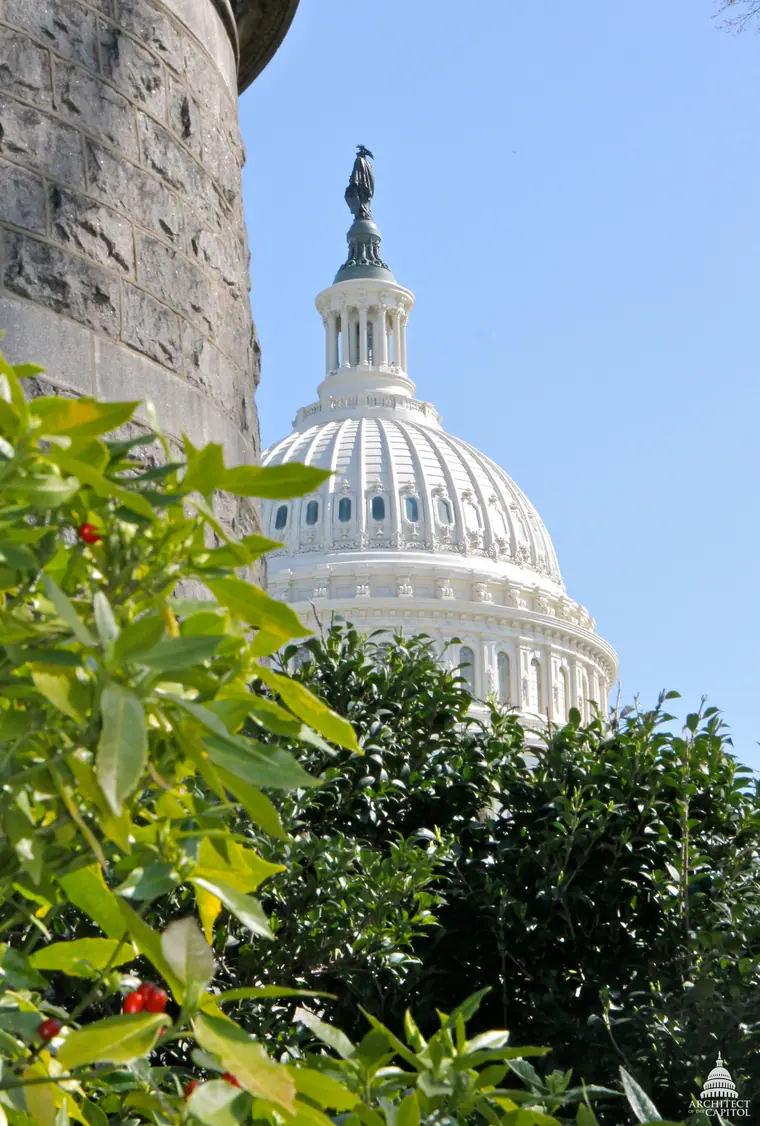
Eleven days after the attacks, on 22 September 2001, Congress passed the Air Transportation Safety and System Stabilization Act, Pub. L. 107-42. Most of it was about keeping the airlines solvent. Title IV created something the United States had not built before: a federal fund that would pay compensation to individuals directly, administered by a single appointed official, entirely outside the courts.
The reason was structural rather than sentimental. Thousands of wrongful-death and personal-injury claims were about to be filed against airlines, airport security contractors, airframe manufacturers, the City of New York, and the parties with property interests in the World Trade Center. Litigation on that scale would take a decade or more, would probably exhaust the available insurance, and would leave some families with everything and others with nothing depending on when they filed and how good their lawyer was.
So the statute did two things at once. It capped the defendants' liability and gave the US District Court for the Southern District of New York exclusive jurisdiction over the claims that were brought. And it offered every eligible person an alternative: file with the Fund, have an award determined administratively, and receive it without trial, without proving fault, and without waiting.
The Attorney General appointed Kenneth R. Feinberg as Special Master. He wrote the regulations, set the methodology, met with families, and decided the awards.
How an award was actually calculated
The methodology had three moving parts, and every argument about the Fund was an argument about one of them.
Economic loss. The projected lifetime earnings and benefits the person would have received, reduced to present value. This is ordinary tort arithmetic, and it produces enormous variation: a bond trader in his thirties and a firefighter in his fifties generate very different numbers from the same formula. That variation was the single most criticised feature of the Fund, and it is not a flaw in the Fund. It is what tort law does.
Non-economic loss. Here the Special Master did something courts do not do: he presumed it. The regulations set $250,000 for the deceased individual, plus $100,000 on account of the spouse and $100,000 on account of each dependent. A flat figure, applied to everyone, deliberately refusing to rank one family's grief against another's.
Collateral source offsets. The statute required awards to be reduced by certain other payments received — life insurance, workers' compensation, pension and government death benefits, Social Security. This was the provision families objected to most, because a person who had bought a large life insurance policy saw the benefit of that decision subtracted from the award.
The results: the original Fund received 7,403 claims and made awards totalling $7.049 billion to 5,560 claimants — the survivors of 2,880 people killed and 2,680 people injured in the attacks or the rescue effort. Reported averages ran to roughly $2 million for a death claim and roughly $400,000 for a physical-injury claim. All determinations were completed by 15 June 2004.
- Economic loss — projected lifetime earnings and benefits, present-valued. The source of most of the variation between awards.
- Non-economic loss — presumed at $250,000 for the deceased, plus $100,000 for a spouse and $100,000 per dependent.
- Collateral offsets — life insurance, pension, workers' compensation and government death benefits subtracted. The most contested rule in the programme.
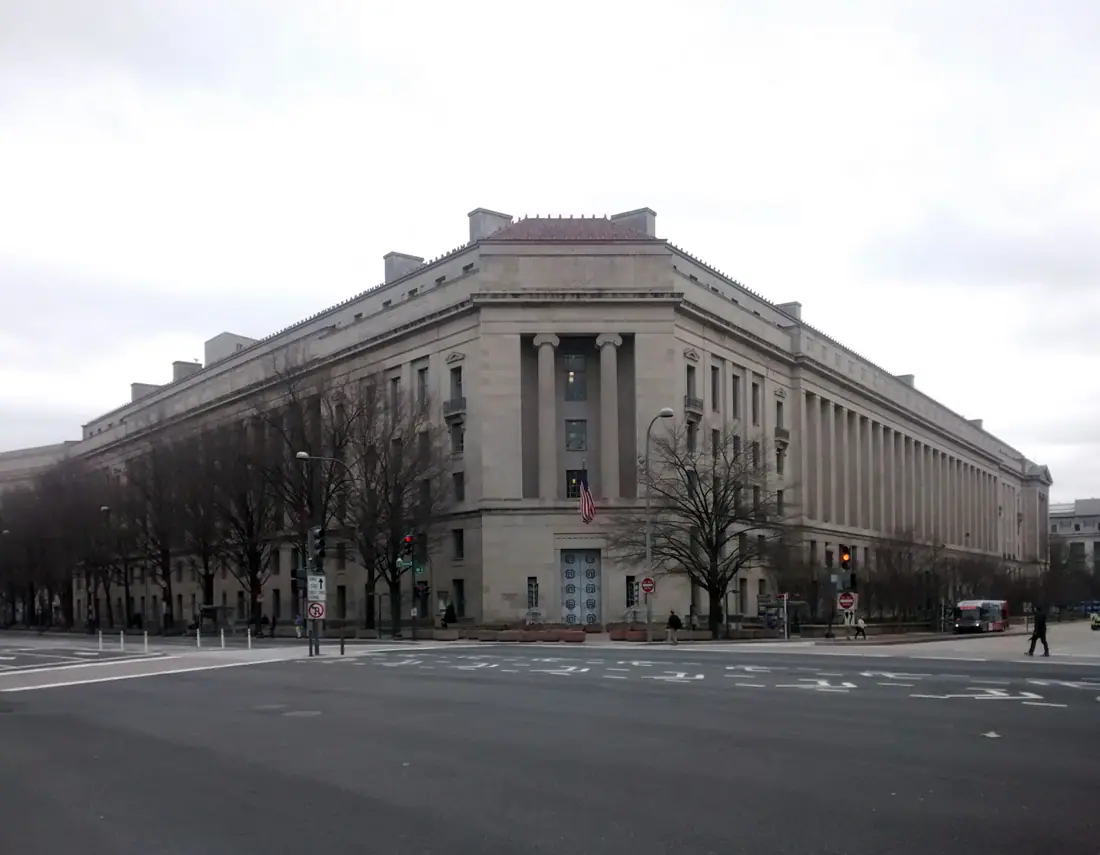
Ninety-five families litigated instead
Feinberg later stated that about 97% of eligible families who lost someone came into the Fund voluntarily. The rest went to court — a group that ultimately amounted to 95 wrongful-death and injury cases in the Southern District of New York, consolidated before Judge Alvin K. Hellerstein and organised into master cases.
The reasons for choosing litigation were rational and specific. Some families' collateral offsets would have consumed most of an award. Some had very high projected earnings and believed a jury would do better. Some wanted discovery and a public record about airport security more than they wanted money.
None of it went to trial. Over the following years the cases settled one at a time, with Sheila Birnbaum serving as mediator, and aggregate settlements were reported at roughly $500 million. The last case — the family of Mark Bavis, against United Airlines and its security contractor — settled on 19 September 2011, ten years and eight days after the attacks.
That is a fair summary of the trade Congress offered. The Fund paid an average of about $2 million per death within about thirty months. Litigation produced settlements for a much smaller group over a decade, with no findings and no trial. Neither outcome is a scandal. They are the two prices of the two roads.
No letters, no claim
This is the part that gets left out of every retelling, and it is the reason this page is in a probate archive.
A claim for a person who died can only be filed by their Personal Representative. Not by a widow as a widow, not by a parent, not by a sibling. The Fund requires Letters Testamentary where there was a will, or Letters of Administration where there was not, issued by the appropriate probate court, and they must be free of limitations that would interfere with the representative's authority to pursue the claim.
Which means the very first step in claiming from a federal fund created by an Act of Congress is a filing in a county courthouse. A family that has never dealt with a probate court has to open an estate, be appointed, and produce certified letters — before anyone at the Fund will look at the claim.
And the money does not simply go to the person who filed. The Personal Representative must distribute the award in accordance with state law and the orders of any applicable court, and must submit a proposed distribution plan to the Special Master for review before payment. Where there is a will, the estate — non-economic — portion generally follows the will. Where there is not, it follows the state's intestacy statute. The economic-loss portion is distributed under the state's wrongful-death rules, which frequently point to different people.
So a federal award, calculated by a federal methodology, is divided under state law by a state-appointed representative under a plan reviewed by a federal official. Four layers, and a family that fails at the first one — appointment — never reaches the others.
Reopened, extended, and made permanent
The original Fund closed to new claims in December 2003. The health consequences of the exposure at the sites did not.
The James Zadroga 9/11 Health and Compensation Act of 2010, Pub. L. 111-347, signed on 2 January 2011, reopened the VCF for responders and for people who had lived, worked or attended school in the exposure zone, with a $2.775 billion cap and an authorisation running to 3 October 2016.
The Zadroga Reauthorization Act of 2015, enacted 18 December 2015 as part of Pub. L. 114-113, extended the claim deadline to 18 December 2020 and added $4.6 billion, producing two funding groups and a combined $7.375 billion cap.
The Never Forget the Heroes: James Zadroga, Ray Pfeifer, and Luis Alvarez Permanent Authorization Act, Pub. L. 116-34, enacted 29 July 2019, removed the funding caps, appropriated such sums as may be necessary, and extended the claim filing deadline to 1 October 2090.
The reason for that date is arithmetic, not rhetoric: a child who was in Lower Manhattan in 2001 could develop a qualifying illness in their eighties. As reported through 30 November 2023, the VCF had awarded $12.62 billion to nearly 56,000 claimants. As of August 2026 the Fund remains open, and the probate step at the front of every deceased claim has not changed.
Timeline
- Sep 22, 2001The Air Transportation Safety and System Stabilization Act, Pub. L. 107-42, becomes law. Title IV creates the September 11th Victim Compensation Fund, caps defendants' liability, and gives the Southern District of New York exclusive jurisdiction.
- Late 2001The Attorney General appoints Kenneth R. Feinberg as Special Master. His regulations presume non-economic loss at $250,000 for the deceased, plus $100,000 for a spouse and $100,000 per dependent.
- Dec 22, 2003The original Fund closes to new claims, having received 7,403.
- Jun 15, 2004All award determinations are complete: $7.049 billion to 5,560 claimants — survivors of 2,880 people killed and 2,680 people injured. About 97% of eligible families of the deceased chose the Fund.
- 2004–2011The 95 cases brought instead of claiming are consolidated before Judge Alvin K. Hellerstein in the Southern District of New York and settle one by one, with Sheila Birnbaum mediating. None reaches trial.
- Sep 19, 2011The final case — the Bavis family against United Airlines and its security contractor — settles. Aggregate settlements in the group are reported at roughly $500 million.
- Jan 2, 2011The James Zadroga 9/11 Health and Compensation Act, Pub. L. 111-347, reopens the VCF for responders and survivors with health conditions, capped at $2.775 billion.
- Dec 18, 2015Reauthorization extends the claim deadline to December 18, 2020 and adds $4.6 billion, for a combined $7.375 billion cap.
- Jul 29, 2019The Never Forget the Heroes Act, Pub. L. 116-34, removes the funding caps and extends the claim filing deadline to October 1, 2090.
What actually went wrong
- Probate was the gate, and nobody warned anyone. A claim for a deceased victim requires Letters Testamentary or Letters of Administration from a probate court, without limitations. Families who had never opened an estate had to do that first, in the worst months of their lives.
- Letters with limitations stop the claim. Courts routinely issue restricted letters. Restrictions that interfere with the representative's authority to pursue the claim have to be removed before the Fund will proceed — an extra motion, and an extra delay, that a properly drafted petition avoids.
- Collateral offsets punished the people who planned. Life insurance, pensions and death benefits reduced awards. A family that had bought good coverage saw the benefit of that decision subtracted, which is exactly backwards from how anyone expects planning to work.
- Economic-loss arithmetic produced very different numbers for equally lost lives. That is what tort law does, and it is why the presumed non-economic figure was set flat: it was the one component that refused to rank anyone.
- Two portions, two sets of rules, one cheque. The estate portion follows the will or intestacy; the economic-loss portion follows state wrongful-death law. They frequently point at different people, and the distribution plan is where that becomes a family's problem.
Would it have gone that way in Florida?
Florida changes none of the federal arithmetic and all of the division. The award is calculated federally and split under Florida law — by a Florida personal representative, with unrestricted letters.
Start with the appointment, because nothing happens without it. A Florida personal representative is appointed under §733.301, which sets the order of preference: in a testate estate, the person named in the will, then a person selected by a majority in interest of the beneficiaries; in an intestate estate, the surviving spouse, then a person selected by a majority in interest of the heirs. The court issues letters of administration, and §733.601 provides that a personal representative's powers relate back, giving beneficial acts done before appointment the same effect as acts done after it.
Watch the limitations. Florida courts do issue restricted letters, and a restriction that would interfere with pursuing or settling a claim has to be addressed. If the estate's only meaningful asset is a compensation claim, say so in the petition and ask for letters that permit the representative to prosecute and settle it. §733.612 enumerates the transactions a personal representative may undertake without court order, and §733.708 governs court approval of a compromise or settlement.
Then the split, and this is where Florida is emphatic. Under §768.20 the wrongful-death action is brought by the personal representative, who recovers for the benefit of the decedent's survivors and the estate — and where a personal injury results in death, no action for the personal injury survives. One representative, one action, two categories of recovery.
§768.21 allocates them. The surviving spouse recovers loss of support and services, loss of companionship and protection, and mental pain and suffering. Minor children — and all children where there is no surviving spouse — recover loss of support and services, loss of parental companionship, instruction and guidance, and mental pain and suffering. Parents of a deceased minor recover mental pain and suffering, and parents of a deceased adult may where there are no other survivors. The estate separately recovers the decedent's lost earnings from injury to death, prospective net accumulations where the statute permits, and unreimbursed medical and funeral expenses. Survivor recoveries are not estate assets. They do not pass under the will. Estate recoveries do.
The honest caveat. A federal compensation programme sets its own eligibility, methodology and offsets, and state law does not override any of it. What state law supplies is who may claim, and who receives what. That is not a small residual role — for most families it is the part that determines the actual outcome, and it is the part nobody reads until the cheque is about to be cut.
The practical instruction. If a Florida family is pursuing any federal compensation programme for someone who died — the VCF, a defence or environmental exposure programme, a disaster fund — do the appointment first and do it properly. Petition for letters that expressly permit prosecuting and settling the claim, get certified copies, and write the allocation between survivor recoveries and estate recoveries down before the money arrives. An allocation agreed in advance is an agreement. The same allocation proposed after a wire transfer is a dispute.
What people ask us about this.
Further reading
Third-party sites. Not ours, not endorsed, not kept current by us — just the places worth going next.
Sources
- The September 11th Victim Compensation Fund (VCF), CRS Report R45969 — Congressional Research Service, Dec 2023
- The September 11th Victim Compensation Fund (VCF) — EveryCRSReport (CRS R45969)
- Final Report of the Special Master for the September 11th Victim Compensation Fund of 2001, Volume I — US Department of Justice / Office of Justice Programs
- Laws and regulations — September 11th Victim Compensation Fund (vcf.gov)
- Last 9/11 family settles suit over death of Mark Bavis — ABC News, Sep 2011
- Most Sept. 11 lawsuits settled for $500 million — Courthouse News Service
- Lawyer describes the emotional toll of calculating victims' compensation — NPR, Sep 2016 (interview with Kenneth Feinberg)
- Fla. Stat. §768.20 — Parties (wrongful death) — The Florida Senate
- Fla. Stat. §733.301 — Preference in appointment of personal representative — The Florida Senate
If this is your situation
Free 30-minute consult. Plain English. No pressure.
Nearly every case in this archive turned on something ordinary — an unwitnessed page, a stale beneficiary line, a document nobody could find. Those are cheap to fix while you're alive and expensive to fix afterward.