Abraham Shakespeare
A Lakeland truck driver's assistant won a $30 million Florida Lotto jackpot in 2006 and took $17 million in cash. Within three years the money was gone, his house was titled to someone else's company, and he was dead. The estate spent four more years getting the house back for his two sons.
Abraham Shakespeare bought a Florida Lotto ticket at a convenience store in Frostproof, in southern Polk County, while working as a truck driver's assistant. On November 15, 2006, it hit for $30 million. He took the cash option: roughly $17 million, paid at once.
What happened next is the ordinary version of this story rather than the exotic one. He bought a house in a gated Lakeland subdivision for about $1.07 million, a Rolex, and a Nissan Altima. Then he started giving money away — to relatives, to acquaintances, to people who arrived at the door with a reason. He told reporters he would have been better off broke, and that he had worked out that what people wanted from him was the money.
He also got sued. A co-worker, Michael Ford, claimed the winning ticket had been taken from his wallet and demanded a share of at least $1 million. A jury rejected the claim in October 2007. Shakespeare kept the jackpot and acquired, in the process, a public record showing exactly how much of it there was.
By late 2008 the $17 million was substantially spent. What remained was still a large amount of money in the hands of a man who could not read.
An LLC, a deed, and $1,000,095
In 2008, Dorice “DeeDee” Moore — who ran a nurse-staffing company — approached Shakespeare, initially on the stated basis of writing a book about him. She subsequently took a role in handling what was left of his money.
Two structures did the work. Abraham Shakespeare LLC was formed, and Moore obtained control of its funds. Her company, American Medical Professionals LLC, took title to his Lakeland house on January 9, 2009. She said she had paid him $655,000 for it. Prosecutors and the estate found no evidence that any such payment was made.
The estate's later civil complaint put numbers on the rest. It alleged that on or about January 2, 2009, $246,493 belonging to Shakespeare was converted, and that on or about February 17, 2009, a further $1,000,095 was converted. Testimony at the criminal trial described what the money bought: a Hummer, a Corvette, a truck.
None of this required forgery of a will, a contested capacity hearing, or a probate court. It happened while he was alive, through documents he signed, using an operating agreement and a warranty deed — the two most boring instruments in the drawer.
Reported missing in November, found in January
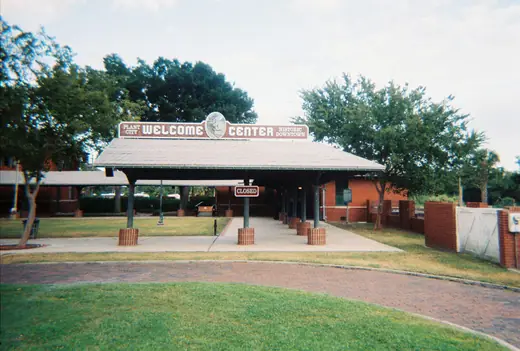
Shakespeare was last seen in April 2009. His family reported him missing on November 9, 2009. On January 28, 2010, investigators recovered his body from beneath a concrete slab at a property in Plant City, in Hillsborough County. He had been shot.
Moore was arrested in February 2010 and charged with first-degree murder. At trial the State's case rested substantially on the financial record and on evidence that she had constructed the appearance that Shakespeare was still alive after his death, including a letter sent to his mother. On December 10, 2012, a Hillsborough County jury convicted her of first-degree murder and of possession and discharge of a firearm causing death. Circuit Judge Emmett Battles sentenced her to life without parole, plus a 25-year mandatory minimum on the firearm count.
She has maintained her innocence and has sought post-conviction relief. The conviction stands as of August 2026.
Four years to get the house back
The probate side of this case took longer than the murder trial and produced none of the headlines.
Shakespeare's estate, acting through personal representative Christine Miller, sued Moore and American Medical Professionals in Hillsborough County. The claims were the unglamorous ones that actually work: conversion of the two sums, replevin of property bought with estate money, and unwinding the transfer of the Lakeland house. The estate also sought the return of 121 items — jewellery, a Rolex, six computers, two cameras — that had been seized by sheriff's deputies during the investigation.
In October 2013, the house came back. Title was restored to the estate, to be sold for the benefit of Shakespeare's children.
Shakespeare left two sons, both minors at his death. That is the part of this case that generates the most law and the least coverage: money recovered for a child does not simply go to the child, and it does not simply go to the surviving parent either.
- No will. The estate passed by intestacy, which in Florida means §732.103 — descendants first, per stirpes.
- Two minor beneficiaries. A minor cannot hold or manage an inheritance. Someone has to be appointed to hold it, under court supervision, until the child is 18.
- A parent is not automatically that person for money. Florida's natural-guardian rule caps what a parent can receive on a child's behalf without a court-appointed guardian of the property.
- Everything had to be recovered before it could be distributed. Assets titled in someone else's LLC are not estate assets until a court says they are.
Timeline
- Nov 15, 2006Abraham Shakespeare's Florida Lotto ticket, bought in Frostproof, wins $30 million. He elects the cash option — roughly $17 million.
- 2007He buys a Lakeland house for about $1.07 million and begins giving large sums away. Co-worker Michael Ford sues claiming the ticket was his; a jury rejects the claim in October 2007.
- 2008Dorice “DeeDee” Moore approaches Shakespeare, initially on the stated basis of writing a book, and takes a role in handling his remaining money. Abraham Shakespeare LLC is formed.
- Jan 9, 2009Title to the Lakeland house transfers to Moore's company, American Medical Professionals LLC. She states she paid $655,000; no evidence of payment is found.
- Feb 17, 2009The estate's later complaint alleges $1,000,095 belonging to Shakespeare was converted on or about this date, following $246,493 on or about January 2.
- April 2009Shakespeare is last seen. He is reported missing on November 9, 2009.
- Jan 28, 2010His body is recovered from beneath a concrete slab at a Plant City property. Moore is arrested in February and charged with first-degree murder.
- Dec 10, 2012A Hillsborough County jury convicts Moore of first-degree murder. Judge Emmett Battles imposes life without parole plus a 25-year firearm minimum.
- Oct 2013The Lakeland house is restored to the estate, to be sold for the benefit of Shakespeare's two sons.
What actually went wrong
- A lump sum with no structure behind it. $17 million paid to an individual, into an individual's accounts, with no trust, no LLC, no trustee, and no professional standing between the winner and the next person to ask. Every later problem is downstream of that.
- Publicity by operation of law. Florida publishes the winner. The Ford lawsuit then put the size of the fortune into a public court file. A person who cannot be anonymous needs the gatekeeper more, not less.
- Control transferred through ordinary paperwork. An LLC operating agreement and a warranty deed moved a house and seven figures of cash. No court, no notice, no third party reviewing anything.
- No independent adviser who was not also a beneficiary. There was no lawyer, accountant, or corporate trustee whose only job was to say no. The person managing the money and the person receiving it were the same person.
- No will, with minor children. Dying intestate with two young sons guaranteed a court-supervised guardianship of the property on top of a probate — and turned every recovered dollar into a matter requiring judicial approval.
Would it have gone that way in Florida?
This IS the Florida rule. Every protection in this story is a Florida statute, and most of them only work if you set them up before the money arrives.
Start with the rule that ends the inheritance question. Fla. Stat. §732.802 — the slayer statute — provides that a person who unlawfully and intentionally kills the decedent takes nothing: not under the will, not by intestacy, not by survivorship on joint property, not as a named beneficiary on a life insurance policy or other contract. The estate passes as though the killer had died first. A final judgment of conviction of murder in any degree is conclusive under §732.802(5); and in the absence of a conviction, the probate court may make the finding itself by the greater weight of the evidence.
But note what §732.802 does not do. It has nothing to say about property transferred before the death. A deed signed in January 2009 and an LLC funded in February 2009 are not inheritances. They had to be attacked as they were here — by the personal representative, in circuit court, as conversion and replevin, with the burden on the estate. That is slower, more expensive, and less certain than a slayer determination, and it is the reason lifetime exploitation is a more dangerous problem than a bad will.
The lifetime side has its own Florida law. §825.103 makes it a crime to exploit an elderly person or disabled adult — to knowingly obtain or use their funds or property, by deception or intimidation, or by standing in a position of trust and confidence, with intent to deprive them of it. Grading runs from third-degree felony to first-degree felony at $50,000 or more. §772.11 gives a civil remedy for theft or exploitation: on proof by clear and convincing evidence, and after a written demand, treble damages plus attorney's fees. It reaches both chapter 812 theft and §825.103(1) exploitation, and it is frequently the more useful tool for an estate trying to get money back.
Then the children. Shakespeare left no will, so §732.103 governed: the estate passed to his descendants. Because both sons were minors, §744.301(2) capped what a natural guardian could receive on a child's behalf at $15,000 in the aggregate; above that, §744.387 requires a court-appointed guardian of the property, with a bond, annual accountings, and court approval of expenditures until the child turns 18. §733.301 governs who gets appointed personal representative in an intestate estate — the surviving spouse first, then the person selected by a majority in interest of the heirs — which in a family with children by different mothers is itself a contested question.
The honest caveat: none of the post-death machinery gets you back to where you started. The estate recovered a house and 121 items. It did not recover $17 million, because $17 million had already been spent, given away, or moved before anyone had standing to object.
The practical instruction, and it applies to any sudden windfall in Florida — lottery, settlement, inheritance, sale of a business: claim the prize through a structure, not as yourself. A revocable trust or an LLC that receives the ticket, a corporate or professional trustee who signs the cheques, a written distribution policy so that “no” is a rule and not a personal refusal, and a will naming a guardian and a trustee for any minor children. Set up in advance, that costs a few thousand dollars. Set up afterwards, it costs whatever is left.
What people ask us about this.
Can a Florida lottery winner stay anonymous?+−
Can someone who killed the decedent inherit in Florida?+−
If my child inherits money, do I just hold it for them?+−
What should someone who suddenly receives a large sum in Florida actually do first?+−

Further reading
Third-party sites. Not ours, not endorsed, not kept current by us — just the places worth going next.
Sources
- Murder of Abraham Shakespeare — case chronology — Wikipedia (with underlying press citations)
- Lottery murder: DeeDee Moore found guilty — ABC News, Dec 2012
- “Cold, calculating, cruel”: lottery murderer sentenced to life in prison — NBC News, Dec 2012
- Body of missing lottery winner found — NBC News, Jan 2010
- Slain lottery winner's estate goes to court — Courthouse News Service
- House taken from woman convicted of killing lottery-winning owner — UPI, Oct 2013
- Woman convicted of killing Lakeland lottery winner asks for new trial — WFLA
- Fla. Stat. §732.802 — Killer not entitled to receive property — The Florida Senate
- Fla. Stat. §744.301 — Natural guardians — The Florida Senate
If this is your situation
Intake reopens late October 2026. The archive stays free.
Nearly every case in this archive turned on something ordinary — an unwitnessed page, a stale beneficiary line, a document nobody could find. Those are cheap to fix while you're alive and expensive to fix afterward.