NAGPRA and repatriation
Probate answers who inherits a person's property. It has never answered who is responsible for a person's remains when the death was centuries ago and the descendants are a nation rather than a family. In 1990 Congress wrote a separate statute for that, and it is still being worked through.
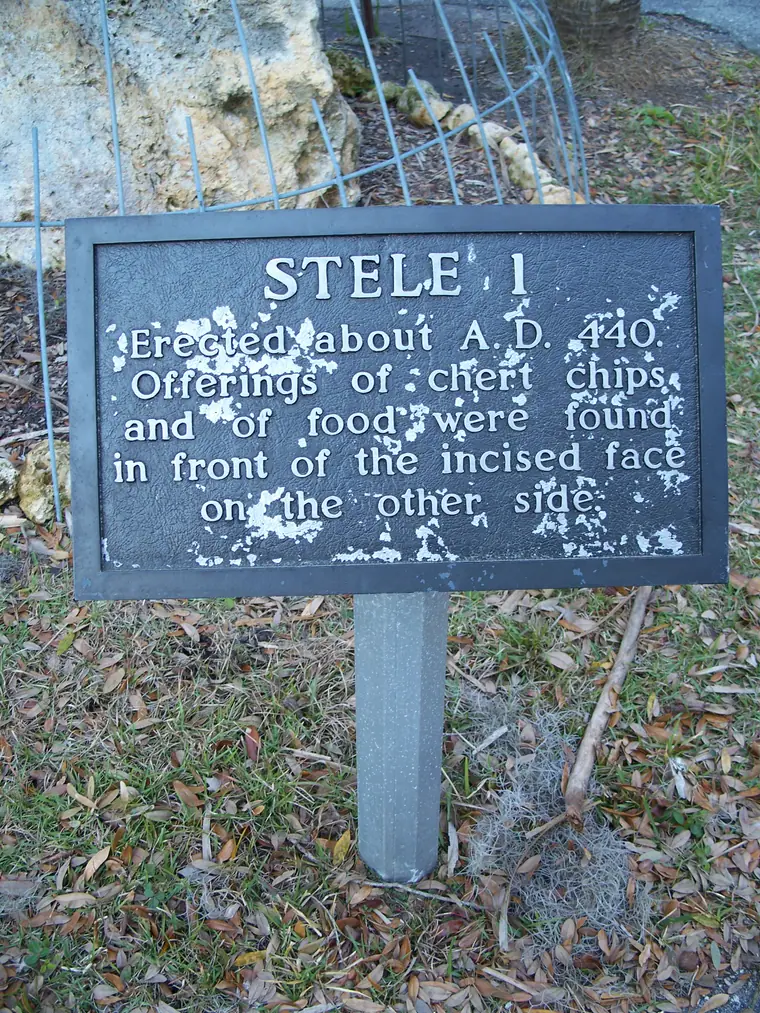
Every other case in this archive begins with a person who owned things and then died. This one begins with the opposite: people whose remains were taken, catalogued, and kept, in institutions, for generations, by a legal system that treated them as specimens rather than as anyone's ancestors.
The scale is the part that is hard to absorb. As of ProPublica's reporting on federal repatriation data, 617 institutions still hold the remains of 104,539 Native American ancestors, with roughly thirty thousand more at the Smithsonian, which is covered by a separate 1989 statute rather than by NAGPRA. Alongside them are several hundred thousand funerary objects — the items buried with a person, which is to say the items a family chose.
The Native American Graves Protection and Repatriation Act — Pub. L. 101-601, enacted November 16, 1990, codified at 25 U.S.C. §§3001–3013, with a criminal trafficking provision at 18 U.S.C. §1170 — is the statute that addresses it. It is not a probate statute and it does not pretend to be. But it answers the questions a probate court would ask, in a context probate cannot reach: who has standing, what must be inventoried, who decides, and what is owed.
The National Park Service's statement of the principle is one sentence, and it is the right place to start: human remains of any ancestry “must at all times be treated with dignity and respect.”
What NAGPRA requires, and of whom
NAGPRA reaches federal agencies and museums and institutions that receive federal funding — which in practice means nearly every university and public museum in the country. It divides what it covers into categories, and the categories matter because they carry different procedures.
- Human remains, and associated funerary objects — items buried with an individual whose remains are also held.
- Unassociated funerary objects — burial items where the remains themselves are elsewhere or gone.
- Sacred objects — items needed by traditional religious leaders for the practice of traditional religion.
- Objects of cultural patrimony — items of ongoing historical, traditional, or cultural importance to a group, which no individual could have alienated in the first place.
Institutions must compile inventories of human remains and associated funerary objects and summaries of the other categories, consult, and repatriate on request to lineal descendants, Indian Tribes, and Native Hawaiian organizations. NAGPRA also governs new discoveries on federal and tribal lands, provides grants to support the work, and authorises the Secretary of the Interior to assess civil penalties against museums that fail to comply. 18 U.S.C. §1170 makes trafficking in Native American human remains and cultural items a federal crime.
The last category is the conceptually interesting one. An object of cultural patrimony is defined by the fact that no single person had the authority to sell it. That is a rule about the limits of individual ownership, written into federal law — and it is the exact inverse of the premise underneath every will in this archive.
The Ancient One, and twenty-one years
In July 1996, human remains were found in shallow water along the southern shore of Lake Wallula, the section of the Columbia River pooled behind McNary Dam at Kennewick, Washington. They were approximately 8,500 years old. Scientists called the individual Kennewick Man. The Columbia Plateau tribes called him the Ancient One, recognised him as an ancestor, and sought to rebury him.
Eight anthropologists and archaeologists sued for the right to study the remains. In 2002 the federal district court ruled in their favour, and in Bonnichsen v. United States, 367 F.3d 864 (9th Cir. 2004) the Ninth Circuit agreed — holding, in substance, that the remains did not qualify as “Native American” within NAGPRA's definition, because the record did not establish a relationship between remains that old and a presently existing tribe, people, or culture.
The legal result was that a statute written to protect Native ancestors did not protect this one, because he was too old to prove he was who the tribes said he was. That is not a caricature of the holding. It is the holding.
Then the evidence changed. In 2015, genomic analysis found the Ancient One more closely related to modern Native Americans — and to Columbia Plateau tribes in particular — than to any other population. In April 2016, after independent confirmation, the Army Corps of Engineers formally recognised the remains as Native American.
The NAGPRA process was still running when Congress ended it directly. In December 2016, a provision of the Water Infrastructure Improvements for the Nation Act ordered the transfer of the remains and required repatriation within 90 days. On February 18, 2017, in a private ceremony attended by roughly 200 tribal members and staff, the Umatilla, Yakama, Colville, Wanapum, and Nez Perce reburied the Ancient One at an undisclosed location on the Columbia Plateau — the day after the remains were handed to tribal leaders at the Burke Museum in Seattle.
Twenty-one years, three courts, an act of Congress, and a genome. The tribes' position at the beginning and at the end was the same one.
The regulations that closed the loophole, and some galleries
The Department of the Interior published revised NAGPRA regulations on December 13, 2023, effective January 12, 2024, at 43 CFR Part 10. They did four things that changed institutional behaviour immediately.
They eliminated the category of “culturally unidentifiable human remains.” That classification had functioned, in a great many collections, as a permanent holding pen: an institution that concluded it could not determine affiliation was under no obligation to return anything. ProPublica's reporting documented how widely it was used.
They require deference to Native American traditional knowledge in determining cultural affiliation, rather than treating scientific evidence as the only admissible kind.
They created a duty of care. Under 43 CFR 10.1(d), museums and federal agencies must consult lineal descendants, Indian Tribes, and Native Hawaiian organizations about the storage, treatment, and handling of remains and cultural items — and must obtain consent before activities that could cause physical or spiritual harm, which includes exhibition and research.
They imposed deadlines, running from 14 days to five years depending on the obligation, for summaries, itemised lists, and inventories.
The visible consequence arrived within weeks: major museums covered or closed displays containing affected items while consultation caught up. That has been criticised — from one direction as institutional over-correction that removed public access and research opportunity, and from another as the overdue consequence of thirty years of non-compliance. Repatriations in 2023 reached a record, with institutions returning roughly 18,000 ancestors in a single year. Both things are true at once.
Timeline
- Nov 16, 1990NAGPRA is enacted as Pub. L. 101-601, codified at 25 U.S.C. §§3001–3013, with a criminal trafficking provision at 18 U.S.C. §1170.
- Jul 1996Human remains approximately 8,500 years old are found in shallow water along the Columbia River at Kennewick, Washington.
- 2002A federal district court rules that the scientists who sued may study the remains.
- 2004Bonnichsen v. United States, 367 F.3d 864 (9th Cir.): the remains do not qualify as “Native American” under NAGPRA's definition on the record presented.
- 2015Genomic analysis finds the Ancient One more closely related to modern Native Americans, and to Columbia Plateau tribes in particular, than to any other population.
- Apr 2016After independent confirmation of the genetic findings, the Army Corps of Engineers formally recognises the remains as Native American.
- Dec 2016A provision of the Water Infrastructure Improvements for the Nation Act orders the transfer of the remains, with repatriation required within 90 days.
- Feb 18, 2017The Umatilla, Yakama, Colville, Wanapum, and Nez Perce rebury the Ancient One in a private ceremony on the Columbia Plateau.
- Jan 12, 2024Revised NAGPRA regulations take effect at 43 CFR Part 10: the culturally unidentifiable category is eliminated, traditional knowledge is given deference, a duty of care and consent requirement is imposed, and new deadlines run from 14 days to five years.
What actually went wrong
- A category did the work of a refusal. “Culturally unidentifiable” allowed institutions to hold remains indefinitely without ever denying a claim. The 2024 regulations removed it, and repatriations reached a record the year before they took effect.
- The statute's own definition excluded the person it was written for. Bonnichsen held that NAGPRA's definition of “Native American” required a demonstrated relationship to a presently existing tribe, people, or culture — a test the oldest remains are least able to satisfy.
- Science and testimony were not treated as equivalent evidence. The 2024 rules require deference to Native American traditional knowledge in affiliation determinations, which is a change in what counts as proof rather than a change in the standard.
- Consultation came after display rather than before it. The duty of care in 43 CFR 10.1(d) requires consent before activities that may cause physical or spiritual harm. Museums that had exhibited for decades had to stop first and consult afterwards.
- Thirty years of deadlines produced a backlog measured in six figures. More than 100,000 ancestors remain held. The 1990 Act set the obligation; it did not, on its own, produce compliance.
Would it have gone that way in Florida?
NAGPRA binds Florida's federally funded museums and universities directly. Florida then adds its own statute for what is found in the ground — and §872.05 is unusually protective.
Federal law comes first for collections. Every Florida museum, university, and agency that receives federal funding is subject to NAGPRA's inventory, summary, consultation, and repatriation obligations, and to the revised regulations that took effect on January 12, 2024. That is not a Florida question; it is the same obligation everywhere.
Florida's own statute governs what is discovered. Fla. Stat. §872.05 — “Unmarked human burials” — opens with a statement of intent that all human burials and human skeletal remains be accorded equal treatment and respect regardless of ethnic origin, cultural background, or religious affiliation. The procedure it sets out is precise, and it applies to anyone who encounters a burial in the course of construction, farming, or anything else.
The sequence under §872.05. A person who discovers an unmarked human burial must immediately notify the local law enforcement agency, and all activity that could disturb the site must cease until it is authorised to resume. Where law enforcement finds evidence of unlawful disturbance, the district medical examiner is notified and has 30 days to determine whether to retain jurisdiction or refer the matter to the State Archaeologist. Remains of a person dead less than 75 years stay with the medical examiner; remains older than that generally pass to the State Archaeologist, who must consult a human skeletal analyst within 15 days.
And then the part that matters most here. Once jurisdiction passes to the State Archaeologist, that official must make reasonable efforts to identify and locate persons with kinship or ethnic ties to the remains, and for Native American remains the consultation includes Native American members of current state tribes. Willfully disturbing an unmarked burial is a third-degree felony, and failing to report a known disturbance is a second-degree misdemeanour. The statute dates from 1987 — three years before NAGPRA — and has been amended since.
The honest caveats. §872.05 governs unmarked burials discovered in Florida; it does not itself compel the repatriation of items already in a Florida institution's collection, which is NAGPRA's job. NAGPRA reaches federal and tribal lands for new discoveries and federally funded institutions for collections — it does not reach a private landowner's field in Florida, where §872.05 and §872.02 (injuring or removing a tomb or monument, or disturbing the contents of a grave) are the operative provisions. And the 75-year line is a jurisdictional trigger, not a statement about whose ancestors matter.
What to actually do. If you are developing land, farming, or landscaping in Florida and something is uncovered: stop, and call local law enforcement. Not the county, not a contractor, not an archaeologist you know — law enforcement, immediately, which is what §872.05 requires and what starts the medical examiner's 30-day clock. If you are an institution: the January 2024 duty of care under 43 CFR 10.1(d) requires consultation and consent before exhibition, research, or handling, and the deadlines already began running. And if you are simply reading this: the reason this case sits in a probate archive is that it is the clearest available demonstration that the law's usual answer — find the heirs, close the estate — has limits, and that Congress had to write an entirely separate statute when it reached them.
What people ask us about this.
Further reading
Third-party sites. Not ours, not endorsed, not kept current by us — just the places worth going next.
Sources
- Native American Graves Protection and Repatriation Act — 25 U.S.C. Ch. 32 — Office of the Law Revision Counsel, U.S. House of Representatives
- Native American Graves Protection and Repatriation Act of 1990 — National Park Service — Archeology Program
- NAGPRA — National NAGPRA Program — National Park Service
- 43 CFR Part 10 — Native American Graves Protection and Repatriation Regulations — Electronic Code of Federal Regulations
- America's biggest museums fail to return Native American human remains — ProPublica, 2023
- Repatriation progress in 2023 — ProPublica
- Columbia Plateau tribes rebury the Ancient One (Kennewick Man) on February 18, 2017 — HistoryLink.org
- Kennewick Man (The Ancient One) — HistoryLink.org
- Fla. Stat. §872.05 — Unmarked human burials — The Florida Senate
If this is your situation
Free 30-minute consult. Plain English. No pressure.
Nearly every case in this archive turned on something ordinary — an unwitnessed page, a stale beneficiary line, a document nobody could find. Those are cheap to fix while you're alive and expensive to fix afterward.