Charles Vance Millar
A Toronto lawyer with no family left his fortune to whichever woman in the city gave birth to the most children in the ten years after his death. He meant it as a joke about human greed. Then the Depression arrived and it stopped being funny.
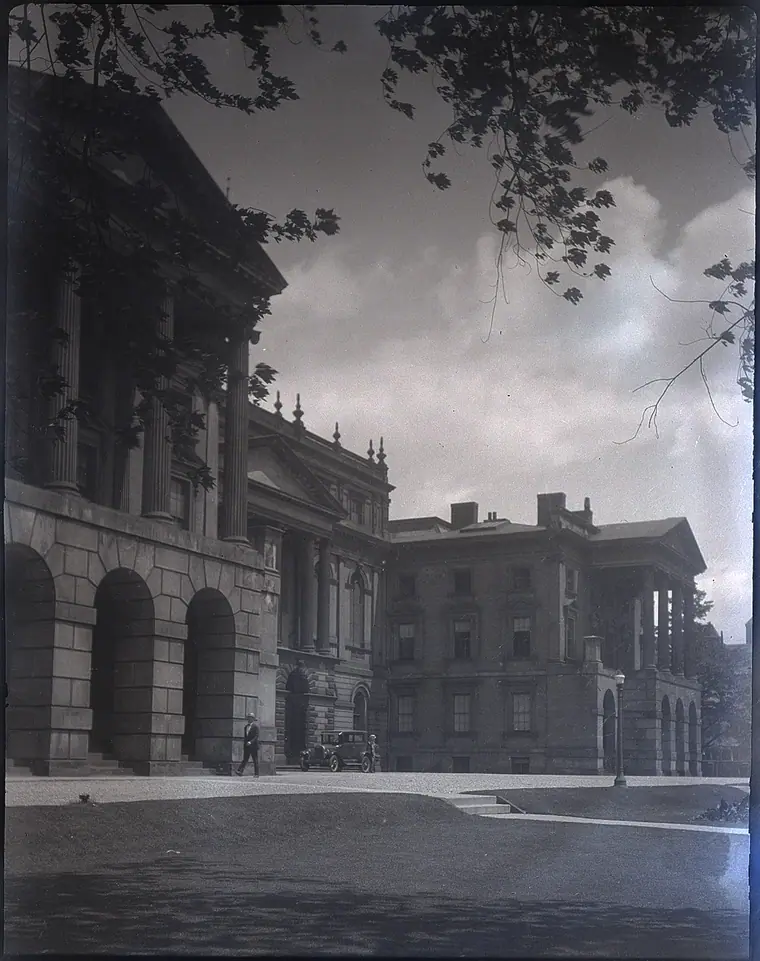
Charles Vance Millar was a Toronto lawyer and financier who died on October 31, 1926, with no wife, no children, and no close family. He was known during his life for elaborate practical jokes — leaving dollar bills on the sidewalk to watch respectable men stoop for them was a documented hobby.
His will opened with a line of unusual candour: that it was necessarily uncommon and capricious, because he had no dependants and could therefore do as he liked.
He then did as he liked. Among the bequests:
- Shares in a jockey club to a group of clergymen who had publicly opposed horse racing and gambling.
- Shares in a brewery to Protestant ministers in Toronto who were prominent supporters of temperance.
- His vacation home in Jamaica, in joint tenancy, to three men who were known to despise one another.
- And Clause Nine: the residue of his estate to the woman in Toronto who, in the ten years following his death, gave birth to the greatest number of children.
Ten years, and a Depression
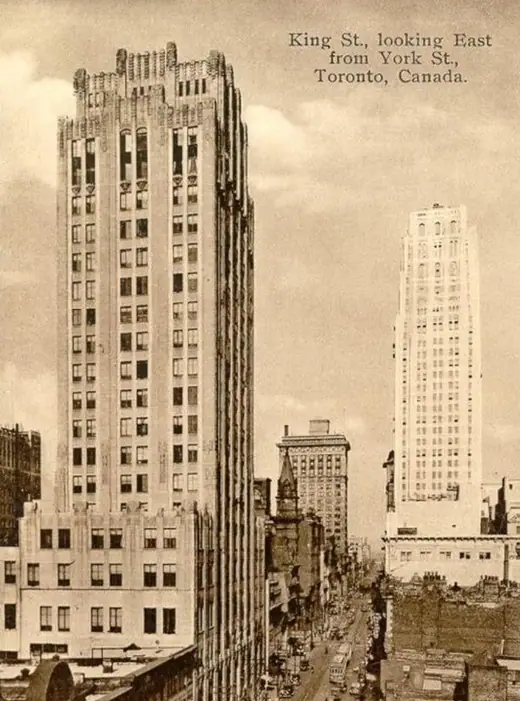
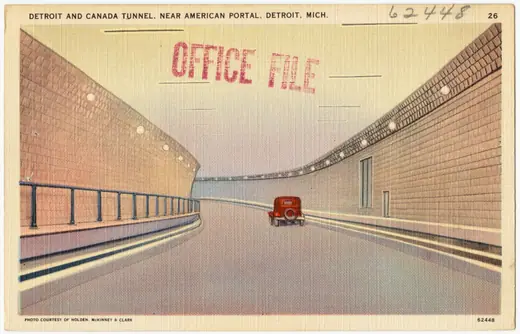
Nobody expected the residue to be worth much. Millar had, however, bought stock in the Windsor–Detroit tunnel shortly before his death, and its value rose sharply. By the end of the decade the residue was a genuine fortune.
That coincided with the worst economic collapse in modern history. What had been designed as a wry commentary on greed became, for families in Depression-era Toronto, a real and desperate proposition. Newspapers tracked the leading contenders by name. Reporters camped outside maternity wards. The press named it the Great Stork Derby.
The legal fights ran the whole ten years, and they were not abstract. The courts had to decide, on a record of individual family tragedies, what the word children meant in Clause Nine:
- Did stillbirths count?
- Did children born outside marriage count?
- Did children by different fathers count?
- Did a registered birth count if the registration was irregular?
Relatives challenged the clause as void for uncertainty and as contrary to public policy. The Ontario government considered escheating the money. In 1938 the Supreme Court of Canada upheld the will. Millar's joke was law.

Four mothers, nine children each
The contest closed on October 31, 1936. Four women tied with nine children each and shared the residue, receiving roughly $125,000 apiece — a life-changing sum in 1936, worth several million in today's terms.
Two other contenders received settlements of about $12,500 each rather than judgments — their claims turned on exactly the definitional questions above, and settling was cheaper for the estate than litigating whether a particular child counted.
The women who won were not, on the whole, wealthy. The money bought houses, educations, and stability for families who had spent the 1930s in the newspapers being counted.
Millar had wanted to prove something about greed. What he actually produced was a decade of public spectacle at the expense of poor women, and then, unintentionally, a small amount of genuine relief. Both of those things are true.
Timeline
- Oct 31, 1926Charles Vance Millar dies in Toronto with no wife or children. His will contains jockey club shares for anti-gambling clergy, brewery shares for temperance ministers, a jointly held Jamaican house for three enemies, and Clause Nine.
- Late 1920sMillar's Windsor–Detroit tunnel stock rises sharply. The residue becomes a substantial fortune.
- 1929–1936The Depression turns Clause Nine into a national news story. Newspapers track contenders by name. Courts litigate what "children" means.
- 1936Ontario considers legislation to void the clause and escheat the money.
- Oct 31, 1936The ten-year period closes.
- 1938The Supreme Court of Canada upholds the will. Four women with nine children each share the residue at roughly $125,000 apiece; two others take settlements of about $12,500.
What actually went wrong
- Nothing, legally — and that is the lesson. The clause was valid, enforceable, and enforced. Testamentary freedom is real, and it does not require your instructions to be wise or kind.
- A term the testator never defined. Ten years of litigation happened because Millar wrote "children" and left a court to work out whether that included stillbirths and children born outside marriage. Define your terms.
- No mechanism to decide disputes. No arbiter, no tiebreak, no procedure. So the Supreme Court of Canada became the tiebreak.
- No accounting for a change in value. A residue Millar assumed was trivial became a fortune. Any conditional gift should contemplate the possibility that the number grows by an order of magnitude.
Would it have gone that way in Florida?
Florida would enforce it — and Florida now lets you tie money up for a thousand years.
The instinct is that a court would strike this down as ridiculous. Courts generally do not. Testamentary freedom is the default, and a condition attached to a gift is enforced unless it runs into one of three walls: it is illegal, it violates public policy, or it violates the rule against perpetuities.
Illegality. Nothing about the Stork Derby was illegal.
Public policy. Florida courts void conditions that require or reward the commission of a crime, that require a beneficiary to obtain a divorce, or that impose a general restraint on marriage. A condition that rewards childbearing is not in that family. Uncomfortable is not the same as void.
Perpetuities. A contest that runs for ten years after death is not remotely close to a violation. Florida's §689.225 adopts the Uniform Statutory Rule Against Perpetuities, which validates an interest that vests within 21 years of a life in being — or, in the alternative, within 90 years. Ten years is nothing.
In fact Florida is now among the most permissive jurisdictions in the country on duration. Section 689.225(2)(f) extends the permissible period for trusts to 1,000 years for trusts created on or after July 1, 2022, up from the 360 years Florida allowed before that. A Millar-style stunt in modern Florida could be structured to run not for a decade but for centuries.
Which is worth pausing on. The eccentricity is legal. The vagueness is what costs money. If you want to condition a gift — on graduation, on sobriety, on a marriage, on children, on anything — define the term, name the person who decides whether it has been satisfied, set a deadline, and say what happens if nobody qualifies. Millar failed only that last part, and it cost his estate ten years of litigation for a joke.
One more Florida point. A conditional gift like this normally belongs in a trust, not in a will. A will disposes and closes; a trust can hold, evaluate, and pay over time, with a trustee whose whole job is to decide whether the condition was met. That is the difference between a clause and a machine.
What people ask us about this.

Further reading
Third-party sites. Not ours, not endorsed, not kept current by us — just the places worth going next.
Sources
- Great Stork Derby — Wikipedia
- The oddest things found in historical wills — History Facts
- The world's weirdest wills — Lovemoney
- The top 10 strangest inheritance stipulations — PR Newswire
- Fla. Stat. §689.225 — Statutory rule against perpetuities — The Florida Senate
If this is your situation
Free 30-minute consult. Plain English. No pressure.
Nearly every case in this archive turned on something ordinary — an unwitnessed page, a stale beneficiary line, a document nobody could find. Those are cheap to fix while you're alive and expensive to fix afterward.