Marilyn Monroe
She left three quarters of everything to her acting coach, outright, with no one named after him. He outlived her by twenty years. When he died it passed to his third wife — a woman Monroe never met — who turned it into a fifty-million-dollar brand.
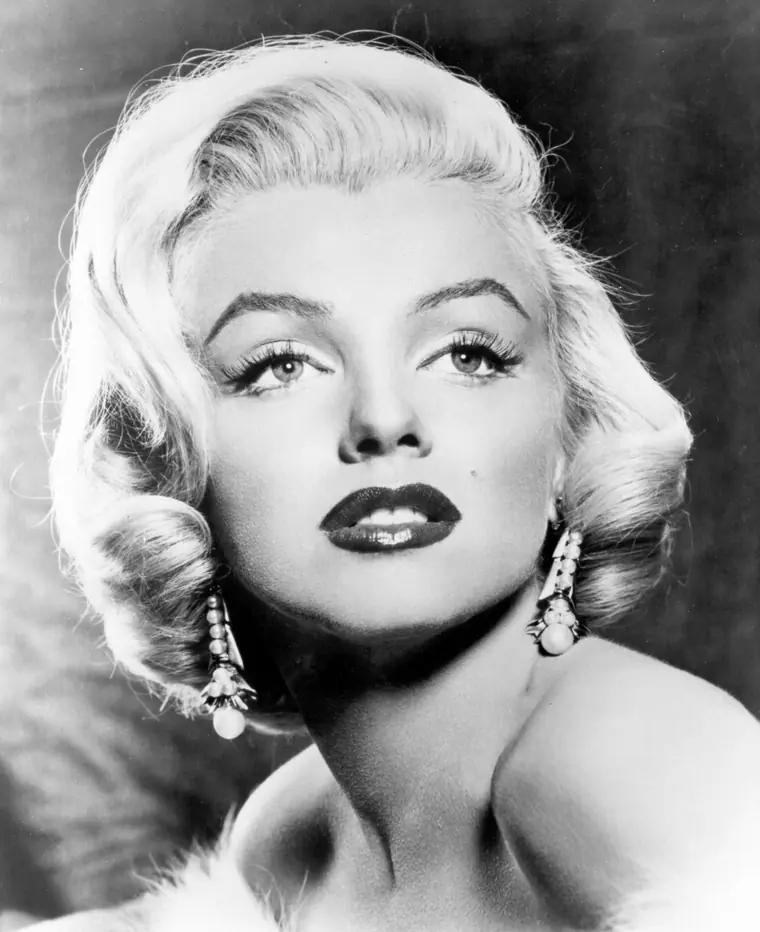
Marilyn Monroe died on August 5, 1962, in Brentwood, California. She was 36. Her will had been signed nineteen months earlier, in January 1961.
It was not a careless document. It made specific provision for the people she was closest to: a $100,000 trust to provide for her mother, Gladys Baker, and for Mrs. Michael Chekhov; $10,000 to her half-sister Berniece Miracle; her personal effects and clothing to her acting coach, Lee Strasberg, with the request that he distribute them among her friends and colleagues.
Then came the residuary clause — the paragraph that catches everything not otherwise given away. Twenty-five percent to her psychiatrist, Dr. Marianne Kris, to fund a psychiatric institution. Seventy-five percent to Lee Strasberg.
Outright. No trust. No successor. No instruction about what should happen if he died first, or last, or at all.
It passed to a woman she never met
Lee Strasberg did not die first. He died in February 1982, twenty years after Monroe, having remarried in the meantime.
Because Monroe's gift to him was outright and vested, it was simply part of his own estate when he died. It passed under his will to his widow — his third wife, Anna Strasberg, an actress who had never met Marilyn Monroe and had married Lee years after Monroe's death.
This is not a scandal. It is not a loophole. It is the ordinary, entirely predictable operation of a residuary gift made outright. Monroe wrote it that way. Everything that followed is downstream of one drafting choice made in 1961.
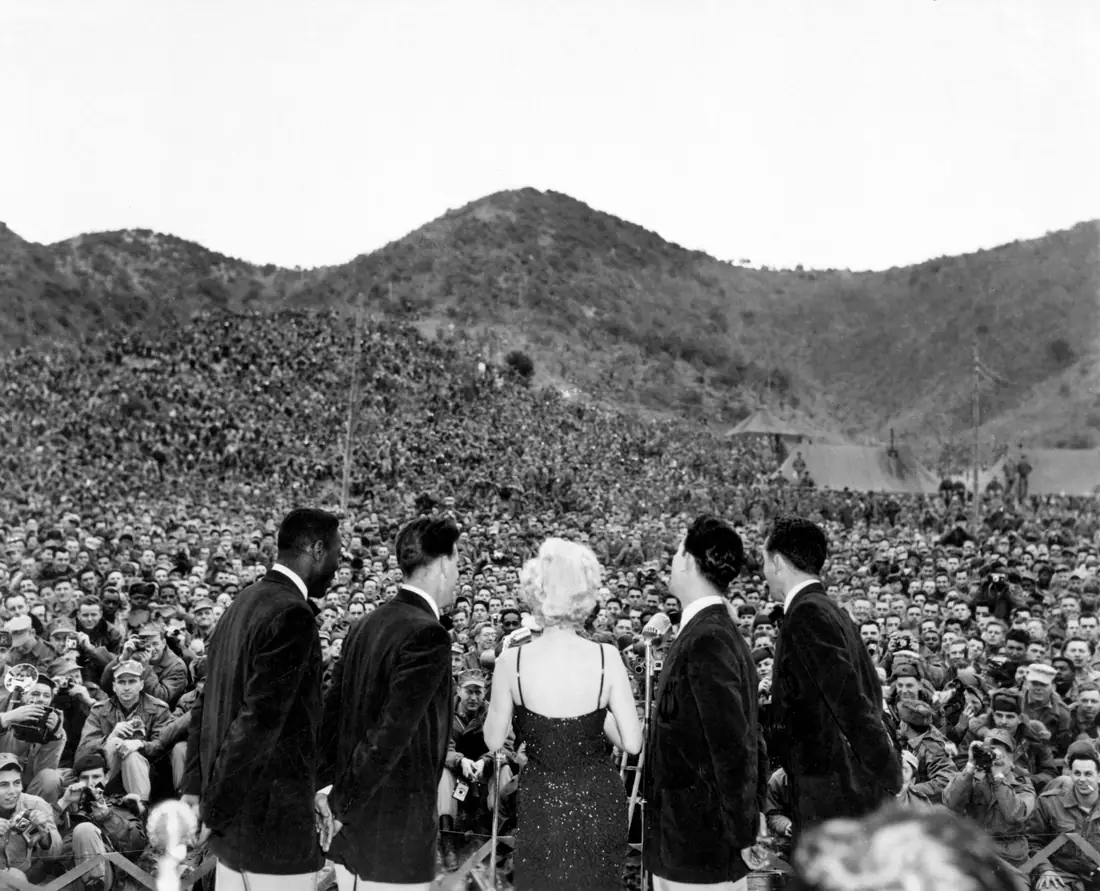
What the inheritance turned into
Anna Strasberg administered the Monroe estate for decades. She engaged CMG Worldwide and later Authentic Brands Group to license Monroe's name and image, and formed Marilyn Monroe LLC to hold the rights.
The licensing reached hundreds of companies — Mercedes-Benz, Coca-Cola, apparel, cosmetics, and a very long tail of merchandise. In 2010, Marilyn Monroe LLC was sold to Authentic Brands Group and NECA in a transaction reported at roughly $50 million.
So: an actress who died with a modest estate in 1962 generated tens of millions of dollars in posthumous value, and effectively none of it reached anyone she knew. Her mother's trust was funded. Her half-sister received $10,000. The residue built somebody else's business.
The estate argued itself out of the publicity rights
There is a final turn that estate lawyers enjoy more than they should.
For decades after her death, Monroe's estate had taken the position — for tax purposes — that she died domiciled in New York, not California. That saved money at the time.
When the estate later tried to enforce a post-mortem right of publicity against photograph archives, that old position came back. In 2012 the Ninth Circuit applied judicial estoppel: having claimed New York domicile to reduce taxes, the estate could not now claim California domicile to capture California's descendible publicity right. And New York, at the time of Monroe's death, recognised no descendible post-mortem right of publicity at all.
The estate had, in effect, argued its way out of owning the thing it most wanted to own. A position taken for one purpose in one decade decided a completely different question forty years later.
Timeline
- Jan 14, 1961Monroe executes her will. Residue: 75% to Lee Strasberg, 25% to Dr. Marianne Kris — both outright, with no successor beneficiaries.
- Aug 5, 1962Monroe dies in Brentwood, California, at 36.
- Feb 1982Lee Strasberg dies. Monroe's residuary gift, long since vested in him, passes under his own will to his widow Anna Strasberg.
- 1980s–2000sAnna Strasberg licenses Monroe's name and likeness through CMG Worldwide and later Authentic Brands Group, forming Marilyn Monroe LLC.
- 2010Marilyn Monroe LLC is sold to Authentic Brands Group and NECA in a transaction reported at roughly $50 million.
- 2012The Ninth Circuit applies judicial estoppel: having claimed New York domicile for tax purposes, the estate cannot claim California's post-mortem publicity right.
What actually went wrong
- An outright residuary gift with no successor named. One clause. Everything else follows from it. A gift in trust, with named remainder beneficiaries, would have kept the residue under Monroe's direction after Strasberg's death.
- No contingent beneficiaries anywhere. A will should always answer the question "and if that person is dead, then what?" Monroe's did not.
- No thought given to assets that did not exist yet. In 1961 nobody was valuing a dead actress's likeness. The residuary clause quietly swept up an asset class that would not be worth anything for another twenty years.
- A tax position taken without considering what else it decides. Claiming New York domicile saved money in the 1960s and cost the estate its publicity rights in 2012.
- Never updated. Nineteen months between signing and death, and a lifetime of changing relationships before that.
Would it have gone that way in Florida?
Identical result — Florida's antilapse statute would not have saved it. But Florida would have protected the likeness.
Two Florida questions here, and they come out opposite ways.
First, the residue. People often assume a statute rescues a gift like this. It does not, and it would not here for two separate reasons.
Florida's antilapse rule, Fla. Stat. §732.603, only operates when a beneficiary predeceases the testator — and even then only if that beneficiary was a grandparent or a descendant of a grandparent of the person who made the will. Lee Strasberg was neither. He was not related to Monroe at all, and he did not die first. He survived her by twenty years. The gift never lapsed; it vested and then travelled. No statute in any American state reaches back to recapture a vested outright gift once the recipient has survived you.
The only cure is drafting. Leave a residuary share in trust with named remainder beneficiaries, or name contingent takers outright — to Lee Strasberg, and if he does not survive me, to X; and on his death, whatever remains to Y. That is one sentence and it is the entire difference between this outcome and a different one.
Second, the likeness — and here Florida is genuinely better. The reason the estate lost in 2012 was that New York, in 1962, had no descendible post-mortem right of publicity. Florida has had one since 1967. Fla. Stat. §540.08 prohibits the unauthorized publication of a person's name, portrait, photograph, or likeness for commercial purposes, and it expressly extends the right for forty years after death, enforceable by a surviving spouse, surviving children, or a licensee or assignee.
So a Florida-domiciled Monroe would have owned a clear, statutory, descendible publicity right — the exact asset her estate spent decades litigating over and ultimately could not establish. Whether that right would have ended up with her family or with Anna Strasberg still depends entirely on the residuary clause, which brings us back to the sentence at the top.
The instruction: read your residuary clause. It is usually one paragraph near the end and it disposes of more of your estate than every specific gift combined. Ask two questions of it — who takes if this person dies before me, and where does it go after this person dies. If the document does not answer both, it is not finished.
What people ask us about this.
Further reading
Third-party sites. Not ours, not endorsed, not kept current by us — just the places worth going next.
Sources
- Anna Strasberg, widow of Lee Strasberg and inheritor of the Marilyn Monroe estate, dies at 84 — The Hollywood Reporter
- How a Venezuelan-born actress ended up owning the rights to Marilyn Monroe's estate — Celebrity Net Worth
- Marilyn Monroe's legacy: estate, will, and unintended consequences — Kantor LLP
- Who inherited Marilyn Monroe's estate and what happened next — LegalClarity
- Who owns the rights to Marilyn Monroe's image? — LegalClarity
- Fla. Stat. §732.603 — Antilapse; deceased devisee — The Florida Senate
If this is your situation
Free 30-minute consult. Plain English. No pressure.
Nearly every case in this archive turned on something ordinary — an unwitnessed page, a stale beneficiary line, a document nobody could find. Those are cheap to fix while you're alive and expensive to fix afterward.