The Anatomical Gift Act
Almost everything you write down about your death is advisory. A Florida anatomical gift is not. Once the donor has made it, the statute says a family member, guardian, or health care surrogate may not modify, deny, or prevent it — and after death it is irrevocable.
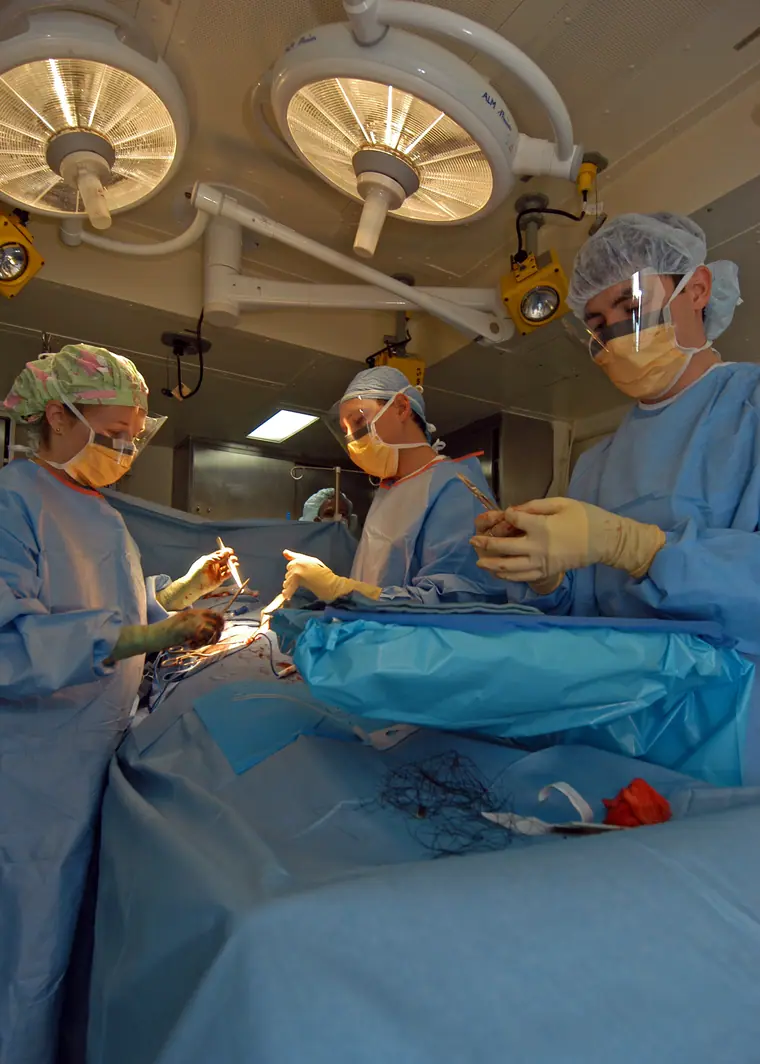
Most of what people write down about their own death turns out to be a suggestion. A will speaks only after probate opens. Funeral instructions in a will are usually read after the funeral. A letter of wishes is not binding on anybody. The pattern in estate law is that the decedent proposes and the survivors dispose.
The anatomical gift is the exception, and it is a sharp one. A gift of the body or its parts, validly made by the donor under Chapter 765, Part V of the Florida Statutes, is effective at death, is irrevocable after death, and — in the statute's own words — may not be modified, denied, or prevented by a family member, a guardian, a representative ad litem, or a health care surrogate.
That is an unusual amount of power to hand a document, and the reason is in the legislative declaration at §765.510: the Legislature wrote the part to encourage and aid transplantation and medical research by facilitating donations. The statute is not neutral. It is designed to make gifts easy to make and hard to unmake.
Florida's version descends from the Uniform Anatomical Gift Act of 1968, the model law the Uniform Law Commission has since revised twice, in 1987 and 2006. Florida's provisions originally sat inside the Probate Code — the history notes still show them as the former §732.910 — and were moved out into Chapter 765 in 2001. They are, in origin, probate law that stopped being probate law once everyone realised the timing did not work.
Six ways to make a gift, and one of them is your driver licence
Section 765.514 sets out how a donor makes an anatomical gift. It is deliberately generous about the form.
- A signed organ and tissue donor card.
- Registration in the state donor registry maintained under §765.5155.
- A designation on your Florida driver licence or ID card. Under §765.521, a notation that you intend to make an anatomical gift satisfies all requirements for consent to organ or tissue donation. This is not a hint to your family. It is the gift.
- A living will or other advance directive that expresses the wish.
- A provision in your will. The gift is effective at the testator's death without waiting for probate — and, remarkably, if the will is never probated or is declared invalid for testamentary purposes, the gift is still valid to the extent it has been acted on in good faith.
- Any other signed writing, which must be signed by the donor in the presence of two witnesses who sign in the donor's presence.
Read that fifth item again, because it is one of the strangest sentences in Florida law. A will that fails every formality of §732.502 — the wrong number of witnesses, the signature in the wrong place, a document a court refuses to admit — can still carry a valid anatomical gift, so long as somebody relied on it in good faith. The Legislature decided that a heart already transplanted should not be unwound by a probate ruling three weeks later. It is the only place in the Florida statutes where an invalid will does real legal work.
Section 765.513 governs who may receive the gift and for what: procurement organisations and accredited medical or dental schools for education, research, therapy, or transplantation; a named individual for therapy or transplantation; and the anatomical board or a nontransplant anatomical donation organisation for whole-body donation for medical or dental education or research. Where a donor lists purposes without ranking them, the gift is used first for transplantation or therapy if suitable, and only then for research or education. And any restriction on recipients by race, colour, religion, gender, national origin, age, physical disability, health status, marital status, or economic status is void and unenforceable.
The list that decides for you, in order
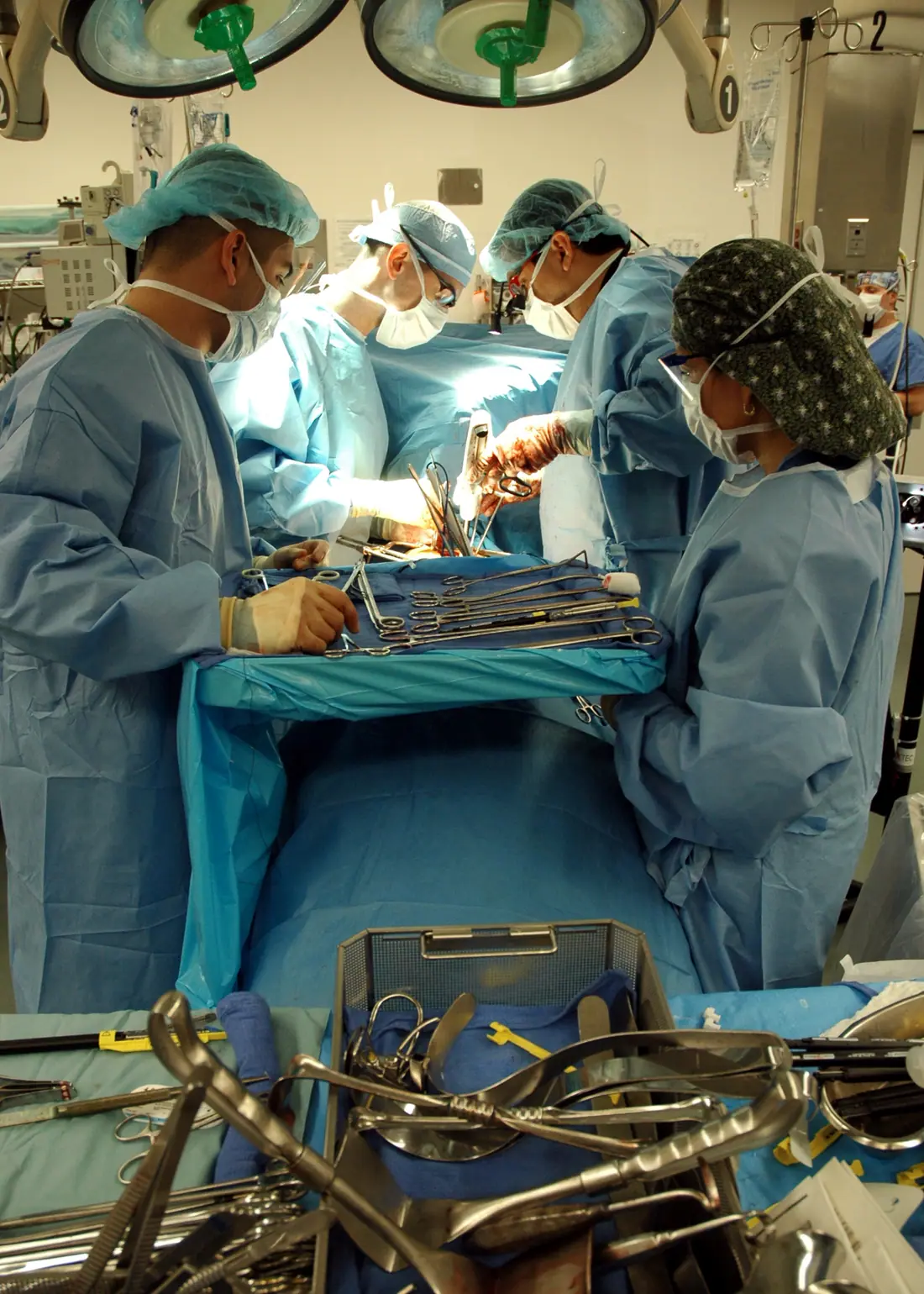
If the donor made no gift, §765.512 allows others to make one after death, in a fixed order of priority: the spouse; then an adult son or daughter; then either parent; then an adult brother or sister; then an adult grandchild; then a grandparent; then a close personal friend; then a court-appointed guardian of the person; then a representative ad litem appointed by the court.
A person lower on the list may not act while someone higher is available, and reasonable efforts must be made to locate the higher-priority person first. It is the same architecture as the disposition-of-remains hierarchy in §497.005 and the same architecture as intestate succession in §732.103 — Florida's standard answer to who decides is a list, in order, of relatives.
The critical distinction is what happens when the donor did speak. A gift made by others is a decision made on your behalf. A gift made by you is not: the statute forbids family members, guardians, representatives ad litem, and health care surrogates from modifying, denying, or preventing it. If you have checked the box on your licence, the conversation at the hospital is not about whether — it is about logistics.
Revocation, and why it is easier than the myth suggests
The corollary of a gift the family cannot revoke is that the donor must be able to, easily and at any time. Section 765.516 gives seven routes:
- A signed, witnessed statement delivered to the donee — two adult witnesses, at least one disinterested.
- An oral statement made before two people, one of them not a family member, and communicated to the family, the attorney, or the donee. It is effective only if the procurement organisation gets notice before any incision or invasive procedure begins.
- A statement to your attending physician during a terminal illness, which the physician must pass to the procurement organisation.
- A signed document found on your person.
- Removing your name from the donor registry.
- A later document that amends or contradicts the earlier gift.
- Destroying the document of gift with intent to revoke.
A gift made in a will can also be revoked the way a will is revoked, or by any of the routes above. The point of the list is that revocation should never require a lawyer, a form, or an appointment. It should be possible in a hospital room, out loud, in the last hours — which is why the oral-statement route exists and why it is tied to the moment of incision rather than to the moment of death.
What Florida does not offer is a way for anyone else to revoke on your behalf after you have died. That asymmetry is the whole design.
What the gift does not decide
A donor designation is not a disposition plan. Section 765.517 deals with what happens next: where the gift is of a part, the donee removes it and custody of the remainder vests in the surviving spouse, next of kin, or other person under an obligation to dispose of the body. Where the gift is of the whole body for research or education, the donee may authorise embalming and use of the body in funeral services, subject to the terms of the gift. Everything after that runs on §497.005, not on Chapter 765.
There are also practical gates the statute does not remove. Medical suitability is determined at the time — most registered donors never become donors, because the circumstances of death rule it out. Where a medical examiner has jurisdiction, recovery is coordinated with that investigation under §765.547 and, for corneas, §765.5185. And people acting in good faith under the part are protected from civil and criminal liability, which is what makes procurement organisations willing to act on a document at 3am.
One warning that belongs here rather than in a footnote. Whole-body donation for education and research is a different market from transplantation, with different players and much thinner oversight. Section 765.513 routes it to the anatomical board or a nontransplant anatomical donation organisation for a reason. If a company approaches a family offering free cremation in exchange for a body, that is the market being described — ask what organisation it is, what will be done, and what comes back.
Timeline
- 1968The Uniform Law Commission promulgates the Uniform Anatomical Gift Act. It is adopted across the United States.
- 1974Florida's anatomical gift provisions are carried into the new Probate Code, ch. 74-106, as former §732.910.
- 1984Chapter 84-264 amends the Florida provisions.
- 1987The Uniform Law Commission issues a revised Anatomical Gift Act.
- 2001Chapter 2001-226 moves Florida's anatomical gift law out of the Probate Code and into Chapter 765, Part V — alongside advance directives, not wills.
- 2006The Commission issues the Revised Uniform Anatomical Gift Act, the third version of the model law.
- PresentA Florida donor designation is made on a driver licence, in the state registry, on a donor card, in an advance directive, in a will, or in any signed writing witnessed by two people.
What actually went wrong
- Putting it only in the will. A will gift works under §765.514, but a will is not in anyone's hands during the hours that matter. Use the licence or the registry, and let the will be the backup.
- Assuming the family will be asked. Where the donor has made the gift, §765.512 says the family may not modify, deny, or prevent it. Relatives who expect to be consulted, and are not, take the surprise badly. Tell them now.
- Confusing donation with disposition. The gift decides what is recovered. It does not decide burial, cremation, or who arranges the funeral — that is §497.005, and it needs its own document.
- Registering and then never mentioning it. The oral revocation route in §765.516 exists because people change their minds. Nobody can act on a change of mind they were never told about.
- Signing something a stranger brought to the funeral home. Whole-body donation is a separate industry from transplantation. Ask which organisation, for what purpose, and what is returned.
Would it have gone that way in Florida?
This IS the Florida rule. Chapter 765, Part V — and the donor's own gift outranks the family completely.
There is no out-of-state case to compare here, because the Anatomical Gift Act is the answer rather than the question. What is worth setting out is how the Florida version differs from what most people assume it says.
A driver licence designation is a legal gift, not a preference. Section 765.521 provides that a notation on a Florida driver licence or identification card indicating an intent to donate satisfies all requirements for consent to organ or tissue donation. Combined with §765.512's bar on family members, guardians, representatives ad litem, and health care surrogates modifying, denying, or preventing a donor's gift, that box is the most legally durable thing on the card.
A written document works if two people watched you sign it. Under §765.514 any signed writing qualifies if the donor signs in the presence of two witnesses who sign in the donor's presence. That is a lower bar than §732.502 sets for a will, and there is no requirement that the witnesses be disinterested. If you want to record a specific limitation — organs but not tissue, transplantation but not research — a witnessed writing is the instrument, and it belongs with your advance directive rather than in your will.
A gift in a will survives the will's failure. Section 765.514 makes a testamentary gift effective at death without waiting for probate, and provides that if the will is not probated or is declared invalid for testamentary purposes, the gift remains valid to the extent it was acted on in good faith. Compare §733.207, where a lost or destroyed will requires two disinterested witnesses or a correct copy plus one, before it can do anything at all. Anatomical gifts run on a different clock and a different standard of proof, because they have to.
Nobody can undo it for you, and you can undo it almost any way you like. Section 765.516 offers seven routes to amendment or revocation, including an oral statement before two people, effective if the procurement organisation is notified before any incision. The asymmetry — hard for others to unmake, easy for you — is the deliberate architecture of the part.
And the honest caveat. The gift does not settle the funeral. Once a part is removed, §765.517 vests custody of the remainder in the surviving spouse, next of kin, or whoever is obliged to dispose of the body, and from that point the governing statute is §497.005. Where a medical examiner has jurisdiction under Chapter 406, recovery is coordinated with the investigation under §765.547 and, for corneas, §765.5185 — the investigation is not overridden by the gift.
The practical instruction, and it takes one afternoon. Register the gift where it will actually be found: the donor designation on your licence, or the state registry, or both. Then write a one-page witnessed statement covering the parts the box does not — whether you want tissue as well as organs, whether research and education are acceptable, and whether whole-body donation is or is not on the table — and keep it with your health care surrogate designation, not with your will. Then say it out loud to the person named as your surrogate, because they are the one standing in the corridor when the question is asked.
What people ask us about this.
Further reading
Third-party sites. Not ours, not endorsed, not kept current by us — just the places worth going next.
Sources
- Fla. Stat. §765.510 — Legislative declaration — The Florida Senate
- Fla. Stat. §765.512 — Persons who may make an anatomical gift — The Florida Senate
- Fla. Stat. §765.513 — Donees; purposes for which anatomical gifts may be made — The Florida Senate
- Fla. Stat. §765.514 — Manner of making anatomical gifts — The Florida Senate
- Fla. Stat. §765.516 — Donor amendment or revocation of anatomical gift — The Florida Senate
- Fla. Stat. §765.517 — Rights and duties at death — The Florida Senate
- Fla. Stat. §765.521 — Donations as part of driver license or identification card process — The Florida Senate
- Anatomical Gift Act — 1968, 1987, and 2006 versions — Uniform Law Commission
If this is your situation
Free 30-minute consult. Plain English. No pressure.
Nearly every case in this archive turned on something ordinary — an unwitnessed page, a stale beneficiary line, a document nobody could find. Those are cheap to fix while you're alive and expensive to fix afterward.