Howard Hughes
One of the richest men on earth died without a will. Roughly forty of them then appeared — including a handwritten one, left on a desk at church headquarters, giving a Utah gas-station owner $156 million for a ride he said he gave a stranger in the desert.
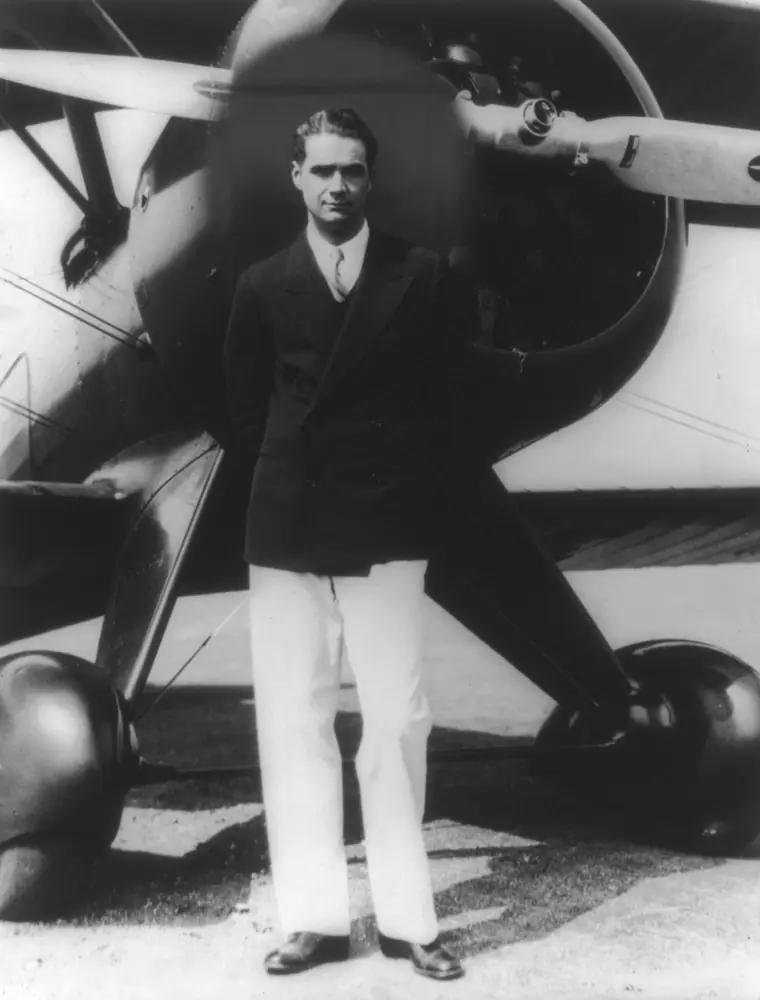
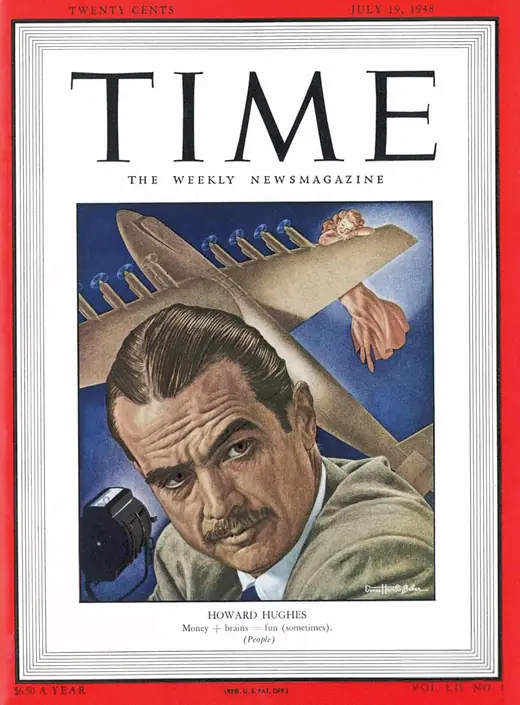
Howard Hughes died on April 5, 1976, aboard an aircraft flying from Acapulco to Houston. He was 70. He had been an aviator, a film producer, a defense contractor, and for the last two decades of his life a recluse of such total commitment that the FBI had to use fingerprints to confirm the body was his.
He left behind roughly two billion dollars and, so far as any court could ever establish, no valid will at all.
Nature abhors a vacuum. Within a few years, roughly forty documents purporting to be the last will of Howard Hughes had been produced. Every one of them was rejected.
Three handwritten pages, left on a desk
The most famous of the forty turned up in April 1976, on a desk at the headquarters of the Church of Jesus Christ of Latter-day Saints in Salt Lake City. Three pages, handwritten, dated March 19, 1968. It became known as the Mormon Will.
It divided the estate sixteen ways — among the LDS Church, the Boy Scouts, Hughes's ex-wives, his aides, the Hughes Medical Institute, and, in a clause nobody could explain, one sixteenth to a man named Melvin Dummar, a gas-station owner from Willard, Utah.
One sixteenth of Howard Hughes was worth roughly $156 million.
The man in the desert
Dummar's explanation was the reason this case became folklore rather than a docket number.
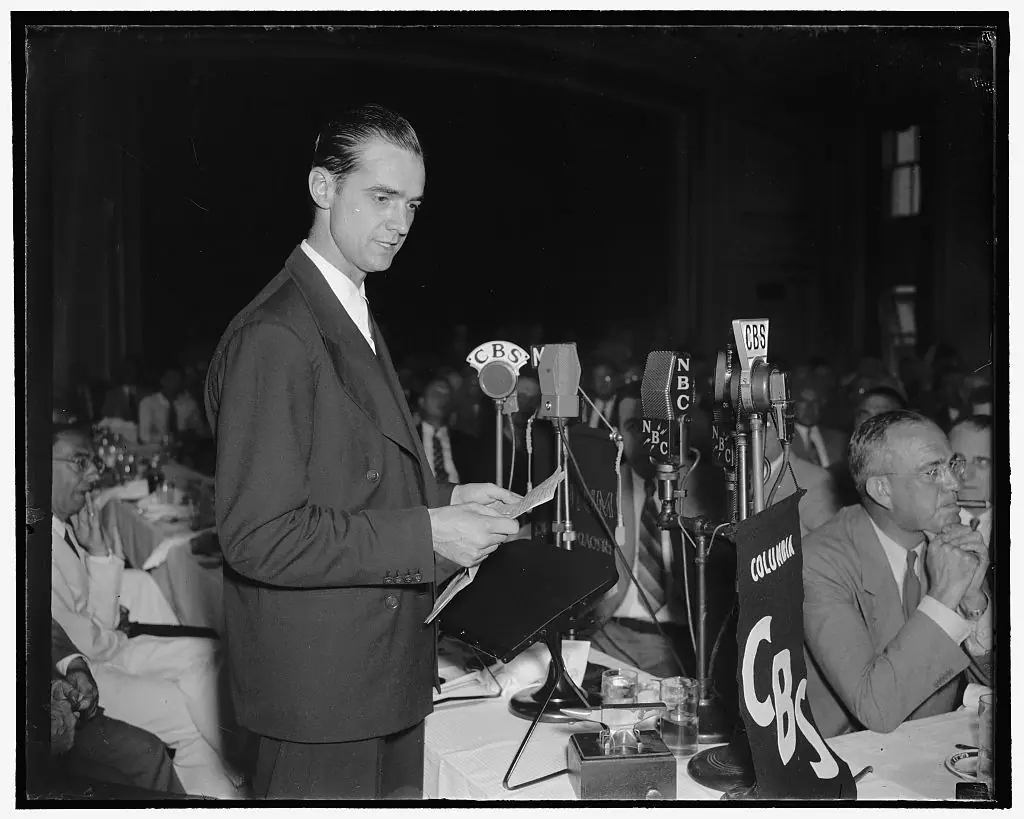
He said that one night in December 1967, driving through the Nevada desert near Lida Junction, he saw a disheveled man lying by the roadside. He stopped, put him in the car, and drove him to Las Vegas. Somewhere on the way the man said he was Howard Hughes. Dummar said he gave him a quarter and thought nothing more of it for eight years.
It is, on its face, absurd. It is also the kind of thing that occasionally happens. A Las Vegas jury heard the handwriting experts, the fingerprint evidence, and Dummar himself, and in June 1978 returned a verdict: the Mormon Will was a forgery.
Dummar spent the rest of his life insisting he had told the truth about the ride, whatever the truth about the document was. Reporting in the mid-2000s, and a book by a former FBI agent, revived the question; a later suit by Dummar was dismissed. He died in December 2018. Jonathan Demme made a film about him in 1980 — Melvin and Howard — and it won two Academy Awards, which is more than most probate litigants get.
Twenty-two cousins, seven years, two states fighting over the tax
With no valid will, the estate passed by intestacy — the statutory default that applies when a person has left the state to guess.
Hughes had no spouse at death, no children, no surviving parents, and no siblings. The law therefore climbed the ladder outward and upward until it found somebody, and what it found was roughly twenty-two cousins, several of whom had never met him. Distribution was not completed until 1983, seven years after he died.
There was a second fight running alongside it that had nothing to do with heirs. Texas and Nevada each claimed Hughes as a domiciliary for estate-tax purposes — a recluse who lived in hotel suites across several states is an inheritance-tax jurisdiction's dream and a nightmare to pin down. The states litigated it and ultimately divided the take.
The Hughes Aircraft Company went to the Howard Hughes Medical Institute, which is today one of the largest private funders of biomedical research in the world. It got there through corporate structure Hughes had built during life — not through anything he wrote down about what should happen after it.
Timeline
- Dec 1967Melvin Dummar later says he picked up a disheveled man in the Nevada desert who told him he was Howard Hughes.
- Mar 19, 1968The date written on the three-page handwritten document that becomes known as the Mormon Will.
- Apr 5, 1976Hughes dies aboard a plane en route to Houston at 70. Fingerprints are used to confirm identity.
- Apr 1976The Mormon Will appears on a desk at LDS Church headquarters in Salt Lake City.
- 1976–1978Roughly forty purported wills surface. None is admitted.
- Jun 1978A Las Vegas jury finds the Mormon Will to be a forgery.
- 1980Melvin and Howard is released; Mary Steenburgen wins the Academy Award for Best Supporting Actress.
- 1983The estate is distributed by intestacy to roughly 22 cousins, seven years after the death. Texas and Nevada divide the estate-tax claim.
What actually went wrong
- No will, at any price. Hughes could afford the finest estate planning in the world and had none of it. The estate paid for that omission seven years and an unknowable fortune in fees.
- Extreme privacy with no succession plan. Reclusiveness meant nobody could say with authority what he had signed, when, or where — which is exactly the condition under which forgeries thrive.
- No fixed domicile. Living in hotel suites in multiple states handed two revenue departments a genuine argument and the estate a second lawsuit it did not need.
- Nothing in writing for the people who mattered to him. Aides, ex-wives, and institutions he had spent decades with received what intestacy gave them, which was nothing.
Would it have gone that way in Florida?
The same. Florida would reject the Mormon Will faster — and Florida's intestacy ladder ends sooner.
Take the document first. The Mormon Will was entirely handwritten and unwitnessed — a holographic will. In Florida that is void on its face. Fla. Stat. §732.502(1) requires two attesting witnesses who sign in the presence of the testator and of each other, and §732.502(2) refuses to honor a holographic will even when it was validly executed somewhere that permits them. A Florida court would not have needed a jury or a handwriting expert. It would have needed the first paragraph of the statute.
Florida has a second gate for a document like this. §733.207 governs the establishment of a lost or destroyed will, and it is deliberately hard to get through: the content must be proved by the testimony of two disinterested witnesses, or by a correct copy plus one disinterested witness. A page that appears on a desk with no chain of custody and no witnesses does not clear that bar.
Now the intestacy. §732.103 sets Florida's ladder when there is no will and no surviving spouse: descendants first, then parents, then brothers and sisters and their descendants, then the estate splits between the paternal and maternal kindred — grandparents, then uncles and aunts and their descendants. If no blood kindred survive, the estate makes a final pass to the kindred of the decedent's last deceased spouse. Florida stops there. Unlike some states, the ladder does not climb indefinitely outward through ever more remote cousins; if nobody qualifies, §732.107 escheats the property to the state, where it is deposited for the benefit of the State School Fund.
Whether a Hughes-shaped estate would reach twenty-two cousins in Florida depends entirely on how those cousins descend. Descendants of grandparents qualify. More remote kindred generally do not. The practical effect is that Florida's default runs out sooner — which is another way of saying that in Florida, dying without a will is more likely to end with the state, not a stranger.
There is one more thing worth saying plainly. Hughes was among the wealthiest men alive and had access to any lawyer in the country. The reason his estate took seven years is not that estate law is complicated. It is that he never signed anything. The document is the whole job. Everything else in this archive is a footnote to that.
What people ask us about this.

Further reading
Third-party sites. Not ours, not endorsed, not kept current by us — just the places worth going next.
Sources
- Hughes will hoax — EBSCO Research Starters
- Melvin Dummar — Wikipedia
- Melvin and Howard: the saga of a billionaire's missing will — CBS 42
- Howard Hughes' will — Encyclopedia.com
- Dummar may have told truth after all — Deseret News, Feb 2005
- Fla. Stat. §732.103 — Share of other heirs — The Florida Senate
If this is your situation
Free 30-minute consult. Plain English. No pressure.
Nearly every case in this archive turned on something ordinary — an unwitnessed page, a stale beneficiary line, a document nobody could find. Those are cheap to fix while you're alive and expensive to fix afterward.