Henrietta Lacks
Cells taken during her cancer treatment in 1951 became the first human cell line that would not die. They are in laboratories on every continent. Her family found out twenty-two years later, and the question of what — if anything — her estate owns is still being litigated.
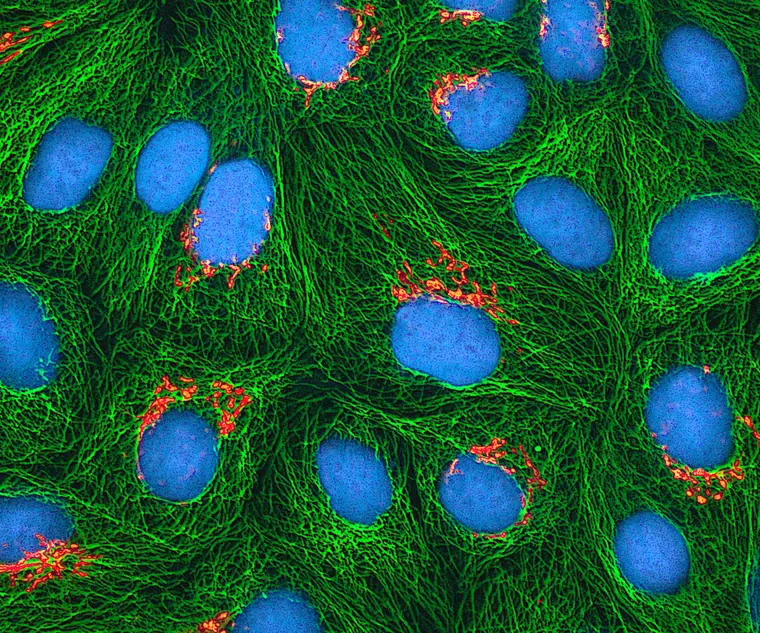
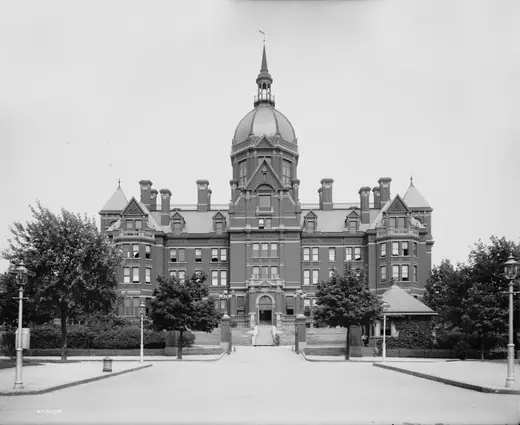
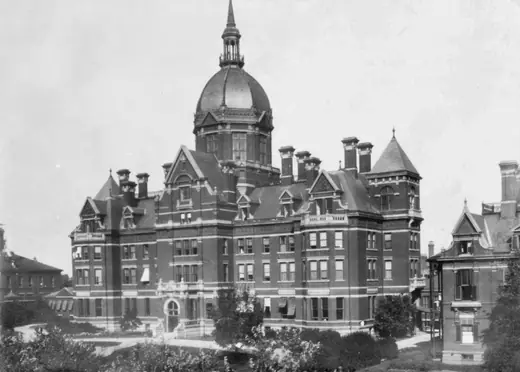
Henrietta Lacks was born in Roanoke, Virginia, on August 1, 1920, raised in Clover, and living outside Baltimore when she went to Johns Hopkins Hospital early in 1951 with a pain she could not explain. She was 31 and had five children. A biopsy in February found cervical cancer. She died on October 4, 1951.
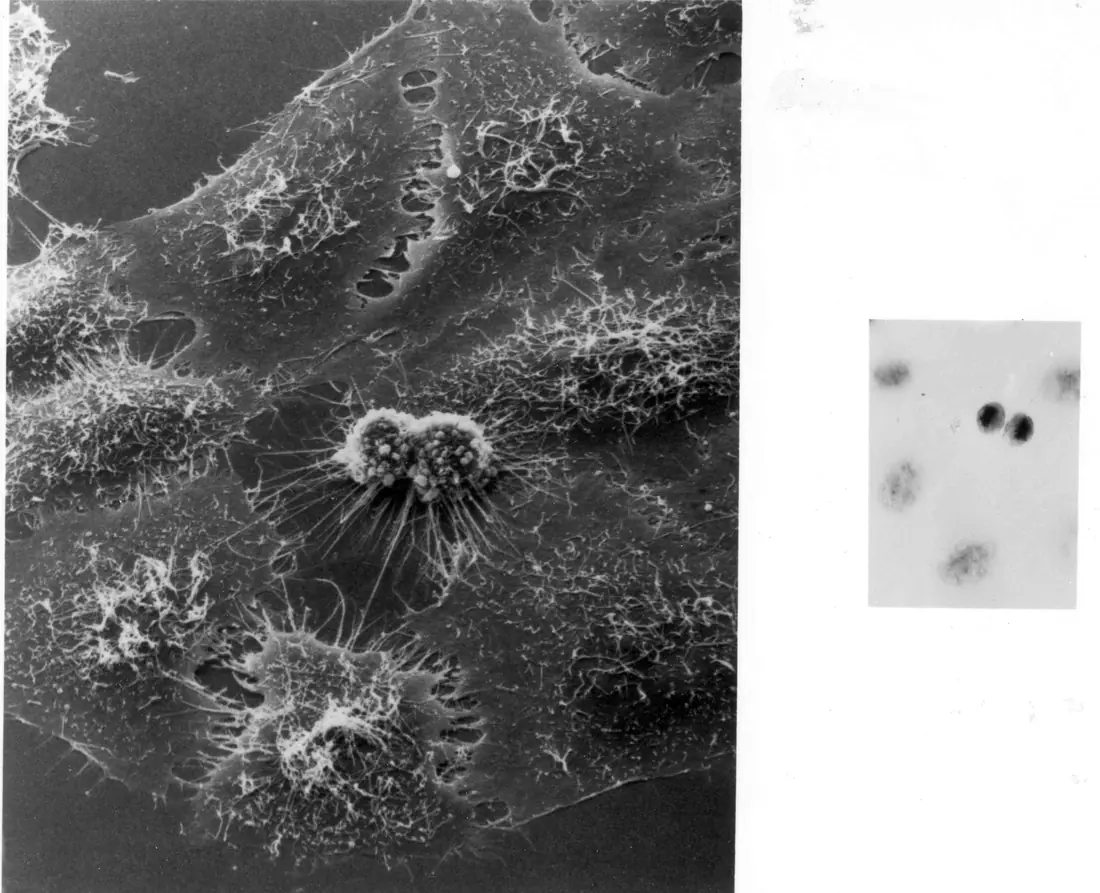
During her treatment, tissue was taken from the tumour and sent to a laboratory in the same hospital run by George Gey, who had spent years trying and failing to keep human cells alive outside the body. Hers did not die. They divided, and kept dividing, and are still dividing. The line was labelled HeLa and given away free to anyone who asked for it.
What followed is the largest single contribution any one person has made to biomedical research: the polio vaccine trials, chromosome counting, decades of cancer and virology work, and — because the cells are cheap, hardy, and everywhere — a great deal of the ordinary laboratory science underneath modern medicine. Companies grew them, sold them, and built products on them.
Nobody asked her. Nobody asked her family. In 1951 nobody was required to. And when her estate was opened, the most valuable thing associated with her name was not on any inventory — not because it was hidden, but because the law did not treat it as hers to leave.
Twenty-two years before anyone told the family
Her name was not a secret in the laboratory world, but it was not public either, and her family did not know. In 1973, researchers approached Lacks relatives for blood samples: HeLa had contaminated other cell cultures worldwide, and genetic markers from the family were wanted to identify the contamination. That is how the family learned the cells existed. A study using the family's genetic material was published in 1976.
The public learned it properly in 2010, when Rebecca Skloot published The Immortal Life of Henrietta Lacks, which spent years on the bestseller lists and was adapted for television in 2017.
Johns Hopkins has said publicly that it never patented the HeLa line and never sold or profited from it, and that consent practices in 1951 did not require what they require now. Both things can be true and still leave the family exactly where they were: outside a system built on their mother's cells, holding no legal interest in it.
The agreement that gave the family a seat instead of a share
In March 2013 a European research team published a full genome sequence of a HeLa cell line. A genome sequenced from Henrietta Lacks's cells is also, unavoidably, information about her living descendants. The data was withdrawn from open access after objections.
On August 7, 2013, the National Institutes of Health announced the NIH–Lacks Family Agreement, negotiated with family members. It paid nobody. What it did was change who decides.
- Controlled access. NIH-funded whole-genome HeLa data goes into the dbGaP database under controlled access rather than open download.
- A working group with the family on it. Applications for access are reviewed by a panel that includes two Lacks family representatives alongside scientists, clinicians, and bioethicists.
- Conditions on use. Applicants state the biomedical purpose, disclose any commercial plans, and acknowledge Henrietta Lacks and her family in resulting publications.
It is a short document with an unusual shape. There was no property right to enforce, so the parties built a governance structure instead — the family got a vote on access rather than a share of proceeds. Bioethicists have been arguing since about whether that is a precedent or a one-off.
Unjust enrichment, because there was no property claim to make
On October 4, 2021 — seventy years to the day after her death — the Estate of Henrietta Lacks sued Thermo Fisher Scientific in the U.S. District Court for the District of Maryland, case no. 1:21-cv-02524. The complaint pleaded a single count: unjust enrichment. Not conversion, not theft, not trespass to chattels. Unjust enrichment does not require the plaintiff to have owned the thing. It asks whether the defendant received a benefit it would be inequitable to keep.
The estate's position was that the origin of the HeLa line has been public knowledge for decades, and that continuing to commercialise it on those facts is what makes retention inequitable. The theory was built to go around the property problem rather than argue it.
No court has ruled on it. The parties settled on August 1, 2023, on confidential terms, before any decision on the merits.
Three more suits followed on the same theory. Novartis settled in February 2026, on confidential terms, in the same federal court. Viatris settled in March 2026 and the case was dismissed with prejudice; the 2024 complaint had alleged the company used HeLa cells in testing two of its drugs. The suit against Ultragenyx Pharmaceutical, filed August 10, 2023, remains pending as of August 2026, and counsel for the estate have said further complaints are possible.
The running total: four defendants, three confidential settlements, and no judicial ruling on whether the claim is good. The law has not moved. The settlements have.
Why an estate cannot inherit a cell line
The governing American authority is Moore v. Regents of the University of California, decided by the California Supreme Court in 1990, which held that a patient retained no ownership interest in cells removed from his body — while allowing a claim against his physician for failing to disclose a research and financial interest before the procedure. The remedy American law offers is about disclosure and consent, not ownership.
That is why the Lacks estate's viable claims have been equitable rather than proprietary, and why the 2013 agreement is a governance deal rather than a licence. It is also why the personal representative of an estate — in Florida as anywhere else — will never find tissue on the asset schedule.
There are two things an estate genuinely can hold in this neighbourhood, and both matter more than they sound: rights in information, where a statute creates them, and the name.
Timeline
- Feb 1951A biopsy at Johns Hopkins Hospital diagnoses cervical cancer. Tissue is taken and sent to George Gey's laboratory. No consent to research use is sought.
- Oct 4, 1951Henrietta Lacks dies in Baltimore at 31. The HeLa line, already growing, is distributed free to researchers who request it.
- 1973Researchers contact Lacks relatives for blood samples to help identify HeLa contamination of other cultures. The family learns the cells exist.
- 2010Rebecca Skloot publishes The Immortal Life of Henrietta Lacks.
- Mar 2013A full HeLa genome sequence is published, then withdrawn from open access after objections that it exposes the family's genetic information.
- Aug 7, 2013NIH announces the NIH–Lacks Family Agreement: controlled access through dbGaP, and a review panel including two family representatives.
- Oct 4, 2021The Estate of Henrietta Lacks sues Thermo Fisher Scientific in the District of Maryland. One count: unjust enrichment.
- Aug 1, 2023The Thermo Fisher case settles on confidential terms, with no ruling on the merits. A suit against Ultragenyx follows on August 10.
- Feb–Mar 2026Novartis settles in February; Viatris settles in March and is dismissed with prejudice. Both confidential. The Ultragenyx case remains pending.
What actually went wrong
- Consent was never sought, because nothing required it. The failure was structural rather than individual: in 1951 American medicine had no rule obliging anyone to ask a patient whether her tissue could be used in research.
- The family was told nothing for twenty-two years, and then only because researchers needed something from them.
- The law offered no property claim. Excised tissue is not the patient's property, so the estate's only route was equitable — unjust enrichment — a theory no court in this litigation has yet evaluated.
- Genomic publication reopened it. Sequencing HeLa published information about living relatives. Privacy law protects the living, so a consent gap from 1951 reached forward sixty years to touch them.
- Every resolution has been private. Three confidential settlements produce compensation without precedent. The next family in this position starts from the same place this one did.
Would it have gone that way in Florida?
Same result on the cells. Different result on the data — Florida is one of the few states that made genetic information the property of the person tested.
Florida has no statute making excised tissue the property of the patient, and no Florida decision departing from the general American rule. A Florida personal representative opening an estate today would not list the decedent's cells, tumour samples, or surgical specimens as assets, because they are not assets. If a Florida hospital's pathology department retains a specimen and a research programme later builds something on it, the estate's claim — if it has one — is not a claim in the specimen.
Where Florida is genuinely unusual is one step over, in genetic information. Section 760.40 provides that DNA analysis may be performed only with the express consent of the person tested, and that the results of DNA analysis are the exclusive property of the person tested and are confidential, not to be disclosed without that person's consent. That is a statutory property right, written in the language of ownership, over the information rather than the tissue. Very few states have an equivalent.
The statute speaks to the person tested. It does not say what becomes of that right when the person dies, and that is the honest gap: a personal representative asserting a §760.40 interest in a decedent's genetic data is making an argument, not invoking a settled rule. It is still a considerably better starting position than an estate in a state with no such statute at all.
The second thing a Florida estate really does own is the name. Section 540.08 protects against unauthorised commercial use of a person's name, portrait, or likeness, and the protection runs for 40 years after death, enforceable by the personal representative or by whoever the decedent designated. In a case shaped like this one, the family's most enforceable Florida right would concern use of the decedent's name and image — on a product, in advertising, in a laboratory's marketing — rather than the cells.
Two more Florida provisions belong in the frame. Chapter 765, Part V — the Florida Uniform Anatomical Gift Act — governs how a body or its parts may be given for transplantation, therapy, research, or education, and who may make that gift after death. It is the mechanism by which tissue lawfully leaves a body for science, and the mechanism Henrietta Lacks was never offered. And §497.005 sets the hierarchy of who may direct the disposition of remains, with the decedent's own written directions at the top of it.
The practical instruction, and it is two documents. First: when a hospital or laboratory hands you a consent form covering research use of leftover tissue, read the paragraph about future commercial use. That is the paragraph Moore made legally significant, and it is the only place your answer gets recorded. Second: if you have used a consumer DNA service, or have genetic testing in your medical file, put in writing who may access that data after your death and who may not, and give the instruction to the same person who holds your health care surrogate designation. Florida gives you an ownership right in that data while you are alive. Leaving no instruction is the surest way to make it unusable by anyone.
What people ask us about this.
Further reading
Third-party sites. Not ours, not endorsed, not kept current by us — just the places worth going next.
Sources
- The NIH–Lacks Family Agreement — National Institutes of Health
- Lacks v. Thermo Fisher Scientific Inc. — an extraordinary event from more than 70 years ago — Food and Drug Law Institute, Aug 2023
- Henrietta Lacks's estate settles with Novartis over the HeLa cell line — STAT, Feb 2026
- Novartis settles with woman's estate over use of her cells to advance medicine — CBS News, Feb 2026
- Viatris settles lawsuit over use of Maryland woman's cells in drug research — Insurance Journal / AP, Mar 2026
- Lacks v. Thermo Fisher Scientific Inc., 1:21-cv-02524 — docket — CourtListener, D. Md.
- Henrietta Lacks — biography — Encyclopaedia Britannica
- Fla. Stat. §760.40 — DNA analysis; confidentiality — The Florida Senate
If this is your situation
Free 30-minute consult. Plain English. No pressure.
Nearly every case in this archive turned on something ordinary — an unwitnessed page, a stale beneficiary line, a document nobody could find. Those are cheap to fix while you're alive and expensive to fix afterward.