Moore v. Regents
John Moore's spleen was removed at UCLA in 1976. His cells became a patented cell line worth commercial licences. In 1990 the California Supreme Court told him he had never owned them — but that his doctor should have told him what the surgery was also for.
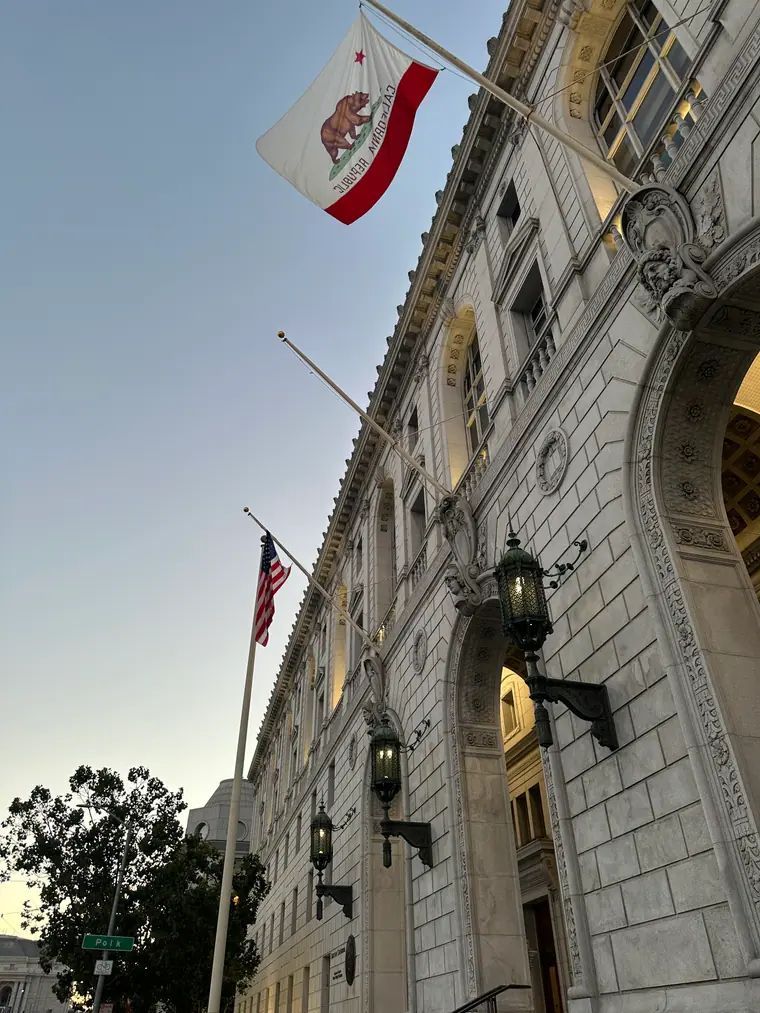
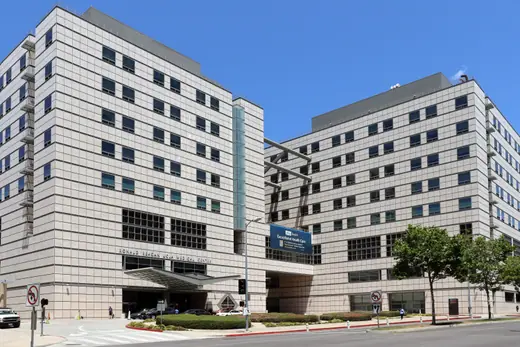
In October 1976, John Moore was diagnosed with hairy-cell leukemia and went to the UCLA Medical Center. His physician, Dr. David W. Golde, recommended removal of his spleen as medically necessary. Moore signed a consent form. The spleen came out.
The recommendation was, on the court's account of the pleadings, medically sound. What Moore was not told was that his cells were unusually productive of certain proteins, that Golde and a researcher, Shirley G. Quan, had formed plans to work on them, and that the research had no therapeutic connection to Moore's own treatment.
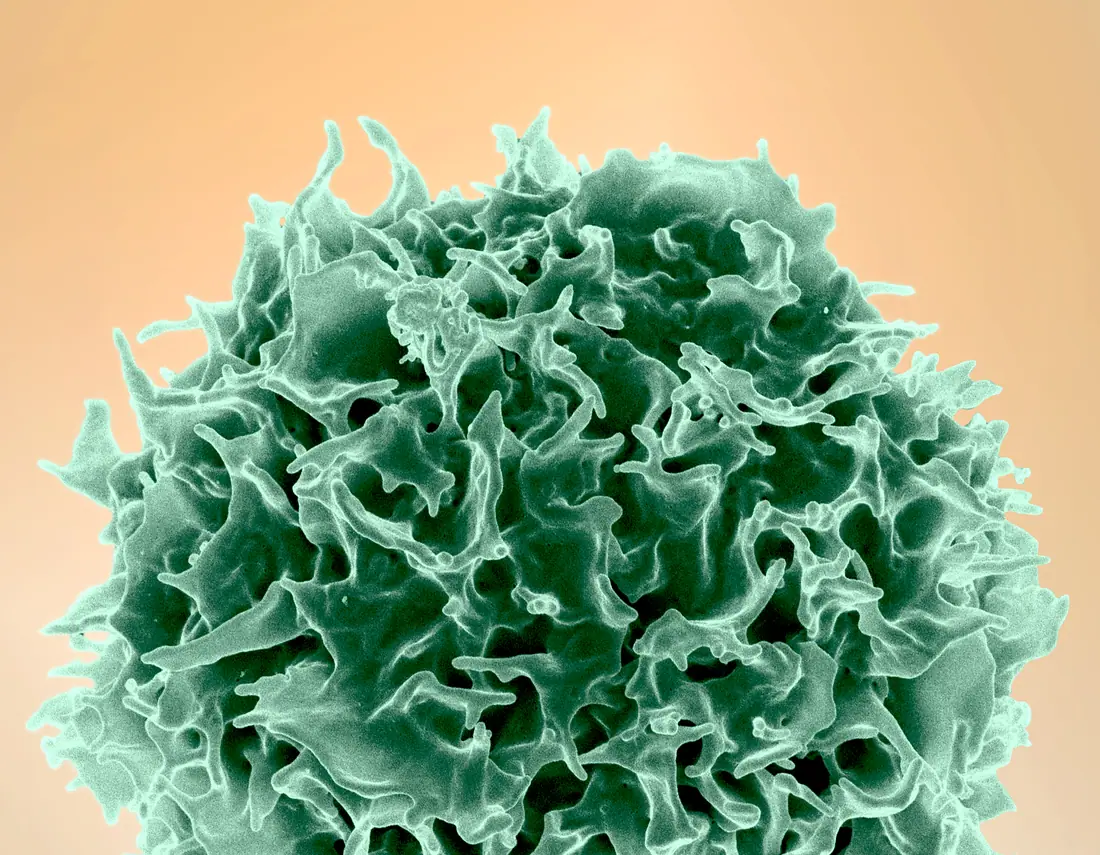
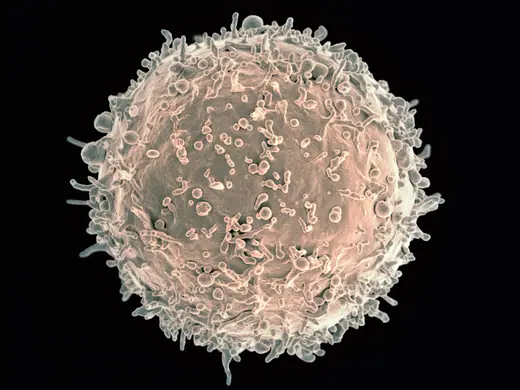
Between November 1976 and September 1983 Moore travelled back to Los Angeles repeatedly — he had moved to Seattle — to give further samples, believing each visit was part of his care. In that period the defendants established a cell line from his T-lymphocytes. The Regents applied for a patent on January 30, 1981. U.S. Patent No. 4,438,032 issued on March 20, 1984, naming Golde and Quan as inventors, and commercial agreements followed with Genetics Institute and Sandoz Pharmaceuticals.
Moore sued in 1984. His lead theory was conversion — the tort of wrongfully exercising dominion over another person's property. It is a strong claim, and the strength is the point: conversion is close to strict liability and does not much care whether the defendant knew.
No conversion, and three reasons for it
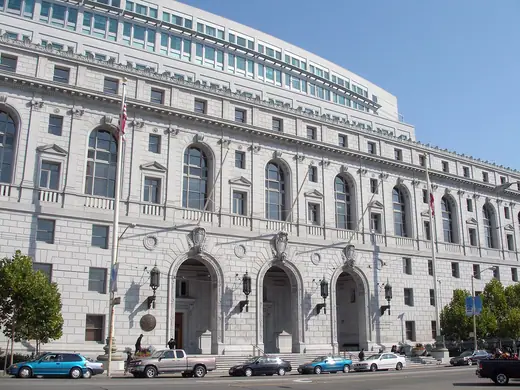
On July 9, 1990 the California Supreme Court, in an opinion by Justice Edward Panelli, held that the use of a patient's excised cells in medical research does not amount to conversion. Moore had no ownership interest to convert.
- No existing property right to point to. No reported decision had recognised a patient's continuing ownership of excised cells, and California's own statute cut the other way: Health & Safety Code §7054.4 required that human tissue removed in surgery be destroyed after scientific use. A thing you must have incinerated is not a thing you own in any ordinary sense — the statute, the court said, strips away so many of the rights normally attached to property that what is left cannot be assumed to be property at all.
- The patented cell line was not Moore's cells. Federal patent law rewards inventive effort, not the discovery of naturally occurring material. The court treated the cell line as factually and legally distinct from the tissue it came from, and the patent as an authoritative determination that it was a product of invention.
- Policy. Conversion is a strict-liability tort. Extending it to human tissue would expose every researcher who ordered a sample from a repository — thousands of cell lines, changing hands constantly — to liability for a consent failure they had no way to detect. The court was explicit that it did not want to put that risk into biomedical research.
That is the sentence the case is remembered for, and it has been followed almost everywhere since. In the United States, you do not own your tissue once it leaves you.
The duty to disclose, which is the real rule
Moore's other claims survived, and they are the working part of the opinion. The court held that a physician seeking a patient's consent must disclose personal interests unrelated to the patient's health — research or economic — that may affect the physician's medical judgment.
The logic is old and unglamorous. A patient is entitled to know whether the person recommending surgery has a reason to recommend it that has nothing to do with the patient. That is a fiduciary problem, not a property problem, and fiduciary law already had the tools.
The disposition tracked the split precisely. On remand the trial court was directed to overrule Golde's demurrers to the breach-of-fiduciary-duty and lack-of-informed-consent claims, to sustain the other defendants' demurrers with leave to amend on those counts, and to sustain every demurrer to the conversion count without leave to amend. Moore got a case. He did not get a property right.
The court divided on how satisfying that was. Justice Arabian, concurring, took the view that the deeper moral question — whether the human body should be a subject of commerce at all — was not the judiciary's to answer. Justice Broussard concurred in part and dissented in part. Justice Mosk dissented, arguing that a limited property interest could be recognised without creating a market in body parts, and that leaving the patient with nothing while everyone else in the chain held a legally protected interest was the wrong place to stop.
The architecture of consent, not ownership
Moore set the shape of American law on human biological material, and the shape is asymmetric. The researcher, the university, and the licensee all hold enforceable interests. The person the material came from holds a right to be told, and nothing else.
Everything downstream follows from that asymmetry. Federal research regulation — the Common Rule — is built on informed consent and institutional review, not on ownership or royalties. Biobank consent forms devote a paragraph to future commercial use precisely because Moore made that paragraph legally load-bearing. And when the Estate of Henrietta Lacks finally sued in 2021, it pleaded unjust enrichment rather than conversion, because Moore had closed the property route thirty-one years earlier.
The practical residue for anyone reading this in a hospital: the only moment your preferences about your own tissue are legally recorded is the moment you sign the form. After that, the law's answer is that it was never yours.
Timeline
- Oct 1976John Moore is diagnosed with hairy-cell leukemia and begins treatment at UCLA Medical Center under Dr. David Golde. His spleen is removed.
- Nov 1976 – Sep 1983Moore returns repeatedly for further samples, believing the visits are part of his treatment.
- Before Aug 1979A cell line is established from Moore's T-lymphocytes.
- Jan 30, 1981The Regents of the University of California file a patent application on the cell line.
- Mar 20, 1984U.S. Patent No. 4,438,032 issues, naming Golde and Quan as inventors. Commercial agreements follow with Genetics Institute and Sandoz.
- 1984Moore sues, pleading conversion among other counts. The trial court sustains demurrers; the Court of Appeal reverses in part.
- Jul 9, 1990The California Supreme Court holds there is no conversion claim, but that Moore stated claims for breach of fiduciary duty and lack of informed consent.
- 1991 onwardCourts and legislatures across the United States follow the property holding. Research regulation continues to be built on consent rather than ownership.
What actually went wrong
- The consent form did not cover what the surgery was also for. The operation itself was recommended on medical grounds. The undisclosed part was the research and economic interest sitting behind it.
- Seven years of follow-up visits. Each return trip was a fresh opportunity to disclose and a fresh failure to. The court treated the pattern, not just the first operation, as the pleading.
- The strong claim was the wrong claim. Conversion would have given Moore a share of the proceeds. It was also the claim most likely to frighten a court into refusing it, because of what it would do to every laboratory downstream.
- A patent that transformed the thing. Once the cell line was patented as an invention, the tissue it came from and the asset that made money were, legally, two different objects. That gap is where the ownership claim disappeared.
Would it have gone that way in Florida?
Same result. Florida would not recognise the property claim either — but Florida gives the consent claim a statute, a deadline, and a procedure most people miss.
Florida has no statute making excised tissue the property of the patient, and no Florida decision breaking from Moore. A Florida personal representative does not inventory a decedent's stored specimens, because they are not estate property. That is the boring half of the answer and it is settled.
The interesting half is the consent claim, which in Florida is not a free-floating tort. It runs through the Florida Medical Consent Law, §766.103. That statute protects a provider from a no-consent claim where the consent process met accepted medical standards and a reasonable person would have understood the procedure, the medically acceptable alternatives, and the substantial risks — or where the patient would reasonably have gone ahead anyway. A properly executed written consent raises a rebuttable presumption of valid consent, which is exactly the presumption a Moore-style claimant has to overcome.
Two procedural facts about Florida then do most of the work, and both are traps. A claim of this kind against a physician is a medical negligence claim, which means §766.106 applies: before suit, the claimant must serve a notice of intent and sit through a 90-day presuit screening period, during which the limitations period is tolled. Skip it and the case does not start. And §95.11(5)(c) gives two years from the incident or from discovery, with an outer repose of four years — extended to a maximum of seven where fraud, concealment, or intentional misrepresentation of fact prevented discovery.
Note what that repose does to a case built like Moore's. Moore's operation was in 1976; the patent issued in 1984; he sued in 1984. In Florida, an undisclosed research interest that surfaces eight years later lives or dies on the concealment extension — and even that stops at seven years. The Florida version of this case is won or lost on when the patient can show he found out.
Where Florida is genuinely ahead of Moore is on genetic information. §760.40 requires express consent for DNA analysis and makes the results of that analysis the exclusive property of the person tested. California in 1990 had a statute that pointed away from patient ownership; Florida has one that points toward it, for data if not for tissue. And Chapter 765, Part V — the Florida Uniform Anatomical Gift Act — is the lawful route by which tissue is given for research at all, with §765.512 setting out who may make that gift and providing that once a donor has made one, family members and surrogates may not modify, deny, or prevent it.
The practical instruction. Read the research-use paragraph of any surgical or biopsy consent form before you sign it, and if you want to limit future commercial use of your tissue, strike it there — that form is the entire legal record of your answer. If you want to donate tissue for research, do it affirmatively under Chapter 765 rather than leaving it to a consent form's default. And if you believe a disclosure was withheld, get advice early: the two-year clock and the mandatory 90-day presuit notice under §766.106 are the two ways these claims most often end before they begin.
What people ask us about this.
Further reading
Third-party sites. Not ours, not endorsed, not kept current by us — just the places worth going next.
Sources
- Moore v. Regents of the University of California, 51 Cal. 3d 120 (1990) — opinion text — Caselaw Access Project, Harvard Law School
- Moore v. Regents of the University of California — case history and separate opinions — Wikipedia
- Fla. Stat. §766.103 — Florida Medical Consent Law — The Florida Senate
- Fla. Stat. §766.106 — Notice before filing action for medical negligence — The Florida Senate
- Fla. Stat. §95.11 — Limitations other than for the recovery of real property — The Florida Senate
- Fla. Stat. §760.40 — DNA analysis; confidentiality — The Florida Senate
- Fla. Stat. §765.512 — Persons who may make an anatomical gift — The Florida Senate
If this is your situation
Free 30-minute consult. Plain English. No pressure.
Nearly every case in this archive turned on something ordinary — an unwitnessed page, a stale beneficiary line, a document nobody could find. Those are cheap to fix while you're alive and expensive to fix afterward.