Jimmy Buffett
He left $275 million in a trust for his widow and named her to run it alongside his longtime financial adviser. Neither can act without the other, neither can remove the other, and as of 2026 they are still in court in Palm Beach County.
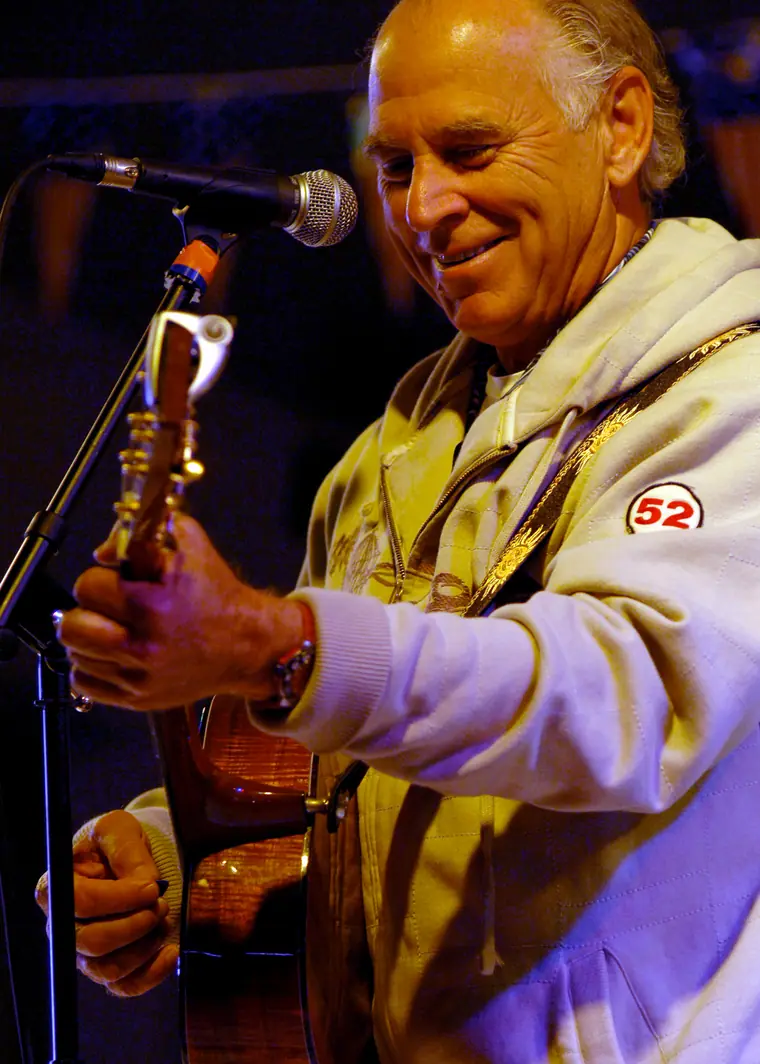
Jimmy Buffett died on September 1, 2023, at 76. He had turned one song about a frozen drink into a business — restaurants, hotels, retirement communities, a licensing empire — and he did what careful people are told to do: he put it in a trust rather than a will, so that his widow would be provided for without a probate court supervising every step.
The trust holds roughly $275 million for the benefit of his wife, Jane Buffett. And he named two co-trustees to administer it: Jane herself, and Richard "Rick" Mozenter, a financial adviser who had worked with him for decades.
Two co-trustees. Neither able to act alone. Neither able to remove the other. It is a structure that works beautifully right up until the two people stop agreeing, at which point it becomes a machine with no off switch.
June 2025: both sides move to remove the other
In June 2025, roughly twenty-one months after the death, the arrangement broke in public and in two states at once.
Jane Buffett filed in Palm Beach County, seeking Mozenter's removal as co-trustee. Her petition alleges, among other things, that he had been "openly hostile and adversarial" toward her, that he was collecting roughly $1.7 million a year in fees, and that a $275 million trust was generating under $2 million in annual income for its beneficiary — a return she characterized as inadequate for a portfolio of that size.
Mozenter filed to have Jane removed as co-trustee, alleging that she had interfered with the administration of the trust.
Both filings are petitions. Neither is a finding. What they establish for certain is only this: the two people Jimmy Buffett chose to work together had reached a point where each was asking a court to fire the other.

Mediation, ordered
Palm Beach County Circuit Judge Charles Burton ordered the parties to mediation — in the court's phrasing, so that each party would fully understand their fiduciary duties with regard to the administration of the trust.
That is a pointed instruction and worth reading carefully. A co-trustee is not a representative of the person who nominated them. Both co-trustees owe their duties to the beneficiary and to the trust, not to each other and not to their own view of what the settlor would have wanted. Ordering two warring fiduciaries into a room to be reminded of that is a judge trying to convert a lawsuit back into an administration.
It did not end there. As of April 2026 the litigation was continuing, with a further filing by Jane Buffett alleging mismanagement of family trusts and breach of fiduciary duty. The matter remains open as this page is written.
Why a marital trust makes this worse, not better
It is tempting to read this as a personality clash. The more useful reading is that the structure was always going to amplify one.
A marital trust of this kind typically pays the surviving spouse income for life, with the remainder passing to children or charity afterward. That design puts the widow and the remainder beneficiaries in permanent, built-in tension: income beneficiaries want yield; remainder beneficiaries want growth. A trustee investing for one is, by definition, disappointing the other. The duty of impartiality under a trustee's general obligations is not a tiebreaker — it is a tightrope.
Now add a co-trustee who is also the professional being paid to manage the assets, and a co-trustee who is also the person living on the income. Every investment decision is simultaneously a fee question and a lifestyle question. There is no neutral choice available.
The fix is not a better personality. The fix is a clause.
Timeline
- Sep 1, 2023Jimmy Buffett dies at 76. His estate plan places roughly $275M in trust for his wife, Jane, with Jane and adviser Richard Mozenter as co-trustees.
- Jun 2025Jane Buffett petitions in Palm Beach County to remove Mozenter, alleging hostility, roughly $1.7M/yr in fees, and inadequate income from the trust. Mozenter separately petitions to remove Jane, alleging interference.
- Mid 2025Palm Beach County Circuit Judge Charles Burton orders the parties to mediation so each understands their fiduciary duties.
- Jul 2025Further removal filings by Jane Buffett.
- Apr 2026Litigation continues. A new filing alleges mismanagement of family trusts and breach of fiduciary duty. No merits findings reported.
- Aug 2026Matter open. Estate resources continue to be consumed by the dispute.
What actually went wrong
- Two co-trustees, no tiebreaker. Even-numbered fiduciaries with equal power and no deadlock provision is a design that requires perpetual agreement from people who have no obligation to agree.
- No trust protector. Nobody held the power to remove and replace a trustee without going to court. That single omission is the difference between a letter and a lawsuit.
- A professional co-trustee whose fee is set by the trust he administers. The person deciding the investment strategy is also the person whose compensation the strategy supports. That is not misconduct; it is a conflict that should have been structurally managed.
- No stated investment mandate. Where the trust does not say how to balance current income against long-term growth, every allocation becomes arguable and the argument has no ending.
Would it have gone that way in Florida?
This is happening in Florida, under Florida law — and Florida gave the drafter every tool needed to prevent it.
The Florida Trust Code has direct answers for all three of the structural problems above. None of them were used.
Deadlock. Under Fla. Stat. §736.0703, when there are two or more co-trustees they act by majority — and where co-trustees cannot reach a decision, the statute contemplates court involvement or action by the remaining trustee in limited circumstances. Two trustees have no majority. Naming three, or naming a tiebreaking third for disputes only, converts a stalemate into a vote.
Removal without litigation. §736.1406 authorizes a trust to give a third party power over trustee decisions — the mechanism behind what practitioners call a trust protector. Give a named, independent person the power to remove and replace a trustee, and a dispute of this shape ends with a signature rather than a docket. §736.0706 is the fallback: a court may remove a trustee for serious breach, lack of cooperation among co-trustees that substantially impairs administration, or unfitness. Note that the statute expressly names co-trustee non-cooperation as a ground — Florida anticipated exactly this.
Fees. §736.0708 entitles a trustee to compensation reasonable under the circumstances, and lets the court adjust it even where the trust specifies an amount. As Florida's own [Rauschenberg case](/archive/robert-rauschenberg-trustee-fees) settled, that reasonableness is measured by the West Coast Hospital factors, not by hours. A stated fee schedule in the instrument would have made a $1.7M annual figure a term rather than an allegation.
Information. §736.0813 requires a trustee to keep qualified beneficiaries reasonably informed and to provide annual accountings. Many trust fights are really information fights that curdled. Regular, complete accountings are cheap; discovery is not.
The plain lesson, for anyone in Palm Beach or Sarasota with a large marital trust: name an odd number of trustees or a tiebreaker, appoint a trust protector with removal power, state the fee, and state the investment mandate. Four clauses. They cost a fraction of one month of this litigation.
What people ask us about this.


Further reading
Third-party sites. Not ours, not endorsed, not kept current by us — just the places worth going next.
Sources
- Battle over Jimmy Buffett's $275 million estate highlights risks of family trusts — CNBC, Jun 13 2025
- Battle over Jimmy Buffett's $275 million estate — NBC News, Jun 2025
- Jimmy Buffett estate lawsuit: judge orders mediation between widow and adviser — Mediate.com
- Jimmy Buffett estate battle: co-trustees clash over $275M trust — WealthManagement.com
- Jimmy Buffett's widow Jane says co-trustee 'wasting' money over suit — Yahoo News
- Fla. Stat. Ch. 736 — Florida Trust Code — The Florida Senate
If this is your situation
Free 30-minute consult. Plain English. No pressure.
Nearly every case in this archive turned on something ordinary — an unwitnessed page, a stale beneficiary line, a document nobody could find. Those are cheap to fix while you're alive and expensive to fix afterward.