Hodel v. Irving
Congress decided that fractional interests in Indian land worth a few dollars would simply stop passing to heirs. The Supreme Court held that taking away the right to leave something to your family is itself a taking — the first time the Court said so.

Almost every case in this archive is a fight about who gets what. This one is about something more basic, and it is the reason the rest of them are possible: is the right to leave your property to somebody actually a right?
Until 1987 the answer was not obvious. Courts had said for a century that inheritance is a creature of statute — the legislature gives it, and what the legislature gives it can take away. Then Congress took it away from a small number of Oglala Sioux families, and the Supreme Court said no.
The property at issue was almost worthless. That is the point. The interests the government wiped out were valued at roughly $100, $1,816, and $2,700 across three estates — forty-one fractional shares in reservation land in South Dakota. Nine Justices agreed the government could not do it, and in the process built the constitutional floor under everything a will does.
A hundred years of arithmetic
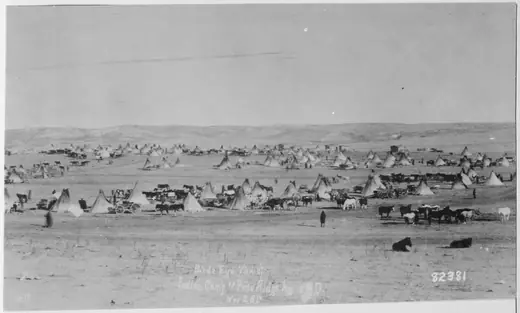
The problem started with the General Allotment Act of 1887, the Dawes Act. Reservations held communally were carved into individual allotments — typically 80 or 160 acres — and assigned to individual tribal members. The United States held the title in trust. The allottee could use the land and could pass it on, but could not freely sell it.
Then the allottees died. Their interests descended, undivided, to all of their heirs. Those heirs died. The interests descended again. No one could easily sell, so nothing ever consolidated. Every generation multiplied the denominator.
By the 1960s the arithmetic had become genuinely absurd, and the Court said so by quoting a study reprinted in a Senate hearing. Tract 1305 was forty acres. It produced $1,080 a year and was valued at $8,000. It had 439 owners. One-third of them received less than five cents a year. Two-thirds received less than a dollar. The common denominator required to express the shares was in the billions. The Bureau of Indian Affairs estimated the cost of administering that single tract at $17,560 a year — more than twice what the land was worth.
Congress had ended allotment in 1934 with the Indian Reorganization Act. It had not undone the fractionation, and by the 1980s roughly 12 million acres of trust land sat under this problem. In January 1983 it passed the Indian Land Consolidation Act, and §207 of that Act was the blunt instrument.
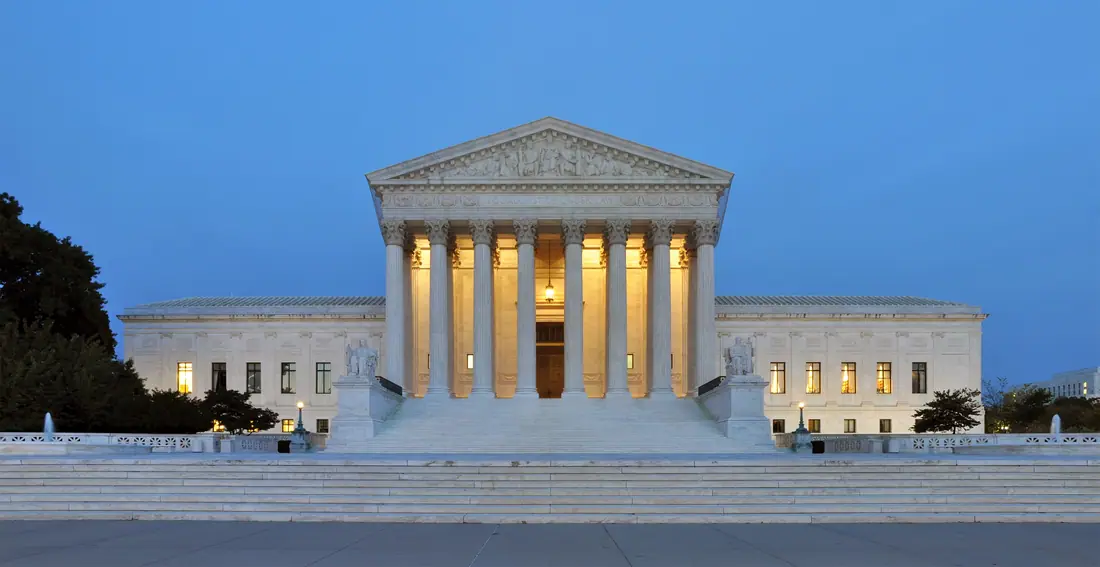
The provision that simply stopped inheritance
Section 207 said that an undivided fractional interest in trust land would not descend by intestacy and could not be devised by will if it represented less than 2 percent of the tract and had earned its owner less than $100 in the preceding year. Instead it escheated to the tribe.
There was no compensation. There was no notice requirement. There was no ability to opt out by leaving the interest to a co-owner, to a child, or to anyone else. On the owner's death the interest was gone.
The appellees were Mary Irving, Patrick Pumpkin Seed, and Eileen Bissonette, members of the Oglala Sioux Tribe whose relatives died in 1983 after the Act took effect. Between them the estates held 41 escheatable interests. Bissonette appeared for the five minor children of Mary Poor Bear-Little Hoop Cross, whose estate alone contained 26 of them, worth roughly $2,700 in total.
The District of South Dakota upheld the statute. The Eighth Circuit reversed. The Secretary of the Interior took it up, and the case reached the Supreme Court as Hodel v. Irving.
Justice O'Connor, and one essential stick
Justice O'Connor delivered the opinion of the Court, joined by Chief Justice Rehnquist and Justices Brennan, Marshall, Blackmun, Powell, and Scalia. Justice Brennan concurred separately, joined by Marshall and Blackmun. Justice Scalia concurred, joined by Rehnquist and Powell. Justice Stevens, joined by Justice White, concurred in the judgment on other grounds. Nobody dissented.
The Court did not dispute that Congress had a serious problem and a legitimate purpose. The fractionation was real, the administrative burden was real, and consolidating the land served the tribes. Under the usual takings analysis the economic loss to any individual owner was small and there was no meaningful interference with investment-backed expectations.
What sank the statute was the third factor. In the Court's words, “the character of the Government regulation here is extraordinary.” Citing Kaiser Aetna v. United States, O'Connor wrote that §207 “amounts to virtually the abrogation of the right to pass on a certain type of property — the small undivided interest — to one's heirs.”
Then the sentence that gets quoted in every trusts-and-estates casebook: “In one form or another, the right to pass on property — to one's family in particular — has been part of the Anglo-American legal system since feudal times.”
The Court distinguished Andrus v. Allard, the 1979 eagle-feather case in which a ban on selling artifacts survived because the owners kept every other use. Here, the Court said, the difference is that both descent and devise are completely abolished — and abolished even where allowing the interest to pass would not have worsened the fractionation the statute existed to cure.
The owners kept full beneficial use of the land during their lives and could still convey it while alive. That was not enough. Taking the last day of ownership is still taking something.
Buying the fractions instead of cancelling them
The fractionation problem did not go away because the Court struck down the statute. It got worse. What eventually moved it was not a taking but a purchase.
The Cobell v. Salazar litigation over the government's administration of Indian trust accounts settled in 2009 for $3.4 billion, confirmed by Congress in the Claims Resolution Act of 2010. Of that, $1.9 billion funded a Trust Land Consolidation Fund — the Land Buy-Back Program for Tribal Nations, which ran from December 2012 to November 2022 and paid landowners fair market value for fractional interests they chose to sell.
By the program's close the Interior Department reported roughly $1.69 billion paid out, more than a million fractional interests acquired, and approximately a million acres restored to tribal trust ownership across dozens of reservations.
The constitutional lesson and the practical one point the same way. You can consolidate fragmented land. You have to buy it.
Timeline
- 1887The General Allotment Act (Dawes Act) divides reservations into individual allotments held in trust. Each allottee's interest descends undivided to all heirs.
- 1934The Indian Reorganization Act ends allotment. The fractionation already created is left in place.
- Jan 12, 1983Congress enacts the Indian Land Consolidation Act. Section 207 provides that small fractional interests escheat to the tribe at death rather than descending or being devised.
- 1983Relatives of Mary Irving, Patrick Pumpkin Seed, and Eileen Bissonette's five wards die holding 41 escheatable interests.
- 1984Congress amends §207, permitting devise to another owner of the same tract and extending the income lookback to five years.
- Oct 6, 1986Argued in the Supreme Court.
- May 18, 1987Hodel v. Irving — §207 is an unconstitutional taking. Justice O'Connor writes; no Justice dissents from the judgment.
- Jan 21, 1997Babbitt v. Youpee — the amended §207 falls too, 8–1, Justice Ginsburg writing.
- 2012–2022The Land Buy-Back Program, funded by the Cobell settlement, pays roughly $1.69 billion for fractional interests and restores about a million acres to tribal trust ownership.
What actually went wrong
- A rule that solved the future by confiscating the present. Section 207 stopped new fractionation by cancelling existing interests at death. The mechanism and the target were mismatched, and the Court noticed.
- No exceptions at all. The statute cut off descent and devise even where letting the interest pass to a single heir would have reduced fractionation rather than increased it. A rule with no safety valve is a rule that will be tested.
- Trust title with no exit. The allotments could not be freely sold, so nothing could consolidate voluntarily. A century of undivided inheritance with no market is how forty acres acquires 439 owners.
- Ignoring the second-cheapest option. Buying the interests worked. It took the Cobell settlement and thirty-five more years to try it.
Would it have gone that way in Florida?
This IS the federal rule, and Florida lives inside it — but Florida restricts the right to devise more than most states, and does it constitutionally.
Hodel binds Florida the way it binds everyone: a legislature cannot abolish the right to pass property to your heirs without paying for it. What Hodel does not say is that the right is unlimited. Every state trims it, and Florida trims it harder than almost any state in the country.
The homestead is the big one. Under Fla. Const. Art. X, §4(c) and Fla. Stat. §732.4015, a Florida homestead is not devisable at all if the owner is survived by a spouse or a minor child — with the single exception that it may be devised outright to the spouse when there is no minor child. Write a will leaving the house to your brother while you have a minor child at home and the devise simply fails. §732.401 then supplies the answer instead: the surviving spouse takes a life estate with a vested remainder in the descendants, or elects a one-half tenancy in common within the statutory window.
This is a genuine restriction on testamentary freedom, and it survives Hodel comfortably. Florida does not take the property. It redirects it to the decedent's own spouse and children — the family the right to devise exists to serve — rather than escheating it to the state.
The elective share is the second one. §732.201 gives a surviving spouse 30% of the elective estate regardless of what the will says, and §732.2035 defines that estate broadly enough to reach revocable trusts, pay-on-death accounts, and joint property. You cannot devise your way past it. You can only contract around it with a valid waiver under §732.702.
And the true escheat is narrow. Florida's counterpart to §207 is §732.107, which sends property to the State School Fund only when a person dies leaving no heir at all under §732.103 — no descendants, no parents, no siblings or their descendants, no grandparents or their descendants, no kindred of the last deceased spouse. Even then the statute gives a claimant a window to come forward and reclaim it. Florida escheats when there is nobody left, not when the share is small.
The honest caveat. None of these limits is avoidable by writing a better will, because they exist precisely to override the will. The homestead restriction is defeated by planning the ownership, not the devise — joint ownership, a properly drafted enhanced life estate deed, or a spousal waiver. The elective share is defeated only by a waiver signed by the spouse.
The practical instruction. If your Florida homestead is going to anyone other than your spouse — a child from a first marriage, a trust, a sibling — do not assume the will handles it. Have somebody confirm whether §732.4015 lets that devise happen at all before you sign, because the answer is frequently no, and the family finds out at the worst possible moment.
What people ask us about this.
Further reading
Third-party sites. Not ours, not endorsed, not kept current by us — just the places worth going next.
Sources
- Hodel v. Irving, 481 U.S. 704 (1987) — full text — Cornell Legal Information Institute
- Babbitt v. Youpee, 519 U.S. 234 (1997) — syllabus — Cornell Legal Information Institute
- Program history — Land Buy-Back Program for Tribal Nations — U.S. Department of the Interior
- History of Indian land consolidation — U.S. Bureau of Indian Affairs
- Land Buy-Back Program for Tribal Nations under the Cobell settlement — Federal Register, Apr 2017
- Fla. Stat. §732.4015 — Devise of homestead — The Florida Senate
- Fla. Stat. §732.107 — Escheat — The Florida Senate
If this is your situation
Free 30-minute consult. Plain English. No pressure.
Nearly every case in this archive turned on something ordinary — an unwitnessed page, a stale beneficiary line, a document nobody could find. Those are cheap to fix while you're alive and expensive to fix afterward.