Gerald Cotten / QuadrigaCX
Canada's largest crypto exchange told 115,000 customers that roughly C$250 million was locked in cold wallets only its dead founder could open. Investigators opened the wallets anyway. They had been empty since April 2018.
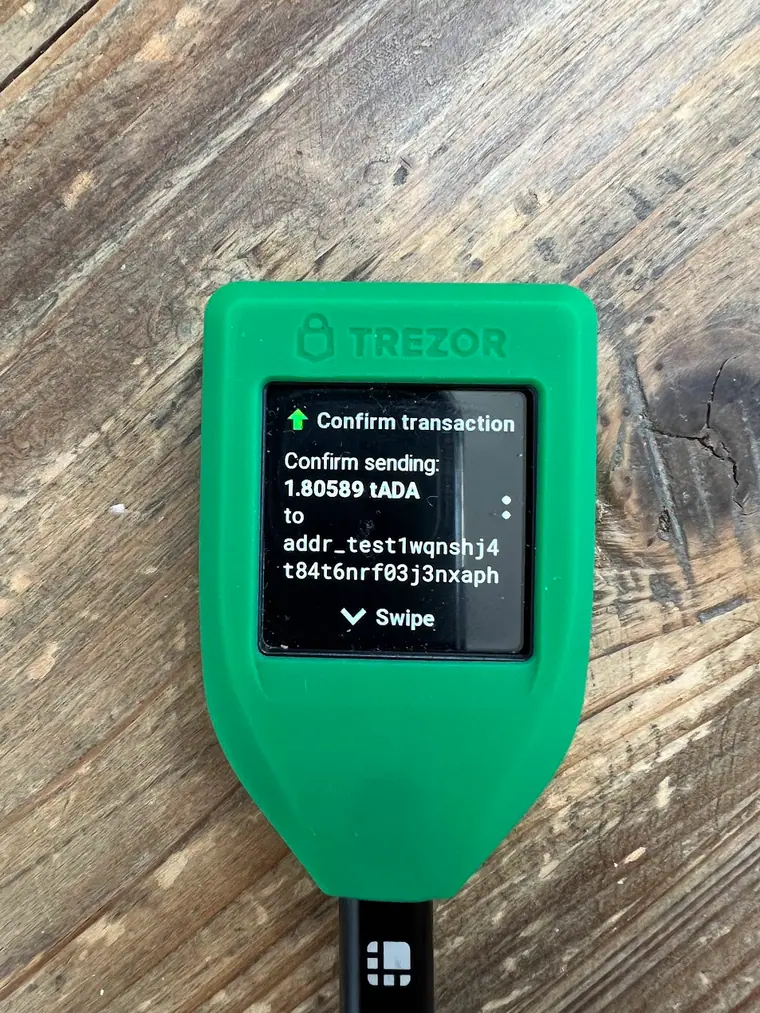
For about eighteen months, QuadrigaCX was the best argument in the world for writing down your passwords.
Gerald Cotten was 30, the co-founder and chief executive of Canada's largest cryptocurrency exchange, and by every account the only person who touched the company's cold storage. He died on December 9, 2018, in Jaipur, India, of complications reported as arising from Crohn's disease. The company announced the death on January 14, 2019.
What followed was the cleanest imaginable statement of the digital-asset problem. Quadriga told the court that roughly C$250 million belonging to about 115,000 customers was sitting in offline wallets, and that the private keys had died with Cotten. His widow, Jennifer Robertson, swore an affidavit stating that the laptop he used to run the exchange was encrypted and that she did not have the password or recovery key, and that “despite repeated and diligent searches” she had not found them written down anywhere.
It is an extraordinary sentence to find in a court file. It is also, as it turned out, not the reason the money was gone.
Nova Scotia, February 2019
Quadriga sought creditor protection under the Companies' Creditors Arrangement Act on January 31, 2019. Justice Michael J. Wood of the Supreme Court of Nova Scotia granted a stay on February 5, 2019, and Ernst & Young was appointed monitor. On April 8, 2019, the proceeding converted to a bankruptcy under the Bankruptcy and Insolvency Act.
The monitor did what a monitor does: it went looking for the assets. It identified five Quadriga cold wallet addresses. All five had been empty since April 2018 — eight months before Cotten died. There was no vault to unlock.
In October 2019, Robertson reached a settlement with the trustee, surrendering assets valued at roughly C$12 million and retaining, among a short list of exempt items, about C$90,000 in cash, her wedding rings, and a vehicle. The settlement resolved claims against her; it was not a finding that she had done anything wrong, and none was made.
By March 2023 the bankruptcy had paid a first interim dividend of about C$0.13 on each dollar of proven claim.

June 11, 2020: “an old-fashioned fraud wrapped in modern technology”
The Ontario Securities Commission published a staff review of QuadrigaCX on June 11, 2020. Its conclusion was blunt: the collapse was the result of a fraud committed by Cotten, and Quadriga operated as a Ponzi scheme.
Staff found that Cotten had opened accounts on his own platform under aliases, credited those accounts with fictitious currency and crypto balances, and traded them against real customers using real money. When he lost, the losses fell on the customers. Staff calculated that of at least $169 million lost by roughly 76,000 clients, approximately $115 million came from that fraudulent trading. The rest went to operating shortfalls and to Cotten's personal spending.
A staff review is not a court judgment, and Cotten was never charged — he was dead before the questions started. What the OSC report establishes is what regulatory staff concluded after an investigation, published under the authority of an OSC panel. We state it that way and no more strongly.
Why the exhumation request happened
On December 13, 2019, lawyers appointed to represent former Quadriga users asked the RCMP to exhume Cotten's body, to confirm his identity and the cause of death.
It is easy to read that as internet conspiracy theory arriving in a courtroom. It is more usefully read as what happens when an estate's central asset cannot be verified. Every ordinary estate has a moment where somebody checks: the deed, the account statement, the appraisal, the death certificate. Here, none of the normal verification was available. The wallets could not be opened. The keys could not be found. The death occurred in another country. So the creditors went looking for the only physical fact left to check.
There is one more detail that estate lawyers notice immediately. Cotten signed his will on November 27, 2018 — twelve days before he died — and it dealt in some detail with his personal property, including a provision for the care of his dogs. A man who was organised enough to sign a will that month left no instruction of any kind for the C$250 million his company said was in his sole custody. Whatever else that tells you, it tells you the two documents were never thought about together.
Timeline
- Nov 27, 2018Cotten signs a will in Nova Scotia dealing with his personal property, twelve days before his death.
- Dec 9, 2018Gerald Cotten dies in Jaipur, India, of reported complications of Crohn's disease. He is 30.
- Jan 14, 2019QuadrigaCX announces the death. Customers cannot withdraw.
- Jan 31, 2019Quadriga files for creditor protection under the CCAA in the Supreme Court of Nova Scotia. Jennifer Robertson's affidavit states the laptop is encrypted and the password cannot be found.
- Feb 5, 2019Justice Michael J. Wood grants a stay. Ernst & Young is appointed monitor.
- Mar 2019The monitor identifies five Quadriga cold wallets. All have been empty since April 2018.
- Apr 8, 2019The proceeding converts to a bankruptcy under the Bankruptcy and Insolvency Act.
- Oct 2019Robertson settles with the trustee, surrendering assets valued at roughly C$12 million.
- Dec 13, 2019Lawyers for former users ask the RCMP to exhume Cotten's body to confirm identity and cause of death.
- Jun 11, 2020The Ontario Securities Commission publishes a staff review finding fraud by Cotten and a Ponzi scheme, with roughly $115M of $169M in client losses traced to fraudulent trading.
What actually went wrong
- One person, no successor, no redundancy. Sole custody of an asset is a single point of failure. In a company it is a governance defect; in an estate it is a total loss.
- No key-recovery plan of any kind. No multi-signature arrangement, no split custody, no sealed instruction with a lawyer, no institutional custodian. A password that exists in exactly one head is not stored — it is gambled.
- A will that ignored the largest asset in the room. The will handled personal effects. It said nothing about the exchange's holdings, the keys, or who was to receive access on death.
- Nobody verified the asset before relying on it. For months, courts, customers, and press worked from the premise that C$250 million existed and was merely locked. It did not exist. Verification is the first fiduciary act, not the last.
- Customer assets held by a platform with no reserve audit. The people who lost money were not self-custodying. They were trusting an intermediary that no one had checked.
Would it have gone that way in Florida?
Florida has a whole statutory chapter for digital assets — and it would not have recovered a cent of this.
Florida adopted the Florida Fiduciary Access to Digital Assets Act, Fla. Stat. Ch. 740, in 2016. It is a genuinely useful statute, and it is the first thing a Florida personal representative should reach for when a decedent's assets live online. It is also, on these facts, useless — and understanding why is the whole point.
Chapter 740 is a disclosure statute aimed at custodians. §740.002 defines a custodian as a person that carries, maintains, processes, receives, or stores a digital asset of a user. The machinery of the chapter — §740.006 for the content of electronic communications, §740.007 for everything else — works by handing a custodian a written request, a certified death certificate, certified letters of administration, and evidence of the user's consent, after which the custodian has 60 days to comply under §740.06.
Self-custodied cryptocurrency has no custodian. A private key held on a laptop is not an account with a service provider. There is no company to serve, no compliance department to write to, no 60-day clock. §740.004(2) makes the ceiling explicit: the chapter gives a fiduciary no new or expanded rights other than those held by the user. If the user could not open the wallet without the key, neither can the personal representative.
What Florida law does give a fiduciary here is authority, not capability. §733.607 entitles a personal representative to take possession or control of the decedent's property and requires reasonable steps to manage, protect, and preserve the estate. §740.05(1) applies the ordinary fiduciary duties — care, loyalty, confidentiality — to digital assets, and §740.05(5) lets a fiduciary with authority over tangible personal property access that property and any digital asset stored in it. So a Florida personal representative may lawfully take the laptop, image the drive, and hire a forensic examiner. That is real and worth knowing. It still does not guess a passphrase.
The honest caveat runs the other way too. Where crypto is held at an exchange — Coinbase, Kraken, Gemini — there is a custodian, Chapter 740 applies, and the process works about as well as any other financial-institution death claim. The distinction that matters to a Florida estate is not “is it crypto,” it is “who holds the keys.”
The practical instruction is short and unglamorous. Write down where the assets are and how they open, and store that separately from the will. A Florida will admitted to probate becomes a public court record; the estate inventory does not — under §733.604(1) inventories and accountings filed with the court are confidential and exempt from the public-records law, disclosed only to the personal representative, counsel, interested persons, and on a showing of good cause. So the asset can be listed where it belongs, while the access detail lives in a sealed letter of instruction or a funded trust and never touches a filing at all. Then tell one living human being that the document exists. Every crypto loss in this archive is a failure of that last sentence.
What people ask us about this.

Further reading
Third-party sites. Not ours, not endorsed, not kept current by us — just the places worth going next.
Sources
- QuadrigaCX: A Review by Staff of the Ontario Securities Commission — Ontario Securities Commission, Jun 11 2020
- Crypto exchange Quadriga was a fraud and founder was running Ponzi scheme, OSC report finds — CBC News, Jun 2020
- More than $400,000 in QuadrigaCX cryptocurrency disappears into ‘cold wallet’ — CBC News, Feb 2019
- Settlement allows QuadrigaCX founder's widow to keep $90K in cash, wedding ring, Jeep — CBC News, Oct 2019
- Quadriga bankruptcy: C$190 million may have turned into digital dust — Norton Rose Fulbright, International Restructuring Newswire
- Gerald Cotten mixed personal and corporate funds, Quadriga monitor's report says — The Globe and Mail
- Quadriga Fintech Solutions — Wikipedia — for dates, court venue, and dividend figures
- Fla. Stat. Ch. 740 — Fiduciary Access to Digital Assets — The Florida Senate
If this is your situation
Free 30-minute consult. Plain English. No pressure.
Nearly every case in this archive turned on something ordinary — an unwitnessed page, a stale beneficiary line, a document nobody could find. Those are cheap to fix while you're alive and expensive to fix afterward.