Anna Nicole Smith
A fourteen-month marriage to an 89-year-old oil billionaire produced nineteen years of litigation, two United States Supreme Court opinions that first-year law students still read, and — in the end — nothing at all.

On June 27, 1994, Vickie Lynn Marshall — a Texas model and actress working as Anna Nicole Smith — married J. Howard Marshall II, an 89-year-old oil magnate whose fortune, largely a stake in Koch Industries, ran to roughly $1.6 billion. She was 26.
He died fourteen months later, in August 1995. His estate plan left the bulk of everything to his son, E. Pierce Marshall. Vickie got nothing.
What followed is, by a comfortable margin, the most legally consequential celebrity inheritance fight in American history — and the least profitable. It ran nineteen years. It produced two United States Supreme Court opinions. Both of the people who started it died in the middle of it. And when the last appellate court finally closed the file, the amount actually recovered by Vickie's estate was zero.
Not a will contest. A tort.
This is the detail almost every retelling gets wrong. Vickie did not, in the end, win or lose a will contest. A Texas probate jury heard that fight in 2001 and upheld J. Howard's will and trust. On the four corners of the documents, she was out.
Her surviving theory was different and cleverer: tortious interference with an expected gift. The claim was not the will is invalid. It was J. Howard intended to provide for me through a separate trust, and Pierce wrongfully prevented him from doing it. That is a tort claim against a person, not a challenge to a document — and that distinction is why the case ended up in federal court at all.
In 1996 Vickie filed for Chapter 11 bankruptcy in California. Pierce filed a claim in that bankruptcy asserting she had defamed him. She counterclaimed with the interference tort. The bankruptcy judge found for her and entered an enormous judgment — reported at roughly $474 million, later reduced by the district court to about $88 million on independent review.
The Ninth Circuit threw all of it out, holding that the probate exception to federal jurisdiction meant no federal court could hear the claim in the first place.
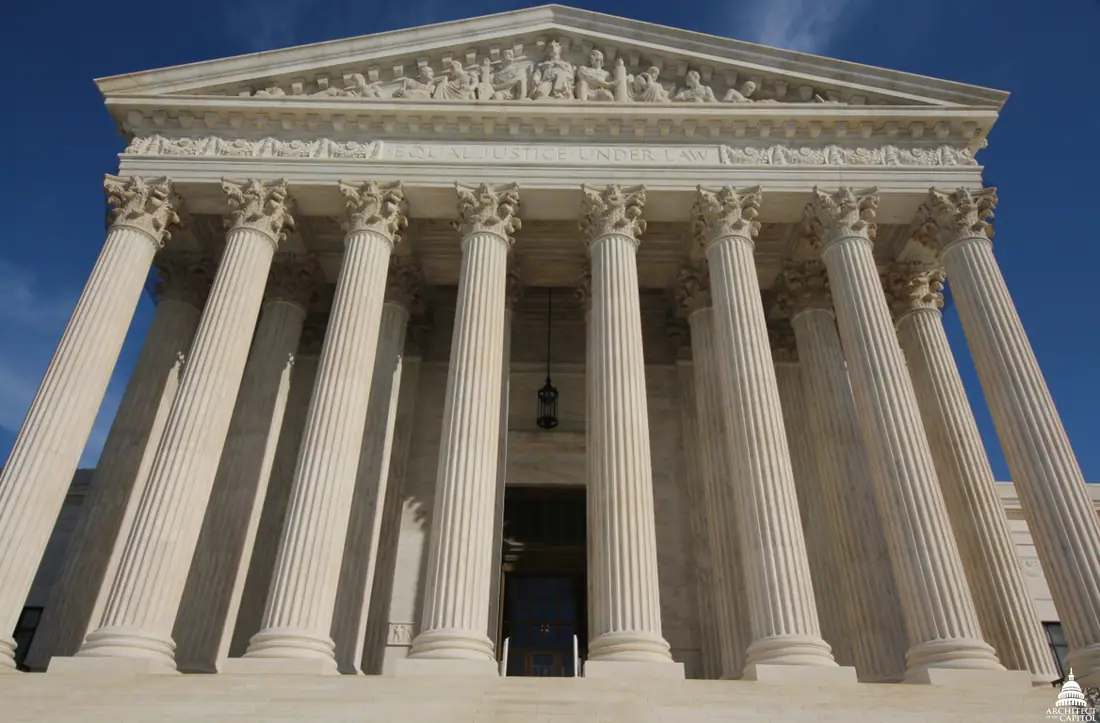
Marshall v. Marshall — the probate exception shrinks
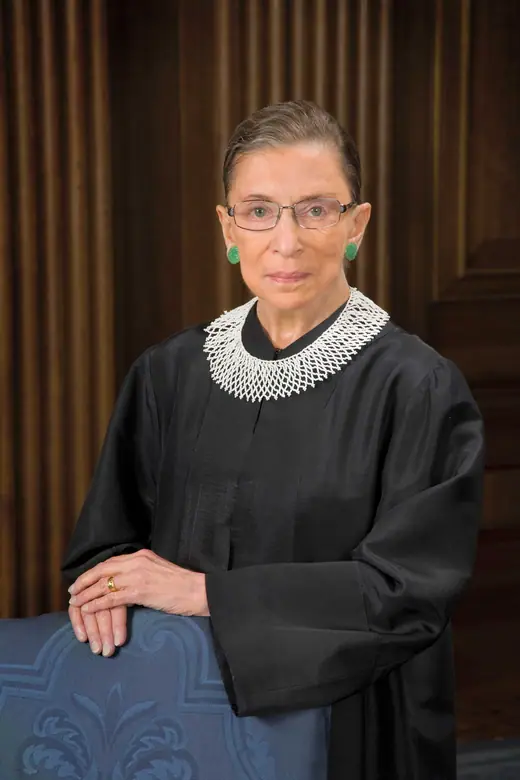
The Supreme Court took it and reversed, 9–0, in an opinion by Justice Ginsburg. Marshall v. Marshall, 547 U.S. 293 (2006).
The "probate exception" is a judge-made limit on federal jurisdiction with a long and muddled history. The Court cleaned it up and cut it down to three things: a federal court may not probate or annul a will, may not administer a decedent's estate, and may not dispose of property that is in the custody of a state probate court.
Everything else is fair game. A garden-variety tort claim between two people — even one whose subject matter is an inheritance — is not barred simply because a probate is going on somewhere. Vickie's interference claim survived.
It was, on paper, a total victory. In practice it bought another five years.
Stern v. Marshall — and a constitutional problem nobody expected
By the time the case returned to the Supreme Court, both principals were dead. Pierce Marshall died in June 2006. Anna Nicole Smith died on February 8, 2007, at a hotel in Hollywood, Florida, at 39; the Broward County medical examiner ruled it an accidental overdose of prescription medication. The litigation continued between their estates.
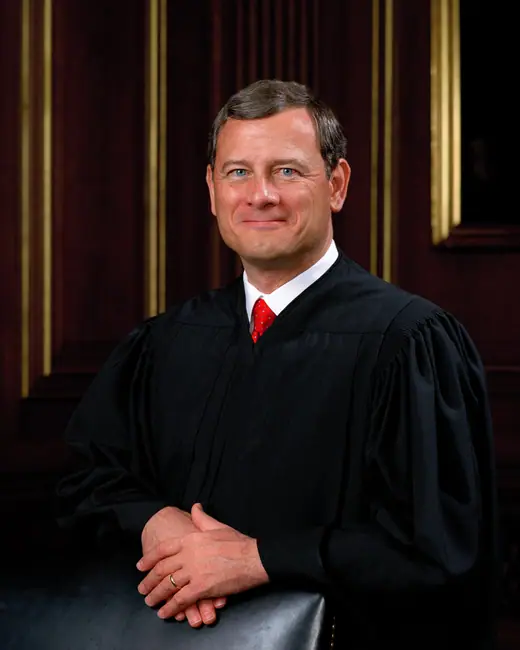
Stern v. Marshall, 564 U.S. 462 (2011), was decided 5–4, Chief Justice Roberts writing. The question was no longer whether a federal court could hear the claim. It was whether a bankruptcy court could finally decide it.
Bankruptcy judges are not Article III judges. They do not have life tenure or salary protection. The Court held that a bankruptcy court lacks the constitutional authority to enter final judgment on a state-law counterclaim that is not resolved in the process of ruling on the creditor's own proof of claim — even though a federal statute purported to give it that power.
The consequence reached far past this family. Stern unsettled thousands of bankruptcy proceedings and generated a decade of follow-on litigation about which matters a bankruptcy judge may decide, which must go to a district judge, and what happens when parties consent. A Playboy model's inheritance claim reshaped the architecture of the federal bankruptcy system.
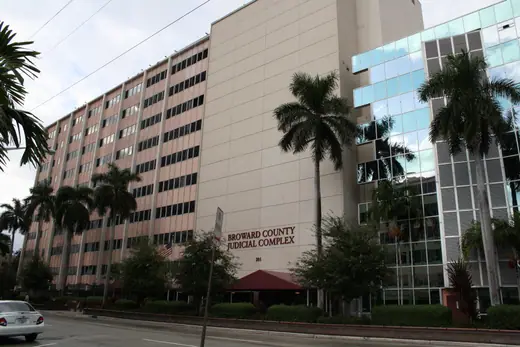
Broward County, twice
Two parts of this story happened in our state, and both were televised.
Her son Daniel Smith died in the Bahamas in September 2006, at 20. Five months later she died in Hollywood, Florida. What followed was a fight over her body — between her mother, her partner, and the representative of her infant daughter — heard in Broward County Circuit Court before Judge Larry Seidlin, in proceedings broadcast live and remembered mostly for the judge's conduct on the bench. He ruled that she be buried in the Bahamas, beside her son.
Separately, a Florida court handled the paternity question for her infant daughter Dannielynn, resolved in April 2007 in favor of Larry Birkhead.
So the Marshall estate fight is a Texas and federal story, and the human wreckage of it is a Broward County story. Both are part of the same file.
Timeline
- Jun 27, 1994Vickie Lynn Marshall marries J. Howard Marshall II. She is 26; he is 89.
- Aug 1995J. Howard dies. His estate plan leaves the bulk of a roughly $1.6B fortune to his son, E. Pierce Marshall.
- 1996Vickie files Chapter 11 in California. Pierce files a defamation claim; she counterclaims for tortious interference with an expected gift.
- 2000–2002Bankruptcy court enters a judgment reported at roughly $474M; the district court, reviewing independently, sets it near $88M.
- 2001A Texas probate jury upholds J. Howard's will and trust. Vickie takes nothing under the documents themselves.
- 2004The Ninth Circuit vacates on jurisdictional grounds, invoking the probate exception.
- May 1, 2006Marshall v. Marshall — the Supreme Court reverses 9–0 and narrows the probate exception to three things.
- Jun 20, 2006E. Pierce Marshall dies.
- Sep 10, 2006Daniel Smith, her son, dies in the Bahamas at 20.
- Feb 8, 2007Anna Nicole Smith dies in Hollywood, Florida, at 39. A Broward County judge later orders her buried in the Bahamas beside her son.
- Jun 23, 2011Stern v. Marshall — 5–4, bankruptcy courts cannot enter final judgment on this kind of state-law counterclaim.
- 2014The Ninth Circuit ends it. Vickie's estate recovers nothing, nineteen years after the claim began.
What actually went wrong
- A promise with no document behind it. The whole claim rested on what J. Howard was said to have intended. Intentions are not instruments. A signed trust amendment would have made the entire nineteen years unnecessary.
- A jurisdiction with no forced share for spouses. Texas protects a surviving spouse through community property and allowances, but has no elective share. In a forced-share state the arithmetic is automatic and there is nothing to litigate.
- Litigating a tort instead of the estate plan. Once the probate jury upheld the documents, every remaining dollar was chased through a theory that had to survive federal jurisdictional review twice.
- Outliving the case, or not. Both original parties died mid-litigation. Estates litigating on behalf of dead people rarely settle sensibly, because nobody left at the table is the person who was actually wronged.
Would it have gone that way in Florida?
Almost certainly not. In Florida the arithmetic is done by statute, not by nineteen years of litigation.
This case is the strongest argument in the archive for what a forced share actually does. Texas has none. Florida does.
Under Fla. Stat. §732.201, a surviving spouse of a person who dies domiciled in Florida has the right to an elective share equal to 30% of the elective estate. Not 30% of what the will leaves them — 30% of the elective estate, which §732.2035 defines expansively: probate assets, revocable trust property, pay-on-death accounts, jointly held property, certain transfers made within a year of death, and more. The whole point of that definition is to stop someone from moving assets around to hollow out a spouse's share.
A surviving spouse elects by filing within the deadline in §732.2135 — six months after service of the notice of administration, or two years after the date of death, whichever comes first. Miss it and the right is gone.
So a Florida version of this case looks like: file the election, value the elective estate, take 30%. On a $1.6 billion elective estate that is an enormous number, and it does not require proving that anyone promised anything or that anyone interfered with anything. The tort theory is unnecessary because the statute already answers the question.
The honest caveat, because this is a law firm and not a listicle: the elective share can be waived. §732.702 allows a spouse to waive it by written contract signed by that spouse in the presence of two subscribing witnesses — a prenuptial or postnuptial agreement. Waivers signed before marriage do not require financial disclosure; waivers signed after marriage do. A valid prenup would put a Florida Anna Nicole in roughly the same position as a Texas one. Whether one existed here is not something we assert.
There is also §732.301, the pretermitted-spouse rule: if you marry after signing your will and the will makes no provision for the new spouse, the spouse takes an intestate share — unless the will shows the omission was intentional or a valid waiver exists.
And Florida does recognize the tort Vickie actually pleaded. Schilling v. Herrera, 952 So. 2d 1231 (Fla. 3d DCA 2007), permits a claim for tortious interference with an expectancy — but only where the probate remedies were inadequate. In a state with a 30% elective share, they usually are not. Which is the point.
What people ask us about this.
Further reading
Third-party sites. Not ours, not endorsed, not kept current by us — just the places worth going next.
Sources
- Stern v. Marshall — Supreme Court Bulletin — Cornell Legal Information Institute
- Supreme Court decides Stern v. Marshall — Faegre Drinker, Jun 2011
- Stern v. Marshall: the Anna Nicole Smith bankruptcy story — Winston & Strawn
- The end of the road: the late Anna Nicole Smith's quest to inherit is over — Justia Verdict, Sep 2014
- The last word: the Supreme Court rules Anna Nicole Smith is entitled to nothing — Justia Verdict, Jul 2011
- Dannielynn Birkhead paternity case — Wikipedia
- Fla. Stat. Ch. 732 Part II — Elective share of surviving spouse — The Florida Senate
If this is your situation
Free 30-minute consult. Plain English. No pressure.
Nearly every case in this archive turned on something ordinary — an unwitnessed page, a stale beneficiary line, a document nobody could find. Those are cheap to fix while you're alive and expensive to fix afterward.