The 1928 Okeechobee hurricane
The dike failed on the night of September 16, 1928, and the south shore of Lake Okeechobee went under. It remains the deadliest disaster in Florida history. Most of the dead were buried in mass graves, most were never identified, and almost none of them ever had an estate opened.
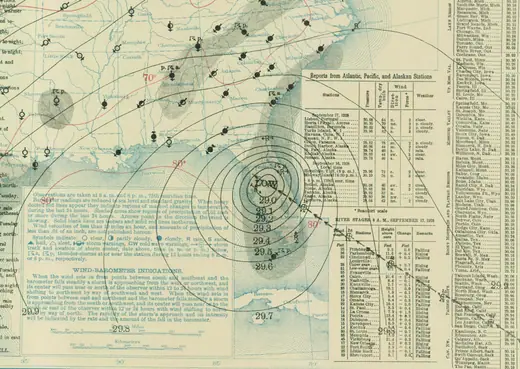
The hurricane that reached Puerto Rico on 13 September 1928 with estimated winds near 200 mph crossed the Atlantic and came ashore at West Palm Beach on 16 September. The coast took the wind. What killed people was the lake.
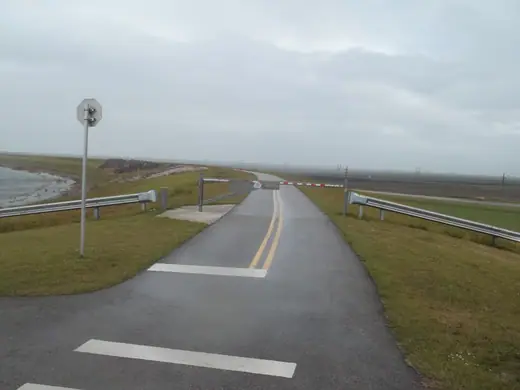
Lake Okeechobee is enormous and shallow, and in 1928 it was contained by a low earthen dike. The hurricane's winds pushed the water first against the southern dike, then back against the northern one. The dike failed, and a storm surge of fifteen to twenty feet went across the farming settlements on the south shore — Belle Glade, South Bay, Pahokee, Chosen — in the dark.
The Red Cross put the death toll at 1,836. Later re-evaluation has put it at at least 2,500, and it may have been higher. It remains the deadliest natural disaster in Florida history and one of the deadliest in the history of the United States.
The great majority of the dead were migrant agricultural workers, most of them African American, many of them Bahamian and Caribbean labourers who had come for the harvest. They were, as a group, poor, mobile, and — this is the fact that governs everything on this page — largely undocumented in the records that probate depends on.
Three cemeteries, sorted by race
The recovery ran for weeks in heat, and the disposal of the dead was organised along the segregation lines of 1928 Florida.
White victims were buried at Woodlawn Cemetery in West Palm Beach, in marked graves, with funerals.
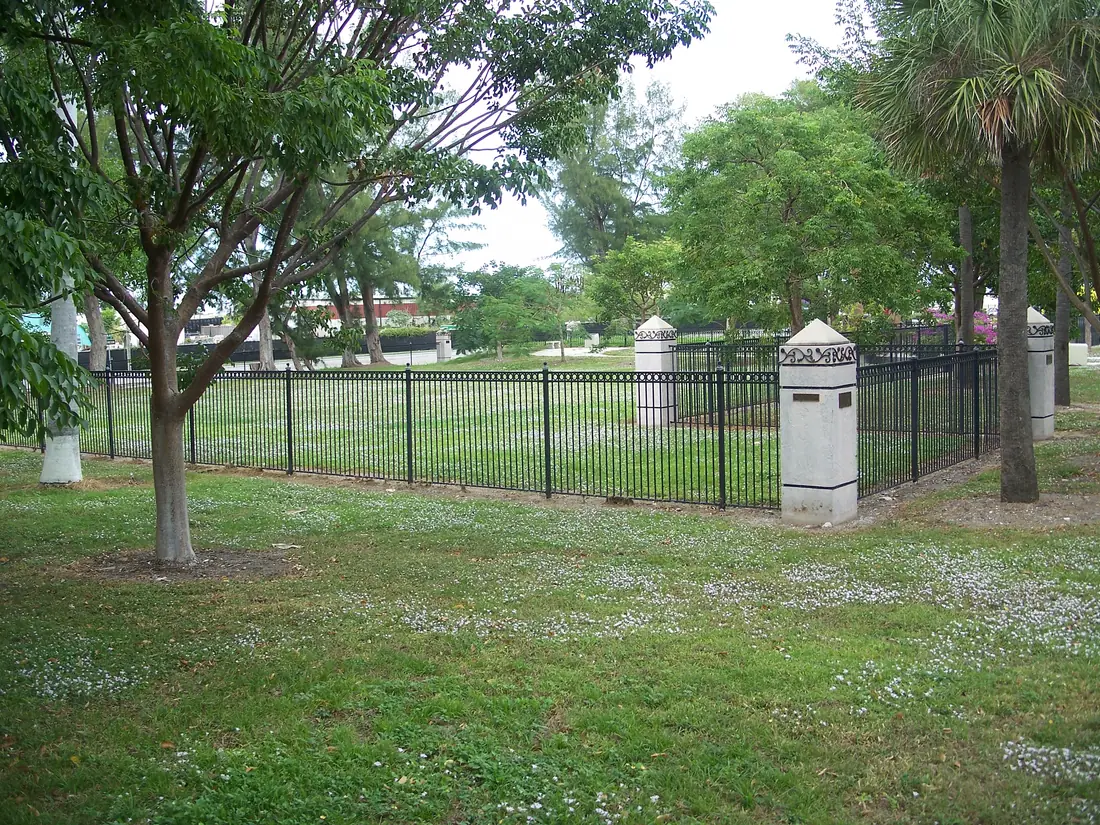
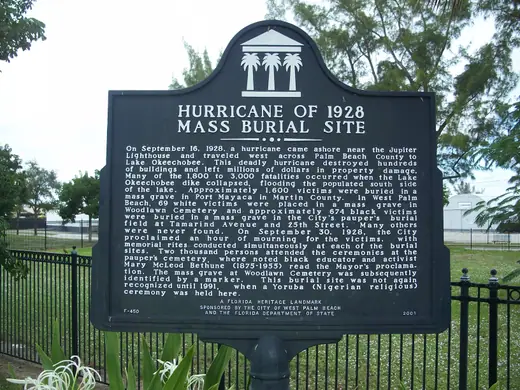
Black victims and those whose race could not be determined were taken to a pauper's field at the corner of 25th Street and Tamarind Avenue in West Palm Beach, where about 674 people were buried in a mass grave. It was left unmarked.
The largest mass grave was at Port Mayaca Cemetery, on the north-eastern side of the lake, where an estimated 1,600 people were buried. Smaller mass burials were made at Lake Harbor, Ortona and Sebring.
What happened to the West Palm Beach site afterwards is its own history. It was sold in 1957 and used for a sewage disposal plant. In the 1980s it was exchanged for church property. It passed into private hands whose owners did not know what was under it.
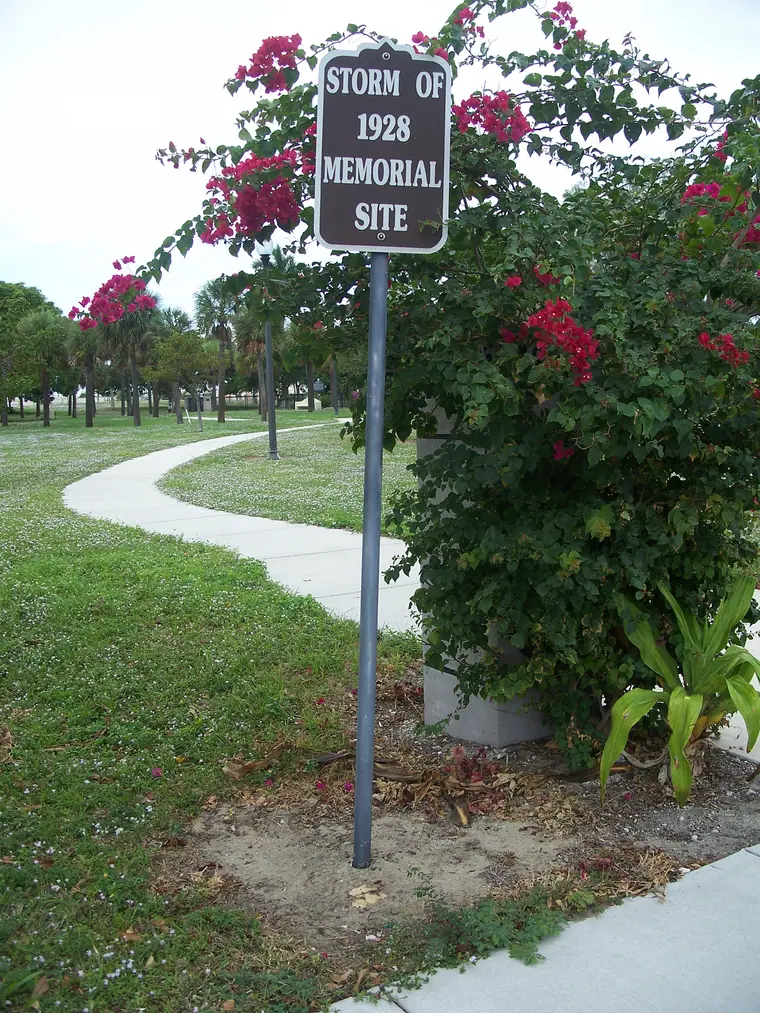
Advocacy to recover the site began in 1991. The City of West Palm Beach bought the property in December 2000 for $180,000. It was added to the National Register of Historic Places on 12 September 2002, and a historical marker was placed in 2003, on the seventy-fifth anniversary — seventy-five years in which 674 people lay in a grave nobody had marked.
What happens to property when the owner is a number
Set the moral weight aside for a moment and look at the mechanics, because they are the reason this belongs in a probate archive.
No certificate, no administration. An estate cannot be opened for an unidentified person. Whatever a drowned farm worker owned — wages owed by a grower, a burial policy, a lot, tools, a bank deposit, a claim — stayed where it was, held by whoever was holding it, with no one authorised to collect it.
No identification, no heir. Even where property was known, an heir has to be identified and located. Families of Caribbean labourers were often in another country, unaware, and unreachable by any process a 1928 Florida court would have used.
Nothing to file against. Wages and small debts owed to the dead are claims that have to be asserted by somebody. With no personal representative, they were never asserted, and the money stayed with the employer or the bank by default rather than by decision.
That is the anatomy of a mass-casualty event in an era with no disaster identification apparatus. Not a scandal of individual conduct so much as a system that had exactly one entry point — a named, certified decedent — and thousands of people who could not be pushed through it.
Zora Neale Hurston put the storm at the centre of Their Eyes Were Watching God in 1937, including the sorting of the dead. It is, for a great many of the people buried at Tamarind Avenue, the closest thing to a record that exists.
- A death certificate is the entry point to probate. Most of the 1928 dead never received one.
- A personal representative must be appointed before anyone can collect wages, deposits or claims. For most of these estates, nobody ever was.
- An heir must be identified and located. For labourers whose families were in the Bahamas or the Caribbean, no 1928 process was going to reach them.
A dike, and eventually some law
The engineering answer came first. The federal government built what became the Herbert Hoover Dike around Lake Okeechobee, and Florida created the Okeechobee Flood Control District to run flood control in the region. The lake has not done this again.
The legal answers took longer and arrived one at a time, and modern Florida now has a specific rule for nearly every failure of 1928.
Fla. Stat. §872.05, “Unmarked human burials,” is the most direct. Its stated legislative intent is that all human burials and human skeletal remains be accorded equal treatment and respect based on common human dignity without reference to ethnic origin, cultural background, or religious affiliation. When an unmarked burial is discovered, all activity that could disturb it must stop immediately. The district medical examiner determines jurisdiction based on whether the remains are less than 75 years old; older remains fall to the State Archaeologist, who determines significance, seeks to identify relatives or a related community, and may take state custody. Wilfully disturbing an unmarked burial is a third-degree felony, and failing to report knowledge of a disturbance is a second-degree misdemeanour.
Fla. Stat. §406.50, “Unclaimed remains,” governs what happens when nobody comes. Before final disposition, a reasonable effort must be made to identify the deceased, to locate relatives, and to determine veteran status, including contact with the National Cemetery Scheduling Office or a Veterans Affairs regional office. The remains of an unidentified deceased person may not be cremated, donated, buried at sea, or removed from the state — because cremation would end the possibility of identification.
Read those two statutes against the 1928 record and the point is unmistakable. Every requirement in them — dignity without reference to ethnic origin, a duty to try to identify, a duty to search for relatives, a prohibition on destroying unidentified remains, a felony for disturbing an unmarked grave — is a rule about something that did not happen in September 1928.
Timeline
- Sep 13, 1928The hurricane strikes Puerto Rico with estimated winds near 200 mph before crossing the Atlantic toward Florida.
- Sep 16, 1928Landfall near West Palm Beach. The winds drive the water of Lake Okeechobee against the earthen dike until it fails.
- Sep 16–17, 1928A storm surge of fifteen to twenty feet crosses the farming settlements of the south shore in darkness. At least 2,500 people die in Florida; the Red Cross initially counts 1,836.
- Sep–Oct 1928Recovery and burial. White victims are buried at Woodlawn Cemetery. About 674 Black victims and unidentified dead are buried in an unmarked mass grave at 25th Street and Tamarind Avenue, West Palm Beach; about 1,600 at Port Mayaca; smaller mass graves at Lake Harbor, Ortona and Sebring.
- 1930sThe federal government builds what becomes the Herbert Hoover Dike around Lake Okeechobee, and Florida creates the Okeechobee Flood Control District.
- 1937Zora Neale Hurston publishes Their Eyes Were Watching God, which places the storm and the sorting of the dead at its climax.
- 1957The West Palm Beach mass grave site is sold and used for a sewage disposal plant. In the 1980s it is exchanged for church property and later passes to private owners unaware of the burials.
- Dec 2000After advocacy beginning in 1991, the City of West Palm Beach buys the property for $180,000.
- Sep 12, 2002The Hurricane of 1928 African-American Mass Burial Site is added to the National Register of Historic Places. A historical marker follows in 2003, seventy-five years on.
What actually went wrong
- No identification, therefore no estate. Probate has exactly one entry point — a named, certified decedent — and thousands of people could not be pushed through it. Whatever they owned stayed with whoever was holding it.
- Burial sorted by race, and one grave left unmarked for 75 years. White victims were buried at Woodlawn with funerals; 674 Black and unidentified victims went into an unmarked pauper's field that was later sold for industrial use.
- Heirs in another country, and no way to reach them. Many of the dead were Bahamian and Caribbean labourers. Even where an estate could have been opened, the people entitled to it were beyond any process a 1928 court would have used.
- Nobody to assert the claims. Unpaid wages, deposits and burial policies owed to the dead required a personal representative to collect them. Without one, the money simply remained where it was.
- Records that did not survive the event. A disaster that destroys the settlements also destroys the paper that identifies who lived in them. Modern practice keeps vital records elsewhere for exactly this reason.
Would it have gone that way in Florida?
This is Florida's own case, and modern Florida law has a specific answer for nearly every failure in it — dignity in burial, a duty to identify, a route to a death determination, and a destination for property nobody claims.
Start with the graves. §872.05 makes it the Legislature's stated intent that all human burials and skeletal remains be accorded equal treatment and respect based on common human dignity without reference to ethnic origin, cultural background, or religious affiliation. On discovery of an unmarked burial, all activity that could disturb it stops. The district medical examiner takes jurisdiction where the remains are less than 75 years old; where they are older, the State Archaeologist determines significance, attempts to identify relatives or a related community, and may assume state custody. Wilfully disturbing an unmarked burial is a third-degree felony. A 1957 sale of a mass grave site for industrial use is not a thing that can quietly happen now.
Then the remains themselves. §406.50 requires a reasonable effort to identify the deceased, locate relatives and determine veteran status before final disposition, and forbids the cremation, anatomical donation, burial at sea or removal from the state of the remains of an unidentified person. Chapter 497 sits alongside it: §497.005 defines the “legally authorized person” who may direct disposition, and places the decedent's own written directions first.
For the dead who are never found, there is a route. §731.103(3) presumes death after five continuous years of unexplained absence following diligent search and inquiry, and allows a court to find death at any time after exposure to a specific peril of death — a named hurricane and a documented surge is the archetype. §731.103(4) allows proof by direct or circumstantial evidence with no waiting period, and §731.103(2) makes agency records of missing or presumed-dead status prima facie evidence. §733.209 then bars appointment of a personal representative until the determination is made, and §382.012 produces the presumptive death certificate that opens everything downstream.
And there is a destination for property nobody claims. Where an estate is administered but a distributee cannot be found, §733.816 requires the personal representative to deposit the unclaimed funds with the clerk, who deposits them in the court registry; after notice and six months they go to the Chief Financial Officer and into the State School Fund. A person entitled may petition for the money within 10 years; after that it escheats. Where a decedent leaves no qualifying heir at all, §732.107 escheats the estate to the State School Fund — and the intestacy ladder in §732.103 is why that happens more often than people expect, because it stops at the descendants of grandparents. Second cousins take. Third cousins do not.
The honest caveat. None of this reaches backwards. The 674 people at Tamarind Avenue are beyond the help of any statute, and the estates that were never opened in 1928 are not going to be opened now. What §872.05 and §406.50 do is make the same sequence unlawful the next time, which is the only thing law can actually do about a thing that has already happened.
The practical instruction, for anyone living in the storm surge zone today. Keep the documents that identify you and your family outside the flood zone: certified copies of the will, the trust, the deed, the insurance policies, and a current list of accounts, either in a bank box inland or scanned and stored where a family member elsewhere can reach them. In a mass-casualty event, the recovery of an estate turns almost entirely on whether anyone can prove who you were and what you owned. That is a problem you solve before the storm, not after it.
What people ask us about this.
Further reading
Third-party sites. Not ours, not endorsed, not kept current by us — just the places worth going next.
Sources
- 1928 Okeechobee hurricane — Wikipedia
- Hurricane of 1928 African-American Mass Burial Site — Wikipedia
- 90th anniversary of the Lake Okeechobee hurricane — NOAA Atlantic Oceanographic and Meteorological Laboratory
- 1928 Lake Okeechobee hurricane: African American mass grave — Clio
- The Hurricane of 1928 — Palm Beach County History Online
- Fla. Stat. §872.05 — Unmarked human burials — The Florida Senate
- Fla. Stat. §406.50 — Unclaimed remains; disposition, procedure — The Florida Senate
- Fla. Stat. §733.816 — Disposition of unclaimed property held by personal representatives — The Florida Senate
- Fla. Stat. §732.107 — Escheat — The Florida Senate
If this is your situation
Free 30-minute consult. Plain English. No pressure.
Nearly every case in this archive turned on something ordinary — an unwitnessed page, a stale beneficiary line, a document nobody could find. Those are cheap to fix while you're alive and expensive to fix afterward.