Alfred I. duPont & Ed Ball
Alfred I. du Pont died outside Jacksonville in 1935 and left almost everything to a trust for crippled children. His brother-in-law ran it for the next 46 years — a bank chain, a railroad, a paper company, half the Panhandle — until Congress amended the banking laws to make him choose.
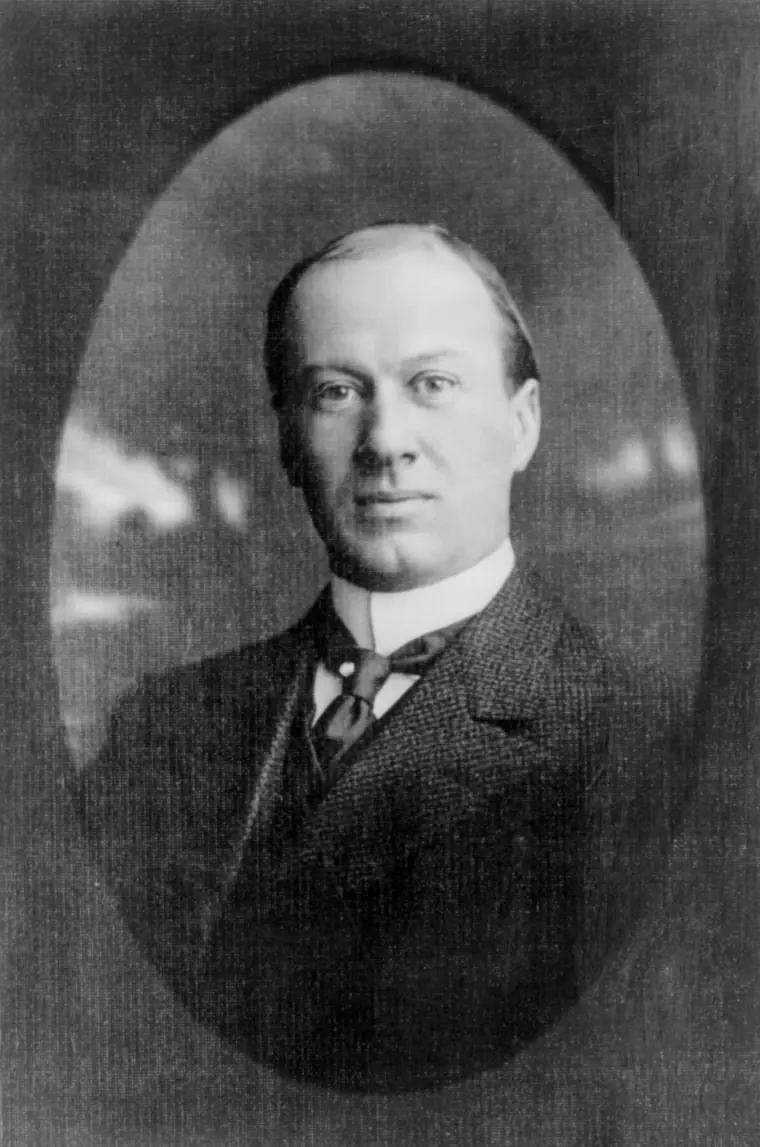
Alfred Irénée du Pont was born in the Brandywine Valley in 1864, into the family that made America's gunpowder. He lost the fight for control of the company in 1916, lost the litigation that followed, and in 1926 he left Delaware for Florida with his third wife, Jessie Ball duPont.
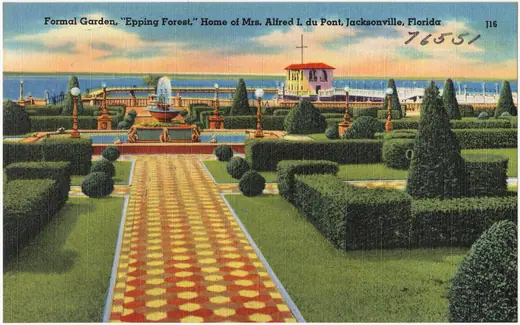
They built Epping Forest, a house on the St. Johns River outside Jacksonville. He bought banks. He bought Panhandle timberland by the hundreds of thousands of acres, at Depression prices, on the theory that Florida would eventually be worth something. He was right, and he did not live to see it.
He died at Epping Forest in late April 1935, at 70. His gross estate was reported above $56 million, with roughly $26 million left after an estate tax bill of about $30 million — a ratio worth pausing on, because it is what a 1930s death tax looked like before anyone had heard of a marital deduction.
What he left behind was not a fortune. It was an instruction.
Income to a widow, remainder to crippled children
Du Pont's will poured almost everything into a testamentary trust — a trust created by the will itself, coming into existence only at death, rather than a living trust funded during life.
Jessie was the principal income beneficiary for her lifetime: a fixed $200,000 a year plus whatever income remained after specified annuities to other relatives. On her death, the trustees were directed to organize a charitable foundation, to be called the Nemours Foundation, and hand the trust's assets to it.
The charitable purpose was stated in du Pont's own terms — the trust was to be maintained as an institution for the care and treatment of crippled children, “but not of incurables,” or the care of old men and old women and particularly old couples, with first consideration in each instance given to residents of Delaware.
That last clause is short. It has generated more litigation than everything else in the will combined, for a reason nobody found funny: the money was in Florida, and the preference was for Delaware.
Jessie Ball duPont lived until 1970. For thirty-five years, the charity waited.
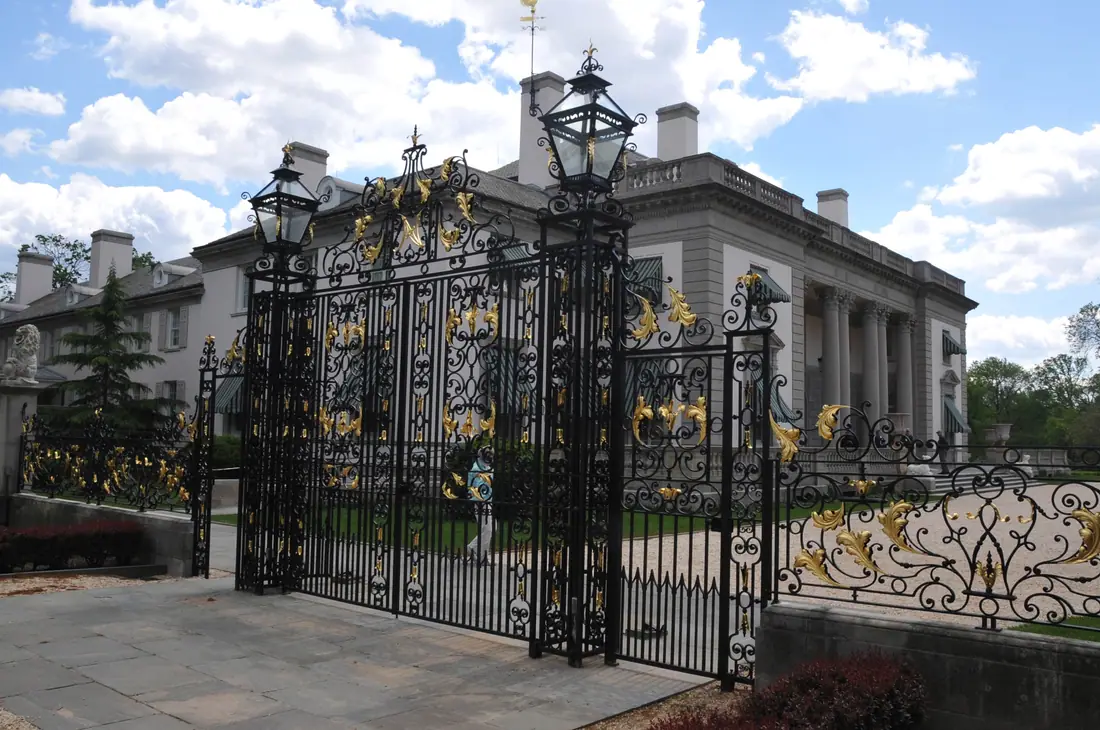
Ed Ball, and 46 years of compound interest
Edward Ball — Jessie's brother, born in Virginia in 1888 — had joined du Pont's operations in 1923. After 1935 he ran the trust's businesses, and he kept running them until he died in 1981 at 93.
What he built out of a dead man's timberland and bank stock was, for a while, something close to a parallel state government:
- Florida National Banks. Grown from du Pont's Depression-era rescue of a Jacksonville bank into a group of some thirty institutions with roughly $675 million in combined resources by 1970.
- The St. Joe Paper Company. A Port St. Joe mill running from 1938 to 1996, sitting on close to a million acres of Panhandle land.
- The Florida East Coast Railway. Majority control acquired in 1961, followed by a strike that began in 1963 and ran for years.
- Newspapers and politics. Ball was the patron of the conservative legislative bloc known as the Pork Chop Gang, in the decades before reapportionment.
By the time he died the trust was reported at roughly $2 billion. His own personal estate — separate from the trust — was estimated between $75 million and $200 million, and he left most of it to the Nemours Foundation with a restriction that it be spent in Florida. He had been reading his brother-in-law's Delaware clause for forty-six years, and he had a view about it.
Congress writes a statute at one trustee
By the 1960s the arrangement was drawing federal attention: a tax-exempt charitable trust controlling both a large commercial banking group and a large industrial company, with the same man directing all of it.
In 1966 Congress amended the Bank Holding Company Act to withdraw the exemption the trust had been relying on. The effect was a forced choice — keep the banks, or keep the non-banking businesses, but not both.
In 1971 the trust sold roughly a third of its Florida National Banks stake to the Charter Company for about $42 million, dropping below the threshold at which the law deemed it to be in control. The paper company and the railroad stayed. The banks drifted away over the next two decades: a hostile approach from Southeast Banking in 1980 that was rejected; a Chemical Bank merger approved in 1984 but blocked by the interstate banking rules of the day; and finally First Union, which bought Chemical's residual stake for $115 million in 1989 and completed the acquisition of the rest in 1990 for roughly $849 million.
The 1971 sale is the part worth keeping. A trust instrument can be drafted to last forever. A regulatory regime cannot be. Du Pont's will did not say “own banks.” It said care for children. The banks were a means, and the means turned out to be legislatively revocable.
Delaware appears in Duval County
On January 17, 1980, the trustees signed an agreement with the State of Florida, the State of Delaware, and the Nemours Foundation. It is still the operating charter of the trust, and its terms are unusually concrete for a charitable settlement:
- Distribute the greater of net income or 3% of net market value to Nemours each year.
- No more than 50% of the funds may be spent outside Delaware.
- A $25 million contingency reserve maintained for Nemours' Delaware operations.
- Care available through age 21 at Nemours' children's facilities.
That held for three decades. Then, on December 29, 2011, the trustees petitioned the Duval County Circuit Court for permission to split the trust into two entities for more favorable tax treatment. Delaware's attorney general moved to intervene, and in March 2012 the Florida court granted the motion — an unusual thing, one state's attorney general given a seat at the table in another state's trust proceeding, on the strength of one preference clause in a 1935 will.
Delaware's office said at the time that it was not alleging wrongdoing by the trust or the foundation and was not opposing the split as such; its stated concern was how Nemours spent what it received and how trustees and directors were chosen. In June 2012 the State filed suit, alleging among other things that a multi-year renovation of the Nemours mansion and grounds had been improperly charged against Delaware's 50% share. Those were allegations. We have not located a published Florida appellate decision resolving them, and this file does not treat them as findings.
The trust meanwhile kept doing what it was told to do in 1935. Nemours now runs children's hospitals in Delaware and in Orlando and Jacksonville. The Delaware Attorney General's office has described the trust's growth as $40 million in 1935 to $4.6 billion by 2009; the Trust's own current figure is about $10.5 billion, overseen by six trustees.
Timeline
- 1916–1919Alfred I. du Pont is removed from the DuPont board after a dispute with his cousin Pierre, and loses the litigation that follows.
- 1926Du Pont moves to Jacksonville and begins buying Florida banks and Panhandle timberland at Depression prices. Ed Ball, his brother-in-law, had joined the operation in 1923.
- Apr 1935Du Pont dies at Epping Forest outside Jacksonville at 70. His will creates a testamentary trust: income to his widow Jessie for life, remainder to a charitable foundation for crippled children and the elderly, Delaware residents first.
- 1936–1940The Nemours Foundation is incorporated in Florida in 1936; the Alfred I. duPont Institute for children opens on the Nemours estate in Wilmington, Delaware, in 1940.
- 1938–1961Ball builds the trust's operating empire: the St. Joe Paper mill (1938), the Florida National Banks group, and majority control of the Florida East Coast Railway (1961).
- 1966Congress amends the Bank Holding Company Act, withdrawing the exemption the trust relied on. The trust must choose between its banks and its other businesses.
- 1970Jessie Ball duPont dies. The trust's charitable phase begins in earnest. The Florida National group stands at roughly 30 banks and $675 million in resources.
- 1971The trust sells about a third of its Florida National stake to the Charter Company for roughly $42 million, dropping below the control threshold.
- Jan 17, 1980Trustees sign the governing agreement with Florida, Delaware, and Nemours: greater of net income or 3% of net market value, no more than 50% spent outside Delaware, $25M Delaware reserve.
- Jun 24, 1981Ed Ball dies at 93 after 46 years running the trust's businesses. The trust is reported at roughly $2 billion.
- 1989–1990First Union acquires Florida National Banks, buying Chemical's residual stake for $115 million and completing the deal for roughly $849 million.
- 2011–2012Trustees petition the Duval County Circuit Court to split the trust for tax purposes. Delaware's attorney general is granted leave to intervene in March 2012 and files suit that June.
What actually went wrong
- The charitable clause named a state, not a need. First consideration to residents of Delaware — written by a man who then moved to Florida and made his money there. Ninety years of interstate friction from one geographic preference.
- The assets were empires, not endowments. Timberland, a railroad, a paper mill, and bank stock produce prestige and control. A charity's obligations are paid in cash, and the gap between the two is what regulators and attorneys general eventually come to ask about.
- One person held everything for 46 years. Ed Ball was extraordinarily effective and unchecked by any co-fiduciary of comparable weight. Concentration of that kind survives exactly as long as the person does, and then the succession problem arrives all at once.
- No payout floor in the instrument. The 3% distribution requirement did not come from du Pont's will. It came from a 1980 settlement with two states, forty-five years later. A drafted payout term would have made the settlement unnecessary.
- Perpetual means perpetually supervised. A charitable trust with no end date is a permanent public institution and will be treated as one — by the IRS, by bank regulators, and by any attorney general who can establish standing.
Would it have gone that way in Florida?
This is Florida law, and has been for ninety years. The trust is administered here, supervised here, and litigated here.
Most files in this archive compare an out-of-state outcome to the Florida rule. This one does not need to. The Alfred I. duPont Testamentary Trust is a Florida charitable trust, administered from Jacksonville, and the fights over it have been heard in the Duval County Circuit Court.
Fla. Stat. §736.0405 is the operating provision. A trust may be created for charitable purposes, and the relief of poverty and the promotion of health are expressly among them. If the terms do not identify a purpose or beneficiary, the court may select one consistent with the settlor's intent. Du Pont's will had no such gap — it named the purpose, the class, and the geographic preference, which is precisely why the argument has always been about interpretation rather than validity.
The perpetuity question answers itself. Florida's §689.225 rule against perpetuities — 90 years, or 1,000 years for trusts created on or after July 1, 2022 — does not restrain charitable trusts. A genuine charity can run forever. A private family trust cannot, and that is the single most common misunderstanding among people who want to set something up “permanently” for their descendants.
Two other provisions do the real work in a case like this. §736.0413 is Florida's cy pres statute: if a particular charitable purpose becomes unlawful, impracticable, impossible to achieve, or wasteful, the court may modify or terminate the trust and direct that the property be applied in a manner consistent with the settlor's charitable purposes. It is the statute you would reach for if the category of institution du Pont described in 1935 ceased to exist in the form he imagined. And §736.0708 governs what the trustees may be paid — reasonable under the circumstances, adjustable by the court, per Robert Rauschenberg Foundation v. Grutman.
The honest caveat: a Florida charitable trust is not private. §736.0405(3) gives the settlor standing to enforce a charitable trust, and Florida practice brings the Attorney General in as the representative of the charitable interest. In the duPont matter a second state's attorney general was admitted as well. If you fund a charity at death, you are creating something that public officers have both a right and a duty to examine.
The practical instruction, and it is not glamorous: if you intend a charitable gift to last, write the payout percentage, the trustee succession, and the review mechanism into the instrument itself. Du Pont wrote a purpose and named a family. Everything else — the 3% floor, the 50% split, the $25 million reserve, the six-trustee board — was supplied decades later by settlements and courts. Those are expensive substitutes for four paragraphs.
What people ask us about this.

Further reading
Third-party sites. Not ours, not endorsed, not kept current by us — just the places worth going next.
Sources
- Alfred I. duPont Testamentary Trust v. Commissioner, 574 F.2d 1332 (5th Cir. 1978) — Justia
- Alfred I. duPont Testamentary Trust v. Commissioner, 514 F.2d 917 (5th Cir. 1975) — Justia
- Delaware's motion to intervene in DuPont trust case granted by Florida court — Delaware Department of Justice, Mar 2012
- Biden protects resources that provide healthcare for Delaware children — State of Delaware News, Jun 2012
- Delaware will have say in billion dollar Florida trust case — WHYY, Mar 2012
- Legacy — Alfred I. duPont Charitable Trust — Alfred I. duPont Charitable Trust
- Our story — Nemours Children's Health
- Fla. Stat. §736.0405 — Charitable purposes; enforcement — The Florida Senate
- Fla. Stat. §736.0413 — Cy pres — The Florida Senate
If this is your situation
Free 30-minute consult. Plain English. No pressure.
Nearly every case in this archive turned on something ordinary — an unwitnessed page, a stale beneficiary line, a document nobody could find. Those are cheap to fix while you're alive and expensive to fix afterward.