James Deering
Deering spent a reported $15 million building a Renaissance villa on Biscayne Bay, then died in 1925 with no wife and no children. His two nieces inherited 180 acres of Miami waterfront and spent twenty-seven years working out how to get rid of it.
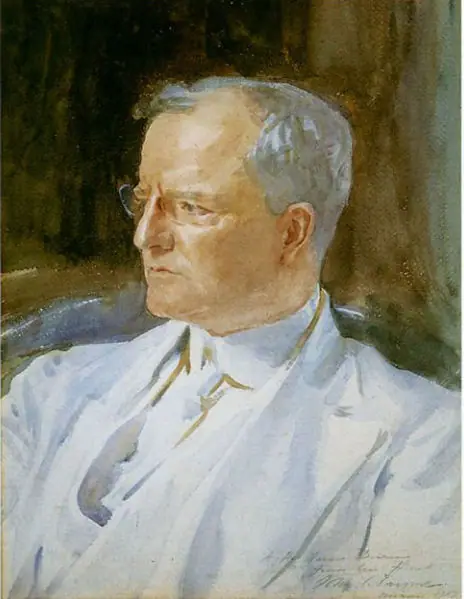
James Deering was born in South Paris, Maine, in 1859, joined the family harvester business as treasurer in 1880, and became a vice-president of International Harvester when the Deering and McCormick companies merged in 1902. He was pushed out of active management in 1909, at 50, with a very large amount of money and nothing in particular to do.
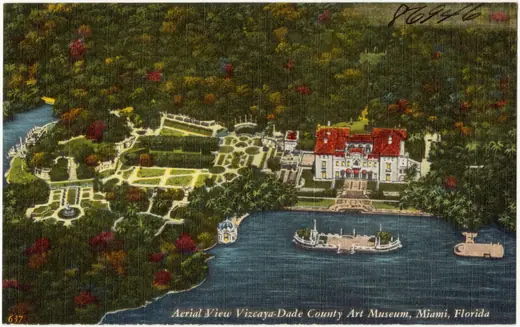
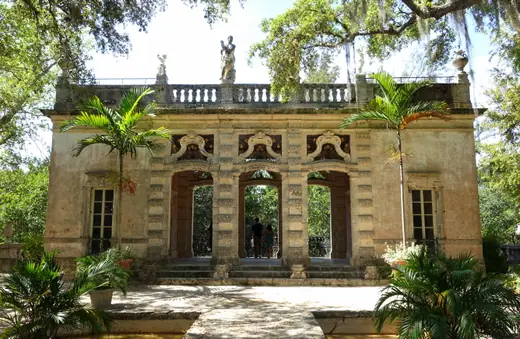
What he did was build Vizcaya — an Italian Renaissance villa, on 180 acres of mangrove and hammock on Biscayne Bay, south of a Miami that was then barely a town. Construction ran from the mid-1910s into the early 1920s. He moved in on Christmas Day 1916. The reported total cost was around $15 million, in 1920s dollars, for a winter house.
He never married and had no children.
On September 21, 1925, he died aboard the SS Paris, returning from Europe. He was 65. The estate's charitable beneficiaries were Chicago institutions — Wesley Hospital, the Visiting Nurse Association, the Children's Hospital of Chicago, the Art Institute of Chicago. Vizcaya went to his two nieces, Marion Deering McCormick and Barbara Deering Danielson.
They inherited the most beautiful problem in Florida.
Twenty-seven years of managed retreat
The nieces did not fight over Vizcaya. There is no will contest in this file, no undue-influence claim, no litigation between the branches of the family. What there is instead is something far more common and much less discussed: an inherited asset that quietly outgrew the heirs' capacity to hold it.
The 1926 Miami hurricane hit fourteen months after Deering died, and pushed saltwater through the gardens. The Depression followed. Then the cost of a large staff, in a climate that dismantles buildings, on land that was becoming some of the most valuable real estate in the United States and taxed accordingly.
So the family sold it in pieces, over decades:
- 1945 — a large parcel to the Catholic Diocese, for what became Mercy Hospital. The retained estate came down to roughly 50 acres.
- 1952 — the villa itself and the formal gardens to Dade County, for $1,000,000, with the heirs donating the furnishings and antiquities that made the house what it was.
- 1953 — Vizcaya opens to the public as a museum.
- 1955 — the remaining village core follows.
A million dollars in 1952 for a house that had reportedly cost fifteen million to build is not a market failure. It is what a unique, unsaleable, high-maintenance asset is actually worth to the only buyer capable of taking it on. The heirs got a price, the public got a museum, and the family got out from under a monthly number that had no ceiling.
It is the best outcome available to that set of facts. It took twenty-seven years, and it was never in the will.
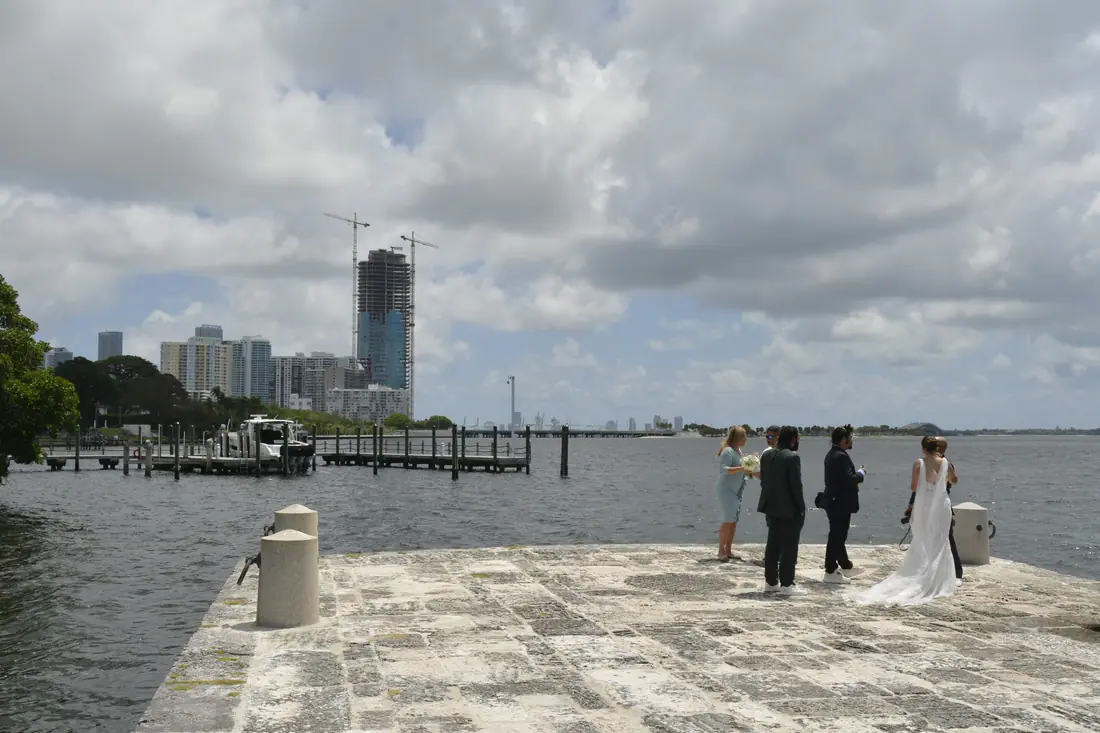
An Illinois man with a Florida house
Here is the part that matters to a reader who owns a condominium rather than a villa.
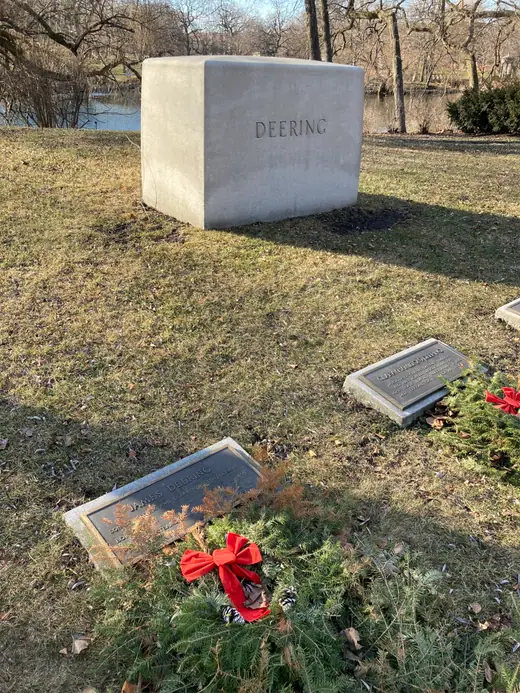
James Deering was domiciled in Chicago. He is buried at Graceland Cemetery there. His will was a Chicago will, administered under Illinois law, and his charitable gifts went to Chicago institutions.
But Vizcaya was Florida real property, and Florida real property does not move to Illinois because its owner did. Title to Florida land is transferred by a Florida court, under Florida procedure, by a personal representative holding Florida letters. When a non-resident dies owning real estate here, the estate needs a second, separate proceeding in a Florida circuit court — ancillary administration — running alongside the home-state probate.
Two probates. Two sets of court costs. Two personal representatives, or one person qualified twice. Two sets of creditor deadlines. It is one of the most reliably surprising bills in American estate administration, and it lands on every snowbird family that never got around to retitling the Florida house.
What a legacy asset actually needs
Deering built something extraordinary and left it to two people who loved it and could not carry it. Nothing in the estate plan addressed the gap. There was no endowment attached to the house, no formula for who paid the taxes, no mechanism for the heirs to hand it to an institution without spending three decades negotiating.
That is not a criticism of a man who died in 1925 — the charitable-remainder tools that would solve it were mostly invented later. But the pattern repeats constantly at ordinary scale. A family cottage. A boat. A ranch. A building the parents were proud of. It is left equally to the children, with no money attached and no exit written down, and it becomes the thing the family argues about at every holiday until somebody finally sells it.
If you intend to leave an asset that costs money to own, leave the money with it — and write down how it gets sold. Those are two paragraphs. Vizcaya took twenty-seven years and a county government.
Timeline
- 1880–1902Deering joins the family harvester business as treasurer; becomes a vice-president of International Harvester after the 1902 merger.
- 1909Phased out of active management at 50. He turns to building.
- 1910sVizcaya is built on 180 acres of Biscayne Bay mangrove and hammock. Reported total cost roughly $15 million.
- Dec 25, 1916Deering takes occupancy of Vizcaya. He winters there for the rest of his life.
- Sep 21, 1925Deering dies aboard the SS Paris at 65. He never married and had no children. Vizcaya passes to his nieces Marion Deering McCormick and Barbara Deering Danielson; charitable gifts go to Chicago institutions.
- Sep 1926The Miami hurricane drives saltwater through the gardens. Restoration costs begin, and never stop.
- 1945The heirs sell a large parcel to the Catholic Diocese; the site becomes Mercy Hospital. About 50 acres are retained.
- 1952The villa and formal gardens are sold to Dade County for $1,000,000. The heirs donate the furnishings and antiquities.
- 1953Vizcaya opens to the public as a museum.
- 1955The remaining village core is transferred.
- 2017Miami-Dade County still owns the property; operations pass to the nonprofit Vizcaya Museum and Gardens Trust under a management agreement.
What actually went wrong
- A magnificent asset with no money attached. Vizcaya generated no income and consumed a great deal. Leaving it to individuals without an endowment, a maintenance fund, or a charitable structure guaranteed that the answer would eventually be a sale.
- No exit written into the plan. There was no mechanism for transferring the house to an institution, no right of first refusal, no formula for valuing it. The heirs had to invent all of that from scratch, in pieces, across twenty-seven years.
- Florida real property owned by a non-resident in his own name. That is the definition of an ancillary administration, and it is entirely avoidable with a trust, an LLC, or an enhanced life estate deed.
- Two owners, one indivisible thing. Co-ownership of a single unique asset by multiple heirs works only where the document says how a disagreement gets resolved. These two agreed. Most siblings, eventually, do not.
- Illiquidity is a planning problem, not a market problem. A house that reportedly cost $15 million sold for $1 million because there was exactly one buyer capable of taking it. Concentration in one unsaleable asset is the risk; the price is just where it shows up.
Would it have gone that way in Florida?
Same result on the house — but the procedure is the point. A non-resident who owns Florida land needs a Florida probate, and that is avoidable.
Deering's story would be identical today in every respect except one, and the exception is the one that costs families money.
Fla. Stat. §734.102 governs ancillary administration. When a non-resident dies leaving assets in Florida — real property, credits, or liens — the estate needs a Florida proceeding to deal with them. The statute sets an order of preference: a personal representative specifically designated in the will to administer the Florida property has first claim to ancillary letters if qualified to act here; then the foreign personal representative, if qualified in Florida; then an alternate named in the will; then a representative selected by those holding a majority interest in the Florida property. The foreign will and codicils are admitted if they were executed as the Florida code requires, bond is posted as in any other administration, and the proceeding otherwise runs as much like an original administration as possible.
In plain terms: a full second probate, in a Florida circuit court, on top of the one in the home state. New filing fees, a new personal representative, a new set of creditor notice obligations under §733.2121 and §733.702, and — if the family used the statutory schedule — a second attorney's fee measured against the Florida property under §733.6171.
The fix is ordinary and it is done before death, not after. Florida real property titled in a properly funded revocable living trust passes under the trust, not through any court. So does property held by an LLC, where the membership interest is the asset and it sits at the owner's domicile. So does property conveyed by an enhanced life estate deed — a Lady Bird deed — which names remainder beneficiaries who take automatically at death while the owner keeps full control and the homestead exemption during life. Any of the three removes the Florida house from the ancillary problem entirely.
One caveat worth naming, because it cuts the other way. Deering's Florida house was a winter residence, not a permanent one, and that matters for more than the tax bill. Florida homestead — the constitutional protection from forced sale under Art. X §4, the devise restrictions in §732.4015, and the property tax exemption — requires actual permanent residence in Florida. A snowbird's Florida house is generally not homestead unless Florida is genuinely the domicile. Families are often surprised in both directions: no creditor protection when they expected it, and no restriction on devise when they assumed one applied.
Practical instruction: if you own Florida real estate and live somewhere else, retitle it now — trust, LLC, or Lady Bird deed — and decide deliberately whether you want Florida to be your domicile. The retitling is a single afternoon. The ancillary administration your family would otherwise run is measured in months.
What people ask us about this.
Further reading
Third-party sites. Not ours, not endorsed, not kept current by us — just the places worth going next.
Sources
- James Deering — Wikipedia (encyclopedic summary, cited sources at foot)
- Vizcaya Museum and Gardens — history, 1952 county purchase, museum opening — Wikipedia (encyclopedic summary, cited sources at foot)
- Vizcaya Museum and Gardens — Miami-Dade County / Vizcaya Museum and Gardens Trust
- Fla. Stat. §734.102 — Ancillary administration — The Florida Senate
- Fla. Stat. §733.6171 — Compensation of attorney for the personal representative — The Florida Senate
- Florida Constitution, Article X, Section 4 — Homestead — The Florida Senate
- Fla. Stat. §222.17 — Declaration of domicile — The Florida Senate
If this is your situation
Free 30-minute consult. Plain English. No pressure.
Nearly every case in this archive turned on something ordinary — an unwitnessed page, a stale beneficiary line, a document nobody could find. Those are cheap to fix while you're alive and expensive to fix afterward.