The unclaimed estate
Florida runs two entirely separate systems for money without an owner, and they have opposite deadlines. Escheated estate proceeds are gone after ten years. Unclaimed property is claimable forever. Almost nobody knows which one holds their money.
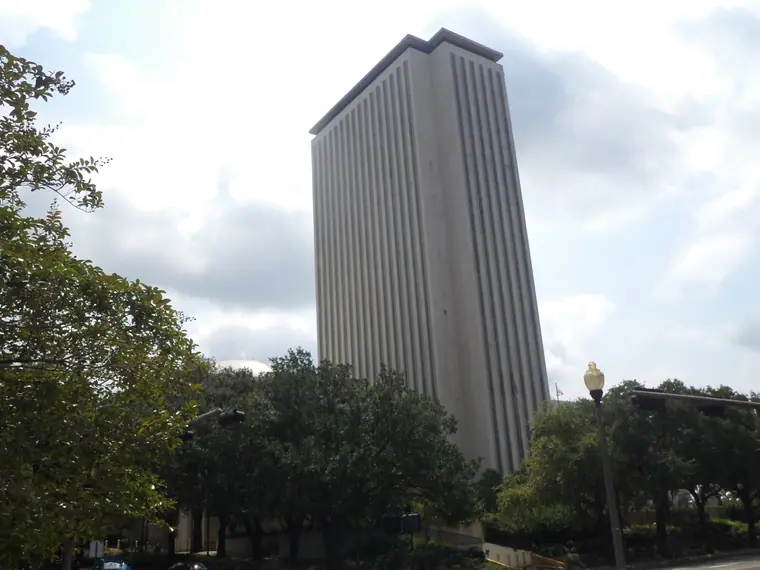
Every state has a pile of money it did not earn and does not want to keep. Florida's is unusually large and unusually well signposted: the Department of Financial Services holds roughly $2 billion in unclaimed property, and says one in five Floridians has an account waiting.
What almost nobody understands is that this is not the same pile as an unclaimed estate. Florida runs two separate systems, under two different chapters, administered on two different timetables, with two opposite answers to the only question anyone asks — how long do I have?
Chapter 717, the unclaimed property system, is the friendly one. A forgotten bank account, an uncashed insurance cheque, a utility deposit, a dividend nobody claimed: after a dormancy period the holder reports it to the state, the state advertises it, and the owner or their heirs can claim it at any time, for free. There is no statute of limitations. The state is a custodian, not an owner.
Section 732.107, the escheat statute, is not friendly. When a person dies leaving an estate and no surviving person entitled to any part of it, that part escheats to the state, is sold, and the proceeds go to the Chief Financial Officer for deposit in the State School Fund. A claimant then has 10 years after the payment to the Chief Financial Officer to reopen the administration and prove entitlement. After that, in the statute's own words, the state's rights to the proceeds become absolute.
Same government, same building, opposite deadlines. The difference is whether the money was lost or whether the family ran out.
What escheat actually does, step by step
Escheat is old — the word describes property reverting to the sovereign when a line of succession fails — but Florida's version is a modern administrative procedure rather than a royal prerogative, and it has been in the current Probate Code since chapter 74-106.
The property is sold and the proceeds are paid to the Chief Financial Officer, who deposits them in the State School Fund. Nothing is held in kind: an escheated house becomes money, and the money becomes school funding.
Then the ten-year window opens. Any person claiming to be entitled may reopen the administration and prove entitlement to the proceeds, within 10 years after the payment to the Chief Financial Officer. It is a probate proceeding, not a form — the claimant reopens the estate and litigates the relationship.
One further provision matters and is the direct connection to the heir-hunting industry. §732.107 permits the Department of Financial Services to distribute the proceeds directly to an attorney, accountant, or licensed private investigator where the entitled person has assigned the right to receive them under a written agreement. The funds must be held in a trust or escrow account at a Florida financial institution, and disbursed to the client within 10 days unless there is a protest. The legislature contemplated that a stranger might be the one who found the heir, and wrote the plumbing for it.
The money left over inside an ordinary probate
There is a third case, more common than either of the above, and it happens inside estates that are otherwise perfectly ordinary: the beneficiary who cannot be found. A named legatee who moved abroad in 1994. A sibling nobody has spoken to. A cheque returned twice.
Fla. Stat. §733.816 tells the personal representative exactly what to do, and it is worth following precisely, because the alternative is an estate that cannot close.
- Sell and deposit. The personal representative sells the unclaimed property and deposits the proceeds, together with any cash already in hand, with the clerk of the court.
- Notice, scaled to the amount. For $500 or less, the clerk posts a notice at the courthouse for 30 days. For more than $500, the clerk publishes once a month for two consecutive months in a newspaper of general circulation in the county.
- Six months, then the state. After six months from the posting or publication, the clerk transmits the funds to the Chief Financial Officer, less the clerk's fees and the cost of publication.
- Into the school fund. The Chief Financial Officer deposits them to the credit of the State School Fund.
- Ten years to claim. A claimant has 10 years from the date of deposit with the Chief Financial Officer to petition the court with proof of entitlement. After that the funds escheat for the benefit of the State School Fund.
The practical effect is that a missing beneficiary does not hold an estate hostage. The personal representative has a statutory exit, and the beneficiary keeps a decade-long right to come and get it. What the beneficiary does not keep is the property itself — by then it has been sold, and what is waiting is a number.
The two billion dollars, and the rules for the people who chase it
Chapter 717, the Florida Disposition of Unclaimed Property Act, runs on an entirely different logic. It is not about failed succession. It is about dormancy.
Property is generally presumed unclaimed after five years without owner-initiated contact or activity, unless the owner shows interest in it. Holders — banks, insurers, utilities, transfer agents — must report annually by May 1 for the preceding calendar year, and must exercise due diligence to locate owners of accounts worth $50 or more, notifying them 60 to 120 days before the report is filed. The department then makes its own cost-effective attempt to notify owners of property valued over $250.
The money is remitted to the department, which retains a working balance for paying claims and administration and deposits the remainder into the State School Fund. That is the sentence that makes people uneasy and should not: the state is holding it, not keeping it. Florida publicises the fact that there is no statute of limitations, and that claiming costs nothing. In 2024, officials reported paying out $323 million to Floridians.
A verified claim goes to the department, which has 90 days to determine it, extendable by 60 days in defined circumstances. For a deceased owner, the claimant is proving a chain — death certificate, letters of administration or an alternative statutory route, and the relationship — which is precisely the work that estate practitioners and, less romantically, professional finders do.
Which brings us to the finders, and to the two sections that govern them. §717.1400 limits registration as a claimant's representative to three groups: licensed private investigators, Florida-certified public accountants, and Florida-licensed attorneys — and prohibits firm names implying government affiliation, so no “Florida State Recovery Bureau.” §717.135 caps total fees and costs at 30% of the amount claimed, requires the department's own forms, mandates disclosure of the dollar amount claimed, the percentage and dollar amount of fees, and the net to the claimant — and provides that an agreement may not be made irrevocable and may not assign any portion of the unclaimed property held by the department. Agreements on any other form are void.
Timeline
- 1974Chapter 74-106 enacts the modern Florida Probate Code, including the escheat provision now at §732.107.
- 1989Chapters 89-291 and 89-299 amend the escheat statute, including the provisions on distribution through an attorney, accountant, or licensed investigator.
- 2001Chapters 2001-36 and 2001-226 revise §732.107 again, aligning it with the reorganised Department of Financial Services.
- 2003
- Annually, May 1Holders of dormant property file their Chapter 717 reports with the Department of Financial Services for the preceding calendar year.
- 2024Florida officials report paying out $323 million in unclaimed property to Floridians during the year.
- Aug 2025The Department of Financial Services reports holding roughly $2 billion in unclaimed property, and estimates that one in five Floridians has an account.
- 10 years after deposit
What actually went wrong
- The family ran out, and nobody knew that was possible. §732.103 stops at the descendants of grandparents. A cousin three times removed is not an heir in Florida, however genuine the relationship.
- The two deadlines were confused. Unclaimed property under Chapter 717 can be claimed at any time. Escheated estate proceeds under §732.107 and §733.816 cannot — there are ten years, and then there are not.
- The personal representative sat on a missing beneficiary. §733.816 gives a clean statutory exit: sell, deposit with the clerk, notice, six months, transmit. An estate held open indefinitely for one unreachable legatee is a fee-generating machine with no destination.
- Nobody searched the state database. Claiming Chapter 717 property is free and requires no representative at all. Every fee paid to a finder for a Florida account was optional.
- A recovery agreement was signed on the wrong paper. §717.135 requires the department's authorised forms, caps total fees and costs at 30%, and voids agreements that purport to be irrevocable or to assign the property.
Would it have gone that way in Florida?
It depends which pile it is in — and that is the actual answer, not a dodge. Unclaimed property is claimable forever. Escheated estate proceeds are claimable for ten years, and then they are the state's.
Escheat first. Fla. Stat. §732.107 provides that where a person dies leaving an estate without being survived by any person entitled to a part of it, that part escheats to the state. The property is sold, the proceeds go to the Chief Financial Officer and into the State School Fund, and a person claiming entitlement may reopen the administration within 10 years of the payment. After that the state's rights become absolute. The statute also allows the Department of Financial Services to pay the proceeds to a Florida attorney, accountant, or licensed private investigator holding a written assignment, into a Florida trust or escrow account, with distribution to the client within 10 days absent a protest.
The reason escheat happens sits in §732.103. Florida's intestacy ladder runs descendants → parents → siblings and their descendants → grandparents and their descendants, and then it ends. There is no residual category of “nearest living relative.” Add §732.105, under which half-blood kindred take half as much as whole-blood kindred of the same degree, and a family tree can produce a smaller answer than anyone expects.
Then the missing beneficiary. §733.816 covers property a personal representative cannot deliver: sell it, deposit the proceeds with the clerk, post for 30 days if $500 or less or publish monthly for two months if more, wait six months, and the clerk transmits the balance to the Chief Financial Officer for the State School Fund — with 10 years for a claimant to petition. This is how a Florida estate closes despite an unreachable legatee, and it is the correct route rather than an improvisation.
Then Chapter 717, which is a different animal entirely. Dormant accounts are reported to the Department of Financial Services after roughly five years of inactivity, holders must attempt notice before reporting, and the department attempts its own notice above $250. The state deposits the balance into the State School Fund but remains a custodian: there is no time limit on a Chapter 717 claim and no charge for making one. The department has 90 days to determine a verified claim, extendable by 60. For a deceased owner, an heir claims by proving death and entitlement — which usually means letters of administration, and sometimes means opening a small estate for the sole purpose of collecting the account.
The honest caveat about finders. A professional locator is not doing anything improper — Florida wrote rules for them rather than banning them. But §717.1400 limits registration to licensed private investigators, Florida CPAs, and Florida attorneys, and §717.135 caps total fees and costs at 30%, requires the department's own forms, requires the fee and the net-to-claimant to be stated in dollars, and voids any attempt to make the agreement irrevocable or to assign the property. If a letter arrives offering to recover “funds in your name” for a percentage, the account can be searched for free first.
What to actually do. Search FLTreasureHunt.gov for your own name, your parents' names, and the name of any estate you have administered — it costs nothing and takes minutes. If you are a personal representative and cannot find a beneficiary, follow §733.816 rather than holding the estate open. And if your closest living relatives are cousins, understand that Florida will not find them for you: write a will, because §732.103 is where an estate goes to become a line item in the school budget.
What people ask us about this.
Further reading
Third-party sites. Not ours, not endorsed, not kept current by us — just the places worth going next.
Sources
- Fla. Stat. §732.107 — Escheat — The Florida Senate
- Fla. Stat. §733.816 — Disposition of unclaimed property held by personal representatives — The Florida Senate
- Fla. Stat. Ch. 717 — Disposition of Unclaimed Property — The Florida Senate
- Fla. Stat. §717.135 — Unclaimed property recovery agreements — The Florida Senate
- Fla. Stat. §717.1400 — Registration of claimant's representatives — The Florida Senate
- 'Florida's Treasure Hunt': are you one of the millions who could have unclaimed money? — ABC7 Suncoast, Aug 2025
- Florida's Unclaimed Property — official search and claim site — Florida Department of Financial Services
If this is your situation
Free 30-minute consult. Plain English. No pressure.
Nearly every case in this archive turned on something ordinary — an unwitnessed page, a stale beneficiary line, a document nobody could find. Those are cheap to fix while you're alive and expensive to fix afterward.