Lord Lucan
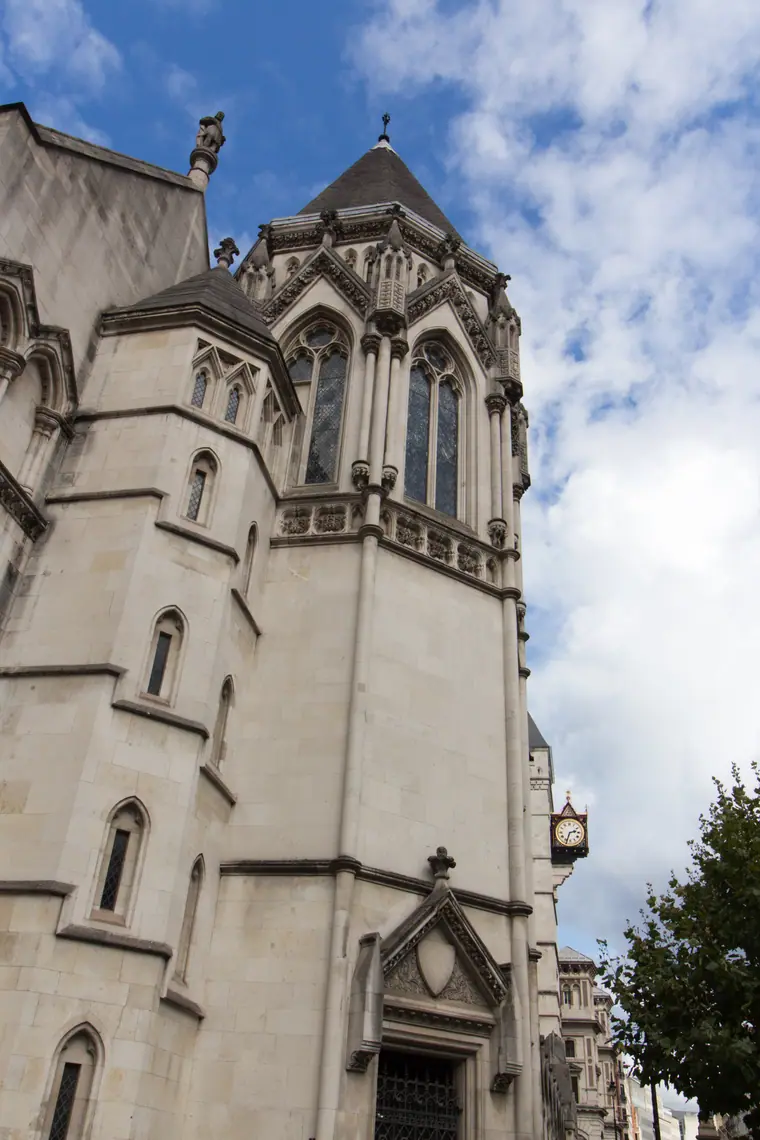
He disappeared in November 1974. In 1999 the High Court declared him dead and granted probate — but issued no death certificate, so his son could not take the earldom. It took a new statute and another seventeen years. The certificate came in February 2016, forty-two years on.
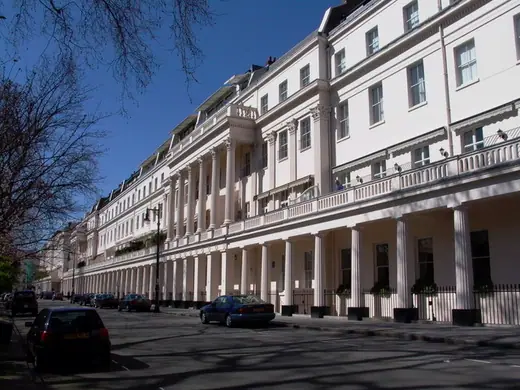
Richard John Bingham, 7th Earl of Lucan, was born in Marylebone on 18 December 1934, went to Eton, served two years in the Coldstream Guards, and by the 1970s was a professional gambler in serious financial trouble, separated from his wife and having lost a custody battle over his children.
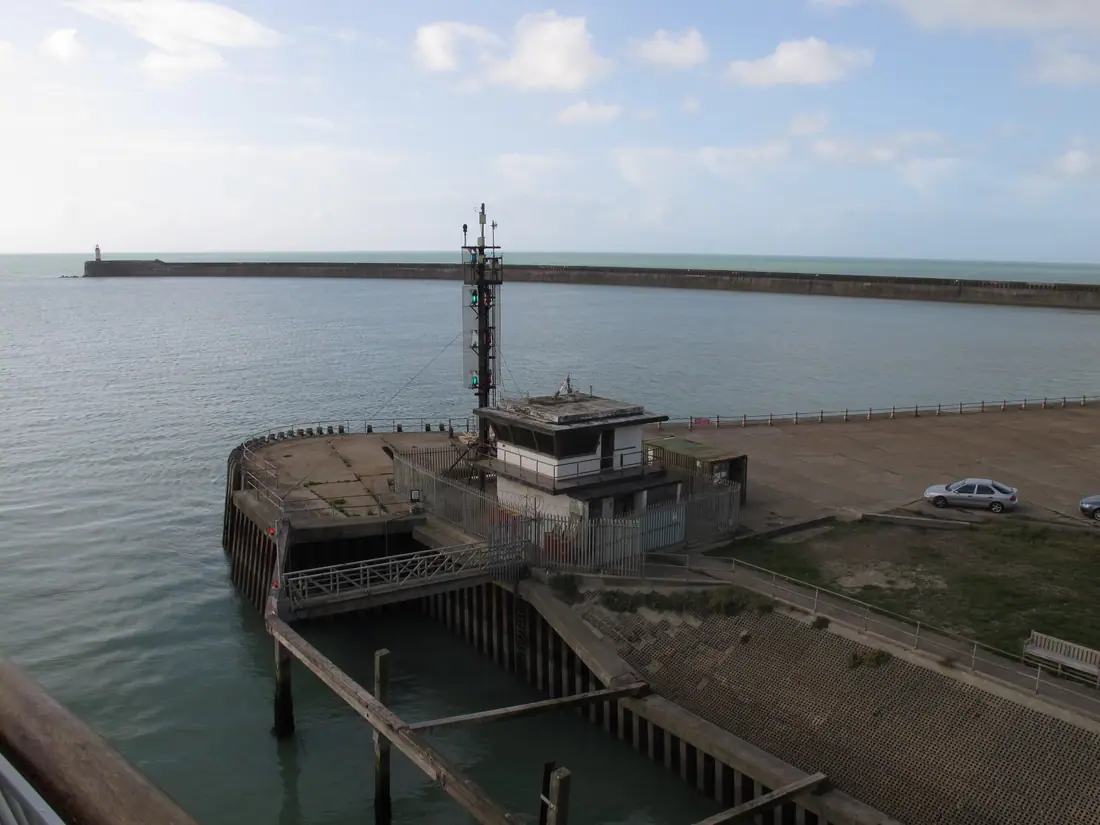
On the evening of 7 November 1974, Sandra Rivett, the nanny employed by Lady Lucan, was killed at 46 Lower Belgrave Street in Belgravia. Lady Lucan was attacked and escaped to a nearby public house. Lucan drove that night to friends in Uckfield. On 8 November a borrowed Ford Corsair was found abandoned at Newhaven, on the Sussex coast. He has not been seen since.
At an inquest in June 1975 a jury returned a verdict naming Lucan as Rivett's killer — the last time an English coroner's jury did such a thing, because section 56 of the Criminal Law Act 1977 removed the power. He was never tried and never convicted, and no court has since found him guilty of anything.
That is the story everyone knows. The part almost nobody knows is that the legal question it produced took forty-two years to answer, and it took an Act of Parliament to answer it.
Dead enough to distribute an estate. Not dead enough to hand over a title.
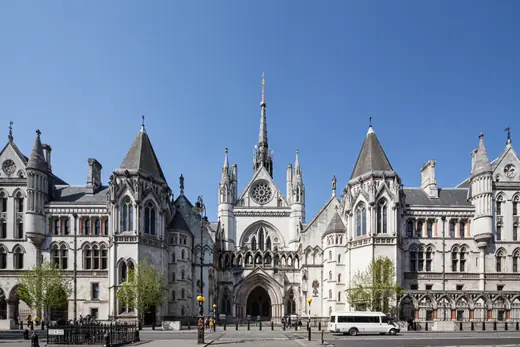
On 27 October 1999 the High Court declared Lucan legally dead and probate was granted, so his estate could be administered under his will.
That grant did exactly one thing: it authorised somebody to deal with his property. It did not produce a death certificate, and it did not settle his status generally. When his son George Bingham sought to take his father's place, he was refused. The earldom did not pass. As far as the register of deaths was concerned, the 7th Earl of Lucan was not dead — he was missing.
The distinction sounds like pedantry and is not. Under the pre-2014 English law there was a rebuttable presumption that a person unheard of for seven years was dead, and relatives could go to court and rely on it for particular purposes — this estate, that insurance policy, this piece of land. What the court could not do was make a general declaration of death effective for all purposes. So a family could hold a grant of probate and still be told, by a different office applying a different rule, that the person was not registered as dead.
It is a rather good illustration of a point that applies everywhere, Florida included: an order is only as wide as the statute that authorised it. A determination made for probate purposes settles probate. It does not automatically settle pensions, insurance, marital status, land registration, or a peerage.
One statute, one declaration, one register
The Presumption of Death Act 2013 received Royal Assent on 26 March 2013 and came into force on 1 October 2014. It did the obvious thing that had somehow never been done: it gave the High Court power to make a single declaration of presumed death, effective for all purposes.
The court may make the declaration if satisfied that a missing person has died, or has not been known to be alive for a period of at least seven years. On a declaration, the Registrar General enters it in a Register of Presumed Deaths, and a certified copy of that entry does the work of a death certificate — good for the bank, the pension, the land registry, the insurer, and the College of Arms.
George Bingham applied. On 3 February 2016 the High Court granted the declaration and a death certificate was issued for his father. He became the 8th Earl of Lucan the same day.
Forty-two years, three months and twenty-six days after the Ford Corsair was found at Newhaven.
- Before the Act: a presumption, relied on for specific purposes, with no general declaration and no register entry.
- After the Act: one High Court declaration, effective for all purposes, entered in the Register of Presumed Deaths.
- What it fixed for the Lucans: the seventeen-year gap between owning the estate and being able to prove the death.
A title, and not much else
The estate was not a fortune. A report to creditors in August 1975 put Lucan's assets at £22,632 against unsecured debts of roughly £45,000. The custody proceedings alone were estimated to have cost him around £20,000. By the time he disappeared, his financial position was, on the documents, insolvent.
So the seventeen-year fight after 1999 was not about money. It was about a hereditary peerage — an asset with no market value, no cash flow, and no substitute, which is precisely the category of thing families fight hardest over. You cannot sell an earldom, borrow against it, or split it among three children. There is one of it, it goes to one person, and until 2016 it went to nobody.
There is a second, quieter point in the 1975 creditors' report. An insolvent estate does not stop being an estate. Somebody still has to be appointed, the assets still have to be collected, and the creditors still have to be dealt with in the statutory order — which is one of the reasons a grant was worth obtaining in 1999 even though there was nothing in it for the family.
Lady Lucan died in 2017. The couple's children were not provided for in her will, which was reported at the time and which is a separate story about a separate document. Sandra Rivett's family have spoken publicly across the decades; her killing remains, in law, an unsolved murder.
Timeline
- Dec 18, 1934Richard John Bingham is born in Marylebone. He succeeds as 7th Earl of Lucan in 1964.
- Nov 7, 1974Sandra Rivett, the nanny employed by Lady Lucan, is killed at 46 Lower Belgrave Street. Lady Lucan is attacked and escapes to a nearby public house.
- Nov 8, 1974A borrowed Ford Corsair is found abandoned at Newhaven, on the Sussex coast. Lucan is not seen again.
- Jun 1975An inquest jury returns a verdict naming Lucan as Rivett's killer — the last such verdict before section 56 of the Criminal Law Act 1977 removes a coroner's jury's power to name anyone. He is never tried.
- Aug 1975A report to creditors puts his assets at £22,632 against unsecured debts of roughly £45,000.
- Oct 27, 1999The High Court declares Lucan legally dead and grants probate of his will. No death certificate is issued, and his son is refused his father's seat.
- Mar 26, 2013The Presumption of Death Act 2013 receives Royal Assent.
- Oct 1, 2014The Act comes into force, creating a single High Court declaration effective for all purposes and a Register of Presumed Deaths.
- Feb 3, 2016On George Bingham's application the High Court grants the declaration. A death certificate is issued and he becomes the 8th Earl of Lucan — 42 years on.
What actually went wrong
- One determination, one purpose. The 1999 order settled the estate and nothing else. Families routinely assume a court's finding of death is universal. It is only as wide as the statute behind it, and the 1999 statute was narrow.
- No death certificate, no anything else. Registrars, pension schemes, insurers and land registries do not read court orders; they read certificates. England did not create a Register of Presumed Deaths until 2014, and the gap swallowed seventeen years.
- The asset that could not be divided. A hereditary title has no value and no substitute. Every fight in this archive about a ring, a dog, a house or a set of ashes is the same fight, and they are the ones that last decades.
- An insolvent estate still needs administering. Assets of £22,632 against debts of about £45,000 meant nothing was coming to the family. Somebody still had to be appointed to collect and to deal with creditors in the statutory order.
Would it have gone that way in Florida?
It could not happen this way in Florida. One determination, one certificate, all purposes — and the clock would have run out in 1979, not 2016.
Florida never built the English split. Fla. Stat. §731.103(3) presumes death after five continuous years of absence from the place of last known domicile where the absence is unexplained after diligent search and inquiry, and permits a court to find death sooner where the person was exposed to a specific peril. On that determination, §382.012 requires the Department of Health to file a presumptive death certificate, with the judge signing the medical certification. There is a court order and there is a certificate, and the certificate is a Florida death certificate — the same document, from the same registry, that everyone else gets.
Which means the seventeen-year gap between 1999 and 2016 has no Florida equivalent. A family holding a Florida order determining death also holds the piece of paper the bank, the insurer, the pension administrator and the Social Security Administration will accept. In England before 2014, they did not.
And the timing would have been very different. Lucan disappeared on 8 November 1974. Florida's five-year period would have run out in November 1979, and on the ordinary reading of §731.103(3) the presumed date of death would be the end of that period — not the date he vanished — unless evidence established that death occurred earlier. That date matters far more than people expect: it fixes the valuation date for every asset, the start of the creditor clock, and who among the heirs was alive to inherit.
On the creditors, Florida is blunt. His estate was insolvent — assets of £22,632 against about £45,000 of unsecured debt. In a Florida administration, §733.702 requires creditors to file within the later of 3 months after the first publication of the notice to creditors or 30 days after service on a known or reasonably ascertainable creditor, and §733.710 bars any claim more than 2 years after death as a jurisdictional matter. Insolvent estates in Florida are paid in the statutory order of §733.707, and a great many old claims simply die on the deadline rather than on the merits.
The honest caveat, and it is the Florida-specific one. Florida has no hereditary titles, but it has something that behaves a little like Lucan's earldom: constitutional homestead. Under Fla. Const. Art. X, §4 and §732.401, the homestead is protected from forced sale by most creditors and, where the decedent leaves a spouse or minor child, passes outside the reach of the estate's creditors and outside the ordinary devise rules. It is the one asset in a Florida insolvent estate the creditors usually cannot touch, and it descends by a formula the will cannot override.
The practical instruction. If you hold a court order about a missing relative from any jurisdiction, ask one question before relying on it: what does this order actually authorise, and did a certificate issue? An order that opens an estate may do nothing for a pension, a life policy, a jointly held deed, or a foreign registry. In Florida, insist that the §382.012 certificate is filed and obtain certified copies — that is the document that ends the argument everywhere else.
What people ask us about this.
Further reading
Third-party sites. Not ours, not endorsed, not kept current by us — just the places worth going next.
Sources
- John Bingham, 7th Earl of Lucan — Wikipedia
- Presumption of death: a death certificate for Lord Lucan after 42 years — Penningtons Manches, Feb 2016
- Lord Lucan granted death certificate, son takes title — TIME, Feb 2016
- Death certificate issued for Britain's Lord Lucan, missing since 1974 — Voice of America, Feb 2016
- Death certificate granted 42 years after Lord Lucan's disappearance — Ison Harrison Solicitors
- Presumption of Death Act 2013 — legislation.gov.uk
- Criminal Law Act 1977, section 56 — legislation.gov.uk
- Fla. Stat. §731.103 — Evidence as to death or status — The Florida Senate
- Fla. Stat. §382.012 — Presumptive death certificate — The Florida Senate
If this is your situation
Free 30-minute consult. Plain English. No pressure.
Nearly every case in this archive turned on something ordinary — an unwitnessed page, a stale beneficiary line, a document nobody could find. Those are cheap to fix while you're alive and expensive to fix afterward.