The sealed royal wills
In England a proved will is a public document anyone can buy a copy of. Except for one family. Since 1910 the wills of senior royals have been sealed by court order, and in 2021 a judge sealed Prince Philip's for ninety years after a hearing nobody was told about.
Probate is a public proceeding, and in England it is unusually public. Once a will is proved, section 124 of the Senior Courts Act 1981 puts the original under the control of the High Court and provides that it shall be open to inspection. In practice this means anyone — a journalist, a neighbour, a genealogist, you — can order a copy of a proved English will online for a fee measured in pounds. This is not a loophole. It is the design. Probate transfers property under state authority, and the price of that authority is that the record of it is open.
There is one family it does not apply to.
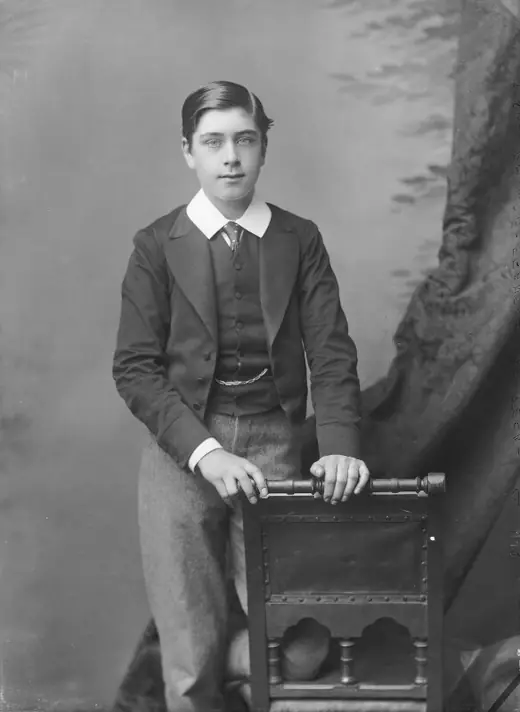
Since 1910, when the will of Prince Francis of Teck, brother of Queen Mary, was sealed, the wills of senior members of the Royal Family have been closed by order of the President of the Family Division. There is no statute that says so. It is a practice that grew up case by case, largely without reasoned judgments, and its existence was better known than its terms.
Prince Philip, and a hearing nobody was told about
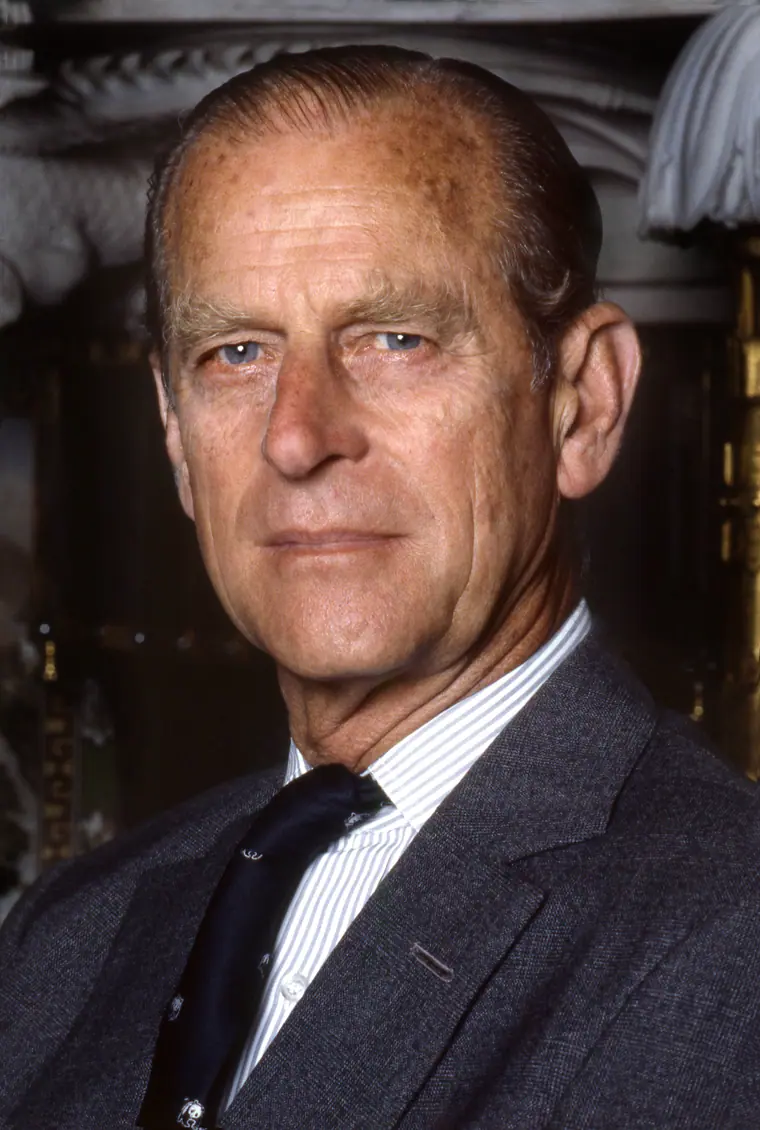
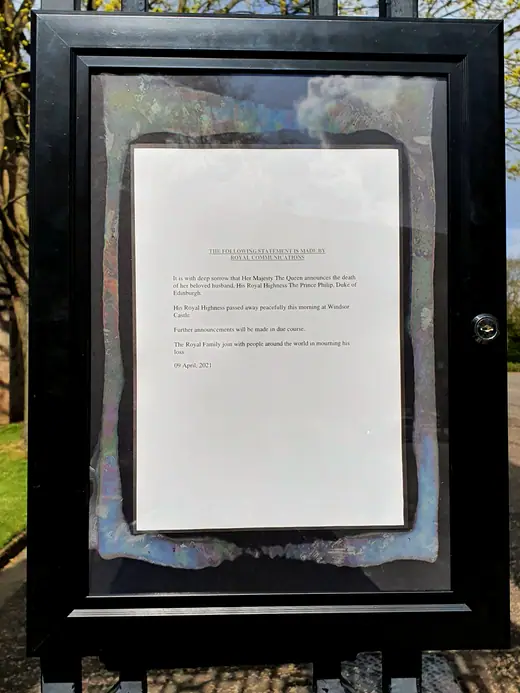
Prince Philip, Duke of Edinburgh, died on April 9, 2021, aged 99. His executor applied in the usual way for the will to be sealed.
The application was heard in private on July 28, 2021 by Sir Andrew McFarlane, President of the Family Division. The only people present were representatives of the executor and of Her Majesty's Attorney General, who appeared to represent the public interest. The media were not notified that the hearing was happening.
The judgment — In re: the Will of His late Royal Highness The Prince Philip, Duke of Edinburgh [2021] EWHC 77 (Fam) — was handed down and published on September 16, 2021. The President ordered the will sealed for 90 years, at which point it is to be privately opened and reviewed, with a decision then taken about publication.
The reasoning ran through the constitutional position of the Sovereign. The judgment held that a special practice for royal wills is appropriate because of that position, and that publication would attract publicity of a degree wholly at odds with maintaining the Sovereign's dignity. The 90-year term was itself a change: earlier royal wills had been sealed with no time limit at all, so the 2021 order was, in its own way, a small movement toward eventual openness.
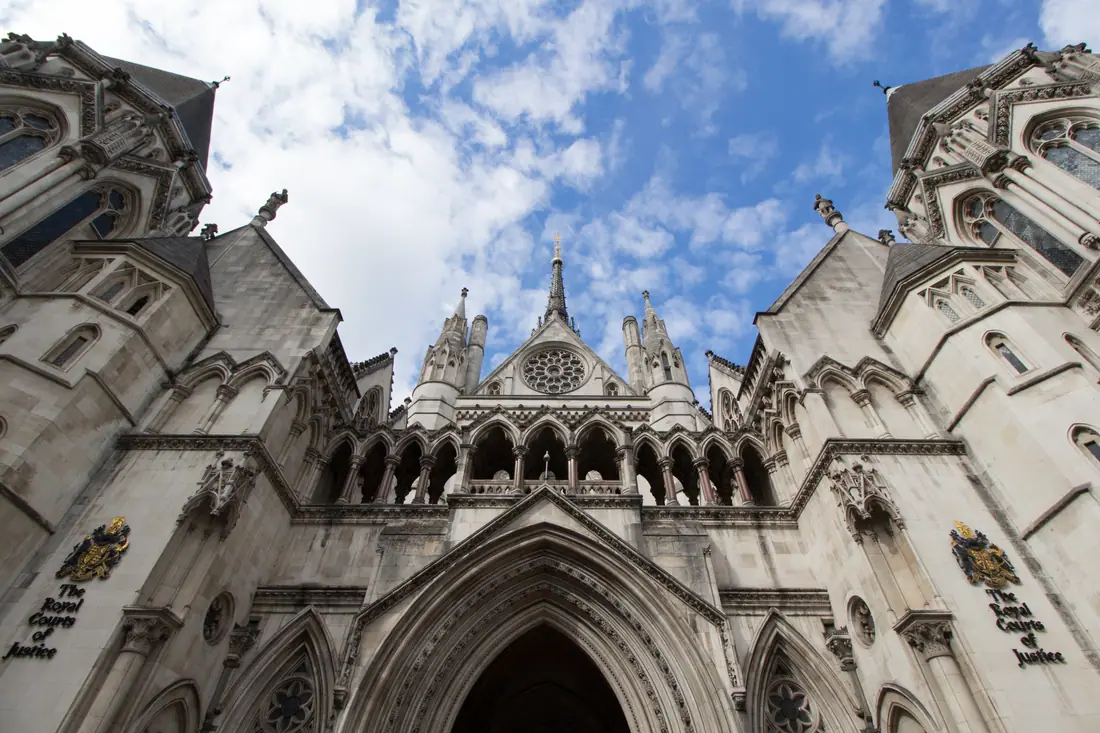
The Guardian appeals, and loses
Guardian News and Media appealed. Its complaint was not primarily that the will should be public. It was that the press had been shut out of a hearing about openness — and shut out of the earlier decision about whether that hearing should be private — without ever being told it was taking place.
The Court of Appeal heard it on July 20 and 21, 2022 and gave judgment on July 29, 2022: The Executors of HRH Prince Philip, The Duke of Edinburgh (Deceased) v Guardian News and Media, [2022] EWCA Civ 1081. The court was Sir Geoffrey Vos MR, Dame Victoria Sharp P, and King LJ. The appeal was dismissed on all grounds.
The court accepted the general principle that the media should normally be able to be heard at some stage where an order engages open-justice and free-expression rights, but found no error by the judge, since notifying the press would itself have produced the publicity the application was designed to avoid.
King LJ recorded reservations, noting that the court might have considered admitting accredited journalists subject to strict reporting restrictions until judgment, while concluding that the judge had not been wrong given the limited nature of appellate review. The Court of Appeal also observed how little formality had historically attended these applications — the questions Lord Phillips had listed in 2008 about how the sealing practice should work had gone unanswered until this case gave the first opportunity to reason about it in public.
One of them has actually been opened
Sealed does not mean sealed forever, and there is a documented instance.
On November 15, 2017, Sir James Munby P granted an application by the Assistant Keeper of the Queen's Archives for access to the will and codicil of the Duke of Windsor — the former Edward VIII — in In the matter of His Royal Highness the Duke of Windsor, [2017] EWHC 2887 (Fam). The stated grounds were filling a gap in the Royal Archives' own holdings and identifying who held copyright in the Duke's literary works. Either, the judgment said, would plainly justify disclosure. One copy was taken and the envelope was re-sealed.
So the mechanism is a court's continuing control over a document, not a vault that cannot be opened. Someone with a proper reason may apply. It is simply that almost nobody has one the court accepts.
Timeline
- 1910The will of Prince Francis of Teck, brother of Queen Mary, is sealed — the start of the practice.
- 1981Section 124 of the Senior Courts Act places proved wills under the control of the High Court and open to inspection — the rule the royal practice is an exception to.
- 2002The wills of Princess Margaret and the Queen Mother are sealed by order of the President of the Family Division.
- Feb 8, 2008Brown v Executors of the Estate of HM Queen Elizabeth the Queen Mother [2008] EWCA Civ 56 — application to inspect those wills dismissed as without foundation.
- Nov 15, 2017Munby P grants the Royal Archives access to the sealed will of the Duke of Windsor. A copy is taken; the envelope is re-sealed.
- Apr 9, 2021Prince Philip, Duke of Edinburgh, dies aged 99.
- Jul 28, 2021McFarlane P hears the sealing application in private. Only the executor and the Attorney General attend; the media are not notified.
- Sep 16, 2021[2021] EWHC 77 (Fam): the will is sealed for 90 years, then to be privately opened and reviewed. The judgment discloses a safe holding over 30 sealed royal wills.
- Jul 29, 2022[2022] EWCA Civ 1081: the Court of Appeal dismisses Guardian News and Media's appeal on all grounds, with reservations recorded by King LJ.
What actually went wrong
- A century of practice with no published reasoning. Applications were dealt with informally for over a hundred years. When the first reasoned public judgment finally arrived in 2021, it had to construct the framework from scratch.
- A hearing about openness, held without notice to anyone. Both courts accepted this, and the Court of Appeal still recorded that the media should normally be heard where such orders are made. That tension is the case.
- Indefinite sealing, until it wasn't. Earlier royal wills were sealed with no end date. The 90-year term in 2021 is the first fixed period, which means the practice was moving even as it was being upheld.
- Nobody knows the scope. Over thirty envelopes exist. Which royals, and on what basis each was added, has never been published.
Would it have gone that way in Florida?
Not remotely. A Florida will admitted to probate is a public court record, and Florida has no royal exception. If you want privacy, you use a trust, not a seal.
Start with what is public in a Florida estate, because most people are surprised by both halves of the answer.
The will is public. It is filed with the clerk of the circuit court — §732.901 requires the custodian to deposit it within 10 days of learning of the death — and once it is filed it sits in a court file that is presumptively open. So are the petition for administration, the letters of administration, the orders, the notice to creditors, the claims, and the objections. Anyone can walk into the clerk's office, or in most counties open a browser, and read who got what.
But the numbers are not. This is the part that gets missed. Under §733.604(1), any inventory of an estate — initial, amended or supplementary — filed with the clerk is confidential and exempt from Florida's public-records law and from Article I, §24(a) of the Florida Constitution, and the same protection covers inventories of the elective estate and all accountings filed in the proceeding. The clerk must make them available to the personal representative, the personal representative's attorney, any interested person as defined in §731.201, and anyone else the court authorises for good cause. So the plan is public and the balance sheet is not.
Sealing anything else is hard on purpose. Florida Rule of Judicial Administration 2.420 governs public access to judicial-branch records, and a party seeking to close a record has to make the showing the rule requires; a court can only restrict access in limited circumstances on a compelling showing. There is no category of person, however prominent, for whom the analysis is different. Harper Lee's will was sealed in Alabama on a motion by her estate — a reminder that state practice varies and that it is a court order, not a status.
The honest caveat. Public does not mean publicised. The overwhelming majority of Florida probate files are read by nobody. The privacy problem is real for a narrow set of people — the wealthy, the locally famous, families with a contest, and anyone whose beneficiaries would rather the amounts not circulate — and irrelevant for almost everyone else.
The practical instruction, and it is the whole point of the comparison. England's answer to privacy is a judge and a safe. Florida's answer is structural: a revocable living trust is not filed with any court, in life or at death. Assets titled in the trust pass under its terms without a probate proceeding, so there is no public file to read. The trustee still owes duties — §736.0813 requires a trustee to keep qualified beneficiaries reasonably informed and to account — but that disclosure runs to the beneficiaries, not to the public. Pair the trust with a pour-over will (which does become public if it is ever filed, but says almost nothing except everything goes to the trust), and confirm that every deed, account and beneficiary designation actually points at the trust. Funding is where this plan fails; an unfunded trust sends the assets straight back into the open court file you were trying to avoid.
What people ask us about this.

Further reading
Third-party sites. Not ours, not endorsed, not kept current by us — just the places worth going next.
Sources
- The Executors of HRH Prince Philip, The Duke of Edinburgh (Deceased) v Guardian News and Media [2022] EWCA Civ 1081 — The National Archives — Find Case Law
- Prince Philip's will to be sealed for 90 years, family court rules after secret hearing — The Law Society Gazette, Sep 2021
- Prince Philip's will to be kept secret for 90 years, British court rules — CNN, Sep 2021
- Brown v Executors of the Estate of HM Queen Elizabeth The Queen Mother [2008] EWCA Civ 56 — BAILII
- In the matter of His Royal Highness the Duke of Windsor [2017] EWHC 2887 (Fam) — Courts and Tribunals Judiciary
- Royal wills: unsealing the mystery — The Transparency Project
- The Royal Will, unsealed — IDR Law
- Fla. Stat. §733.604 — Inventory — The Florida Senate
- Fla. Stat. §732.901 — Production of wills — The Florida Senate
If this is your situation
Free 30-minute consult. Plain English. No pressure.
Nearly every case in this archive turned on something ordinary — an unwitnessed page, a stale beneficiary line, a document nobody could find. Those are cheap to fix while you're alive and expensive to fix afterward.