Heir hunters
An industry exists to find the relatives of people who died without a will, prove the relationship in court, and take a percentage. It has made ordinary people rich, produced a British television series, and — in Salt Lake City in 2019 — produced two guilty pleas under the Sherman Act.
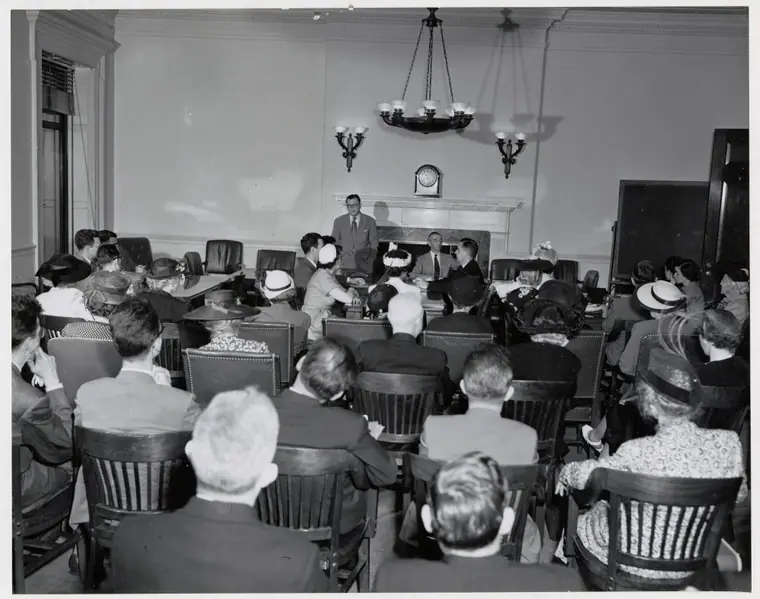
Roman Blum died in Staten Island in January 2012, aged 97. He was a Holocaust survivor who became a real estate developer. His ex-wife had died in 1992. There were no children, and there was no will. What he left behind was reported at roughly $40 million — described in coverage of the case as the largest unclaimed estate in New York's history.
An eighteen-month international search for heirs followed. It found nobody. New York's public administrator, professional genealogists, journalists, and volunteers all failed, and the money moved toward the state comptroller's office of unclaimed funds, where it can sit indefinitely against the possibility of a proven heir who has not yet arrived.
That is the negative image of an entire industry. The heir hunters — the trade calls itself probate genealogy or, in American antitrust filings, heir location services — exist because the Blum outcome is expensive and avoidable more often than people assume. Somebody reads the intestate filings, builds the family tree, finds the second cousin in Lisbon who never knew the decedent existed, and offers to prove the relationship in court in exchange for a share.
It is a legitimate business, it is regulated unevenly, and it produces two reliable emotional reactions: gratitude from people who received money they did not know existed, and unease at the arithmetic — because the percentage is negotiated at the exact moment the heir knows least.
Where the leads come from, and what the fee looks like
Probate genealogy runs on public information that most people never look at. Intestate estates are filed in open court. Public administrators publish appointments. Unclaimed property rolls are searchable. And in England and Wales, the government simply publishes the list.
The Bona Vacantia Division of the Government Legal Department administers estates in England and Wales where a person dies without a will and without known family, for estates over £500 — with the Duchy of Cornwall and the Duchy of Lancaster handled separately. It publishes a searchable unclaimed estates list, distributed as a downloadable CSV file. Anyone can open it in a spreadsheet. That list is the raw material of the BBC's long-running Heir Hunters, and of the firms that appear on it.
The UK claim rules are specific, and they explain the industry's urgency.
- Twelve years, with interest. Claims made within 12 years of the completion of the estate's administration are accepted, and interest is paid on the money held.
- Thirty years, absolutely. No claim is considered 30 years after the date of death. For pre-1997 estates the division accepts claims up to 30 years from death, without interest after the 12-year point.
- The proof is a family tree. Claimants must supply a tree showing the relationship, with dates of birth, marriage, and death for everyone in it, plus full birth certificates naming parents and the relevant marriage certificates.
- The fee is a percentage, negotiated privately, and it varies enormously by jurisdiction, by estate size, and by how hard the research was. Where the fee is unregulated it is a matter of contract; where it is regulated, the cap is the whole protection.
The good version of this business is genuinely valuable: research nobody else was going to do, at the researcher's own risk, producing money that would otherwise have gone to a government. The firm is paid nothing if it finds nothing, and the heir pays nothing out of pocket. The bad version is the same transaction with an unnecessary percentage attached — most obviously where the money was already sitting on a free public database under the heir's own name.

United States v. Kemp & Associates
On August 17, 2016, a federal grand jury indicted Kemp & Associates, Inc., a Utah corporation, and Daniel J. Mannix, its chief operating officer, on one count of violating §1 of the Sherman Act. The Department of Justice's Antitrust Division alleged that they had conspired with a competitor to allocate customers of heir location services sold in the United States between 1999 and 2014.
The charging documents describe the business in the plainest available terms: heir location services “identify heirs to estates of intestate decedents and, in exchange for a contingency fee, develop evidence and prove heirs' claims to an inheritance in probate court.” In an allocation agreement, the competing firms stop competing for the same heirs — which, in a market where the customer is a person who has just learned they may inherit, means the customer never finds out what a second quote would have looked like.
The case went sideways procedurally before it resolved. The district court held that the alleged conduct should be assessed under the rule of reason rather than treated as a per se violation, and dismissed on statute of limitations grounds. The government appealed. In United States v. Kemp & Associates, 907 F.3d 1264 (10th Cir. 2018), decided October 31, 2018, the Tenth Circuit reversed the limitations ruling and directed reconsideration of the rule-of-reason determination.
On July 11, 2019, both defendants pleaded guilty in the United States District Court in Salt Lake City. The Department of Justice announced that Kemp & Associates agreed to pay a $1.53 million criminal fine and Mannix a fine of $77,595.93.
It is the only criminal antitrust prosecution most people will ever encounter involving genealogists. It is worth knowing about for one reason: it establishes, on the record of a federal court, that this is a market — with competitors, prices, and customers who can be divided up.
Who may do this, and for how much
American regulation of heir finders is a state-by-state patchwork, and Florida's is among the more specific. Two sections do the work, and both sit in the unclaimed property chapter rather than the probate code.
Fla. Stat. §717.1400 decides who may register with the Department of Financial Services as a claimant's representative and file claims for other people. The list is short: licensed private investigators holding a Class “C” licence, Florida-certified public accountants, and attorneys licensed in Florida. Registrants must supply licence details, identification, banking information for electronic transfer, and a tax identification number, and must notify the department within 30 days of any surrender, suspension, or revocation of a licence. Firm names may not suggest government affiliation — no “Bureau,” no “Division,” no “Department,” no “Florida” or “United States” in a way that implies official status.
Fla. Stat. §717.135 governs the agreement itself. Total fees and costs are capped at 30% of the amount claimed; an agreement providing for more is reduced to 30% and the balance goes to the claimant. The agreement must be on the department's own authorised form — anything else is void. It must disclose the total dollar amount of the accounts claimed, the total percentage of authorised fees and costs, the specific dollar amounts to be deducted, the net amount to the claimant, the account numbers, the payment timeline, and the representative's contact and identification details. And it may not be made irrevocable, and may not assign any portion of the unclaimed property held by the department.
Florida's escheat statute contains the parallel provision for estate proceeds. §732.107 allows the Department of Financial Services to distribute escheated proceeds directly to an attorney, accountant, or licensed private investigator where the entitled person has assigned the right under a written agreement — the funds to be held in a trust or escrow account at a Florida financial institution and paid to the client within 10 days absent a protest.
Timeline
- 1999–2014The period the Department of Justice later charged as a conspiracy to allocate customers of heir location services in the United States.
- 2007The BBC begins broadcasting Heir Hunters, following British probate genealogy firms working from the published unclaimed estates list.
- Jan 2012Roman Blum dies in Staten Island at 97, intestate, leaving an estate reported at roughly $40 million and no identified heirs.
- 2013An eighteen-month international search for Blum's heirs concludes without success; the estate moves toward New York's unclaimed funds system.
- Aug 17, 2016A federal grand jury indicts Kemp & Associates, Inc. and Daniel J. Mannix on one count under §1 of the Sherman Act.
- 2017The district court holds the alleged conduct should be analysed under the rule of reason and dismisses on statute of limitations grounds. The government appeals.
- Oct 31, 2018United States v. Kemp & Associates, 907 F.3d 1264 (10th Cir.): the Tenth Circuit reverses the limitations dismissal and directs reconsideration of the rule-of-reason ruling.
- Jul 11, 2019Kemp & Associates and Mannix plead guilty in the United States District Court in Salt Lake City. The company agrees to a $1.53 million criminal fine; Mannix agrees to $77,595.93.
What actually went wrong
- The estate had no will, and that is the whole precondition. Every heir hunter's lead is an intestacy. A will naming anybody — a friend, a charity, a neighbour — removes the estate from the list before it appears on one.
- The percentage was agreed before the heir knew the size of the estate. The information sits entirely on one side of the table. Fee caps and mandatory disclosure exist because negotiation at that moment is not really negotiation.
- Nobody checked the free database first. Florida's unclaimed property search is free and takes minutes. A percentage paid on an account the claimant could have found unaided is a fee for a search, not for research.
- The agreement was signed on the wrong paper. Under §717.135 a Florida recovery agreement must be on the department's authorised form; agreements on other forms are void, and no such agreement may be irrevocable or assign the property itself.
- The market was small enough to divide. The Kemp prosecution rested on an allegation that competitors agreed to allocate customers — which only works where there are few enough firms to make an agreement worth having.
Would it have gone that way in Florida?
Legal, capped, and licensed. Florida allows heir finders, limits who may register, caps total fees and costs at 30%, and requires its own form — but the state's own search costs nothing, so check that first.
Who may act. Fla. Stat. §717.1400 restricts registration as a claimant's representative with the Department of Financial Services to licensed private investigators, Florida-certified public accountants, and Florida-licensed attorneys. A firm cannot trade under a name implying it is a government body. Registrants must report a licence surrender, suspension, or revocation within 30 days. If the person contacting you fits none of those three categories, they cannot file a Florida unclaimed property claim on your behalf.
What they may charge. §717.135 caps total fees and costs at 30% of the amount claimed, reduces any excess and remits the balance to the claimant, and denies purchase-agreement claims that would produce more than a 30% net gain. The agreement must be on the department's own authorised form; other forms are void and can trigger enforcement under §717.1322. It must state the dollar amount claimed, the percentage and dollar amount of all fees and costs, and the net amount the claimant will receive. It may not be irrevocable and may not assign any portion of the property held by the department.
Escheated estate proceeds work slightly differently. Chapter 717 is about dormant accounts. Where an estate has actually escheated under §732.107, the statute separately allows the department to pay proceeds to an attorney, accountant, or licensed private investigator under a written assignment from the entitled person, with the money held in a Florida trust or escrow account and released to the client within 10 days unless protested. The claim itself is made by reopening the administration within the 10 years §732.107 allows — after which the state's rights become absolute.
The honest caveat, in both directions. Genuine probate genealogy is real work, done at the firm's own risk, and it produces money that would otherwise disappear into a state fund. A 30% fee on an inheritance nobody would ever have located is not a swindle. But the same 30% on an account already listed under your own name on a free public database is a fee for typing. Both transactions look identical in the letter that arrives in the post.
And the deadlines are not the same, which matters more than the fee. Chapter 717 unclaimed property has no time limit and costs nothing to claim. Escheated estate proceeds under §732.107 and §733.816 have ten years. England and Wales run on twelve years with interest and thirty years absolutely through the Bona Vacantia Division. Anyone telling you to sign quickly should be asked which of those clocks is actually running.
What to actually do. If a letter arrives: search FLTreasureHunt.gov for your own name and your relatives' names before replying — free, and often the entire answer. Then ask the sender for their §717.1400 registration and their Florida licence number, and ask to see the department's own agreement form with the dollar figures filled in. If you would rather not do any of it yourself, hire a Florida probate attorney by the hour; on a large estate that is usually cheaper than 30%. And if you are the one planning: write a will. Intestacy is what puts an estate on the list in the first place.
What people ask us about this.


Further reading
Third-party sites. Not ours, not endorsed, not kept current by us — just the places worth going next.
Sources
- Heir location services company and co-owner plead guilty to antitrust charge — U.S. Department of Justice, Antitrust Division
- Heir location services company and co-owner charged in customer allocation scheme — U.S. Department of Justice, Antitrust Division, Aug 2016
- United States v. Kemp & Associates, No. 17-4148 (10th Cir. Oct. 31, 2018) — Justia — U.S. Court of Appeals for the Tenth Circuit
- US: heir location services provider pleaded guilty — Competition Policy International, Jul 2019
- Holocaust survivor Roman Blum leaves behind $40 million estate but no heirs — The World / PRX
- The $40 million unclaimed estate of Holocaust survivor Roman Blum — Tablet Magazine
- Unclaimed estates list — Bona Vacantia Division, UK Government Legal Department
- Fla. Stat. §717.1400 — Registration of claimant's representatives — The Florida Senate
- Fla. Stat. §717.135 — Unclaimed property recovery agreements — The Florida Senate
If this is your situation
Free 30-minute consult. Plain English. No pressure.
Nearly every case in this archive turned on something ordinary — an unwitnessed page, a stale beneficiary line, a document nobody could find. Those are cheap to fix while you're alive and expensive to fix afterward.