Prince
He controlled his masters, his name, and every frame of video shot at Paisley Park. He did not leave a will. Six years later a judge signed off on a settlement handing half of it to a music-rights company he never met.

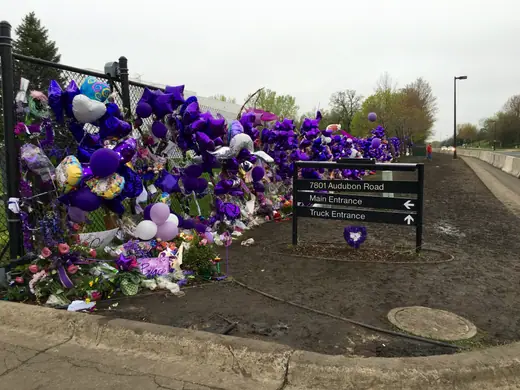
Prince Rogers Nelson died at Paisley Park in Chanhassen, Minnesota, on April 21, 2016, at 57. The medical examiner found the cause to be an accidental fentanyl overdose.
He was, by reputation and by fact, the most control-obsessed artist of his generation. He fought Warner Bros. for years to own his master recordings and won. He changed his name to an unpronounceable symbol rather than let a label use it. He famously had videos of his own performances pulled off the internet within hours.
He left no will.
The result is the single cleanest demonstration in this archive of what intestacy actually costs: six years, an IRS valuation war, dozens of claimants, and a final settlement handing half of Prince's estate to a company he never did business with in his life.
Everyone who could possibly be related
His sister Tyka Nelson filed to open the estate in Carver County District Court within a week. Bremer Trust was appointed special administrator; Comerica Bank & Trust later took over as personal representative.
Then came the claims. Dozens of people asserted they were Prince's children, half-siblings, nieces, or nephews. One man filed from a federal prison in Colorado. DNA testing was ordered. Genealogists were retained. Every claim had to be run down, because with no will the entire question of who inherits is a question of biology and statute, and the court cannot skip it.
The court ultimately recognized six heirs: his full sister Tyka, and five half-siblings — Sharon Nelson, Norrine Nelson, John R. Nelson, Alfred Jackson, and Omarr Baker. Under Minnesota law, they shared equally.
The estate outlasted two of them. Alfred Jackson died in 2019. John R. Nelson died in 2021. Their interests passed on to their own successors, which is how six heirs became a considerably more complicated cap table.

What is a dead genius worth?
The second front was the IRS, and it was not a small disagreement. The estate valued itself at roughly $82.3 million. The IRS came back at approximately $163.2 million and added an accuracy-related penalty of about $6.4 million.
The gap was almost entirely about intangibles — the value of unreleased recordings in the legendary Paisley Park vault, of publishing rights, of name and likeness. There is no market price for the estate of a person who has just died and whose catalogue is about to be revalued by his own death.
The two sides settled in January 2022 on a total of $156.4 million, closer to the government's number than the estate's. Roughly half the estate's value went to federal and Minnesota estate taxes — a bill that competent lifetime planning could have substantially reduced through charitable structures, valuation planning, and liquidity arrangements that, without a will, nobody had authority to put in place.
Half to Primary Wave
While the estate ground on, the heirs did the rational thing for people waiting six years for money: several sold their expectancy interests.
Primary Wave, a music-rights company, bought them. By August 2021 it had emerged as the single largest stakeholder. The final structure, approved by Carver County Judge Kevin Eide on July 29, 2022, splits the estate two ways:
- Prince Legacy LLC — 50%. The interests formerly held by Sharon Nelson, Norrine Nelson, the John Nelson Revocable Trust, and advisers L. Londell McMillan and Charles Spicer.
- Prince Oat Holdings — 50%. Primary Wave's interest.
Six years, an eight-figure administrative cost, a nine-figure tax bill, and half the legacy of the most control-obsessed artist in modern music in the hands of a rights-acquisition firm.
None of the people involved did anything wrong. Primary Wave paid willing sellers a market price for an illiquid asset. The bank administered. The judge decided. The IRS assessed. Every single one of them was doing their job in a vacuum Prince created by not signing a piece of paper.
Timeline
- Apr 21, 2016Prince dies at Paisley Park at 57. No will is found.
- Apr 26, 2016Sister Tyka Nelson petitions to open the estate in Carver County, Minnesota. Bremer Trust is appointed special administrator.
- 2016–2017Dozens of claimed heirs come forward. DNA testing and genealogical work narrow the field to six. Comerica Bank & Trust becomes personal representative.
- 2019Heir Alfred Jackson dies.
- Aug 2021Primary Wave, having acquired interests from several heirs, emerges as the single largest stakeholder.
- 2021Heir John R. Nelson dies.
- Jan 2022The estate and the IRS settle on a total valuation of $156.4 million, ending a fight that began at $82.3M versus $163.2M.
- Jul 29, 2022Judge Kevin Eide approves the final split — 50% Prince Legacy LLC, 50% Prince Oat Holdings. Six years and three months after the death.
What actually went wrong
- No will. Everything below this line is a consequence of this line.
- No trust, so no privacy and no continuity. A funded revocable trust would have kept the catalogue out of the public docket and put a named trustee in charge on day one instead of a court-appointed bank in month three.
- No valuation planning for the hardest asset class there is. Unreleased masters and name-and-likeness rights are exactly the assets the IRS challenges. Appraisals, discounts, and charitable structures are set up during life or not at all.
- No liquidity. A nine-figure tax bill against an illiquid catalogue is what forces heirs to sell interests at a discount. Life insurance in an irrevocable trust exists for precisely this problem.
- Nothing said to the family. Six heirs, several estranged, no instructions, and six years of court supervision to work out what he wanted. Nobody knew, because he never told anyone in writing.
Would it have gone that way in Florida?
Same disaster — but a different split. Florida would not have divided it six equal ways.
The catastrophe is jurisdiction-neutral. No will means court supervision, public filings, competing claimants, and a tax authority arguing valuation, in Minnesota or Florida or anywhere else.
But the arithmetic of who inherits would have been meaningfully different here, and this is one of Florida's genuine oddities.
Under Fla. Stat. §732.103, with no surviving spouse, no descendants, and no surviving parents, an intestate estate passes to brothers and sisters and their descendants. So far, the same six people.
Then Fla. Stat. §732.105 does something most states no longer do. It provides that when property descends to collateral kindred and some are of the whole blood and some of the half blood, those of the half blood inherit only half as much as those of the whole blood. If all are of the half blood, they take whole parts.
Prince had one full sibling — Tyka Nelson — and five half-siblings. In Minnesota, all six shared equally: one-sixth each. In Florida, Tyka would count as two shares and each half-sibling as one, across seven notional shares: Tyka takes 2/7, and each half-sibling takes 1/7. On a $156.4 million estate that is a swing of tens of millions of dollars, produced by nothing but a statute almost nobody has heard of.
The rest of the Florida picture: the personal representative would be appointed under §733.301, which sets its own order of preference among heirs when there is no will — meaning the court, not Prince, chooses who runs the estate. And under §733.702 creditors get their statutory window, which is what makes an intestate estate of this size take years rather than months even when everyone cooperates.
The instruction is the shortest one in the archive. Sign a will. If you own anything that will be worth arguing about — a catalogue, a business, a house, a family — sign a will and fund a trust. Prince's estate is not a cautionary tale about fame. It is a cautionary tale about a blank space where a signature goes.
What people ask us about this.

Further reading
Third-party sites. Not ours, not endorsed, not kept current by us — just the places worth going next.
Sources
- Prince's estate is finally settled after a 6-year battle — CNN, Aug 2022
- Prince's estate pegged at $156.4 million in final valuation — NBC News, Jan 2022
- After six long years, the Prince estate is finally settled — Digital Music News, Aug 2022
- Legal battle over Prince's estate finally comes to an end — Rolling Stone
- The battle for Prince's estate: unending conflict, legal drama and lessons — Forbes, Jan 2024
- Fla. Stat. §732.105 — Half blood — The Florida Senate
If this is your situation
Free 30-minute consult. Plain English. No pressure.
Nearly every case in this archive turned on something ordinary — an unwitnessed page, a stale beneficiary line, a document nobody could find. Those are cheap to fix while you're alive and expensive to fix afterward.