Aretha Franklin
The Queen of Soul was thought to have died without a will. Then her niece found three of them — one in a locked cabinet, one wedged under the sofa cushions. A Michigan jury took less than an hour to pick the couch.
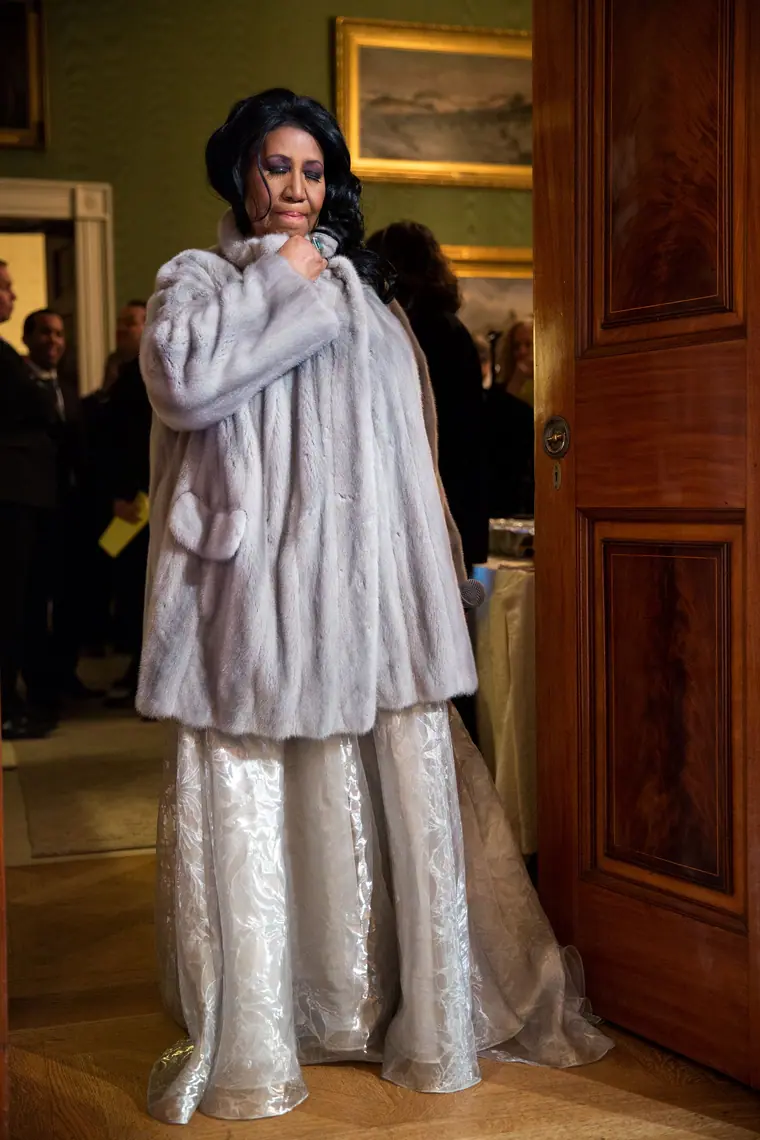
Aretha Franklin died on August 16, 2018, in Detroit. She was 76. For nine months, everyone involved operated on the same assumption: the most decorated woman in the history of the Grammy Awards, a person who had negotiated her own contracts since the 1960s and famously insisted on being paid in cash before performing, had died without a will.
That assumption was wrong. It was just very well hidden.
In May 2019, her niece Sabrina Owens — then serving as personal representative of the estate — searched the Bloomfield Hills house and found three handwritten documents. Two were dated 2010 and were locked in a cabinet. One was dated 2014. It was in a spiral notebook, under the cushions of the living-room couch.
This is the part where most people laugh. Then they find out the couch won.
Three wills, no lawyer
Michigan recognizes what lawyers call a holographic will. Under MCL 700.2502(2), a document is a valid will — witnessed or not — if it is dated, if the testator signed it, and if the material provisions are in the testator's own handwriting. No notary. No witnesses. No attorney. A dated, signed page in your own hand is enough.
So Franklin's kitchen-drawer paperwork was not a curiosity. It was three competing legal instruments, and Michigan law took all of them seriously.
The two documents were not the same in substance, which is exactly why the family went to trial:
- The June 2010 pages — locked in a cabinet. Among other things, they conditioned what two of her sons, Kecalf and Edward, would take from the estate on their taking business classes and obtaining a certificate or degree.
- The March 2014 pages — four pages, spiral notebook, under the couch cushions, with scribbles and passages the jury had to squint at. Named Kecalf as executor. Dropped the business-school condition entirely. Directed the Bloomfield Hills home — appraised at roughly $1.1 million at the time of her death — to Kecalf and his children.
A later will revokes an earlier one to the extent they conflict. So the entire fight compressed into one question a jury could actually answer: is the couch notebook a will, or is it a draft?
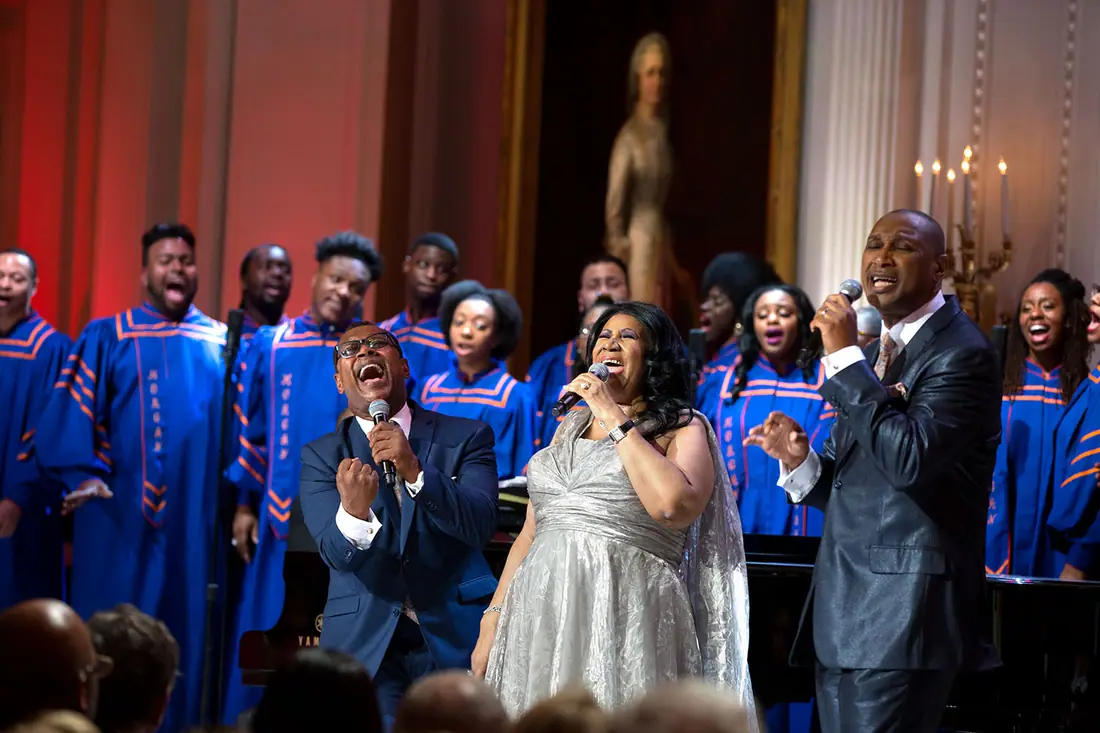
Six jurors, Pontiac, Michigan
The case went to a jury in Oakland County Probate Court in Pontiac, before Judge Jennifer Callaghan. The trial began Monday, July 10, 2023. It was short.
Kecalf and Edward Franklin argued for the 2014 notebook. Their brother Ted White II argued for the 2010 cabinet documents, and testified that his mother was the kind of person who handled important paperwork conventionally and legally, with an attorney — which is a genuinely good argument, and it lost.
It lost because Michigan's holographic-will statute does not ask whether a document looks professional. It asks four things: date, signature, handwriting, testamentary intent. The 2014 pages had all four. Where the document was found is legally irrelevant; a will in a couch is a will, and a will in a bank vault that fails the statute is confetti.
On July 11, 2023, after less than an hour of deliberation, six jurors returned the verdict: the 2014 document is Aretha Franklin's valid will.
Five years, and the IRS was already in line
While the sons litigated which handwriting controlled, the estate was fighting a second front. The IRS asserted that Franklin owed more than $7.8 million in unpaid income taxes, interest, and penalties. An agreement filed in the same Oakland County Probate Court resolved it, beginning with an immediate $800,000 payment and a formula directing a share of ongoing revenue to the government until the balance cleared.
That is the quiet lesson underneath the funny one. The couch will decided who inherits. It did nothing about the tax bill, the five years of administration, the appraisals, the legal fees, or the fact that a family's private arithmetic was read into a public court record and then reprinted worldwide.
Real property was distributed among her sons under the 2014 will — five years after her death. Her oldest son, Clarence, who has special needs and lives under a guardianship, was provided for through the estate throughout.
And it is still not over. The docket passed 1,400 filings, and as of August 2026 the sons remain in court over remaining assets, music rights, and personal property. The jury answered which document controls. It could not make four brothers agree about anything else.
Timeline
- Aug 16, 2018Franklin dies in Detroit at 76. The estate opens on the assumption there is no will.
- May 2019Niece Sabrina Owens finds three handwritten documents in the house — two dated 2010 in a locked cabinet, one dated 2014 under the couch cushions.
- 2019–2022Sons split into camps. Owens later resigns as personal representative amid the conflict.
- Feb 2021Estate files an agreement with the IRS resolving a claim exceeding $7.8M, starting with an $800,000 payment.
- Jul 10, 2023Jury trial opens in Oakland County Probate Court, Pontiac.
- Jul 11, 2023Six jurors deliberate under an hour and find the 2014 couch document is the valid will.
- Late 2023Real property distributed among the sons under the 2014 will.
- Aug 2026Eight years after the death, the estate is still open. The docket has passed 1,400 filings; disputes over remaining assets and personal property continue.
What actually went wrong
- No attorney-drafted will. Three homemade documents, none of them clearly superseding the others, all of them legally arguable.
- No revocation of the older versions. A single sentence — I revoke all prior wills — plus destroying the 2010 pages would have ended the case before it started.
- No trust. A revocable trust would have kept the terms, the assets, and the family arithmetic out of the public record entirely. Instead the terms were exhibits.
- Conditions with no mechanism. The 2010 'business classes' requirement had no trustee, no deadline, and no one named to decide whether it had been satisfied.
- Nothing stored where anyone would look. The operative will spent roughly five years inside a sofa.
Would it have gone that way in Florida?
No. In Florida, the couch will is worth nothing — and neither are the cabinet pages.
This is the cleanest illustration in the archive of how much the state matters. Florida law does not care that a will is handwritten. Florida law cares intensely about who watched you sign it.
Under Fla. Stat. §732.502(1), a Florida will must be signed by the testator at the end, in the presence of two attesting witnesses, who must then sign in the presence of the testator and of each other. Handwrite the whole thing in your own hand if you like — that is fine. Skip the two witnesses and it is not a will.
Florida then closes the back door. §732.502(2) provides that an out-of-state will is generally honored here if it was valid where it was executed — except a holographic or nuncupative (oral) one. So a Michigan-valid holographic will, carried into Florida by a person who retires here, is still void. This surprises people every year.
Had Franklin been a Florida resident, all three documents would have failed, and she would have died intestate. Under §732.103, her estate would have passed in equal shares to her four sons — no business-class condition, no house to Kecalf, no executor of her choosing. The court would have appointed a personal representative under §733.301. The jury trial never happens, because there is nothing to try.
One more Florida wrinkle worth knowing: if a family member here ever did find pages like these, §732.901 requires the custodian of a will to deposit it with the clerk of court within 10 days of learning of the death. You do not get to decide whether it counts. The court does.
What people ask us about this.
Further reading
Third-party sites. Not ours, not endorsed, not kept current by us — just the places worth going next.
Sources
- Jury rules handwritten will found under Aretha Franklin's couch cushion is valid — NPR, Jul 12 2023
- Jury decides 2014 document found in Aretha Franklin's couch is a valid will — NBC News, Jul 11 2023
- Aretha Franklin's handwritten will found in a couch after her 2018 death is valid, jury decides — CBS News, Jul 11 2023
- Jury declares pages from Aretha Franklin's couch to be her will — Al Jazeera, Jul 11 2023
- Three wills found at Aretha Franklin's home — NPR, May 21 2019
- Why a handwritten will found in Aretha Franklin's couch got R-E-S-P-E-C-T from a jury — The Conversation, 2023
- Aretha Franklin's estate reaches deal over IRS tax bill — WealthManagement.com
- Aretha Franklin's estate divided among her sons 5 years after her death — FOX 2 Detroit
- Eight years after Aretha Franklin’s death, estate saga quietly drags on — Blue Water Healthy Living, Aug 2026
- MCL 700.2502 — Execution of wills; holographic wills — Michigan Legislature
- Fla. Stat. §732.502 — Execution of wills — The Florida Senate
If this is your situation
Free 30-minute consult. Plain English. No pressure.
Nearly every case in this archive turned on something ordinary — an unwitnessed page, a stale beneficiary line, a document nobody could find. Those are cheap to fix while you're alive and expensive to fix afterward.