Cy pres
You leave money to a charity that no longer exists, or on a condition nobody can meet. The gift does not simply evaporate — a court can redirect it to the nearest charitable purpose you would have wanted. Florida codified that power in §736.0413, and its courts have used it on a wildlife society that never existed and on Janet Reno's homestead.
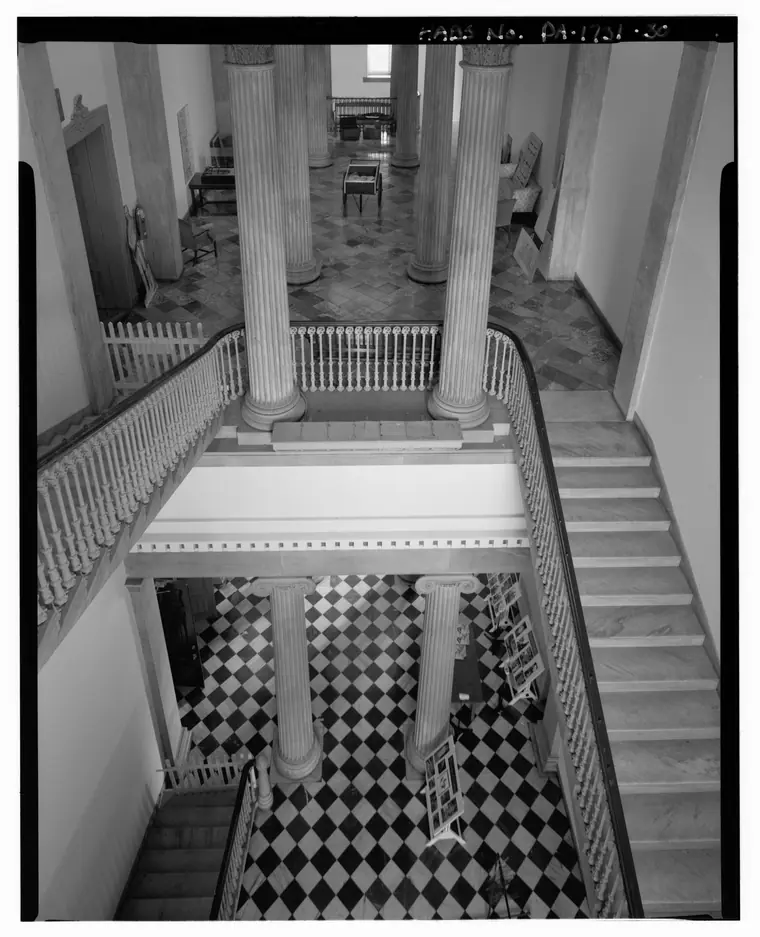
Cy près comme possible — Norman French, “as near as possible.” The doctrine is roughly seven centuries old and it exists to solve one problem: a charitable gift whose stated object cannot be carried out.
The alternative, if the doctrine did not exist, is severe. A gift that fails falls into the residuary estate, or if there is no residuary clause, passes by intestacy to relatives the donor may deliberately have left out. Cy pres exists because courts concluded, over centuries, that redirecting a charitable gift to a similar purpose is closer to the donor's intention than handing it to the heirs.
Florida codified it at Fla. Stat. §736.0413, in two sentences that do a great deal of work:
Unlawful, impracticable, impossible, wasteful
Those four words are not decoration. Each has its own case law and its own difficulty, and the difference between them decides whether a petition succeeds.
- Unlawful. The purpose has become illegal to carry out. This is the cleanest trigger and the rarest — a gift conditioned on something the law now forbids.
- Impossible. The named recipient does not exist, dissolved, or never existed at all. The disease was eradicated. The building burned. Nothing anyone does can perform the instruction.
- Impracticable. The purpose can technically be performed but not sensibly — the class of beneficiaries has vanished, the geography no longer contains the need, the mechanism has become unworkable.
- Wasteful. The fund is far larger than the purpose can absorb, so continuing to apply it as written destroys value. This is the trigger most often argued and least often won.
Then a second question, which trips up more petitions than the first: did the donor have a general charitable intent, or only a specific one? If the donor wanted to benefit charity broadly and merely chose one vehicle, cy pres applies. If the donor wanted that organisation and no other, a court may hold the gift simply fails. The evidence for the answer is usually in the drafting — which is why an alternate-beneficiary clause is worth more than any amount of litigation.
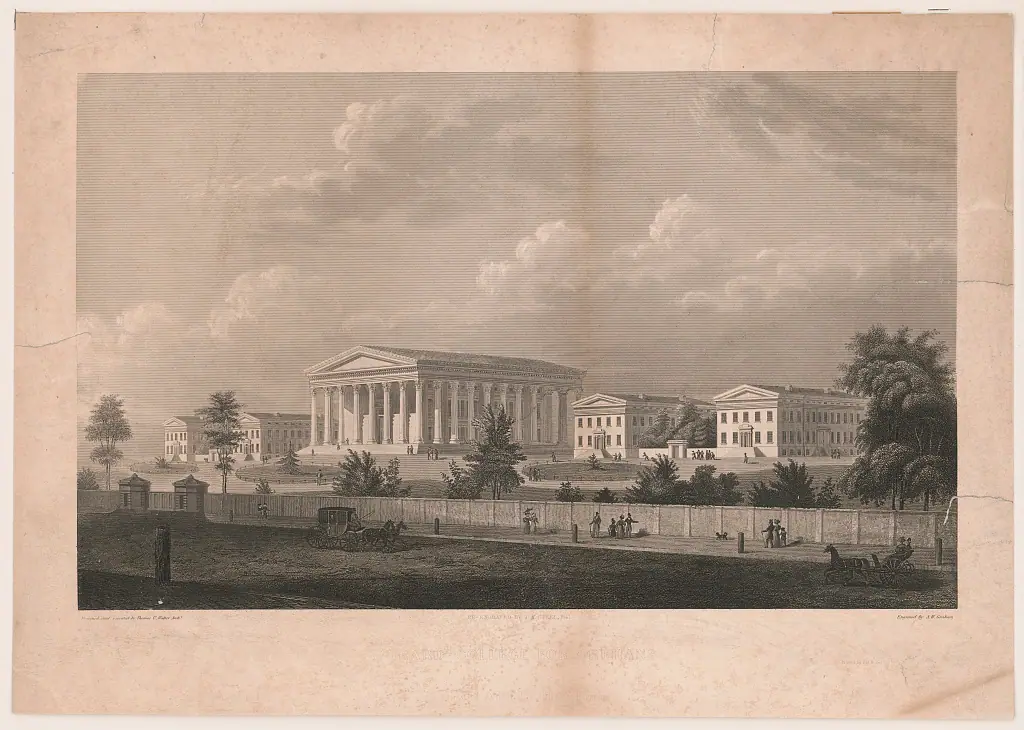
A society that never existed, and a house nobody would take
Florida courts have applied §736.0413 to two fact patterns worth knowing, because between them they cover most real cases.
SPCA Wildlife Care Center v. Abraham, 2011 WL 6183491 (Fla. 4th DCA Dec. 14, 2011). Mary Ericson created a testamentary trust for a friend for life, with the remainder to the “International Wildlife Society.” No such organisation existed. The trial court held the charitable bequest failed for vagueness — meaning no charity would receive anything. Animal charities intervened, with evidence that Ericson had a local Broward County animal shelter in mind. The Fourth District reversed, holding that cy pres applies where a testator's charitable intent is evident but the named beneficiary cannot be identified with certainty, and that a court may substitute a recipient approaching the original scheme as closely as possible. It remanded for an evidentiary hearing on which charity best fitted her purpose.
The Janet Reno homestead. Reno — Florida's first woman State Attorney, later United States Attorney General — left her historically significant Miami-Dade homestead by trust to the University of Miami, on the condition that the property be preserved in perpetuity. After her death the University declined the gift, unable to honour that condition. The successor trustee found Miami Dade College, which agreed to take the property on the same terms, and petitioned to modify under §736.0413. A relative objected. In August 2019 the Third District Court of Appeal affirmed the order approving the substitution.
Look at what the second case actually is. The charity refused the gift. That is not something a donor plans for and it is one of the more common ways a well-intentioned bequest fails: a museum will not accept the maintenance obligation, a university will not accept the naming restriction, a hospital will not accept the use limitation. Cy pres is the reason Reno's house went to an educational institution instead of into a residuary fight.
Two cases where the court said no
Cy pres is not a licence to improve on a donor's judgment, and the two most instructive examples are refusals.
The Buck Trust. Beryl Buck died in 1975, leaving the San Francisco Foundation a bequest valued at about $7.6 million — her late husband's stake in Belridge Oil — with all grants restricted to nonprofit organisations in Marin County, California. In December 1979 Shell bought Belridge for $3.65 billion, and the trust's value went to roughly $260 million overnight, then to about $360 million by the early 1980s, generating some $30 million a year for a county holding about 7% of the Bay Area's population and among its wealthiest. In 1984 the Foundation petitioned the Marin County Superior Court for cy pres, arguing the Marin-only restriction had become impracticable, inexpedient, and inefficient. The court refused. Inefficiency is not impracticability. The Foundation gave up the trust, and the Marin Community Foundation was created in 1986 to administer it within Marin County, exactly as written.
The Barnes Foundation is the counterexample to the counterexample, and it is frequently mislabelled. When a Pennsylvania court permitted Albert Barnes's collection to move to Philadelphia in December 2004, it did not apply cy pres. It applied the doctrine of deviation — the purpose (display and teach from this collection) was unchanged; only the method (do it in Merion) was modified. That distinction is not pedantry. It decides which statute applies, what the petitioner must prove, and how much of the donor's instrument is up for revision.
Timeline
- 1831Stephen Girard's will creates a trust for a Philadelphia college. Restrictive charitable trusts of this era are the reason the doctrine developed as it did.
- 1975Beryl Buck dies, leaving about $7.6 million to the San Francisco Foundation restricted to Marin County nonprofits.
- Dec 1979Shell buys Belridge Oil for $3.65 billion. The Buck Trust jumps to roughly $260 million, and to about $360 million by the early 1980s.
- 1984The San Francisco Foundation petitions the Marin County Superior Court for cy pres, arguing the geographic restriction has become impracticable.
- 1986The court refuses. The trust leaves the San Francisco Foundation and the Marin Community Foundation is created to administer it within Marin County as written.
- Dec 2004A Pennsylvania court permits the Barnes Foundation collection to move to Philadelphia — under the doctrine of deviation, not cy pres.
- 2006
- Dec 14, 2011SPCA Wildlife Care Center v. Abraham (Fla. 4th DCA) — a bequest to a nonexistent “International Wildlife Society” does not fail; cy pres applies and the case is remanded to identify the closest charity.
- Aug 2019The Third District Court of Appeal affirms the substitution of Miami Dade College for the University of Miami as recipient of Janet Reno's homestead, under §736.0413, after the University declined the gift.
What actually went wrong
- A charity named by the wrong name. “International Wildlife Society” cost an estate a trial and an appeal. Use the exact registered legal name, the address, and the federal tax identification number.
- A condition the recipient will not accept. Preservation in perpetuity, naming requirements, use restrictions — institutions decline gifts over these regularly. Ask the charity, in writing, before you sign, whether it will take the gift on your terms.
- No alternate beneficiary. One sentence naming a substitute, or authorising the trustee to select a similar organisation, converts a court proceeding into an administrative decision.
- A restriction that outgrows its purpose. Buck restricted a $7.6 million gift to one county; it became $360 million restricted to the same county. Restrictions should be tested against the possibility that the fund becomes very much larger — or very much smaller.
- Asking for cy pres when you need deviation. They are different statutes with different tests. Getting the label wrong is a straightforward way to lose a petition that should have succeeded.
Would it have gone that way in Florida?
This IS the Florida rule. Section 736.0413 is short, it has been used, and it is the reason a Florida charitable gift almost never simply disappears.
Fla. Stat. §736.0413 provides that if a particular charitable purpose becomes unlawful, impracticable, impossible to achieve, or wasteful, the court may apply cy pres to modify or terminate the trust, directing that the property be applied or distributed, in whole or in part, in a manner consistent with the settlor's charitable purposes. A settlor, a trustee, or any qualified beneficiary may bring the proceeding.
Two Florida applications show the range. SPCA Wildlife Care Center v. Abraham (Fla. 4th DCA, Dec. 14, 2011) rescued a bequest to an organisation that did not exist, holding that where charitable intent is evident but the named beneficiary cannot be identified, a court may substitute one that approaches the original scheme as closely as possible. And in August 2019 the Third District affirmed the substitution of Miami Dade College for the University of Miami as recipient of Janet Reno's homestead under §736.0413, after the University declined the gift because it could not honour the perpetual-preservation condition.
Know the companion statutes, because most real petitions engage more than one. §736.04113 is judicial modification — Florida's deviation provision — available on the application of a trustee or qualified beneficiary where the purposes have been fulfilled or become illegal, impossible, wasteful, or impracticable to fulfil, or where compliance with the terms would defeat or substantially impair a material purpose. §736.04115 permits modification in the qualified beneficiaries' best interests. §736.0414 deals with the uneconomic trust — the fund too small to justify its own administration. §736.0410 covers termination generally. And §736.0405(2) lets a court select a charitable purpose or beneficiary where the trust names none, consistent with the settlor's intent so far as it can be ascertained.
On enforcement, §736.0405(3) gives the settlor standing to enforce a charitable trust — during the settlor's life — and §736.0110(3) gives the Florida Attorney General the right to assert the rights of a qualified beneficiary, with standing in any judicial proceeding, for a charitable trust whose principal place of administration is in Florida. In a contested cy pres petition the Attorney General is usually the party on the other side of the table from the trustee, and sometimes the only one.
Here is the caveat that matters most, and it is the one people are surprised by. Cy pres requires a general charitable intent. If the instrument shows you wanted this organisation and nothing else — say, an express clause stating that if the named charity cannot take, the gift lapses — a court may honour that and let the gift fail. The doctrine reconstructs a broader intent; it does not override a narrow one you clearly expressed. Buck also shows the outer limit from the other direction: a restriction that has become merely inefficient is not impracticable, and Florida's word list does not include “inefficient” either.
Practical instruction, four lines, and they cost nothing at the drafting stage. Name the charity by exact legal name, address, and EIN. Call the charity before you sign and confirm in writing that it will accept the gift on your conditions. Name an alternate, or authorise your trustee to select an organisation with a similar purpose. State your purpose in one plain sentence — “to support animal rescue in Broward County” — so that if the named recipient ever fails, a court has your words to work from instead of your silence.
What people ask us about this.


Further reading
Third-party sites. Not ours, not endorsed, not kept current by us — just the places worth going next.
Sources
- Fla. Stat. §736.0413 — Cy pres — The Florida Senate
- Fla. Stat. §736.04113 — Judicial modification of irrevocable trust — The Florida Senate
- 4th DCA: what is the cy pres doctrine, and why should Florida charities care? — Florida Probate & Trust Litigation Blog, Dec 2011
- Client alert: trust disputes — when a charitable donation seems impossible, cy pres may be able to help — Shumaker, Loop & Kendrick, Oct 2019
- Florida appeals court OKs transfer of Janet Reno's home to Miami Dade College — WealthManagement.com
- The unique challenge of the Buck Trust — The San Francisco Foundation
- Barnes move leaves tangled legal legacy, lingering hard feelings — WHYY
- Fla. Stat. §736.0405 — Charitable purposes; enforcement — The Florida Senate
If this is your situation
Free 30-minute consult. Plain English. No pressure.
Nearly every case in this archive turned on something ordinary — an unwitnessed page, a stale beneficiary line, a document nobody could find. Those are cheap to fix while you're alive and expensive to fix afterward.