Robert Rauschenberg
Three friends administered an artist's trust on Captiva Island and asked for $60 million. His own foundation said $375,000. A Lee County judge said $24.6 million — and Florida's appellate court affirmed, in the case that still governs what a trustee's work is worth here.
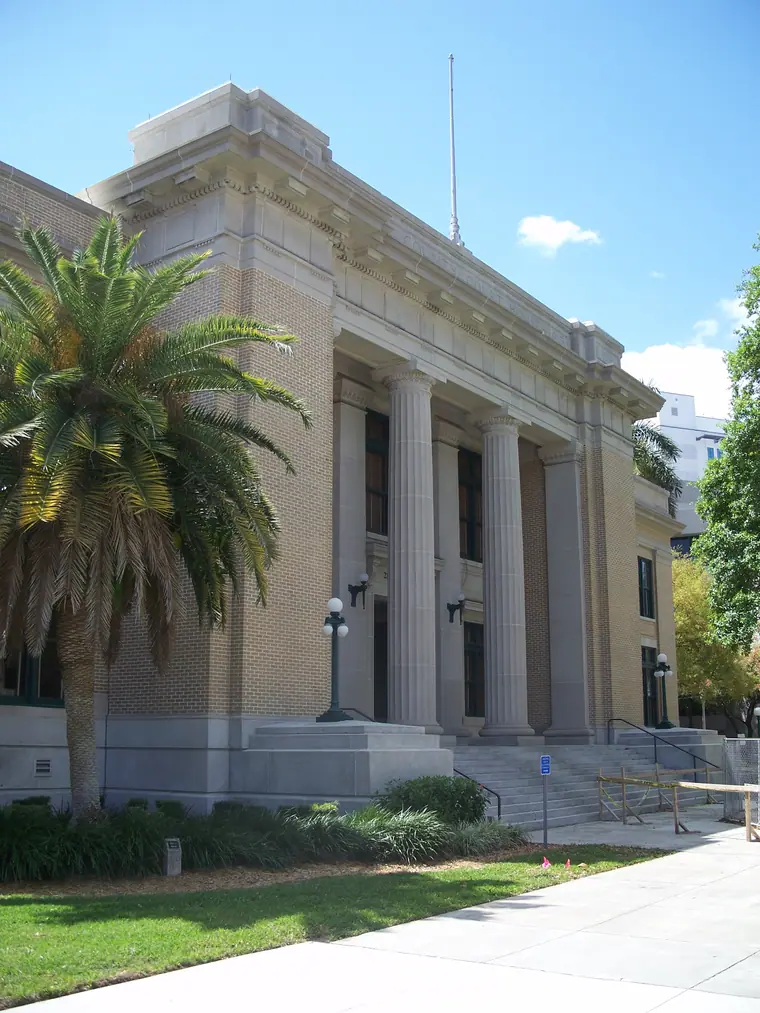
Robert Rauschenberg died on May 12, 2008, at his home on Captiva Island, Florida, at 82. He had spent five decades taking the seriousness out of American art — the Combines, the goat with the tire, the drawing he made by erasing a de Kooning — and he left behind an estate that was less a portfolio than a warehouse.
The Robert Rauschenberg Revocable Trust, created in 1994, held more than 7,600 individual artworks, over 1,100 photographs, extensive Captiva real estate, securities, life insurance, and cash. The remainder beneficiary was his own charity, the Robert Rauschenberg Foundation.
Three men were named trustees: Darryl Pottorf, his longtime partner and collaborator; Bill Goldston, his print publisher; and Bennet Grutman, his accountant. They were his friends. That is the last uncomplicated sentence in this case.
The trust said nothing about fees
Rauschenberg's trust contained no provision addressing trustee compensation. That is not unusual and it is not sloppy drafting on its own — Florida law supplies a default. Fla. Stat. §736.0708 says a trustee is entitled to compensation that is reasonable under the circumstances. Four words, and a decade of litigation.
Over the administration, the value of the trust assets went from $605,645,595 to $2,179,000,000. The trustees held and marketed a body of work while the market for it climbed. They also, per the record, took on the ordinary and extraordinary work of running an artist's estate: cataloguing, conservation, authentication, litigation, real estate, and a foundation transition.
Then they asked to be paid. Depending on the stage of the case, the trustees sought between $51 million and $60 million, on top of roughly $8 million already received.
The Foundation — the charity that would receive whatever was left — offered $375,000.
Two methods, a hundred and forty-fold apart
The gap between $375,000 and $60 million was not a disagreement about the facts. It was a disagreement about the method.
The Foundation argued for the lodestar: hours worked, multiplied by a reasonable hourly rate, the way Florida courts calculate attorney's fees under Florida Patient's Compensation Fund v. Rowe and Standard Guaranty Insurance Co. v. Quanstrom. Count the hours. Pay for the hours. That method produced $375,000.
The trustees argued for the West Coast Hospital factors — the multi-factor test the Florida Supreme Court laid down in West Coast Hospital Ass'n v. Florida National Bank of Jacksonville, 100 So. 2d 807 (Fla. 1958). Those factors look at the amount of capital and income managed, the responsibility assumed, the character of the work, the skill required, the results achieved, the risk borne, the time, the custom in the community, and the character of the trust.
Lee County Circuit Judge Jay Rosman applied West Coast Hospital and awarded $24,600,000, split evenly among the three. Less than half what the trustees asked for. Sixty-five times what the Foundation offered.
The Second District affirms, and says why
The Foundation appealed. In January 2016, Florida's Second District Court of Appeal affirmed the award in its entirety — Robert Rauschenberg Foundation v. Grutman, 198 So. 3d 685 (Fla. 2d DCA 2016) — and wrote separately for one purpose: to explain why the trial court was right to refuse the lodestar.
The court's reasoning was legislative-intent reasoning. When Florida enacted the Trust Code in 2007, the drafters knew about Rowe and Quanstrom. They knew about West Coast Hospital. They chose the phrase "reasonable under the circumstances" against that background, and the history showed an intent to carry the West Coast factors forward — not to import the attorney-fee lodestar into fiduciary compensation.
The practical holding is blunt: a trustee is not an hourly worker. A trustee assumes personal liability, exercises discretion, and bears risk that no timesheet captures. Paying a trustee by the hour would systematically underpay the responsibility and overpay the busywork. The Florida Supreme Court declined to review it.
Timeline
- 1994Robert Rauschenberg creates the Robert Rauschenberg Revocable Trust. It contains no trustee-compensation provision.
- May 12, 2008Rauschenberg dies at Captiva Island, Florida, at 82. Pottorf, Goldston, and Grutman take over as trustees.
- 2008–2012Administration of 7,600+ artworks, 1,100+ photographs, Captiva real estate, securities, and cash. Trust value rises from roughly $605.6M to $2.179B.
- 2011–2014Fee litigation in Lee County. Trustees seek $51M–$60M under the West Coast Hospital factors; the Foundation argues $375,000 under the lodestar.
- Aug 2014Circuit Judge Jay Rosman awards $24,600,000, split evenly among the three trustees.
- Jan 2016Fla. 2d DCA affirms in full and holds the lodestar method does not apply to trustee compensation under §736.0708.
- 2016The Florida Supreme Court declines review. The rule stands.
What actually went wrong
- The trust said nothing about fees. One paragraph — a percentage, a schedule, a cap, or a reference to the trustee's published fee schedule — would have replaced a decade of litigation with a calculator.
- Friends as trustees, with no independent check. Three close associates, no corporate co-trustee, no fee committee, and a charity on the other side of the table with every reason to fight.
- No interim fee approvals. Fees taken and argued about at the end become one enormous, adversarial number. Periodic court approval, or beneficiary consent as you go, keeps the argument small.
- A remainder beneficiary that was itself an institution. A charity has a fiduciary duty to challenge what it sees as excessive. Naming one as remainderman all but guarantees scrutiny — which is fine, if you have drafted for it.
Would it have gone that way in Florida?
This is the Florida answer. Rauschenberg is the rule other Florida cases are decided under.
Most cases in this archive get compared to Florida law. This one is Florida law. It was fought in a Florida trust, over Florida property, under the Florida Trust Code, and decided by a Florida appellate court whose opinion now binds trial judges across the state.
The operating rule after Rauschenberg: a Florida trustee's compensation is what is reasonable under the circumstances per §736.0708(1), measured by the West Coast Hospital factors — amount of capital and income managed, responsibility and risk assumed, character of the work, skill required, results achieved, time expended, custom in the community, and the character of the trust. Not hours × rate.
The same statute gives the court two other powers worth knowing. Under §736.0708(2), even when the trust does specify compensation, a court may adjust it if the trustee's duties turn out to be substantially different from what was contemplated, or if the stated amount would be unreasonably low or high. And under §736.0201, any interested person can bring the question to court in the first place.
Personal representatives sit under a parallel but different rule: §733.617 sets a presumptively reasonable percentage schedule for ordinary services — 3% of the first million of the estate, sliding down from there — plus additional reasonable compensation for extraordinary services like litigation, business operation, or a sale of real property. Trustees have no such percentage default. That difference is exactly why the Rauschenberg fee had to be litigated rather than calculated.
The drafting lesson is one sentence long, and it costs nothing: say what the trustee gets paid. A percentage, a schedule, a cap, or a named institutional fee schedule. Silence is not neutral. Silence is an invitation to spend a decade and a fortune finding out.
What people ask us about this.

Further reading
Third-party sites. Not ours, not endorsed, not kept current by us — just the places worth going next.
Sources
- Robert Rauschenberg Foundation v. Grutman, 198 So. 3d 685 (Fla. 2d DCA 2016) — FindLaw
- Robert Rauschenberg Foundation v. Grutman — CourtListener
- Court says YES to $24.6 million in trustee fees; NO to hourly billing — Florida Probate & Trust Litigation Blog, Jan 2016
- Judge awards three pals of Robert Rauschenberg $25 million — Artnet News, 2014
- Rauschenberg estate saga of trust and fees explained — Center for Art Law
- Recent cases of interest to fiduciaries, July 2016 — McGuireWoods
- Fla. Stat. §736.0708 — Compensation of trustee — The Florida Senate
If this is your situation
Free 30-minute consult. Plain English. No pressure.
Nearly every case in this archive turned on something ordinary — an unwitnessed page, a stale beneficiary line, a document nobody could find. Those are cheap to fix while you're alive and expensive to fix afterward.