The charitable pledge
You sign a pledge card for $100,000. You die having paid $20,000. Can the charity collect the rest from your estate? In New York, Cardozo said yes on facts thinner than these. In Florida, the Supreme Court said no — and set out exactly what a pledge must contain to survive.
A charitable pledge is the most casually signed document in American philanthropy. Someone hands you a card at a dinner. You write a number. Everyone applauds. Then you die, and a lawyer has to decide whether that card is a debt of your estate.
The answer is not obvious, and it is not the same in every state. A promise to make a gift, standing alone, is the textbook example of an unenforceable promise — a nudum pactum, a bare promise with nothing given in return. Contract law requires consideration. The donor gets nothing. So what is the charity giving up?
Courts have spent a century inventing answers to that question, because the alternative — telling every charity in America that its pledge book is worthless — is unattractive. The two poles of that effort are a 1927 New York opinion by Benjamin Cardozo and a 1974 Florida Supreme Court decision that went the other way.
Cardozo, and the memorial fund
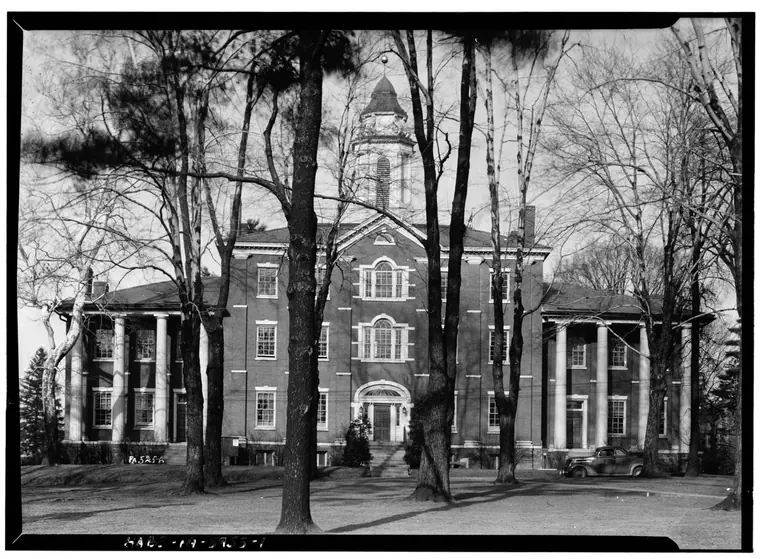
In June 1921 Allegheny College, in Meadville, Pennsylvania, ran a drive for an additional endowment of $1,250,000. Mary Yates Johnston of Jamestown, New York, signed a pledge on June 15, 1921 for $5,000, payable thirty days after her death, and directed her executor to pay it from her estate. The pledge specified that the money would establish a memorial fund bearing her name, to be used for the education of students preparing for the ministry.
In 1923 she paid $1,000. In 1924 she notified the college that she was revoking the rest. She died, and the college sued her executor, the National Chautauqua County Bank of Jamestown, for the remaining $4,000.
Allegheny College v. National Chautauqua County Bank, 246 N.Y. 369, 159 N.E. 173 (1927), held the pledge enforceable. Cardozo's route was consideration, not charity: by accepting the $1,000 and setting it aside for the named memorial fund, the college had assumed a duty — to perpetuate the donor's name in the manner the pledge specified. That assumed duty was the consideration. The promise became a bilateral contract, and a contract binds an estate.
The opinion is famous partly because it is doing two things at once. It states the orthodox rule that a bare promise to give is unenforceable, and then finds consideration in a place most readers would not have looked. Generations of law students have read it as a judge deciding what the result should be and then constructing the doctrine to reach it.
Mount Sinai, and the two prongs
Florida took the opposite road, and it did so in the only Florida decision squarely on the enforceability of a charitable pledge.
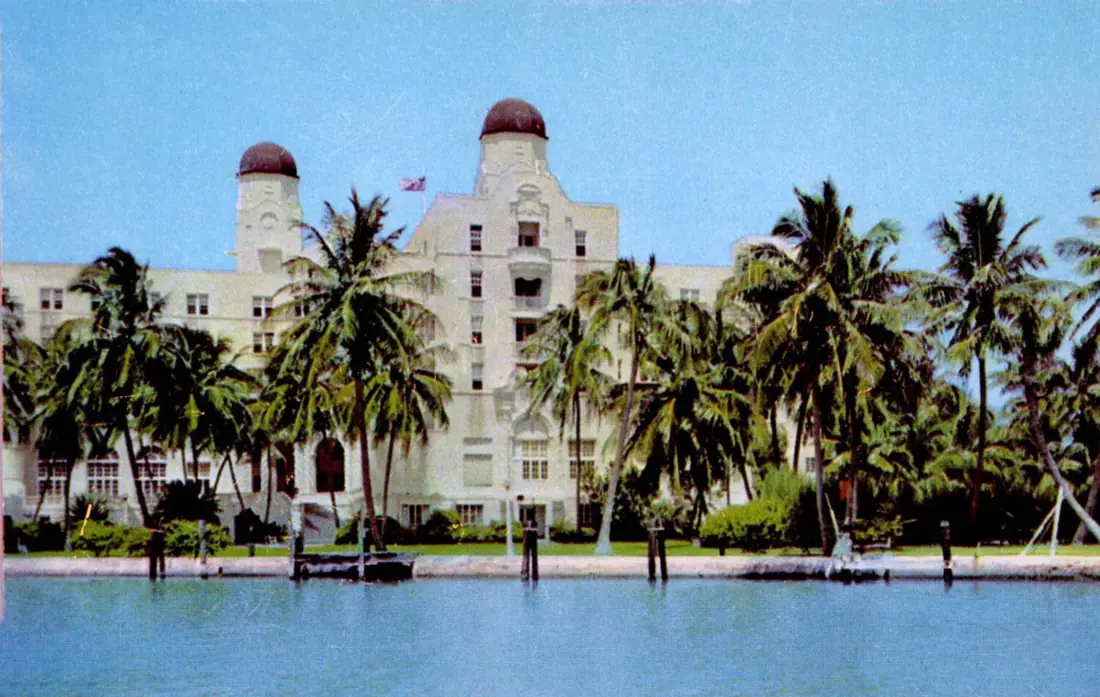
In 1968, Harry Burt executed two pledges of $50,000 each to Mount Sinai Hospital of Greater Miami, payable in instalments. The documents recited that they were made in consideration of and to induce the subscription of others — the standard clause, then and now. Burt paid $20,000 and died on November 18, 1969, leaving $80,000 unpaid. The hospital filed a claim against his estate.
The trial judge found adequate consideration and ruled for the hospital. The Third District reversed. The Florida Supreme Court affirmed the reversal in Mount Sinai Hospital of Greater Miami, Inc. v. Jordan, 290 So. 2d 484 (Fla. 1974), and in doing so set out a two-part requirement that a Florida pledge must meet before an estate has to pay it:
- Specificity. The pledge instrument must recite with particularity the specific purpose for which the funds are to be used. A pledge to general operating funds does not qualify. The point is that the estate should be able to see what obligation it is assuming.
- Actual reliance of a substantial character. The charity must affirmatively show that it relied, substantially, in furtherance of the specific purpose set out in the pledge instrument — construction begun, obligations incurred, naming rights conferred.
Burt's pledges failed both. There was no specified purpose, and the hospital had undertaken nothing in reliance. It recovered nothing. An $80,000 balance, on a signed document, against a solvent estate, produced zero.
Notice what Florida did not do. It did not say charitable pledges are unenforceable. It said they are enforceable when the paperwork is specific and the charity actually acted on it — which is Cardozo's Allegheny College fact pattern, described in a checklist instead of a paragraph of prose. Mary Yates Johnston's pledge named the purpose and named the fund, and the college set the money aside for it. That pledge would very likely survive in Florida too.
What a personal representative is actually facing
Once the donor dies, the pledge becomes a creditor claim, and Florida's claim machinery takes over.
The charity must file in the probate proceeding. Under Fla. Stat. §733.702(1), a claim is not binding on the estate unless filed on or before the later of three months after first publication of the notice to creditors, or thirty days after service of the notice on that creditor. Missing that window is fatal to most claims regardless of merit. Independently, §733.710 bars claims not filed within two years of death, with no extension.
That produces a strange asymmetry. A charity holding an enforceable pledge can lose it by not reading the legal notices. A charity holding an unenforceable pledge can file on time and still lose. Both outcomes are common, and both are avoidable at the drafting stage.
The personal representative's position is worse than it looks. Pay a claim that should have been objected to, and the beneficiaries have a grievance. Object to a claim that was valid, and the estate absorbs the litigation. The Florida Bar Journal's treatment of this problem recommends the cleanest fix available: have the donor address the pledge in the will itself.
Timeline
- Jun 1921Allegheny College opens a drive for an additional $1,250,000 endowment.
- Jun 15, 1921Mary Yates Johnston signs a $5,000 pledge payable 30 days after her death, to establish a named memorial fund.
- 1923She pays $1,000, which the college sets aside for the named fund.
- 1924She notifies the college that she is revoking the balance.
- 1927Allegheny College v. National Chautauqua County Bank, 246 N.Y. 369, 159 N.E. 173 — Cardozo holds the pledge enforceable; the college's assumption of a duty to maintain the named fund is the consideration.
- 1968Harry Burt executes two $50,000 pledges to Mount Sinai Hospital of Greater Miami, reciting that they are made to induce the subscription of others.
- Nov 18, 1969Burt dies having paid $20,000. The hospital files a claim against the estate for the $80,000 balance.
- 1974Mount Sinai Hospital of Greater Miami, Inc. v. Jordan, 290 So. 2d 484 (Fla.) — the pledges fail for want of a specified purpose and of substantial reliance. The hospital recovers nothing.
What actually went wrong
- A boilerplate consideration clause. “In consideration of and to induce the subscription of others” appeared on Burt's pledges and did no work at all. Reciting consideration does not create it.
- No stated purpose. Under Mount Sinai the pledge instrument must name the specific purpose with particularity. A pledge to the general fund is the weakest document a charity can hold in Florida.
- No reliance, and no record of any. The hospital had begun nothing in furtherance of a purpose the pledge never identified. Reliance has to be actual, substantial, and traceable to the pledge.
- The will said nothing about the pledge. A single directive sentence in Burt's will would have made the whole case unnecessary — and would have secured the charitable deduction cleanly.
- Nobody told the family. Beneficiaries who first learn of a six-figure pledge when the claim arrives treat it as an intrusion. Donors who intend a pledge to be honoured after death should say so, in the will and out loud.
Would it have gone that way in Florida?
Harder than most states. In Florida a charitable pledge binds an estate only if the document names the specific purpose and the charity substantially relied on it.
Mount Sinai Hospital of Greater Miami, Inc. v. Jordan, 290 So. 2d 484 (Fla. 1974), is the Florida rule, and it is the only Florida decision squarely on the point.
The framework has two elements, both required. First, specificity: the pledge instrument must recite with particularity the specific purpose for which the funds are to be used. A pledge to general operations, or to “the campaign,” does not satisfy it. Second, substantial reliance: the charity must affirmatively show actual reliance of a substantial character in furtherance of the specific purpose set out in the pledge instrument. Both prongs failed in Mount Sinai, and an $80,000 balance on signed pledges produced nothing.
Compare that to Allegheny College. Johnston's pledge named the purpose — a memorial fund in her name, for a stated educational use — and the college set the first $1,000 aside for it. That is exactly what Florida's two prongs describe. So the honest statement of the difference is not that Florida rejects charitable pledges. It is that Florida requires the Allegheny College facts, in writing, rather than letting a court find consideration by construction.
Then the deadlines, which defeat more claims than the merits do. Fla. Stat. §733.702(1) requires a claim to be filed in the probate proceeding on or before the later of three months after the first publication of the notice to creditors, or thirty days after service of the notice on that creditor. §733.710 bars any claim not filed within two years of the date of death, and that one does not bend. §733.705 governs how the personal representative pays or objects to claims. A charity that learns of the death six months late and files anyway will normally lose without the court ever reaching whether the pledge was good.
The caveat runs to timing rather than doctrine: Mount Sinai is a 1974 decision and remains the controlling Florida authority. Other states have moved toward enforcing pledges on promissory-estoppel grounds without a reliance showing, and the Restatement is more charity-friendly than Florida is. If your pledge is governed by another state's law, or the charity is elsewhere, get advice on which law applies before assuming the Florida result.
Practical instruction, split by who is reading. If you are the donor and you want the pledge honoured: say so in your will — direct your personal representative to pay the pledge under the identified agreement and treat it as a bequest to the named charity. That removes the consideration question, protects your personal representative, and secures the estate tax treatment. If you are the donor and you do not want it honoured: revoke the pledge in writing, during your life, and keep the copy. If you are the charity: write the specific purpose into the pledge form, document what you do in reliance on it, and calendar the probate claim deadlines the week you learn of a donor's death.
What people ask us about this.

Further reading
Third-party sites. Not ours, not endorsed, not kept current by us — just the places worth going next.
Sources
- A sermon on the Mount (Sinai): enforceability of charitable pledges against an estate — The Florida Bar Journal
- Mount Sinai Hospital of Greater Miami, Inc. v. Jordan, 290 So. 2d 484 (Fla. 1974) — Justia — Florida Supreme Court
- Jordan v. Mount Sinai Hospital, 276 So. 2d 102 (Fla. 3d DCA 1973) — Leagle
- Allegheny College v. National Chautauqua County Bank of Jamestown, 246 N.Y. 369 (1927) — H2O / opencasebook
- Allegheny College v. National Chautauqua County Bank — case brief — Quimbee
- Fla. Stat. §733.702 — Limitations on presentation of claims — The Florida Senate
- Fla. Stat. §733.710 — Limitations on claims against estates — The Florida Senate
If this is your situation
Free 30-minute consult. Plain English. No pressure.
Nearly every case in this archive turned on something ordinary — an unwitnessed page, a stale beneficiary line, a document nobody could find. Those are cheap to fix while you're alive and expensive to fix afterward.