The Barnes Foundation
Albert Barnes wrote a 1922 indenture fixing his collection in place forever: no loans, no touring shows, no colour reproductions, no rearranging a single wall. He died in 1951. In December 2004 a Pennsylvania judge let the whole collection move to Philadelphia — and it is still the most argued-about donor-intent decision in America.
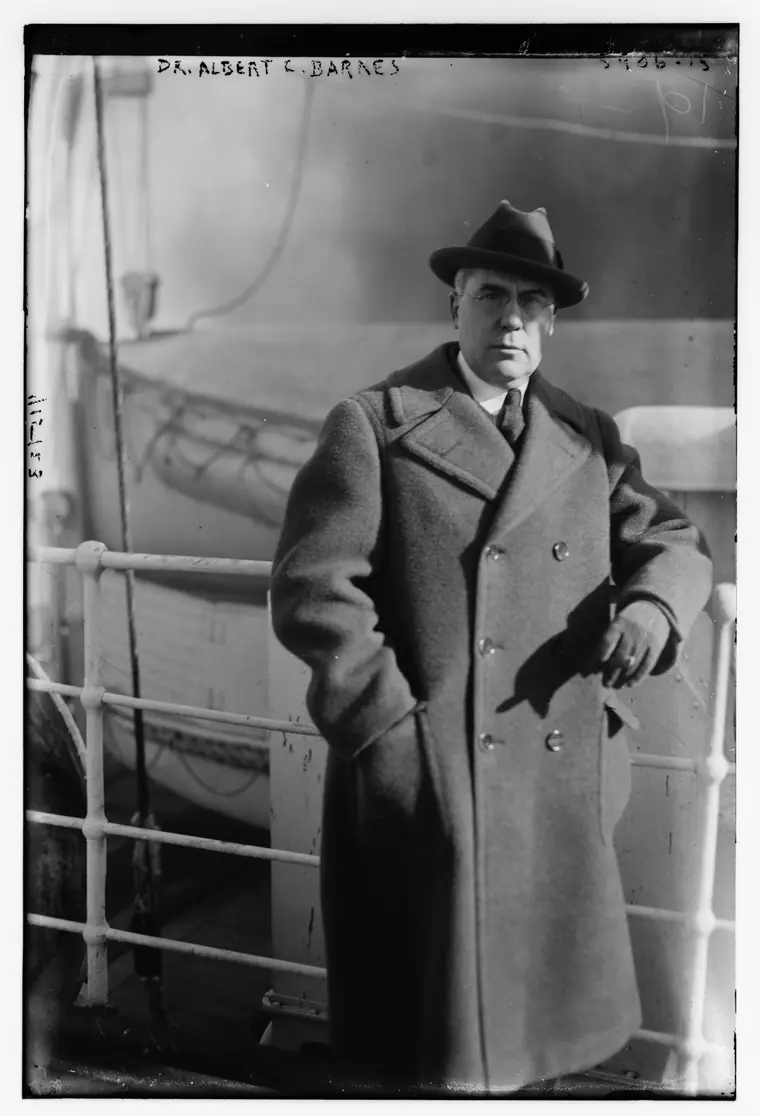
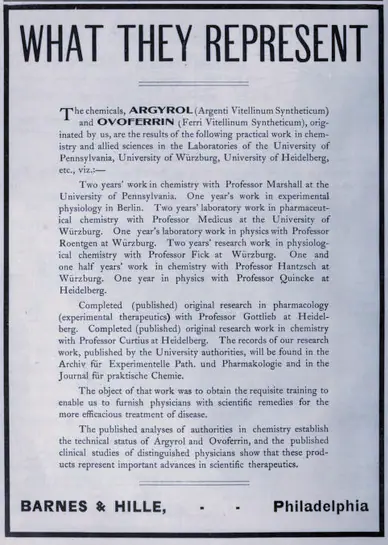
Albert C. Barnes made his money on Argyrol, a silver-based antiseptic he developed with Hermann Hille in 1899. He sold the company to Zonite in July 1929, a few months before the crash, which is the single luckiest piece of timing in the history of American art collecting.
He spent the money on paintings, and he bought early and enormously: Cézanne, Renoir, Matisse, Picasso, Modigliani, Soutine, plus African sculpture, antiquities, Pennsylvania German furniture, and nearly nine hundred pieces of wrought iron. At his death the collection ran to more than 4,000 objects, including over 900 paintings.
He also built something more unusual than a museum: an indenture of trust, executed December 4, 1922, that told everyone who came after him precisely what they could and could not do. The gallery opened in Merion, Pennsylvania in 1925, in a building by Paul Philippe Cret.
Barnes died on July 24, 1951, near Malvern, Pennsylvania. He failed to stop at a stop sign and his car was struck broadside by a truck.
A teaching instrument, not a museum
The restrictions read as eccentricity and were meant as pedagogy. Barnes considered the foundation an educational institution, and the specific hanging of each wall — a Renoir beside a Pennsylvania hinge beside an African mask, arranged for light, line, and colour — was the curriculum. Move the pictures and you have destroyed the lesson. That is the argument, and it is a serious one.
The governance was equally deliberate. In October 1950, less than a year before he died, Barnes amended the bylaws so that board seats would be filled by persons nominated by Lincoln University, a historically Black institution — while excluding trustees affiliated with certain other institutions he distrusted. He was choosing his successors by naming the body that would choose them.
What he did not do was fund the arrangement for the century he was asking it to survive. The endowment was invested conservatively, the restrictions barred nearly every revenue source a modern museum uses, and the township limited visitors. A trust that forbids loans, tours, reproductions, and crowds has closed off admissions revenue, licensing revenue, and exhibition revenue simultaneously.
- No loans, no tours — no exhibition income, no reciprocal borrowing.
- No colour reproductions — no publishing, licensing, or catalogue revenue from the best-known images in the building.
- Restricted admission days — limited gate receipts by design, and neighbours who came to expect quiet.
- Fixed installations — no reinstallation, no travelling shows, no ability to reconfigure for anything.
- Board of five, nominated through a single university — a very small group to carry a very large institution.
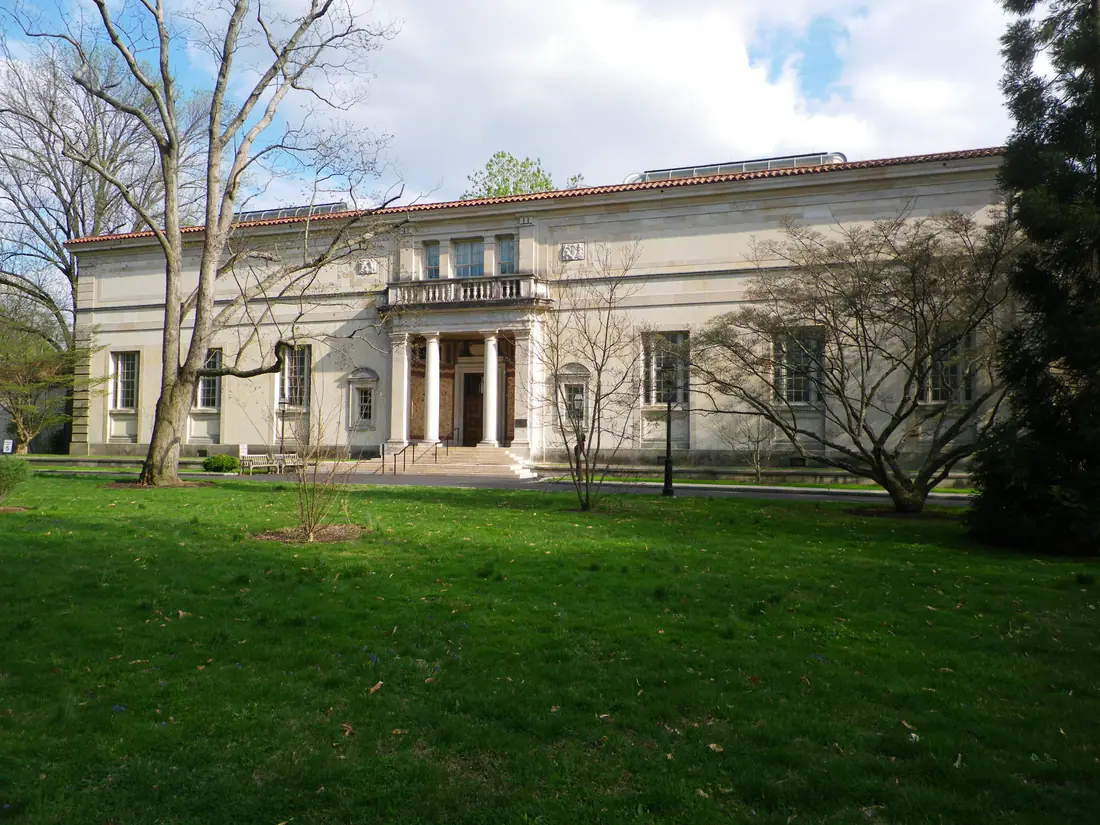
1992: the tour Barnes forbade
The first large breach came four decades after his death and had the court's blessing.
In the early 1990s the foundation, under president Richard H. Glanton, needed money for building repairs. It went to the Montgomery County Orphans' Court for permission to send works abroad, and got it. Eighty-three Impressionist and Post-Impressionist paintings toured the world between 1992 and 1995, raising a reported $15 million for the Merion facility.
That tour matters legally out of all proportion to its size. The indenture said no loans and no touring exhibitions. A court permitted both. From 1992 onward, the question was no longer whether Barnes's terms could be modified — it was how far.
The foundation returned to court repeatedly over the decades; by one count it sought approval to modify the indenture more than twenty times after 1951. Each application was small. The cumulative effect was not.
The petition to move, and the doctrine that allowed it
On September 24, 2002, the board petitioned the Montgomery County Orphans' Court for permission to move the collection to a new building on the Benjamin Franklin Parkway in Philadelphia and to expand the board from five trustees to fifteen. Large Philadelphia foundations backed the plan and the money that would build it.
In December 2004, Judge Stanley R. Ott granted the petition. His finding was financial: the foundation's condition was fragile and its prospects for long-term stability in Merion were poor, while a Parkway location offered a plausible, if uncertain, future for the collection's survival.
The doctrinal route is the part worth understanding, and it is frequently reported wrongly. Ott applied the doctrine of deviation, not cy pres. The distinction is exact and it is the whole case:
- Cy pres changes the purpose of a charitable trust when the stated purpose has become unlawful, impossible, impracticable, or wasteful — redirecting the money to the nearest charitable object the settlor would have wanted.
- Deviation leaves the purpose untouched and changes an administrative term — the how, not the why — where following the original method would defeat or substantially impair the purpose.
- Ott's reasoning: the mission was to display and teach from this collection. Merion was the method. Moving the collection changed how the mission was administered, not what the mission was.
The procedural posture troubled critics as much as the outcome. The Friends of the Barnes Foundation and Montgomery County pressed challenges in 2008 and 2011 and were denied standing; under Pennsylvania law the party with standing to defend a charitable trust is the Attorney General, and the Attorney General supported the foundation's petition. The result was a proceeding with no institutional adversary — which is a structural feature of charitable trust litigation everywhere, not a Pennsylvania quirk.
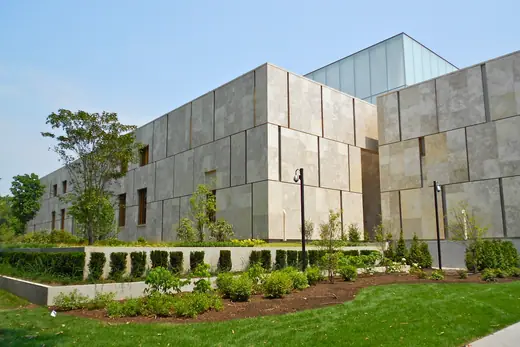
The Philadelphia building opened on May 19, 2012. The wall ensembles were reproduced in the new galleries in the same configurations, in rooms of the same dimensions. Whether that honours the indenture or merely simulates it is a question people will be arguing about for another century.
Timeline
- 1899Barnes and Hermann Hille develop Argyrol. Barnes sells the company to Zonite in July 1929, months before the crash.
- Dec 4, 1922The Barnes Foundation indenture of trust is executed: paintings to stay exactly where they hang, no loans, no touring shows, no colour reproductions, restricted admission.
- 1925The Merion gallery opens, designed by Paul Philippe Cret.
- Oct 1950Barnes amends the bylaws so that board seats are filled by persons nominated by Lincoln University.
- Jul 24, 1951Barnes dies in a car crash near Malvern, Pennsylvania, leaving a collection of over 4,000 objects including more than 900 paintings.
- 1992–1995With Orphans' Court approval, 83 paintings tour the world, raising a reported $15 million — the first large breach of the no-loans and no-tours terms.
- Sep 24, 2002The board petitions the Montgomery County Orphans' Court to move the collection to Philadelphia and expand the board from five trustees to fifteen.
- Dec 2004Judge Stanley R. Ott grants the petition, finding the foundation's finances fragile and its prospects in Merion poor. He proceeds under the doctrine of deviation — changing the method, not the charitable purpose.
- 2008 & 2011The Friends of the Barnes Foundation and Montgomery County seek to reopen the case. Standing is denied; the Attorney General, the party with standing, had supported the move.
- May 19, 2012The Philadelphia building opens, with the wall ensembles reproduced in rooms of the same dimensions.
What actually went wrong
- Restrictions that closed off every revenue source at once. No loans, no tours, no reproductions, and limited admission days meant a trust with fixed expenses and almost no way to grow income. The endowment had to carry everything, forever.
- No amendment mechanism of his own design. Barnes wrote prohibitions and no procedure. When circumstances changed, the only available amendment mechanism was a court — and a court applies its own standards, not the donor's.
- A five-member board for a collection of that size. Small boards are cheap to control and fragile to shocks. The 2002 petition asked to expand to fifteen because five had proved too few.
- Every prior modification made the next one easier. The 1992 tour was permitted for repairs. Once a court had suspended the no-loan term, the argument that the terms were absolute was gone.
- No one with standing to defend the terms. In a charitable trust there is no private beneficiary. Neighbours, scholars, and admirers have opinions and no standing. The Attorney General has standing, and here the Attorney General agreed with the trustees.
Would it have gone that way in Florida?
Florida has both tools, in two separate statutes — and the Barnes case is the reason you need to know which one applies to your gift.
Florida's trust code separates exactly the two doctrines that the Barnes coverage habitually blurs.
Cy pres is §736.0413. If a particular charitable purpose becomes unlawful, impracticable, impossible to achieve, or wasteful, the court may modify or terminate the trust and direct the property to be applied in a manner consistent with the settlor's charitable purposes. A settlor, a trustee, or any qualified beneficiary may commence the proceeding. That is the statute for when the object fails — the named charity dissolved, the disease was cured, the purpose became illegal.
Deviation is §736.04113. On the application of a trustee or qualified beneficiary, a court may modify the terms of a trust — including changing how it is administered — where, among other grounds, compliance with the terms would defeat or substantially impair the accomplishment of a material purpose of the trust, or the purposes have become impracticable or wasteful. That is the Barnes statute: the purpose survives, the method changes. §736.04115 allows modification in the qualified beneficiaries' best interests even where a material purpose remains.
Two more provisions round out the Florida toolkit. §736.0412 permits nonjudicial modification after the settlor's death by unanimous agreement of the trustee and all qualified beneficiaries — useful for private trusts, largely unavailable for charitable ones, because a charitable trust has no such beneficiary class to agree. And §736.0414 allows termination or modification of an uneconomic trust, which is the honest name for what happens when the money runs out before the restrictions do.
The part Florida readers should sit with is §736.0110(3): the Attorney General may assert the rights of a qualified beneficiary in a Florida charitable trust and has standing in any judicial proceeding. And §736.0405(3) gives the settlor standing to enforce a charitable trust — but a settlor who has died cannot exercise it. Read those two together and the Barnes problem is Florida's problem too: after the donor dies, the only reliable enforcer of donor intent is a state official who may or may not share the donor's view.
The honest caveat is uncomfortable and worth stating plainly. No set of restrictions is permanently court-proof. Florida courts have statutory authority to modify charitable trusts, and a trust that cannot pay for itself will eventually be modified, terminated, or consolidated, whatever the instrument says. Detail is not the same as durability.
So the practical instruction is about design rather than prohibition. Fund the restriction, not just the purpose — if you require a building to be kept, endow the building's maintenance and say the endowment is for that. Name an enforcer — a trust protector under §736.1406, an institution with an express contractual right to sue, or a gift-over to a named alternate charity if the terms are breached, which is the one mechanism that gives a real party a real financial stake. Write your own deviation clause, stating which terms are essential and which the trustee may vary, so a court applying §736.04113 is following your priority list instead of guessing at it. And be ruthless about the difference between a term you would actually want enforced in 2120 and a preference you happen to hold now.
What people ask us about this.
Further reading
Third-party sites. Not ours, not endorsed, not kept current by us — just the places worth going next.
Sources
- Barnes Foundation — Wikipedia
- Albert C. Barnes — Wikipedia
- Barnes move leaves tangled legal legacy, lingering hard feelings — WHYY
- The man who said move — The Philadelphia Inquirer
- Broken trust: judge orders those opposing Barnes museum move to pay court costs — Nonprofit Quarterly
- Fla. Stat. §736.04113 — Judicial modification of irrevocable trust when modification is not inconsistent with settlor's purpose — The Florida Senate
- Fla. Stat. §736.0413 — Cy pres — The Florida Senate
- Fla. Stat. §736.0110 — Others treated as qualified beneficiaries — The Florida Senate
If this is your situation
Free 30-minute consult. Plain English. No pressure.
Nearly every case in this archive turned on something ordinary — an unwitnessed page, a stale beneficiary line, a document nobody could find. Those are cheap to fix while you're alive and expensive to fix afterward.