Wellington R. Burt
A Saginaw lumber baron died in 1919 having decided his children would get almost nothing. His will locked the fortune until twenty-one years after the death of his last grandchild alive when he died. Twelve descendants finally collected in 2011.
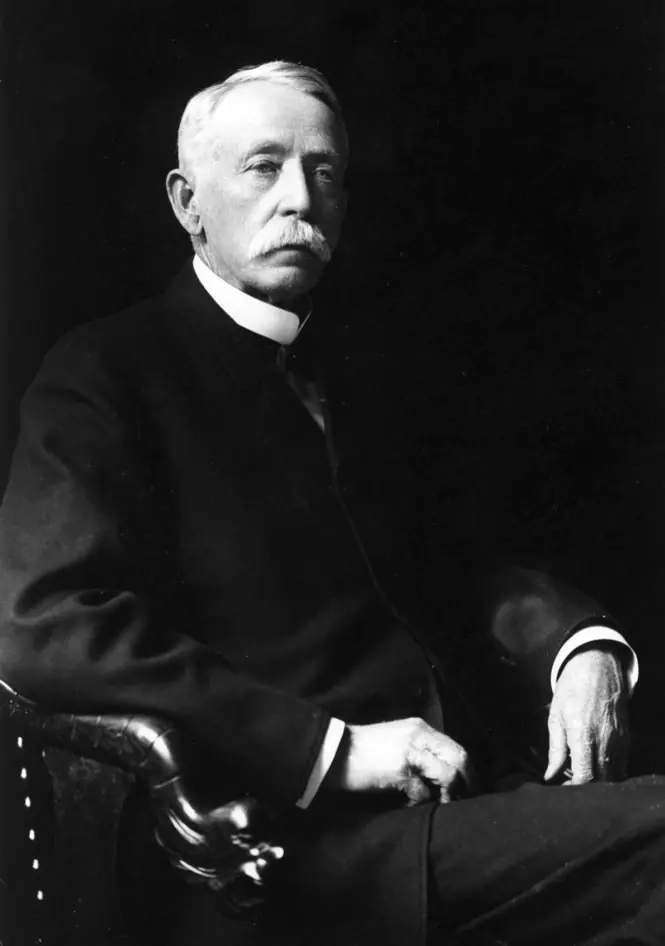
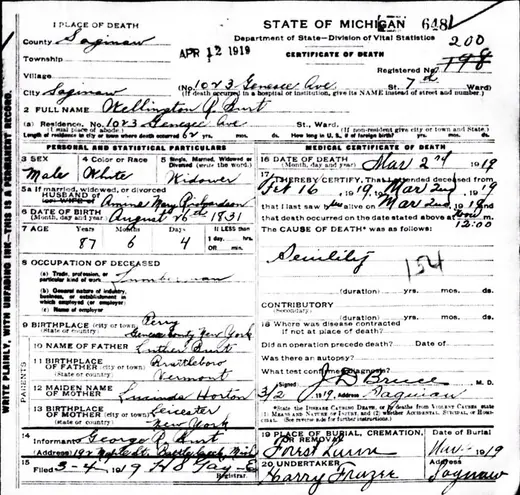
Wellington R. Burt was a lumber baron in Saginaw, Michigan — timber, iron ore, railroads — and at the turn of the twentieth century one of the richest men in the United States. He died in 1919 at 87.
He did not think much of his children. The will made that unusually legible: several of his adult children received modest annual allowances, and by the most-quoted detail of the whole case, his cook, his coachman, and his housekeeper were left more than most of his own family.
Then came the clause. The bulk of the fortune was not to be distributed to anyone until twenty-one years after the death of his last surviving grandchild who was alive at the time of his death.
Ninety-two years
The measuring life turned out to be a granddaughter, Marion Lansill, who was born before Burt died and lived until November 1989. The twenty-one-year clock started then and expired in November 2010.
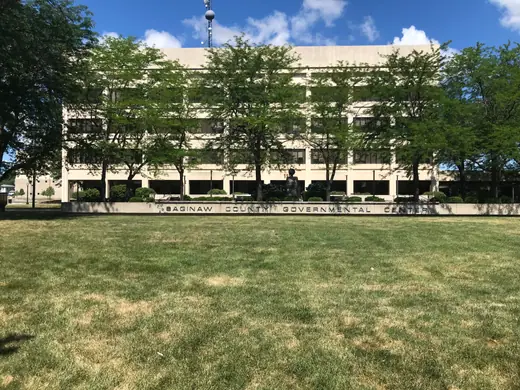
Saginaw County Chief Probate Judge Patrick McGraw handled the distribution, describing it — accurately — as one of the more remarkable matters ever to come through that court. In May 2011 the fortune, reported at roughly $100 million, was divided among twelve descendants ranging in age from 19 to 94.
They were his great-grandchildren, great-great-grandchildren, and great-great-great-grandchildren. None of them had ever met him. Several learned they were beneficiaries only when a genealogist came looking.
In the intervening ninety-two years the family had lived ordinary American lives: two world wars, the Depression, jobs, mortgages, deaths. The money sat in trust the entire time, growing, doing nothing for anyone.
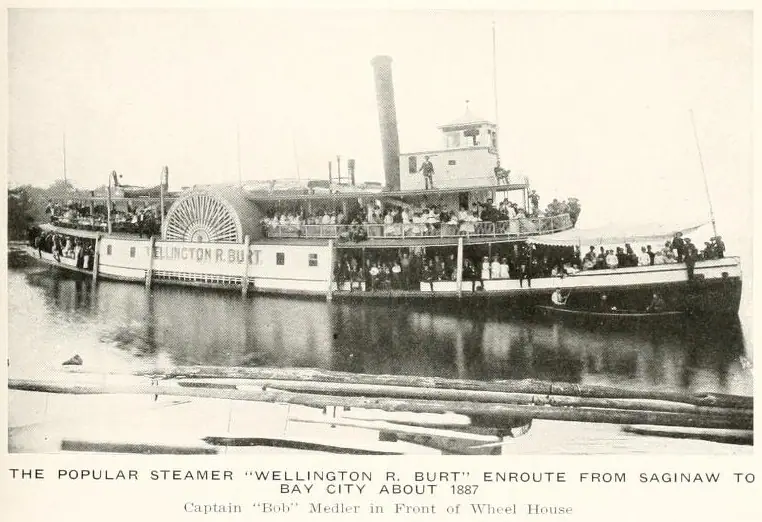
A grudge, compounded at interest
There is no version of this that reads as planning. Burt's children were adults with their own lives, and the message of the will was unmistakable: not you, and not your children either.
The strange consequence is that spite this thorough eventually stops being personal. By the time the money moved, everyone Burt was angry with had been dead for decades. The people who received it had no relationship to the grudge at all. They were, in effect, strangers who won a lottery drawn in 1919.
Estate planners cite Burt for a specific reason. Not because long trusts are wrong — dynasty trusts are a legitimate and common tool — but because a long trust with no purpose is just a delay. A dynasty trust normally exists to do something: protect assets from creditors, manage a family business, fund education across generations, keep property intact. Burt's did nothing except wait for people to die.
Timeline
- 1919Wellington R. Burt dies in Saginaw, Michigan at 87. His will grants his adult children modest allowances and locks the bulk of the fortune until 21 years after the death of his last grandchild living at his death.
- 1920s–1980sThe trust holds and grows. Three generations of descendants live and die without access to it.
- Nov 1989Granddaughter Marion Lansill — the last measuring life — dies. The 21-year clock begins.
- Nov 2010The 21 years expire.
- May 2011Saginaw County Chief Probate Judge Patrick McGraw oversees distribution of a fortune reported at roughly $100 million to twelve descendants aged 19 to 94, ninety-two years after Burt's death.
What actually went wrong
- A delay with no purpose. The trust protected nothing, funded nothing, and managed nothing. It simply waited. Every legitimate reason to use a long trust was absent.
- Beneficiaries the settlor could not possibly know. By design, everyone who received the money was born long after Burt died. He had no way of knowing whether they needed it, deserved it, or could handle it.
- Ninety-two years of trustee fees and administration on a fund that made no distributions and served no beneficiary.
- No mechanism to adapt. No trust protector, no decanting power, no early-termination provision. A century of changed circumstances and nobody with authority to respond to any of it.
Would it have gone that way in Florida?
Florida would allow far longer — and would give the beneficiaries far better tools to get out.
Two answers, pulling in opposite directions, and together they describe modern Florida trust law rather neatly.
First: the lock-up is fine, and could be far longer here. Burt drafted to the outer edge of the common-law rule against perpetuities — 21 years after lives in being. Florida has replaced that with §689.225, the Uniform Statutory Rule Against Perpetuities, and then extended it dramatically. For trusts created on or after July 1, 2022, the permissible period is 1,000 years. Between 2000 and 2022 it was 360 years. A modern Florida settlor with Burt's temperament could lock a fortune up for roughly eleven times as long as he managed.
Second: Florida would not leave the beneficiaries helpless. This is the real difference, and it is a twenty-first-century one. The Florida Trust Code supplies several exits that Burt's heirs simply did not have in 1919:
§736.04113 — a court may modify the terms of a trust if, because of circumstances not anticipated by the settlor, compliance with the terms would defeat or substantially impair the accomplishment of a material purpose. Ninety-two years of unanticipated circumstances is a strong record for that motion.
§736.04115 — a court may modify a trust when modification is in the best interests of the beneficiaries, considering the settlor's purpose, even where the original terms are not impossible to carry out.
§736.0412 — after the settlor's death, a trust may be modified or terminated without court approval on the unanimous agreement of the trustee and all qualified beneficiaries, if the modification is not inconsistent with a material purpose.
§736.04117 — decanting. A trustee with absolute power to invade principal may distribute the assets into a new trust with different terms, which is how modern trustees fix documents drafted by people who could not see the future.
So the honest Florida answer is: you may still be as controlling as Burt was, for centuries longer than he managed — but you will find it much harder to make it stick. Florida lets the settlor set a long fuse and simultaneously gives the beneficiaries and the courts real authority to shorten it when the fuse stops making sense.
The design lesson underneath: if you want a long trust, give it a job and give it a valve. State the purpose in the instrument so a court knows what it is protecting, and appoint a trust protector with power to adapt the terms. A trust that says why it exists is far more likely to survive the century it was built for.
What people ask us about this.
Further reading
Third-party sites. Not ours, not endorsed, not kept current by us — just the places worth going next.
Sources
- Weird & eccentric estate plan gifts — Trust & Will
- The world's weirdest wills — Lovemoney
- The weirdest and most unusual wills ever written — Ozarks Legacy Law
- Fla. Stat. §689.225 — Statutory rule against perpetuities — The Florida Senate
- Fla. Stat. §736.04113 — Judicial modification of irrevocable trust — The Florida Senate
If this is your situation
Free 30-minute consult. Plain English. No pressure.
Nearly every case in this archive turned on something ordinary — an unwitnessed page, a stale beneficiary line, a document nobody could find. Those are cheap to fix while you're alive and expensive to fix afterward.