Aldrich v. Basile
Ann Aldrich wrote her own will on an E-Z Legal Form and listed every asset she owned. Then she inherited more. Because the form had no line for a residuary clause, the new property went to two nieces she had never named — and the Florida Supreme Court said that was correct.
On April 5, 2004, Ann Dunn Aldrich of Keystone Heights, Florida, sat down with a preprinted stationery-store will kit called an E-Z Legal Form and did exactly what the form told her to do.
Under the heading “Bequests,” after the form's printed line directing that “after payment of all my just debts, my property be bequeathed in the manner following,” she wrote out her possessions by hand. The house and lot at 150 SW Garden Street. A Fidelity rollover IRA, with the account number and the customer-service phone number. A United Defense life insurance policy. A Chevy Tracker, with the VIN. Every bank account at M & S Bank, listed by number.
All of it to her sister, Mary Jane Eaton. And then one more line: “If Mary Jane Eaton dies before I do, I leave all listed to James Michael Aldrich” — her brother.
The will was signed. It was properly witnessed. It contained, in the Florida Supreme Court's phrase, “no other distributive provisions.” That last part is the entire case.
The sister became the benefactor
Three years later, on November 10, 2007, Mary Jane Eaton died first. The First District's opinion put it with unusual elegance: she died before Ann, “becoming her benefactor instead of her beneficiary.”
Eaton left her sister cash and land in Putnam County. Eaton's estate closed on July 23, 2008. Two days later, Ann Aldrich opened a new Fidelity investment account and deposited the inherited money into it.
Note what she did not do. The new Fidelity account was not the Fidelity rollover IRA listed in the will — it was a different account, opened five years after the will was written, holding money the will had never heard of. The Putnam County land was not the Garden Street lot. Ann Aldrich now owned two significant assets that her will did not mention in any way.
Later that year she appears to have noticed. Found with the original will was a piece of paper with the printed title “Just a Note,” dated November 18, 2008, in her handwriting, over her signature:
- “This is an addendum to my will dated April 5, 2004.” It went on: since her sister had died, she wished to reiterate that all her worldly possessions pass to her brother, James Michael Aldrich.
- One witness, not two. The only other signature on the page belonged to Sheila Aldrich Schuh — her niece, and James's daughter. Fla. Stat. §732.502(1)(b) requires two attesting witnesses, and §732.502(5) requires a codicil to be executed with the same formalities as a will.
So the note was not a codicil. It was a piece of paper. Everyone in the case agreed on what it said, and nobody could do anything with it.
Ann Aldrich died on October 9, 2009. She left no spouse and no children. One brother survived her. Two nieces — daughters of a brother who had predeceased her — did not appear anywhere in her will.
Trial court, First District, Supreme Court
James Aldrich was appointed personal representative. The nieces, Laurie Basile among them, filed to claim the after-acquired property as intestate heirs.
The brother's argument was the sensible one, and it very nearly won. He pointed to Fla. Stat. §732.6005(2), which says a will “is construed to pass all property which the testator owns at death, including property acquired after the execution of the will.” He pointed to the will naming only two people. He pointed to the ancient presumption that a testator making a will intends to dispose of her whole estate and does not intend partial intestacy. The trial court in Clay County agreed and entered summary judgment for him.
The First District Court of Appeal reversed. Its reasoning turned on the first subsection rather than the second. §732.6005(1) provides that “the intention of the testator as expressed in the will controls.” And Ann Aldrich, the court observed, had devised her property with “painstaking specificity.” Her will plainly evinced an intent to dispose of each particular item it named — and, equally plainly, expressed no intent at all about property it did not allude to in any way. The court sent the case back with directions to enter judgment for the nieces, and certified the question to the Supreme Court of Florida as one of great public importance.
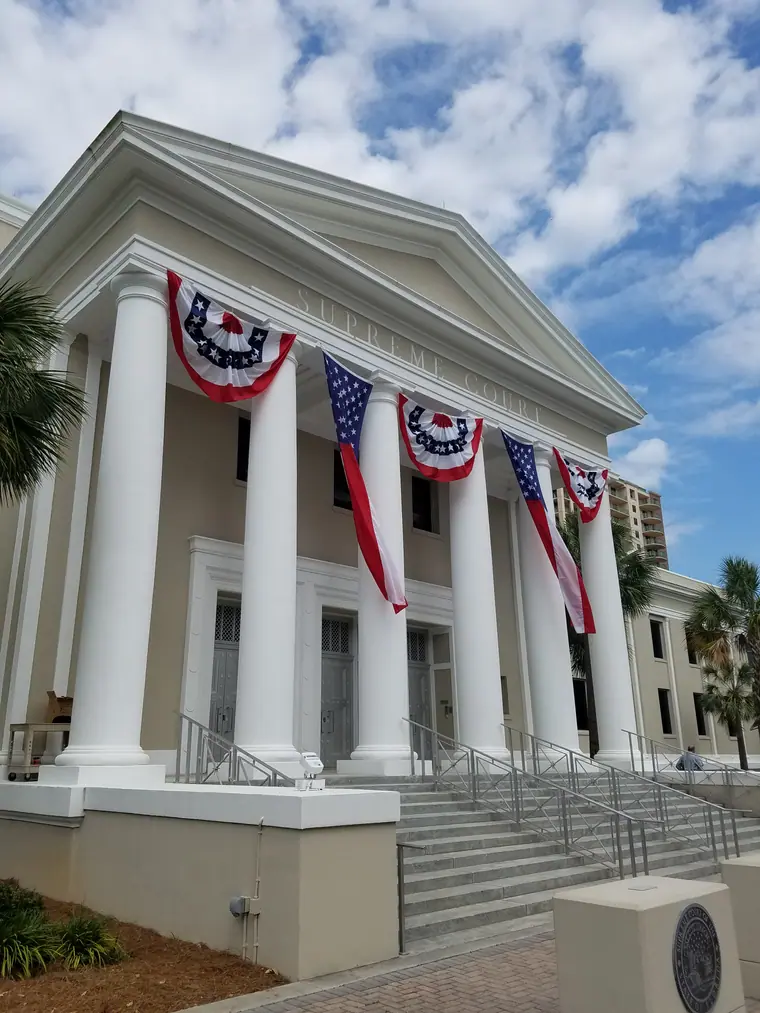
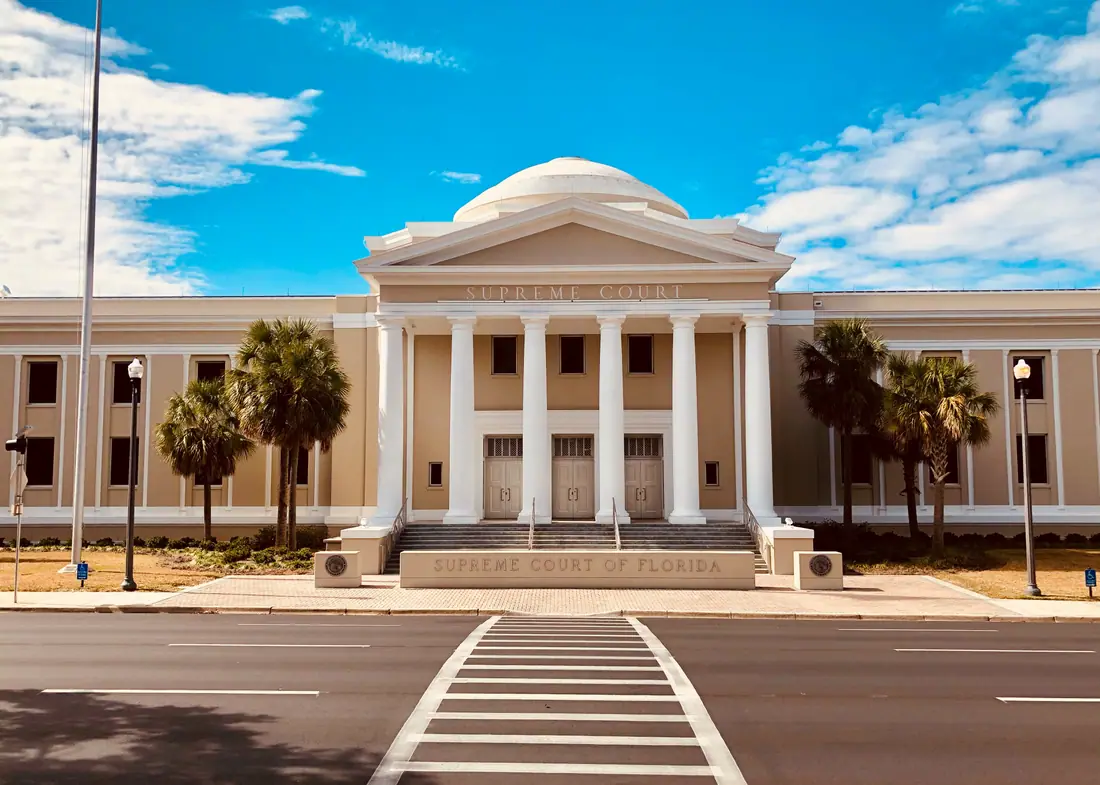
On March 27, 2014, the Supreme Court approved the First District and answered the certified question in the negative. §732.6005(2) is a rule about timing — it stops anyone from arguing that a devise fails merely because the asset was bought after the will was signed. It is not a rule that manufactures a devise where the will made none. No clause, no devise. No devise, intestacy.
Justice Pariente writes the sentence everyone quotes
Justice Barbara Pariente concurred in the result and then wrote separately to say what the majority could not. She began by conceding that the outcome was correct and that it almost certainly did not match what Ann Aldrich wanted. The unenforceable handwritten note, she wrote, “clearly demonstrates” that Aldrich's true intent was to pass everything to her brother — but true intent is not stated intent, and a court is confined to the will.
Then she assigned the blame precisely. The unfortunate result, she wrote, stemmed not from the Court's interpretation of Florida probate law but from the fact that Ms. Aldrich wrote her will using a commercially available form — one that “did not have space to include a residuary clause or pre-printed language that would allow a testator to elect to use such a clause.”
The form was in the record. There was nowhere on it to write the sentence that would have decided this case.
Her closing is the part that made the case famous, and it is worth reading in full rather than in paraphrase. She acknowledged that many Floridians have difficulty affording a lawyer. Then: this case “does remind me of the old adage ‘penny-wise and pound-foolish.’” The cost of a preprinted form is obviously lower than the cost of a knowledgeable lawyer. But the time, effort, and expense of extensive litigation to prove a testator's true intent after her death “can necessitate the expenditure of much more substantial amounts in attorney's fees than was avoided during the testator's life by the use of a pre-printed form.” The result is frustration of the testator's intent plus extensive attorney's fees — “the precise results the testator sought to avoid in the first place.”
A footnote adds the detail that turns the case from instructive to painful. The record indicated that shortly before her death, Ann Aldrich had in fact consulted an attorney who was drafting a will for her. She died days before she was to review it. The testimony was excluded as hearsay.
Timeline
- Apr 5, 2004Ann Aldrich writes her will on an E-Z Legal Form, listing five categories of assets to her sister Mary Jane Eaton, with her brother James as the alternate. Signed, witnessed, no residuary clause.
- Nov 10, 2007Mary Jane Eaton dies first, leaving Ann cash and land in Putnam County.
- Jul 23, 2008Eaton's estate is discharged. Two days later Ann opens a new Fidelity investment account for the inherited cash — an account her will does not mention.
- Nov 18, 2008Ann writes “Just a Note,” an addendum leaving all worldly possessions to her brother. She signs it. Only one other person signs it. Florida requires two.
- Oct 9, 2009Ann Aldrich dies in Keystone Heights, leaving no spouse and no children.
- 2010The Clay County trial court grants summary judgment to James Aldrich under §732.6005(2).
- 2011The First District reverses in Basile v. Aldrich, 70 So. 3d 682, holding that partial intestacy results, and certifies the question as one of great public importance.
- Mar 27, 2014The Supreme Court of Florida approves the First District and answers the certified question in the negative. The after-acquired property passes to two nieces the will never named.
What actually went wrong
- No residuary clause. One sentence — the rest, residue, and remainder of my estate to my brother — would have ended the case before it began. The form had no space for it.
- An inventory instead of a plan. Listing assets by account number is precise on the day you sign and obsolete the day you open a new account. A will that names things cannot follow you as your things change.
- A codicil with one witness. The “Just a Note” page said exactly what she wanted. Under §732.502 it was legally invisible, because a codicil needs the same two attesting witnesses a will needs.
- Five years of no review. Her sister died in 2007. The estate closed in 2008. She lived until 2009 and never re-executed the will, though she did open a new account for the money.
- A form drafted for nobody. Pariente's point was not that Aldrich was careless. It was that the product she bought did not contain the clause that every Florida will needs.
Would it have gone that way in Florida?
This IS the Florida rule — and it is still the rule today.
Most cases in this archive ask how Florida would have handled someone else's mess. This one is Florida handling its own, and the answer is binding on every probate court in the state.
Fla. Stat. §732.6005(1) is the operative sentence: the intention of the testator as expressed in the will controls the legal effect of the dispositions. Not intention as reported by relatives. Not intention as written on an unwitnessed note found clipped to the will. Intention as expressed in the executed document.
§732.6005(2) is narrower than it looks. It provides that a will is construed to pass all property the testator owns at death, “including property acquired after the execution of the will.” Read alone, that sounds like a catch-all. It is not. Aldrich holds it is a timing rule that saves devises the will actually makes; it does not create a devise the will never made. If no clause in your will reaches an asset, subsection (2) will not reach it for you.
When a will disposes of some property but not all of it, the rest passes by partial intestacy under Ch. 732, Part I. With no spouse and no descendants, §732.103 sends the estate to parents, then to siblings and the descendants of siblings. That is how two nieces who were never mentioned in the will inherited a Putnam County parcel and a Fidelity account.
The honest caveat: nothing here says a homemade will is void. Ann Aldrich's will was valid, and the property she listed passed exactly as she wrote it. The failure was not execution — it was drafting. A perfectly executed will can still be an incomplete one, and Florida will not fill in the blank.
The practical instruction is unusually specific for this archive. Open your will. Find the sentence that starts I give the rest, residue, and remainder. If it is not there, the document is a list, not a plan, and everything you acquire from today forward is heading for intestacy. If you already have that clause, the second thing to check is whether your named beneficiaries are still alive, and whether a contingent beneficiary follows each one.
What people ask us about this.
Is a will from an online form or a will kit valid in Florida?+−
What is partial intestacy?+−
Does a will automatically cover property I buy after I sign it?+−
Can I fix a will by writing a note and attaching it?+−
Who inherits in Florida if there is no spouse, no children, and no valid gift?+−
Further reading
Third-party sites. Not ours, not endorsed, not kept current by us — just the places worth going next.
Sources
- Aldrich v. Basile, No. SC11-2147 — slip opinion, Supreme Court of Florida — FSU College of Law Research Center, Mar 27 2014
- Aldrich v. Basile, 136 So. 3d 530 (Fla. 2014) — FindLaw Caselaw
- Basile v. Aldrich, 70 So. 3d 682 (Fla. 1st DCA 2011) — FindLaw Caselaw
- Aldrich v. Basile — Florida Supreme Court decisions — Justia, 2014
- Florida Supreme Court case illustrates the dangers of online legal forms — Dean Mead
- Fla. Stat. §732.6005 — Rules of construction and intention — The Florida Senate
- Fla. Stat. §732.502 — Execution of wills — The Florida Senate
- Fla. Stat. §732.103 — Share of other heirs — The Florida Senate
If this is your situation
Intake reopens late October 2026. The archive stays free.
Nearly every case in this archive turned on something ordinary — an unwitnessed page, a stale beneficiary line, a document nobody could find. Those are cheap to fix while you're alive and expensive to fix afterward.