W.C. Fields
The story is that he hid a fortune in hundreds of accounts under invented names. A biographer went and looked: about two dozen accounts, all in his own name. The parts of this estate that were real — a college for orphans, and a body nobody would cremate — took sixteen years to resolve.
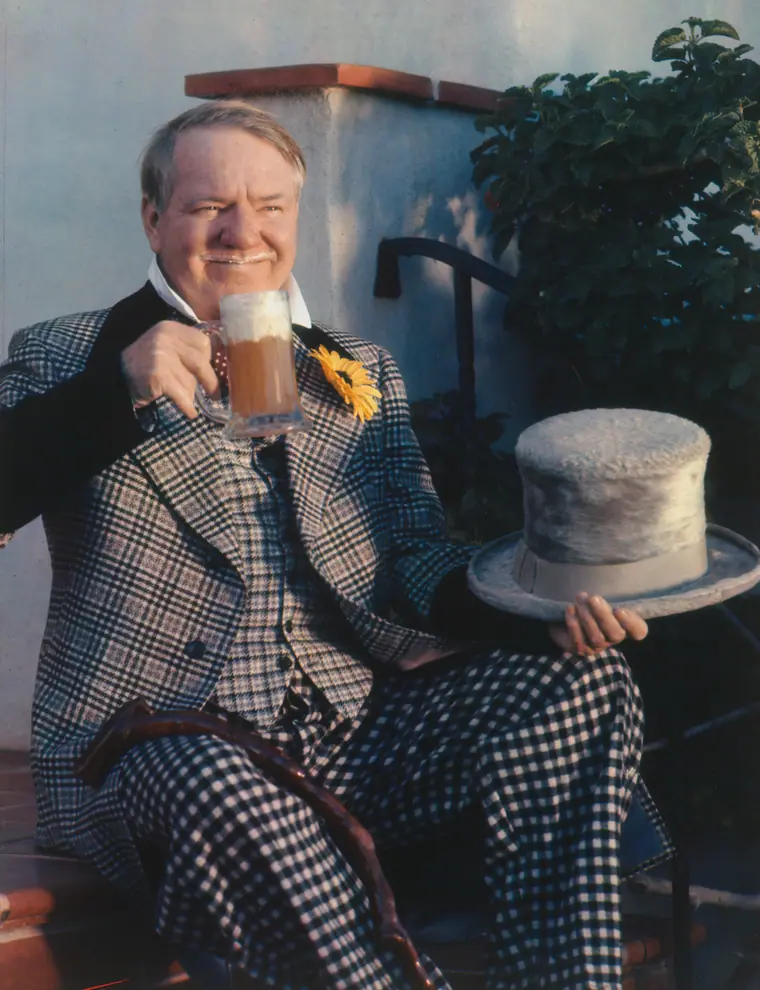
Start with the legend, because everybody knows it and it is the reason you clicked.
W.C. Fields, the story goes, spent his life terrified of being broke — he had been, badly, as a young vaudeville performer — and so he opened a bank account in every town he played, under a false name, and never told anyone. Figley E. Whitesides. Sneed Hearn. Ludovic Fishpond. Aristotle Hoop. Dr. Otis Guelpe. Cholmondeley Frampton-Blythe. He is said to have told a friend he recalled opening at least seven hundred of them. After he died, his companion Carlotta Monti said there was more than $1.3 million sitting unclaimed in banks under names nobody could match to him.
It is a wonderful story. Parts of it are true.
Every estate lawyer has met the smaller version of it
The Fields story persists because it is an exaggerated version of something that happens constantly, in ordinary estates, to ordinary families.
Somebody dies. There is a credit union from a job they left in 1974. A savings bond bought for a grandchild. An old brokerage account moved twice by mergers. A safe deposit box whose bank has been acquired three times and now has a different name over the door. Nobody living knows about any of it, because the person who did is the person who died.
The money does not vanish. After a statutory dormancy period it is turned over to the state's unclaimed property program, where it sits, indefinitely, waiting for someone to look. Every state runs one. Most families never check.
The Fields legend is what that experience feels like from the inside, multiplied by a hundred and given funny names.
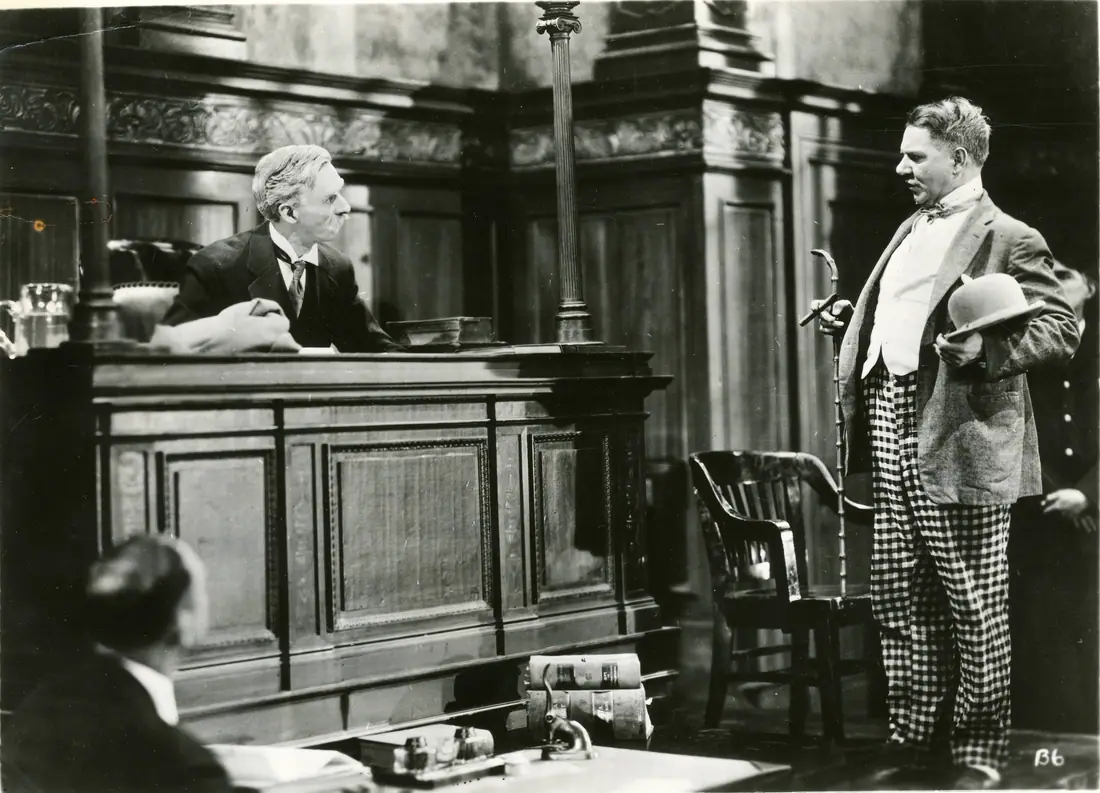
A college for orphans, and a body in storage
The documented estate litigation was not about hidden money at all. It was about two clauses in a will written in 1943.
The first was charitable. Fields directed that the bulk of an estate of roughly $800,000 go to establish the “W. C. Fields College for Orphan White Boys and Girls, where no religion of any sort is to be preached.” Specific bequests came first: $100,000 to his estranged wife Harriet — Hattie — Fields, $11,550 to his brother Walter, $9,240 to his sister Adele, and $3,850 to Carlotta Monti.
Hattie Fields and their son Claude contested the college clause. In December 1949 a judge disallowed it. That decision was subsequently reversed, and in December 1950 the charitable gift was reinstated in a drastically reduced form: $25,000 to “some college in Los Angeles County.” A bequest meant to found an institution ended as a donation.
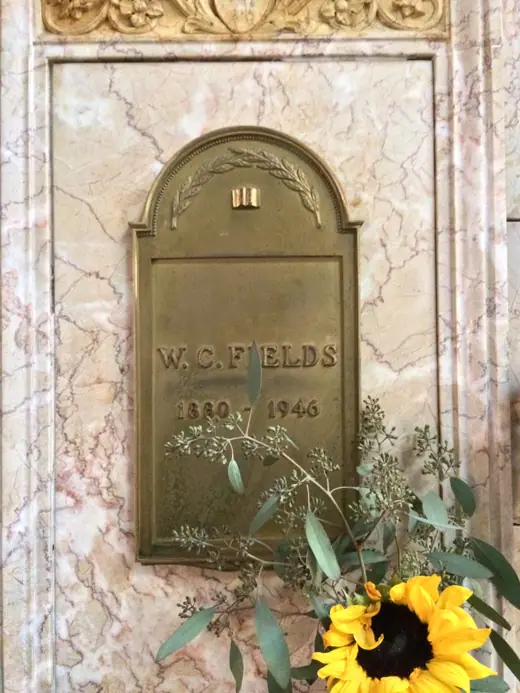
The second was about his body. Fields's will directed that he be cremated immediately upon death. Hattie and Claude Fields objected on religious grounds. The objection worked. He died on December 25, 1946; his funeral was held on January 2, 1947; and he was not cremated until June 2, 1949 — two and a half years during which his own written instruction sat in a court file, unenforced. His ashes were interred at Forest Lawn in Glendale.
The estate itself was finally closed on January 16, 1963. Sixteen years. Hattie Fields received the bulk of it, with payments to Carlotta Monti, to Walter and Adele, and to Fields's son by Bessie Poole.
Documented, and legend
For the reader who wants the ledger without the commentary:
- Documented. The 1943 will. The $800,000 estate. The named bequests. The orphans'-college clause and its exact wording. The 1949 disallowance, the reversal, and the $25,000 substitute in December 1950. The cremation direction, the religious objection, the June 2, 1949 cremation. The January 16, 1963 closing. About two dozen bank accounts, all in his own name.
- Legend. Seven hundred accounts. Accounts under invented names. $1.3 million unclaimed in banks across the world. The invented names themselves are attested as names Fields enjoyed and used in various contexts — what is unsupported is that a fortune was banked under them.
- Contested. Whether Fields ever said “seven hundred.” The claim traces to Fields himself, relayed by a friend, and a man who invented Cholmondeley Frampton-Blythe for fun is not the ideal source for his own bank records.
Timeline
- 1943Fields executes the will, directing immediate cremation and leaving the bulk of the estate to found the W. C. Fields College for Orphan White Boys and Girls.
- Dec 25, 1946Fields dies at 66. The estate is valued at roughly $800,000.
- Jan 2, 1947His funeral is held in Glendale. Hattie and Claude Fields object to cremation on religious grounds, and the body is not cremated.
- Late 1940sAn assistant engaged to untangle the estate finds about 24 bank accounts — all in Fields's own name. Carlotta Monti separately claims more than $1.3 million lies unclaimed under assumed names.
- Jun 2, 1949Fields is cremated, two and a half years after his death and after the objection is resolved. His ashes are interred at Forest Lawn, Glendale.
- Dec 1949A judge disallows the orphans'-college bequest. The ruling is later reversed.
- Dec 1950The charitable gift is reinstated in reduced form: $25,000 to some college in Los Angeles County.
- Jan 16, 1963The estate is closed, sixteen years after his death. Hattie Fields receives the bulk, with payments to Carlotta Monti, to his siblings Walter and Adele, and to his son by Bessie Poole.
- 2003James Curtis's biography, drawing on an interview with Fields's accountant, reports about two dozen accounts, all in Fields's real name.
What actually went wrong
- A charitable purpose written as a restriction rather than a gift. The clause specified who the beneficiaries had to be and what could not be taught. Every condition attached to a charitable bequest is a place a court can find it unlawful or impracticable — and this one had two.
- No fallback charitable beneficiary. If the college could not be built, the will said nothing about where the money should go instead. That silence is what let the gift shrink from an institution to $25,000.
- A funeral instruction with no legal force behind it. He wrote it down and it was ignored for two and a half years, because the people with physical custody objected and the document did not clearly outrank them.
- An estranged spouse and a son as the natural objectors. Anyone who benefits from a clause failing will test that clause. A plan that leaves the bulk to charity over the heads of a wife and child should expect exactly the litigation it got.
- No inventory of accounts. Whatever the true number, somebody had to be hired to go and find them. A single sheet of paper listing institutions — not balances, not passwords, just names of banks — would have replaced years of searching and would have killed the legend at birth.
Would it have gone that way in Florida?
The college clause fails in Florida too — but a Florida court would repair it rather than shrink it. And the two-and-a-half-year fight over his body could not have happened here at all.
Three Florida questions, and they come out three different ways.
The cremation. This is the cleanest and the most useful. Fla. Stat. §497.005 defines the “legally authorized person” who may direct the disposition of remains, and it puts the decedent's own written direction first — ahead of a spouse, ahead of adult children, ahead of everybody. If Fields had written that instruction in Florida, the funeral director would have followed it, and a family member's religious objection would not have changed the answer. Objections by relatives can stall a Florida cremation only in narrow circumstances; they do not override a valid written direction for two and a half years. The single most reliably enforced instruction in American estate law is the one about your own body, and it works only if you actually write it down.
The college. A Florida charitable trust must have a purpose that is lawful and not contrary to public policy — §736.0404 — and §736.0405 requires the purpose to be charitable and reasonably ascertainable. A restriction limiting beneficiaries by race is not a purpose a Florida court would enforce, and the exclusion of religious instruction, while lawful in itself, adds another condition to argue about. So the clause as written fails.
But it would not shrink to a donation. Florida's cy pres statute, §736.0413, is the difference. When a particular charitable purpose becomes unlawful, impracticable, impossible to achieve or wasteful, the trust does not fail: the court modifies it and applies the property to a charitable purpose consistent with the settlor's general charitable intention. Fields's general intention is legible on the face of the clause — the education and care of orphaned children. A Florida court applying §736.0413 would have directed the bulk of the estate to that purpose, stripped of the unlawful restriction. Instead of $25,000 to an unnamed college, the money would have gone to orphans. That is a very large practical difference produced by one statute.
The accounts. Florida's unclaimed property law is Chapter 717, administered by the Department of Financial Services. Dormant accounts, uncashed cheques, insurance proceeds and safe-deposit contents are reported and remitted to the State, which holds them indefinitely — there is no deadline to claim. The searchable database is free and public, and a personal representative can claim on behalf of an estate. Separately, §733.816 governs unclaimed property that a personal representative is holding when the estate closes. Anyone administering an estate in Florida should run the decedent's name — and their maiden name, and their prior addresses — through the state database before closing. It costs nothing and it is astonishing how often something is there.
The instruction: three things, none of them expensive. Put your funeral and disposition instructions in a signed writing of their own, not buried in a will nobody reads until after the funeral. If you are giving to charity, name the purpose broadly, name a specific alternate charity, and let the trustee choose within a category rather than building a condition a court has to strike. And leave a one-page list of every financial institution you deal with — no balances, no passwords, just names — with the person who will have to find them.
What people ask us about this.
Further reading
Third-party sites. Not ours, not endorsed, not kept current by us — just the places worth going next.
Sources
- W. C. Fields — death, will, cremation dispute and estate settlement — Wikipedia
- A bank account in every city — Commonplace Fun Facts
- W.C. Fields urban legend inquiry — the accounts, examined — alt.folklore.urban archive
- W. C. Fields: A Biography — James Curtis, Alfred A. Knopf, 2003
- Carlotta Monti — Wikipedia
- W.C. Fields — trivia and estate details — IMDb
- Fla. Stat. §736.0413 — Cy pres — The Florida Senate
- Fla. Stat. §497.005 — Definitions — The Florida Senate
If this is your situation
Free 30-minute consult. Plain English. No pressure.
Nearly every case in this archive turned on something ordinary — an unwitnessed page, a stale beneficiary line, a document nobody could find. Those are cheap to fix while you're alive and expensive to fix afterward.