Casey Kasem
The most familiar voice in American radio spent his last month as the subject of a conservatorship fight, a court order about a feeding tube, and a search across two states. Then, six months after his death, his body was buried in Norway.

Casey Kasem hosted American Top 40 for most of four decades and voiced Shaggy in Scooby-Doo. He was diagnosed with what his daughter Kerri later described as Lewy body dementia, a condition his family had at first announced as Parkinson's disease. By 2014 he could not speak.
What followed is the most-cited American case in the small, ugly category of estate law that has nothing to do with money: who decides, when a person can no longer decide for themselves, and who takes the body afterward.
It ran for roughly fourteen months, across two state court systems, and it ended with the most recognisable voice in American broadcasting buried in a cemetery in Oslo, Norway — a country he had, on the public record, no connection to.
Two courts, two states, one month
The family had divided long before the crisis. In October 2013 Kasem's older children picketed outside the Los Angeles home, saying they were being kept from their father. They petitioned for a conservatorship over his care. In November 2013 the court denied the petition.
In May 2014 the situation escalated on a weekly cadence:
- May 7 — his wife, Jean Kasem, removed him from a Santa Monica nursing home.
- May 12 — a Los Angeles court granted his daughter Kerri Kasem temporary conservatorship over his person, over Jean Kasem's objection. Her attorney told the court he was no longer in the United States, and the court ordered an investigation.
- June 6 — he was located in Washington state, hospitalised in critical but stable condition, receiving antibiotics for bedsores.
Then came the part that reads badly in every direction. Judge Daniel S. Murphy first ordered that Kasem be hydrated, fed and medicated. Kerri Kasem's lawyer said artificial nutrition had been withdrawn pursuant to a directive Kasem signed in 2007, in which he stated he would not want life support if it would result in a mere biological existence, devoid of cognitive function, with no reasonable hope of normal functioning. Jean Kasem said he had received no food, water or medication over a weekend. The following Monday the judge reversed his own order and permitted end-of-life measures, after Kasem's body stopped responding to artificial nutrition.
He died on June 15, 2014, at a hospital in Gig Harbor, Washington, at 82. The immediate cause was sepsis caused by an ulcerated bedsore. His body was released to his widow.
Tacoma, then Montreal, then Oslo
Reporting at the time said Kasem had wanted to be buried at Forest Lawn Memorial Park in Glendale, California.
On July 19, 2014, Kerri Kasem obtained a temporary restraining order from Judge Ronald Culpepper directing that the remains be preserved at Gaffney Funeral Home in Tacoma pending a hearing on an autopsy. When she went to deliver it, the funeral director told her the body was no longer in their care.
The death certificate had been filed on July 15, listing a disposition date of July 14 and a destination: the Urgel Bourgie funeral home in Montreal. A representative there said they had no such remains and no such name in their system.
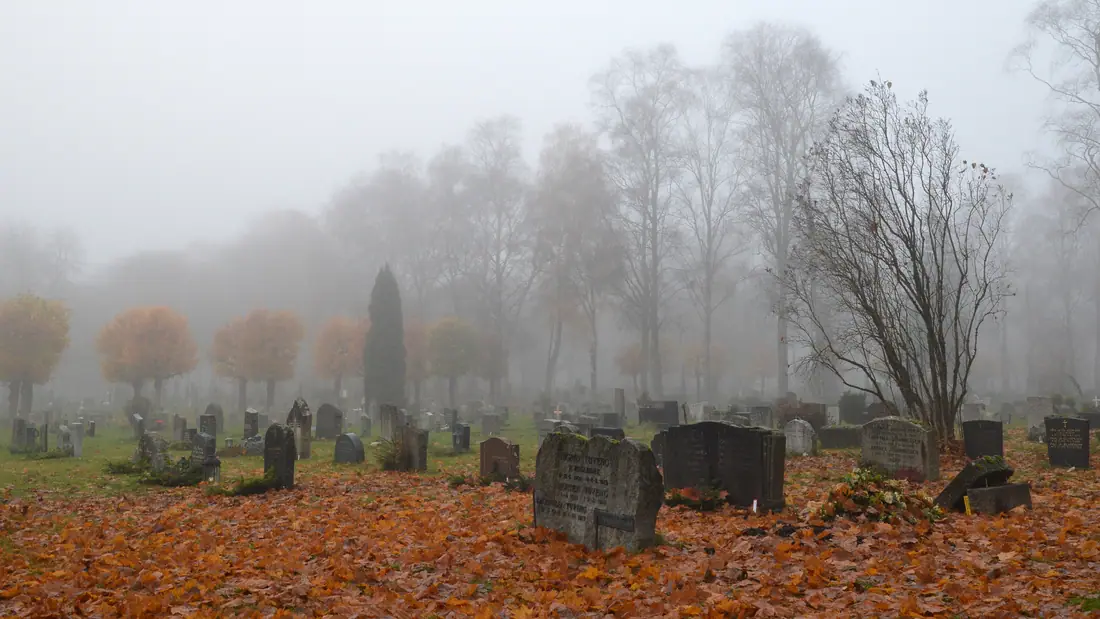
In August 2014 the Norwegian newspaper Verdens Gang reported that Kasem would be buried in Oslo. On December 16, 2014 — six months and a day after his death — he was interred at Oslo's western civil cemetery, Vestre gravlund.
As of August 2026 he is still there.
The lawsuits, the investigation, and the laws that came out of it
In November 2015, three of Kasem's children and his brother sued Jean Kasem, alleging wrongful death, elder abuse, and intentional infliction of emotional distress in restricting access to him before his death. Those were allegations. They were never adjudicated — the litigation was resolved by settlement in 2019, which is not an admission of anything by anyone.
In 2018, a police investigation — initiated by a private investigator working for Jean Kasem — concluded that Kasem had received appropriate medical care while in Washington, and that there was no evidence pointing to homicide.
The lasting product of the case was legislative rather than judicial. Kerri Kasem founded Kasem Cares, which has campaigned in state legislatures for laws guaranteeing family visitation rights to incapacitated adults — the specific grievance at the centre of the case, and one that a will has never had anything to do with.
Which is the point. Nothing here turned on the estate. The fight was about access, care, and a body, and it was decided by advance-directive law, guardianship law, and a funeral-disposition statute. Most people have a will and none of the other three.
Timeline
- 2007Kasem signs a directive stating he would not want life support if it would result in a mere biological existence with no reasonable hope of normal functioning.
- Oct 2013His older children protest outside the family home in Los Angeles, saying they are being kept from him.
- Nov 2013A court denies the older children's petition for conservatorship.
- May 7, 2014Jean Kasem removes him from a Santa Monica nursing home.
- May 12, 2014A Los Angeles court grants Kerri Kasem temporary conservatorship over his person and orders an investigation after her attorney is told he is no longer in the United States.
- Jun 6, 2014Kasem is located in Washington state, hospitalised and being treated for bedsores.
- Jun 2014Judge Daniel S. Murphy orders that he be fed, hydrated and medicated, then reverses the order days later and permits end-of-life measures.
- Jun 15, 2014Kasem dies at a hospital in Gig Harbor, Washington, at 82, of sepsis from an ulcerated bedsore.
- Jul 14–19, 2014The body leaves the Tacoma funeral home. A temporary restraining order from Judge Ronald Culpepper arrives too late; the death certificate lists a Montreal destination the funeral home there says it never received.
- Dec 16, 2014Kasem is interred at Vestre gravlund in Oslo, six months and a day after his death.
- Nov 2015 – 2019Three children and his brother sue alleging wrongful death and elder abuse. A 2018 police investigation finds no evidence of homicide. The litigation settles in 2019 with no finding on the allegations.
What actually went wrong
- No health care surrogate designated in writing. With no named surrogate, the decision-making order is set by statute — and in most states, as in Florida, the spouse ranks ahead of adult children.
- A directive with nobody to enforce it. The 2007 statement of wishes existed. Whether it was being honoured became the substance of an emergency hearing, because no single person had been appointed in advance to speak for it.
- No preneed guardian declaration. Naming the person who should serve as guardian if you become incapacitated converts a contested petition into a presumption. Two witnesses, one page.
- No written directions for the disposition of the remains. Without them, the right to decide passes down a statutory list — and the list starts with the spouse.
- No plan for a divided family. Where adult children and a second spouse are in open conflict, the documents have to name one decision-maker for each question, in advance, or the courts will pick for you under a default nobody chose.
Would it have gone that way in Florida?
The same fight, with the same default order — unless he had signed two pages, in which case none of it happens.
Florida answers two separate questions here, and both defaults run against adult children in a second-marriage family.
Who decides about care. If a Florida patient has not designated anyone, Fla. Stat. §765.401 supplies a proxy in a fixed order: a judicially appointed guardian first, then the patient's spouse, then an adult child or a majority of adult children, then a parent, then siblings, and so on. The spouse outranks the children. The proxy must decide as the patient would have decided, and for a decision to withhold or withdraw life-prolonging procedures the proxy needs clear and convincing evidence of the patient's wishes. That evidentiary standard is exactly what a contested hearing about a feeding tube looks like.
The document that overrides all of it is §765.202 — a written designation of a health care surrogate, signed in the presence of two adult witnesses, at least one of whom is neither the spouse nor a blood relative, and not the surrogate. That single page removes the default list entirely and names the decision-maker yourself. Pair it with a living will under §765.302, executed the same way, which states what you want done about life-prolonging procedures — turning your wishes from testimony about a conversation into a signed instrument.
Who becomes guardian. Florida guardianship runs under Chapter 744. §744.3045 lets a competent adult name a preneed guardian by written declaration before two witnesses, filed with the clerk; produced in a proceeding, it creates a rebuttable presumption that the named person should serve. And on the grievance at the heart of this case, Florida is explicit: §744.3215(1)(m) preserves an incapacitated person's right to receive visitors and communicate with others. It is a statutory right of the ward, enforceable in the guardianship court — which is what the Kasem Cares campaign has been asking other legislatures to adopt.
Who takes the body. This is where Florida law is genuinely reassuring, and almost nobody knows it. §497.005(43)(a) defines the “legally authorized person” who controls the disposition of remains, and the first entry on that list is the decedent, where written inter vivos authorizations and directions have been provided by the decedent. Your own signed instructions rank ahead of your spouse, ahead of your children, ahead of everyone. Only if you leave nothing in writing does the list run to the surviving spouse, then adult children, then parents, then siblings, then grandchildren, and onward.
The honest caveat. All of that works while the remains are in Florida. A Florida court's practical authority over a body ends where its jurisdiction does; once remains leave the country the remedy is diplomatic and expensive rather than judicial. This is a problem you solve in advance or not at all — which is why the written direction, deposited with the funeral home you have actually chosen, matters more than any order a judge can sign afterward.
The practical instruction: sign four things and put them where they will be found. A health care surrogate designation under §765.202. A living will under §765.302. A preneed guardian declaration under §744.3045, filed with the clerk. And written directions for the disposition of your remains, naming the cemetery or crematory, given to that provider and to more than one family member. Then tell everyone who has copies. In a divided family, the fight is not usually about what you wanted — it is about who gets to say what you wanted.
What people ask us about this.

Further reading
Third-party sites. Not ours, not endorsed, not kept current by us — just the places worth going next.
Sources
- Casey Kasem's body is missing, lawyer says — CBS News / AP, Jul 19 2014
- Casey Kasem's remains still unburied — CNN, Jul 22 2014
- Casey Kasem timeline — CNN, Jun 10 2014
- Casey Kasem's daughter can stop food and medication, judge rules — Fox News / AP, Jun 2014
- Casey Kasem to be buried in Norway — The Hollywood Reporter, Aug 2014
- Gravferdsetaten bekrefter likflytting til Oslo — Verdens Gang (VG), Aug 14 2014
- Amerikansk radiokjendis gravlagt i Oslo — Verdens Gang (VG), Dec 2014
- Casey Kasem's family cleared of wrongdoing in investigation into his death — NBC News, 2018
- Casey Kasem, wholesome voice of pop radio, dies at 82 — The New York Times, Jun 16 2014
If this is your situation
Free 30-minute consult. Plain English. No pressure.
Nearly every case in this archive turned on something ordinary — an unwitnessed page, a stale beneficiary line, a document nobody could find. Those are cheap to fix while you're alive and expensive to fix afterward.