Barbara Hutton
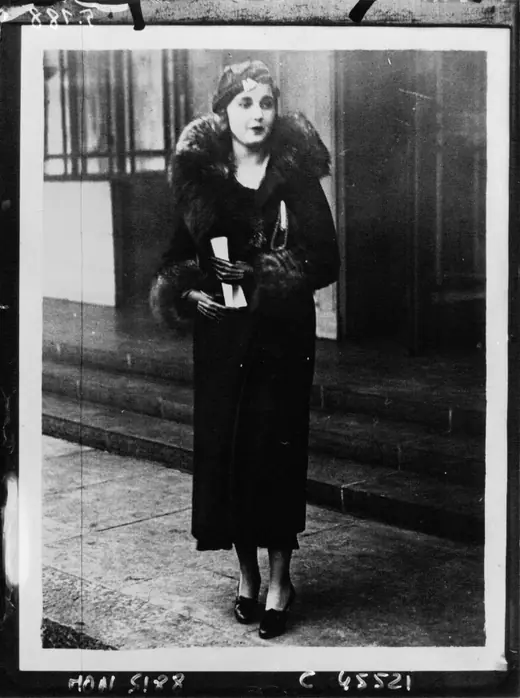
She inherited a Woolworth fortune at twelve, took control of it outright at twenty-one, and married seven times. Almost nothing about her spending was illegal or even unusual for her class. What is instructive is the structure: a trust that protected her until her twenty-first birthday and then simply stopped.
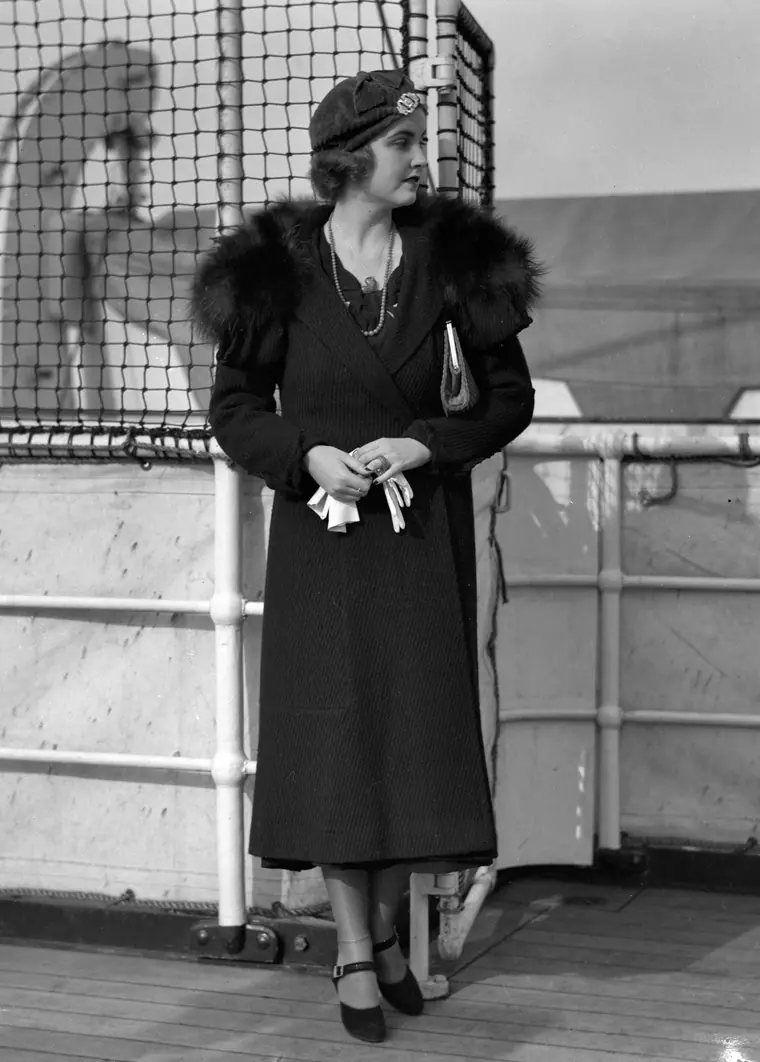
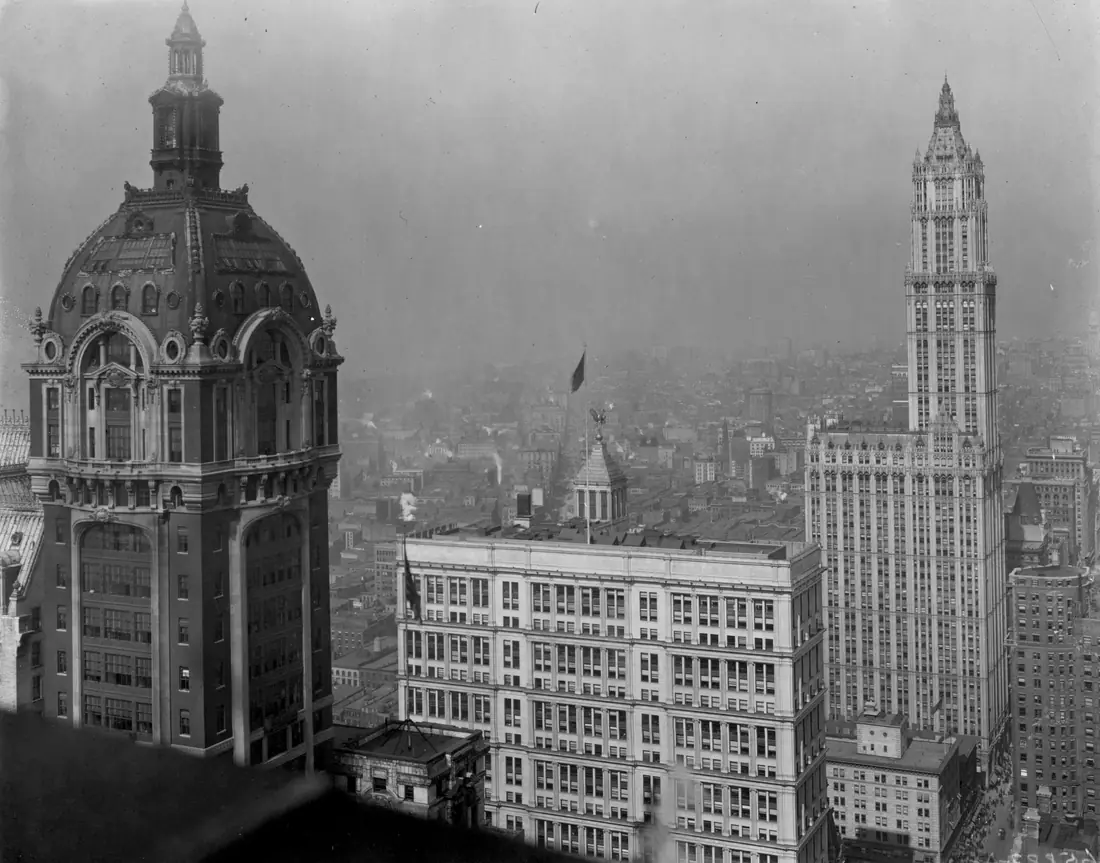
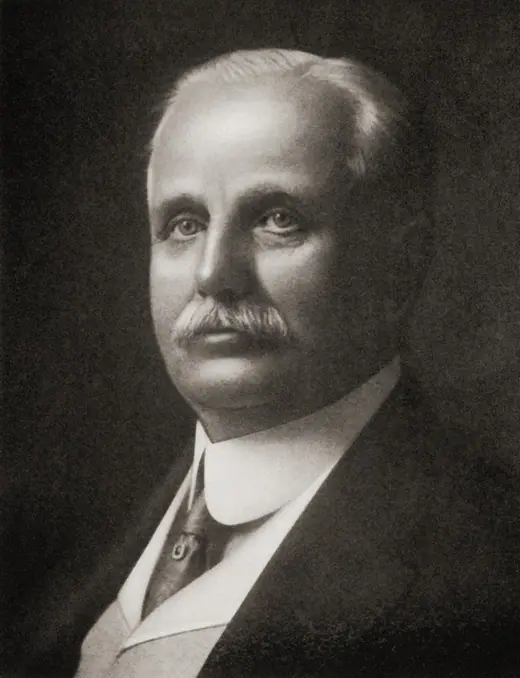
Frank Winfield Woolworth invented the five-and-dime and built a company and a tower to hold it. He died in 1919. His granddaughter Barbara Hutton was seven.
In 1924, when Barbara was twelve, her grandmother Jennie Woolworth died and left her roughly $26.1 million — a genuinely enormous sum, worth several hundred million in today's money. Her mother had died in 1917, when Barbara was four.
The money was held in trust until she turned twenty-one. Her father, Franklyn Hutton, a founder of the brokerage E. F. Hutton, managed it in the meantime and managed it well: by her twenty-first birthday in 1933 the fund had grown to roughly $42 million, with a further $8 million coming from her mother's estate.
And on that birthday, the protection ended. The trust distributed. A twenty-one-year-old received outright control of one of the largest personal fortunes in the world, in the fourth year of the Great Depression, while the newspapers reported the number.
Seven marriages, and a title each time
Hutton married seven times: Alexis Mdivani (1933–1935), Count Kurt von Haugwitz-Hardenberg-Reventlow (1935–1938), Cary Grant (1942–1945), Prince Igor Troubetzkoy (1947–1951), Porfirio Rubirosa (1953–1954, a marriage that lasted 53 days), Baron Gottfried von Cramm (1955–1959), and Prince Pierre Raymond Doan (1964–1966).
Her father paid Mdivani a reported $1 million in connection with the first marriage, and Mdivani is reported to have spent millions of her inheritance during it. Cary Grant is the exception in every account: he neither sought nor took money in the divorce, and the press nicknamed the marriage Cash and Cary anyway.
In December 1937 she renounced her American citizenship in a New York federal court and took Danish citizenship, a step reported at the time as tax-motivated and one that made her, briefly, one of the most unpopular people in the United States.
Her only child, Lance Reventlow, died in an aircraft accident in 1972.
She died on May 11, 1979, at 66, in Beverly Hills. One biographer put what remained of the fortune at $3,500; others close to her disputed that. Accounts differ, and the honest statement is that a fortune of roughly $50 million in 1933 dollars was substantially gone by 1979, without anyone having stolen it.
What a trust is actually for
The popular idea of a trust is a tax device or a rich person's affectation. It is neither. Its core function is much simpler, and this case is the clean illustration of it: a trust separates the enjoyment of money from control over it, for as long as the document says.
Four settings do most of the work.
- When distributions happen. Outright at 21 is the worst common answer. Staged distributions — a third at 30, a third at 35, the rest at 40 — are better. A lifetime trust, from which a trustee distributes for defined purposes and which never fully vests, is better still, and is what most large family fortunes actually use.
- Who decides. A discretionary standard — the trustee may distribute for health, education, maintenance, and support — puts a professional between the beneficiary and the principal. A mandatory income interest does not.
- Spendthrift protection. A properly drafted spendthrift clause restrains both voluntary and involuntary transfer of the interest, so the beneficiary cannot pledge or assign it and most creditors cannot attach it before it is paid out.
- A prenuptial agreement, every time. No trust structure survives a beneficiary who gifts distributions away. The document that governs a marriage does work no trust can do.
Hutton's fund had the first phase of this and none of the rest. It protected her through minority, performed extremely well, and then handed over the keys on a fixed date to a person whose circumstances nobody in 1924 could have predicted.
Fixed ages are a guess about a future you cannot see. A trustee with discretion is a judgment made at the time it is needed.
Timeline
- 1919Frank Winfield Woolworth dies. His granddaughter Barbara is seven.
- 1924Jennie Woolworth dies, leaving Barbara, aged twelve, roughly $26.1 million in trust.
- Nov 14, 1933Barbara turns twenty-one. The trust distributes; she takes outright control of roughly $42 million, plus about $8 million from her mother's estate.
- 1933–1935First marriage, to Alexis Mdivani. Her father pays a reported $1 million in connection with it; Mdivani is reported to have spent millions of her inheritance.
- Dec 1937Hutton renounces US citizenship in a New York federal court and takes Danish citizenship, in a step reported as tax-motivated.
- 1942–1945Marriage to Cary Grant, the one husband reported to have taken nothing in the divorce.
- Dec 1953 – Feb 1954Fifth marriage, to Porfirio Rubirosa, lasting 53 days.
- 1972Her only child, Lance Reventlow, dies in an aircraft accident.
- May 11, 1979Hutton dies in Beverly Hills, aged 66. Accounts of what remained of the fortune differ sharply; all agree it was a small fraction of what she received.
What actually went wrong
- Outright distribution at a fixed age. Twenty-one was the whole plan. Nothing in the structure asked whether, at twenty-one, distributing a nine-figure fortune to this particular person was a good idea.
- No discretionary trustee. A trustee empowered to distribute for defined purposes — and to decline — is the mechanism that converts a fortune into an income for life. Vesting removes the trustee from the picture permanently.
- No prenuptial agreements at the start. Seven marriages, several to men whose financial expectations were public knowledge before the wedding. A prenup is not cynicism; it is the only document that addresses the risk directly.
- A single undiversified concentration of publicity. The size of the fortune was reported in newspapers from her childhood. Privacy is a planning objective, and a trust that stays out of probate is the practical way to get it.
- Nobody planned for the length of the life. A fortune that has to fund fifty-eight adult years of a particular standard of living is an income problem, not a lump-sum problem. It was structured as a lump sum.
Would it have gone that way in Florida?
This IS what Florida trust law is built to prevent — and every tool needed is in Chapter 736, available at any asset level.
Nothing about this case requires a Woolworth fortune to be relevant. Substitute $500,000 and a twenty-one-year-old, and the arithmetic changes while the structure does not.
Spendthrift protection. Fla. Stat. §736.0502 validates a spendthrift provision that restrains both voluntary and involuntary transfer of a beneficiary's interest — the phrase “held subject to a spendthrift trust” is enough to create one. The effect is that the beneficiary cannot assign or pledge the interest, and a creditor or assignee generally cannot reach it or a distribution before the beneficiary receives it. Note the limit in that last clause. Money in the trust is protected; money in the beneficiary's hand is not.
The exceptions, honestly stated. §736.0503 lets three classes through a spendthrift clause: a beneficiary's child, spouse, or former spouse holding a support or maintenance judgment; a person who furnished services protecting the beneficiary's interest in the trust; and claims of the State of Florida or the United States where a statute so provides. Even then, relief for the first two categories is available only as a last resort, on a showing that ordinary enforcement methods are insufficient. A spendthrift trust is not a wall against everything, and anyone who tells you otherwise is selling something.
Discretion is the real protection. §736.0504 deals with discretionary trusts, and it is the provision that does the heavy lifting. Where a trustee holds discretion over distributions — even discretion limited by a standard such as health, education, maintenance, and support — a creditor generally cannot compel a distribution or attach the interest, and the beneficiary has no transferable right to a payment the trustee has not made. Combine discretion with a spendthrift clause and you have the structure large family fortunes actually use.
Two more Florida notes. A trust you create for yourself does not get this protection: §736.0505 allows creditors of the settlor of a revocable trust to reach the assets, and Florida is not a self-settled asset-protection-trust state. And §732.702 governs waiver of spousal rights: a written waiver signed before marriage requires no financial disclosure, while one signed after marriage requires fair disclosure of assets. That is a meaningful practical difference and the reason the conversation belongs before the wedding.
The practical instruction, for a parent or grandparent leaving money to someone young: do not use an age. Use a trustee. Name an independent successor trustee, give discretionary authority under an ascertainable standard, add a spendthrift clause, and let the beneficiary become a co-trustee over time if they show they can. Where the beneficiary may marry, add the sentence that a distribution is a gift to that beneficiary alone. Those four choices cost nothing extra at drafting and are the entire difference between an inheritance and a windfall.
What people ask us about this.
Further reading
Third-party sites. Not ours, not endorsed, not kept current by us — just the places worth going next.
Sources
- Barbara Hutton — inheritance, marriages, and later life — Wikipedia (with cited biographies)
- Barbara Hutton's story: wedding dresses, Romanov jewels, and more — WWD
- The Woolworth misfortune: how not to provide for heirs — SIS Financial Group
- Fla. Stat. §736.0502 — Spendthrift provision — The Florida Senate
- Fla. Stat. §736.0503 — Exceptions to spendthrift provision — The Florida Senate
- Fla. Stat. §736.0504 — Discretionary trusts; effect of standard — The Florida Senate
- Fla. Stat. §732.702 — Waiver of spousal rights — The Florida Senate
If this is your situation
Free 30-minute consult. Plain English. No pressure.
Nearly every case in this archive turned on something ordinary — an unwitnessed page, a stale beneficiary line, a document nobody could find. Those are cheap to fix while you're alive and expensive to fix afterward.