Ty Cobb
He bought Coca-Cola stock in 1907 and never sold. He funded a scholarship trust in 1953 and watched it work. When he died in 1961 he left it a quarter of an estate reported at $11.78 million — and it is still writing cheques in 2026.
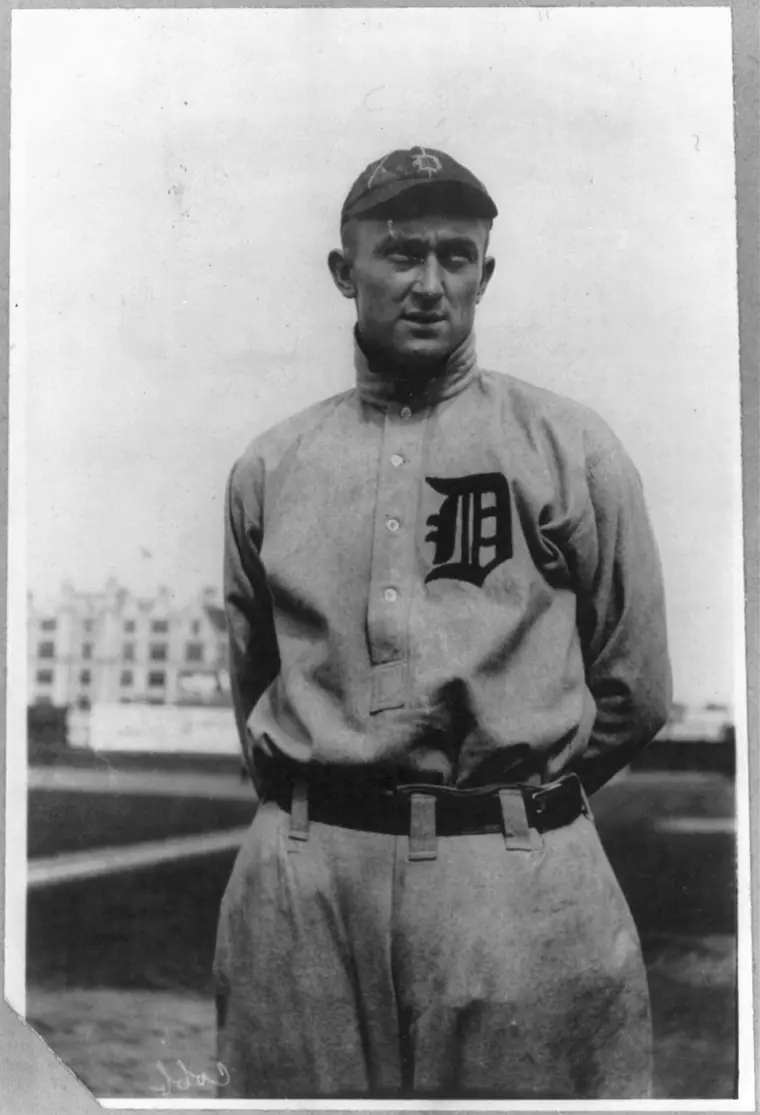
Ty Cobb played twenty-four seasons and retired in 1928 with a batting average nobody has beaten. That is not why he is in this archive.
He is here because in September 1907, at twenty, he started buying stock in a soft-drink company headquartered a hundred miles from his home town. He kept buying. By the end he held more than 20,000 shares of Coca-Cola and three bottling franchises — Santa Maria, California; Twin Falls, Idaho; Bend, Oregon — and he sat on the company's board. He also bought heavily into United Motors, which became General Motors.
When he died at Emory Hospital in Atlanta on July 17, 1961, his estate was reported at at least $11.78 million — roughly $10 million of General Motors and $1.78 million of Coca-Cola. Figures published at the time and since range from about $6 million to $13 million; accounts differ, and the $11.78 million number is the one most often repeated.
The interesting part is not the size. It is that the most durable thing he built, he built while he was alive — and then topped it up in his will.
He funded it in 1953 and watched it run
In 1945 Cobb gave $100,000 to build a hospital in Royston, Georgia, in his parents' name. In 1953 he put another $100,000 into a trust for college scholarships for Georgia students. The IRS record still carries the original instrument in its name: Ty Cobb Foundation Fund, under agreement dated 11/30/53. It received its exemption determination in October 1955.
That sequence — fund it during life, then leave it more at death — is the single most underrated move in charitable planning, and Cobb made it eight years before the will mattered.
The reason it works is unglamorous. A charity that already exists, already has a trustee, already has a bank account and a grant-making practice and a determination letter, does not have to be built by an executor during the worst year of a family's life. When the bequest lands, there is somewhere for it to land.
The counter-example is elsewhere in this archive. Alfred Nobel left the bulk of his estate to prizes awarded by institutions that had not agreed to award them, in a will that ran two pages; it took five years and a family fight to build the machinery. Cobb had already built the machinery.
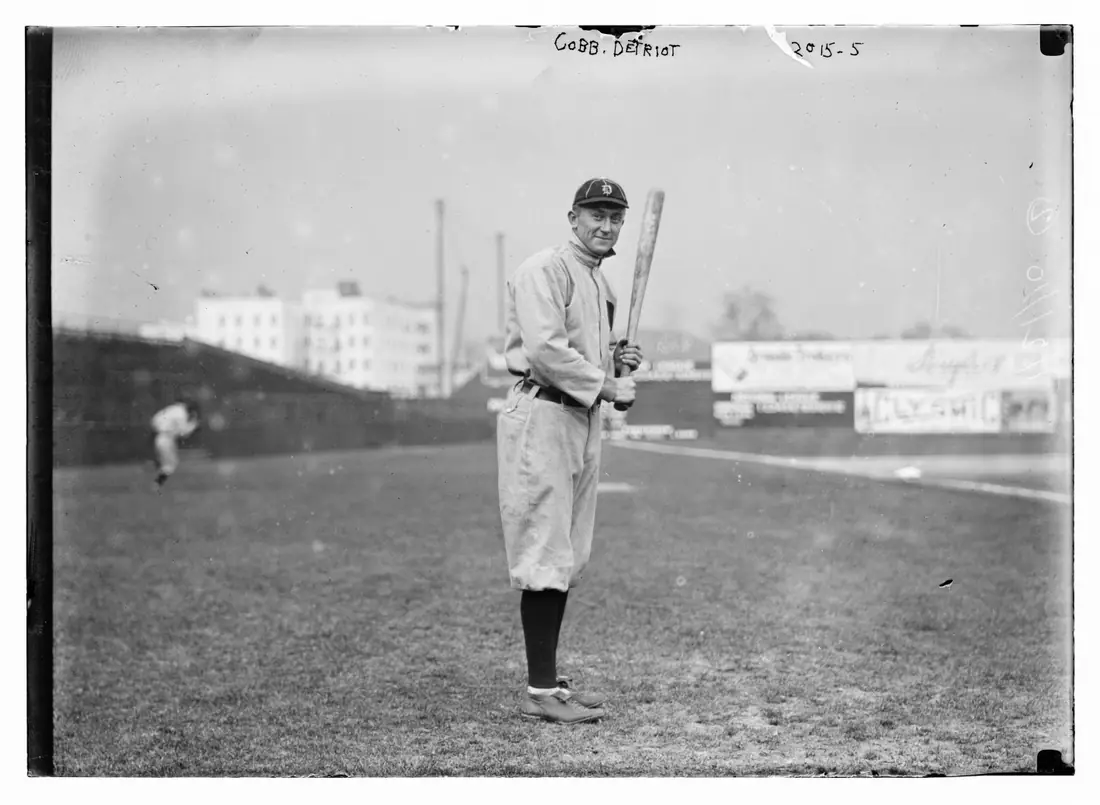
A quarter to the fund, the rest to a family that had thinned out
Cobb's will directed one quarter of the estate to the Cobb Educational Fund and divided the remainder among his children and grandchildren.
Both halves of that sentence are worth pausing on.
The charitable share was written as a fraction, not a dollar amount. That matters more than it sounds. A gift of “$3 million to the foundation” out of an estate that turns out to be worth $6 million is a very different instruction from a gift of “one quarter.” Fixed-dollar charitable gifts in a fluctuating estate either swallow the family or shortchange the charity, and the drafter usually finds out which after the market moves. A fraction self-adjusts.
The family share landed on a family that had already lost two of its five members. Cobb had five children with Charlotte Lombard, whom he divorced in 1947 after thirty-nine years. Herschel died in 1951, at thirty-three. Ty Jr. died in 1952, at forty-two. A second marriage, to Frances Fairbairn Cass in 1949, ended in divorce in 1956. His biographers describe the relationships with his children as strained.
So the residuary clause had to reach past two dead sons to their children. Cobb's did — it named children and grandchildren. A will that had said only “to my children, in equal shares,” drafted before 1951 and never revisited, would have produced a decade of argument about whether the sons' shares lapsed, passed to their descendants, or swelled the survivors' shares.
- Percentages beat dollar figures in any estate whose value can move. Cobb's largest asset was listed equity.
- Name the generation below, or make the antilapse rule do it deliberately rather than by accident.
- Revisit the document when a beneficiary dies. Two of Cobb's five children died within eighteen months of each other, nine and ten years before he did.
The part that is still running
The foundation is now an ordinary private foundation with an extraordinary compounding history. Its most recent reported year shows roughly $11.9 million in assets, $578,177 of revenue — most of it dividends — and $704,873 distributed in grants, about 92% of total expenses. It gives to Georgia residents with demonstrated financial need, undergraduate and medical and dental, and the scholarships carry no obligation back to the foundation.
It is also, per its IRS filing address, administered out of Orlando, Florida. A Georgia man's Georgia charity, run for six decades by a trust department, has drifted to the state where trust departments live. That is not a legal event. It is just what happens to perpetual trusts: the institution outlives the geography, and eventually the family.
Which is the honest lesson of the case. Cobb's fame is contested and his biographers do not agree about him. None of that reaches the scholarships. A properly constituted charitable trust is indifferent to its settlor's reputation, and that indifference is a feature — it is the reason the thing survives the arguments about the man.
Timeline
- Sep 1907Cobb, aged 20, begins buying Coca-Cola stock. He eventually holds more than 20,000 shares and three bottling franchises, and joins the board.
- 1928Retires after 24 seasons. The playing income was never the fortune; the equity was.
- 1945Gives $100,000 to build a hospital in Royston, Georgia, in his parents' names.
- Nov 30, 1953Executes the trust agreement creating the Ty Cobb Foundation Fund with a $100,000 gift. It receives its IRS exemption determination in October 1955.
- Apr 1951Son Herschel dies at 33.
- Sep 1952Son Ty Jr. dies at 42. Two of five children are now gone, nine years before their father.
- Jul 17, 1961Cobb dies of cancer at Emory Hospital in Atlanta, aged 74. His will leaves a quarter of the estate to the educational fund and the remainder to his children and grandchildren.
- Apr 2025The foundation reports $21,578,524 in scholarships awarded since inception, with roughly $11.9 million still in the fund.
What actually went wrong
- Almost nothing — which is why it is here. Cobb built the charity during his life, funded it again at death by fraction rather than dollar figure, and named the generation below his children. Three decisions, all boring, all correct.
- The estate was concentrated in two stocks. $10 million of General Motors and $1.78 million of Coca-Cola is a magnificent result and a terrifying portfolio. Concentration that works during life becomes an executor's valuation and liquidity problem at death.
- Two beneficiaries predeceased him by a decade. Nothing in the record suggests the will was defective on the point, but the general failure is common: a document drafted around a family that no longer exists.
- Charitable intent was never written down as a purpose statement broad enough to survive. The fund's purpose — Georgia students, financial need — is narrow enough to be meaningful and broad enough to last. That balance is a drafting decision, and most charitable trusts get it wrong in one direction or the other.
Would it have gone that way in Florida?
Same result, and Florida law would have made the structure slightly easier to build and considerably harder to break.
Cobb died a Georgia resident with a Georgia will, so nothing here was litigated under Florida law. But every moving part of the plan has a Florida section, and the outcome would not change.
The charitable trust. Fla. Stat. §736.0405 authorises trusts for charitable purposes and lists them: relief of poverty, advancement of education, advancement of religion, promotion of health, governmental purposes. A scholarship fund for students in financial need sits squarely inside it. Section (2) lets a court supply the purpose or the beneficiary where the terms are indefinite, provided the choice is consistent with the settlor's intent, and section (3) gives the settlor standing to enforce the trust — which is unusual and useful, because it means a living donor can sue his own trustee for departing from the deal.
When the purpose stops working. §736.0413 is Florida's cy pres statute. If a charitable purpose becomes unlawful, impracticable, impossible, or wasteful, the court may modify or terminate the trust and direct the property to a use consistent with the settlor's charitable purposes. A settlor, a trustee, or any qualified beneficiary may bring the proceeding. This is the reason a perpetual charitable trust does not simply fail when the world moves — and the reason a purpose written too narrowly ends up being rewritten by a judge rather than by the person who cared about it.
The dead beneficiaries. Fla. Stat. §732.603 is Florida's antilapse rule, and it is narrower than most people assume. It saves a lapsed gift only where the beneficiary predeceased the testator and was a grandparent, or a descendant of a grandparent, of the testator. Cobb's sons qualify — they were his descendants — so their shares would have passed to their own descendants per stirpes rather than lapsing into the residue. But that is the statute making a guess. Cobb's will did it explicitly, which is always better, because §732.603 yields to a contrary intent expressed in the will and litigation about intent is expensive.
The grandchildren born after the will. §732.302 protects a pretermitted child — a child born or adopted after the will was executed, who receives an intestate share unless the will provides for the child, the testator had other children and left substantially everything to the other parent of the child, or the omission was intentional and appears from the will. Note the limit: it protects children, not grandchildren. A grandchild born after the will has no statutory rescue in Florida. A class gift to “my grandchildren” does the work the statute will not.
And if the family had fought. §732.517 makes a no-contest clause in a Florida will unenforceable — as does §736.1108 for trusts. Florida will not let a testator disinherit a beneficiary as a penalty for going to court. So the Florida defence against a challenge to a large charitable bequest is not a threat clause; it is the record: independent counsel, capacity documented, the charity funded and operating for years before death. Cobb had eight years of that record. It is a far better defence than any clause.
The practical instruction is one sentence. If you intend to leave money to a charity, start giving to it now — a foundation, donor-advised fund, or scholarship trust that has been running while you are alive is a far harder target than a bequest to an entity nobody has ever seen work.
What people ask us about this.
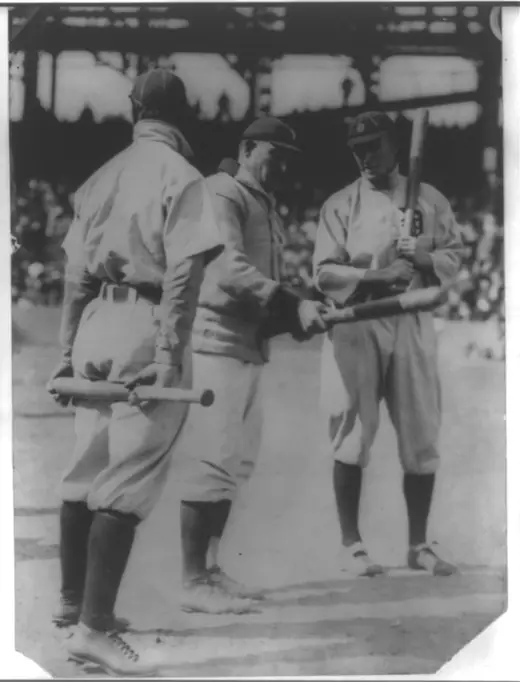
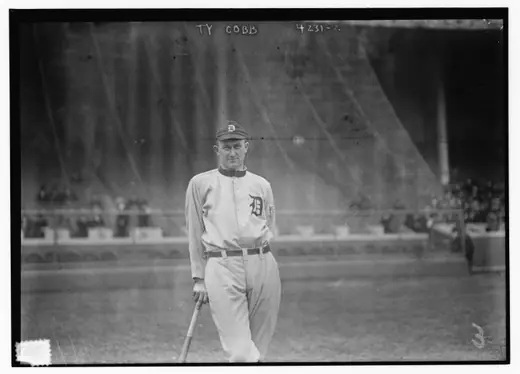
Further reading
Third-party sites. Not ours, not endorsed, not kept current by us — just the places worth going next.
Sources
- Ty Cobb — biography — Society for American Baseball Research
- About the Ty Cobb Educational Foundation — Ty Cobb Educational Foundation, Apr 2025
- Ty Cobb Foundation Fund UA DTD 113053 — Form 990-PF data — ProPublica Nonprofit Explorer
- Ty Cobb: the greatest pro athlete investor of all time? — Benzinga, Apr 2020
- Ty Cobb (1886–1961) — New Georgia Encyclopedia
- Ty Cobb: an unlikely philanthropist — WealthManagement.com
- Fla. Stat. §736.0405 — Charitable purposes; enforcement — The Florida Senate
- Fla. Stat. §736.0413 — Cy pres — The Florida Senate
- Fla. Stat. §732.603 — Antilapse; deceased devisee; class gifts — The Florida Senate
If this is your situation
Free 30-minute consult. Plain English. No pressure.
Nearly every case in this archive turned on something ordinary — an unwitnessed page, a stale beneficiary line, a document nobody could find. Those are cheap to fix while you're alive and expensive to fix afterward.