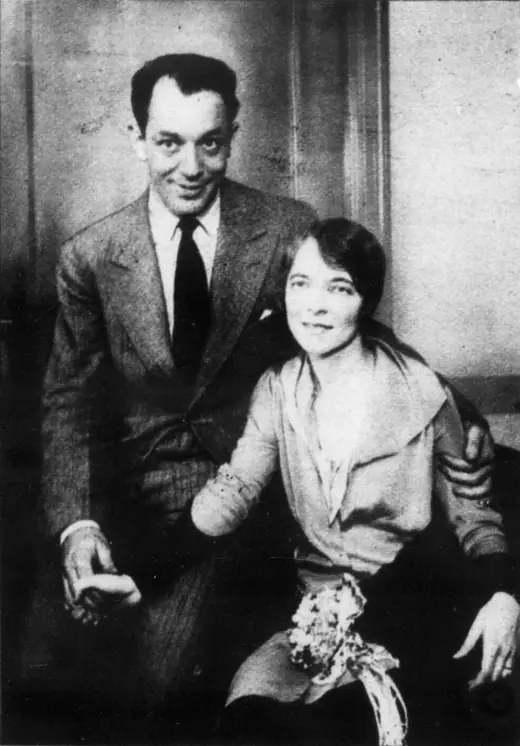
John D. MacArthur
He ran an insurance empire and 100,000 Florida acres from a corner table in a Singer Island hotel coffee shop. When he died in West Palm Beach in 1978, ninety-two percent of it went to a foundation he had given almost no instructions to. Three years later it invented the genius grant.
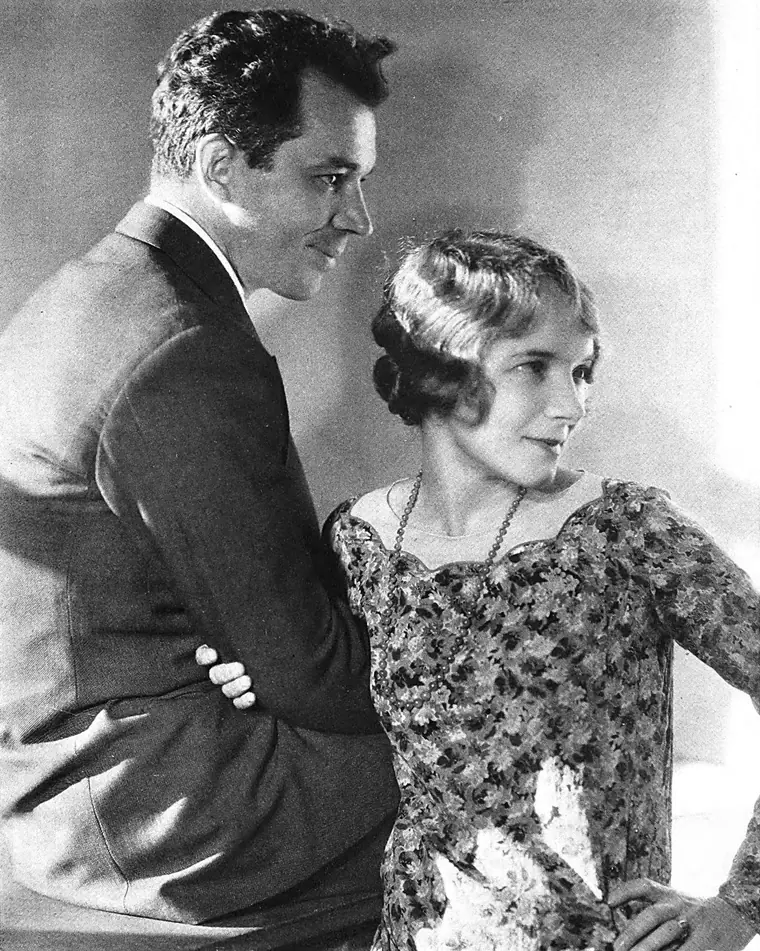
John D. MacArthur was born in Pittston, Pennsylvania, in 1897. In 1935 he borrowed $2,500 and bought a failing insurance company called Bankers Life and Casualty. He built it into an empire, moved to Florida, and started buying land.
By his death he owned roughly 100,000 acres of Florida. In 1954 he bought 2,600 acres in Palm Beach County — the land that became Lake Park, North Palm Beach, Palm Beach Shores, and Palm Beach Gardens, a city he founded, named, and incorporated on June 20, 1959. The 1960 census recorded exactly one resident. Today it has more than 59,000.
He was, by the standards of anyone with that much money, indifferent to the trappings. He lived in an apartment above the bar at the Colonnades Beach Hotel on Singer Island and ran the whole operation from a corner table in the hotel coffee shop.
He died in West Palm Beach on January 6, 1978, of pancreatic cancer, at 80.
One sentence, and then nothing
Here is the entire recorded guidance John D. MacArthur gave the people who would spend a billion dollars of his money:
“I figured out how to make the money. You fellows will have to figure out how to spend it.”
That is not an oversight; it is a decision, and it is a rarer one than it sounds. Most people who fund a foundation do the opposite — they specify subject areas, name the causes, bind the trustees to a program, and then die and watch, from wherever, as the world moves and the instructions age badly. MacArthur handed over the money and the discretion in the same transaction.
The corresponding cost arrived immediately. A board with total discretion and no stated program is a board with nothing to be measured against, and the people who most disagreed with what it did were in the family.
MacArthur's son from his first marriage, J. Roderick MacArthur, sat on the initial board. Between 1979 and 1981 he brought legal action against eight fellow board members alleging mismanagement; the cases were dismissed. In 1984 he filed again, seeking to liquidate the foundation entirely. He withdrew that suit after being diagnosed with pancreatic cancer — the same disease that had killed his father. He died that year.
1981: the genius grant
Three years after the funding, the trustees who had been told to figure it out figured out something no one had done before.
The MacArthur Fellows Program launched in 1981. Its design is the interesting part, and every element of it is a deliberate rejection of how philanthropy normally works:
- You cannot apply. The foundation does not accept applications. Nominations are anonymous and confidential; the selection committee is anonymous and confidential.
- Nobody knows they are being considered. Most fellows find out from a phone call.
- No strings. The money is not a grant for a project. It is described as an investment in a person's originality, insight, and potential, with no obligations and no reporting requirement.
- $800,000, paid quarterly over five years — raised from $500,000 in 2013 and later from $625,000. Roughly 20 to 30 fellows a year; 1,175 people through 2025.
A man who left one sentence of instructions produced an institution whose signature program deliberately gives its beneficiaries no instructions either. It is difficult to say whether that is irony or inheritance.
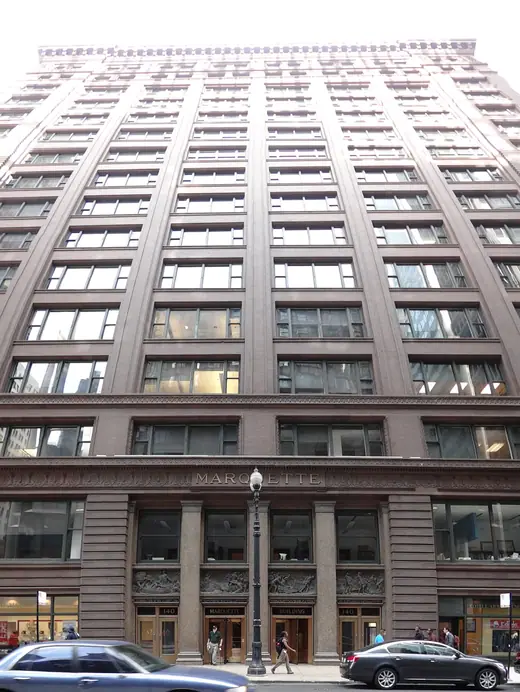
The foundation is headquartered in the Marquette Building at 140 South Dearborn Street in Chicago. As of 2024 its endowment stood at $9.2 billion — after nearly five decades of giving money away.
The land is still there
MacArthur's Florida holdings did not vanish into an endowment spreadsheet. They are underfoot.
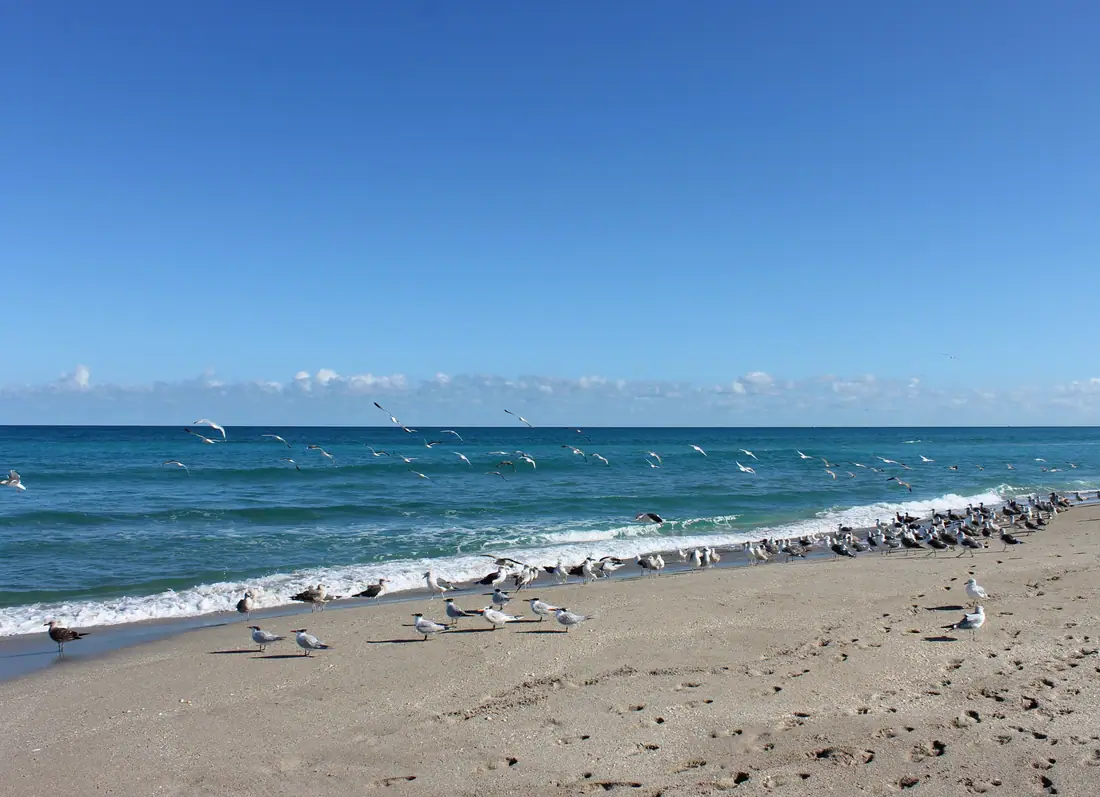
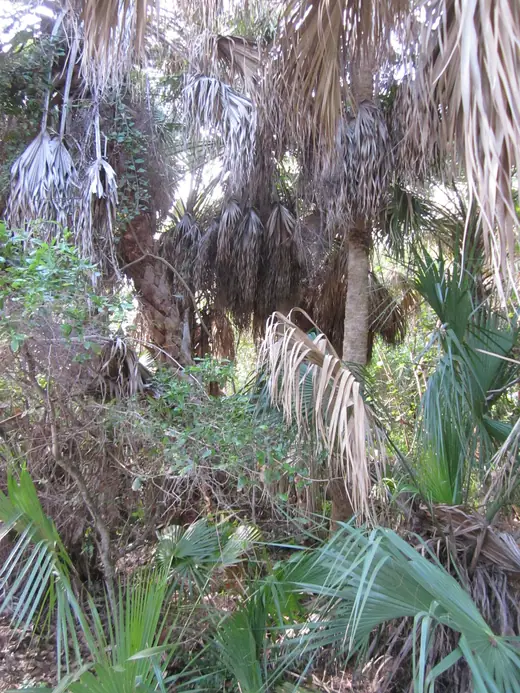
The city of Palm Beach Gardens exists because he drew it. John D. MacArthur Beach State Park in North Palm Beach — 438 acres of beach, estuary, and Munyon Island, with a 1,600-foot boardwalk across the lagoon — sits on land the foundation donated to the state in the 1970s. It opened to the public in 1989.
That is an unusually literal illustration of a point this archive keeps making: an estate is not a number. It is buildings, dirt, a coastline, and in this case a city and a park that will outlast every institution named in the will.
Timeline
- 1935MacArthur borrows $2,500 and buys Bankers Life and Casualty.
- 1954Buys 2,600 acres in Palm Beach County for $5.5 million — the land that becomes Palm Beach Gardens and its neighbors.
- Jun 20, 1959Palm Beach Gardens is incorporated. The 1960 census records one resident.
- 1970MacArthur and his wife Catherine charter the John D. and Catherine T. MacArthur Foundation.
- 1970sThe foundation donates land on and near Singer Island to the State of Florida.
- Jan 6, 1978MacArthur dies in West Palm Beach at 80. Ninety-two percent of his wealth — over $1 billion — funds the foundation.
- 1979–1981His son J. Roderick MacArthur, a board member, sues eight fellow trustees alleging mismanagement. The cases are dismissed.
- 1981The MacArthur Fellows Program launches — no applications, anonymous nominations, no strings.
- 1984Rod MacArthur files suit seeking to liquidate the foundation, then withdraws it after a cancer diagnosis. He dies that year.
- 1989John D. MacArthur Beach State Park opens to the public — 438 acres in North Palm Beach.
What actually went wrong
- Almost nothing — and that is the case study. A billion dollars moved to charity with essentially no litigation risk from outside the family, because a charitable bequest has no disappointed heir with a statutory claim in Florida.
- A family member on the board of the thing that replaced his inheritance. Rod MacArthur was both a trustee and a son. Those two roles pull in opposite directions, and five years of litigation followed. If you fund a foundation instead of your children, decide deliberately whether your children should also govern it.
- Total trustee discretion with no measuring stick. “Figure out how to spend it” is a grant of power so complete that a dissenting trustee has almost nothing to argue from. It worked here. It is not a general prescription.
- No stated program means no protection against drift. If a settlor cares about a specific cause, the way to bind trustees is language a court can enforce in the instrument — not a conversation, a letter, or a mission statement.
Would it have gone that way in Florida?
Same result in Florida — and Florida is where it happened.
MacArthur was a Florida decedent with Florida land, so this is not a comparison; it is the rule as applied. Three things made a bequest of this size unusually clean.
First, no heir had a claim on it. Florida protects a surviving spouse through the 30% elective share under §732.2065 and protects homestead where there is a spouse or a minor child. It does not give adult children a forced share. An adult child who is left out of a Florida estate may challenge the documents — for lack of capacity, undue influence, or defective execution — but has no statutory right to a slice. That is why so much American charitable wealth is created in this state.
Second, Florida law is expansive about what counts as charity. §736.0405(1) provides that a trust may be created for charitable purposes, and the list is illustrative rather than exhaustive: relief of poverty; advancement of arts, sciences, education, or religion; promotion of health, governmental, or municipal purposes. If the terms do not name a purpose or beneficiary, §736.0405(2) lets the court select one consistent with the settlor's intent — which is the statutory answer to a document as sparse as MacArthur's instruction was.
Third, someone is watching even when no beneficiary can sue. A charitable trust has no individual beneficiary with a personal stake, so the ordinary enforcement mechanism is missing. Florida fills the gap two ways. §736.0405(3) gives the settlor standing to enforce a charitable trust, among others. And §736.0110(3) lets the Attorney General assert the rights of a qualified beneficiary as to a charitable trust with its principal place of administration in Florida, with standing to do so in any judicial proceeding. That is who enforces a charity in this state.
There is also the tax point, which is the reason estates this size choose charity so often. Florida imposes no estate tax — Art. VII, §5 forbids it. And the federal charitable deduction removes the charitable portion of the estate from the taxable estate entirely. A gift of 92% of an estate to a qualifying charity is not merely generous; it is close to a complete answer to the federal estate tax on that portion.
The honest caveat: charitable does not mean unsupervised. A private foundation carries its own federal regime — minimum annual distribution requirements, self-dealing prohibitions, excise taxes — and Florida law expects the governing instrument to contain provisions consistent with those rules. And a court may apply the doctrine of cy pres under §736.0413 if the stated charitable purpose later becomes unlawful, impracticable, impossible, or wasteful, redirecting the property to a purpose consistent with the settlor's intent.
The practical instruction: if you intend to leave a meaningful share to charity, decide two separate questions on purpose. What you want funded — and write that in language a trustee is bound by if you actually want it followed. And who governs — because putting a child on the board of the foundation that replaced their inheritance is a structural choice with predictable consequences, whichever way you decide it.
What people ask us about this.
Further reading
Third-party sites. Not ours, not endorsed, not kept current by us — just the places worth going next.
Sources
- John D. MacArthur — Wikipedia
- MacArthur Foundation — Wikipedia
- MacArthur Fellows Program — Wikipedia
- John D. MacArthur Beach State Park — Wikipedia
- Palm Beach Gardens, Florida — Wikipedia
- About the MacArthur Foundation — MacArthur Foundation
- Fla. Stat. §736.0405 — Charitable purposes; enforcement — The Florida Senate
- Fla. Stat. §736.0110 — Others treated as qualified beneficiaries — The Florida Senate
If this is your situation
Free 30-minute consult. Plain English. No pressure.
Nearly every case in this archive turned on something ordinary — an unwitnessed page, a stale beneficiary line, a document nobody could find. Those are cheap to fix while you're alive and expensive to fix afterward.