Peter Thellusson
Thellusson died in 1797 directing his fortune to accumulate through the lives of every son and grandson living at his death. Projections ran to £14 million. Parliament passed a law to stop anyone doing it again, and by the time the last heir was identified in 1859 the costs had eaten the growth.
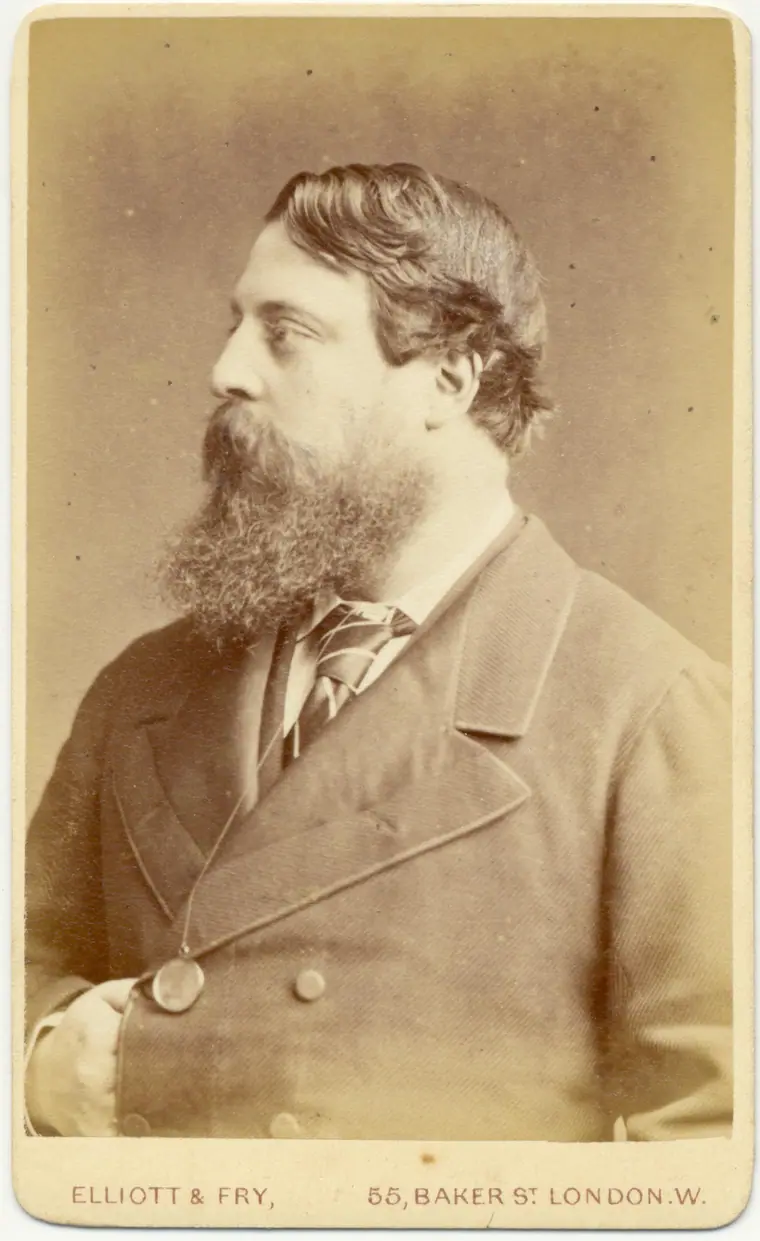
Peter Thellusson was a London merchant, born in Paris in 1737 to a Genevan banking family, who made a very large fortune in trade and finance. He died on July 21, 1797, leaving a will dated April 2, 1796 that is still taught in English law schools two and a quarter centuries later.
He left £100,000 to his wife and children — comfortable, unremarkable, more than adequate. Then he took the remainder, somewhere between £600,000 and £800,000, together with real estate producing about £5,000 a year, and directed his trustees to accumulate it. Not to distribute it. To hold it and let the income compound, through the lives of all of his sons and all of his grandsons living at his death, and the survivor of them.
Only when the last of those lives ended would the fund be divided — among the eldest male lineal descendants of each of his three sons. If no descendant qualified, the money was to go toward extinguishing the national debt.
By the arithmetic of the day this was not a legacy. It was a compounding engine set to run for most of a century, on capital nobody could touch.
Perfectly legal, which was the problem
The family attacked the will. The argument was the obvious one: a scheme that removed a vast fortune from circulation for generations was contrary to public policy, and the accumulation trust was void.
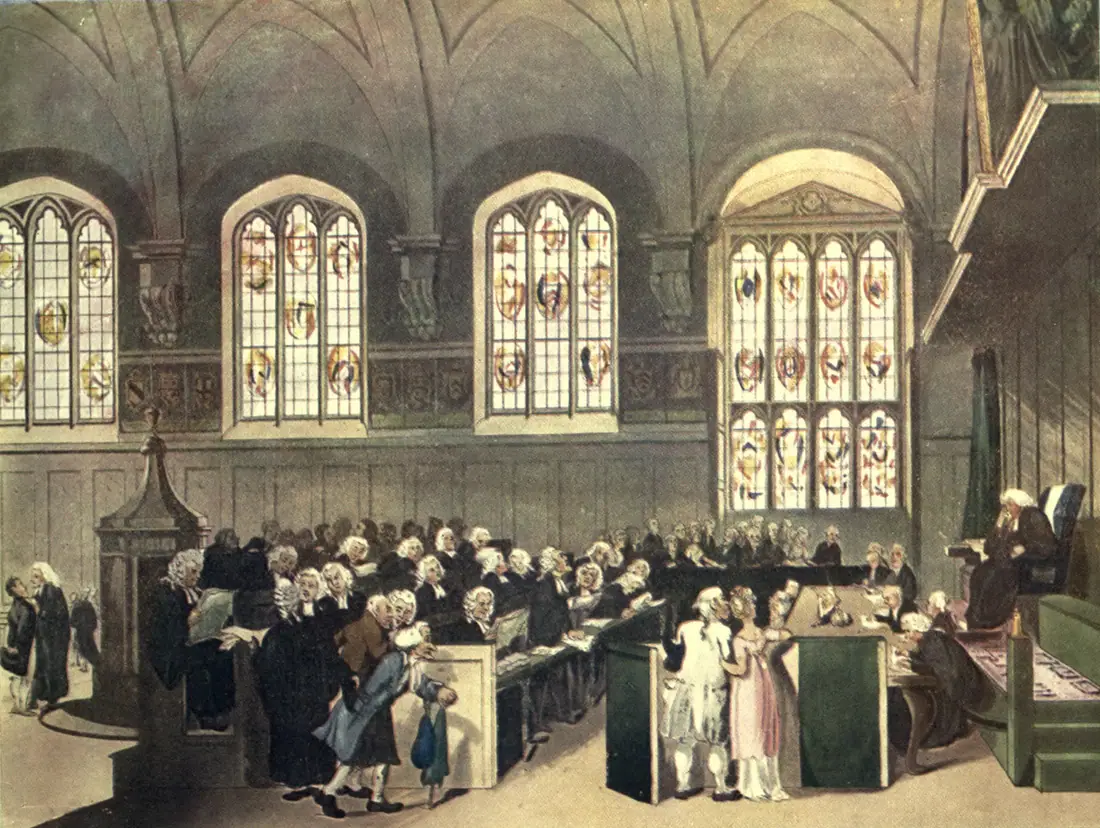
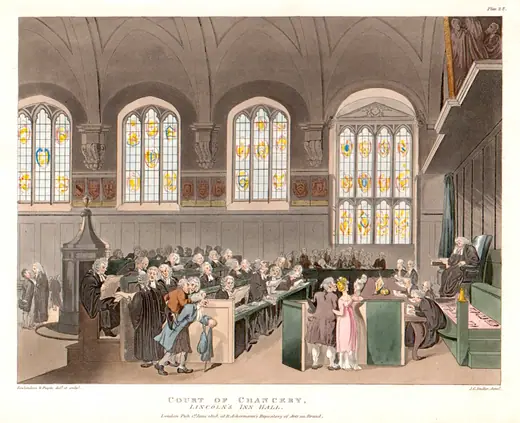
It failed. On April 20, 1799, Lord Chancellor Loughborough held the will valid. The reasoning was uncomfortable and correct — Thellusson had drafted within the rule against perpetuities. The rule requires an interest to vest no later than 21 years after the death of a life in being at the creation of the interest. Thellusson's measuring lives were his own sons and grandsons alive at his death. The gift would vest when the last of them died. That is inside the rule.
The House of Lords affirmed on June 25, 1805. No court found the will offensive to any existing legal principle, because it did not offend one. It merely used the existing principle to its absolute limit, which is not the same thing.
Thellusson v Woodford is the case every estate lawyer eventually meets, and it teaches an unwelcome lesson: the rule against perpetuities is a ceiling, not a standard of reasonableness. A document can be entirely lawful and still be a public problem.
One man's will, one Act of Parliament
Parliament did not wait for the House of Lords. In 1800 it passed the Accumulations Act — 39 & 40 Geo. III c. 98, universally known since as the Thellusson Act — which did what the courts could not do retroactively: it capped how long income could be directed to accumulate.
Under the Act, an accumulation direction could run for one of a short list of permitted periods only:
- The life of the grantor.
- Twenty-one years from the death of the grantor or testator.
- The minority of any person living or in the womb at the death of the grantor or testator.
- The minority of any person who would, if of full age, be entitled to the income directed to be accumulated.
The Act did not apply to Thellusson's own will, which had already taken effect. His estate ran on under the old rules while every other testator in the kingdom was newly constrained. That asymmetry is the point of the case: Thellusson is the only man whose will produced a statute preventing anyone from doing what he did.
The rule survived in English law, with modifications, for the better part of two centuries.
Sixty-two years, and then the bill arrived
The accumulation ran. Sons died, grandsons died, the fund grew, and the trustees administered it through the Napoleonic wars, the Reform Act, and the railway boom.
Charles Thellusson, the last surviving grandson, died on February 25, 1856 at Brighton. That ended the measuring lives and started the only question the will had never adequately answered: who, exactly, were the eldest male lineal descendants entitled to take?
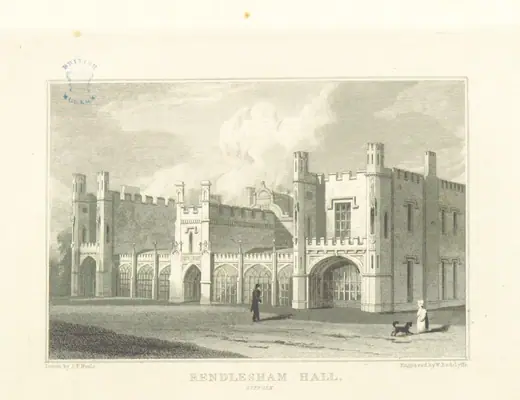
The answer took three more years of litigation. On June 9, 1859, the House of Lords determined the takers: Frederick William Brook Thellusson, Lord Rendlesham, and Charles Sabine Augustus Thellusson.
And then the accounting. The reported expenses of the Thellusson litigation came to £176,336 — an enormous figure for the period — and the fund had been affected by mismanagement across six decades as well. The contemporary verdict, recorded in the Dictionary of National Biography, is the sentence that finishes the case: the amount inherited was not much larger than the amount originally bequeathed.
Sixty-two years of compounding. Two of the most famous decisions in English trust law. An Act of Parliament. And the beneficiaries ended up roughly where they would have been if Thellusson had simply handed the money over in 1797.
Timeline
- Apr 2, 1796Peter Thellusson executes his will: £100,000 to his wife and children, and the remainder to trustees to accumulate through the lives of his sons and grandsons living at his death.
- Jul 21, 1797Thellusson dies at Plaistow, Kent. The estate is reported at £600,000–£800,000 plus real estate worth about £5,000 a year.
- 1798–1799The family challenges the accumulation as contrary to public policy. Estimates of the fund's eventual value circulate at £14 million and higher.
- Apr 20, 1799Lord Chancellor Loughborough upholds the will in Thellusson v Woodford. The scheme is within the rule against perpetuities.
- 1800Parliament passes the Accumulations Act — the Thellusson Act — capping accumulation directions at the grantor's life, 21 years from death, or specified minorities. It does not apply to Thellusson's own will.
- Jun 25, 1805The House of Lords affirms the Chancery decision.
- Feb 25, 1856Charles Thellusson, the last surviving grandson and the final measuring life, dies at Brighton. The accumulation ends.
- Jun 9, 1859The House of Lords determines the ultimate takers: Lord Rendlesham and Charles Sabine Augustus Thellusson. Reported litigation expenses reach £176,336, and the amount inherited is not much larger than the sum originally left.
What actually went wrong
- Drafting to the legal limit rather than to a purpose. The will was lawful in every respect and useless to everyone it named. A ceiling is not a target.
- An identification problem left for the courts. “Eldest male lineal descendants” of three sons, sixty years on, across a family that had scattered and multiplied. Three more years of litigation went into deciding who that meant.
- No mechanism to end the trust early. No trustee discretion to distribute, no protector, no termination clause. Once the measuring lives were running, nothing in the document could stop it.
- Costs with nobody's interest aligned against them. £176,336 in expenses came out of a fund that no living person had yet received a penny from. When every claimant is litigating against an unallocated pot, nobody has an incentive to settle.
- Six decades of administration nobody was watching. Mismanagement over the life of the trust is recorded alongside the legal costs. A trust with no current beneficiary receiving distributions has no natural auditor.
Would it have gone that way in Florida?
Florida would let him go far longer — and would let a judge charge the litigation costs to the people who caused them.
Thellusson used the maximum period the law of 1797 allowed. Modern Florida would have given him far more room and far less protection from the consequences.
On duration: Florida abolished the common-law rule. §689.225(7) provides that no common-law rule against perpetuities exists in this state, and the statutory rule replaces it. An interest is valid if it vests within 21 years of a life in being, or within an alternative statutory period — 90 years generally, 360 years for trusts created between January 1, 2001 and June 30, 2022, and 1,000 years for trusts created on or after July 1, 2022. Thellusson's roughly sixty-year accumulation is not remotely close to the limit here. Florida is one of the most permissive states in the country on how long you may tie money up.
On accumulation specifically: this is the substantive difference from 1800 England. The Accumulations Act existed because English law decided that vesting limits were not enough — that there also had to be a cap on how long income could be piled up rather than paid out. Florida's statutory rule against perpetuities contains no equivalent restriction on the accumulation of income. A Florida trust may accumulate income for its entire permitted term. The Thellusson Act's whole project has no counterpart in the Florida statute.
On the exits Thellusson's family did not have: §736.04115 permits a court to modify a trust when modification is in the best interests of the beneficiaries, considering the settlor's purpose, even where the terms are not impossible to carry out. §736.04113 permits modification where circumstances the settlor did not anticipate would defeat or substantially impair a material purpose. §736.0412 permits modification or termination without court approval after the settlor's death, on unanimous agreement of the trustee and all qualified beneficiaries. Sixty-two years of accumulation with no living beneficiary and mounting costs is exactly the record those statutes were written for.
On the trustee: §736.0813 imposes a duty to inform and account to qualified beneficiaries, and §736.0706 permits removal of a trustee for breach, for unfitness or unwillingness, or where removal serves the beneficiaries' interests and a suitable successor is available. Six decades of unsupervised administration is a much harder thing to run in Florida.
And on the £176,336. This is where Florida law is genuinely different in kind. §736.1004 lets a court award attorney's fees and costs in trust proceedings and — the part that matters — direct that they be paid from a particular party's interest in the trust, or enter a judgment satisfiable from that party's other property, or both. The estate analogue is §733.106(4), which allows the court to direct which part of the estate bears a fee award, including charging a specific beneficiary's share. In Thellusson every claimant litigated against a common fund and none of them paid for it personally. In Florida a judge can put the bill where the litigation came from, which changes the arithmetic of filing.
The instruction is short and it is the same one Thellusson needed. A long trust must be able to end. Give the trustee discretion to distribute early, appoint a trust protector with power to terminate, define the class of beneficiaries so precisely that a stranger could identify them in sixty years, and say what happens if the class is empty. Duration is cheap in Florida. Ambiguity is not.
What people ask us about this.

Further reading
Third-party sites. Not ours, not endorsed, not kept current by us — just the places worth going next.
Sources
- Thellusson v Woodford — Wikipedia
- Peter Thellusson — Wikipedia
- Dictionary of National Biography, 1885–1900 — Thellusson, Peter — Wikisource
- 1911 Encyclopædia Britannica — Accumulation — Wikisource
- The Thellusson Property, House of Commons debate, July 31, 1833 — Hansard
- Fla. Stat. §689.225 — Statutory rule against perpetuities — The Florida Senate
- Fla. Stat. §736.1004 — Attorney's fees and costs — The Florida Senate
- Fla. Stat. §736.04115 — Judicial modification of irrevocable trust — The Florida Senate
If this is your situation
Free 30-minute consult. Plain English. No pressure.
Nearly every case in this archive turned on something ordinary — an unwitnessed page, a stale beneficiary line, a document nobody could find. Those are cheap to fix while you're alive and expensive to fix afterward.