Jarndyce and Jarndyce
Dickens invented a probate suit so long that the heirs grew old inside it, and ended it in the only way it could end: the lawyers' costs consumed the entire fortune. He based it on real cases. One of them ran for sixty-two years.
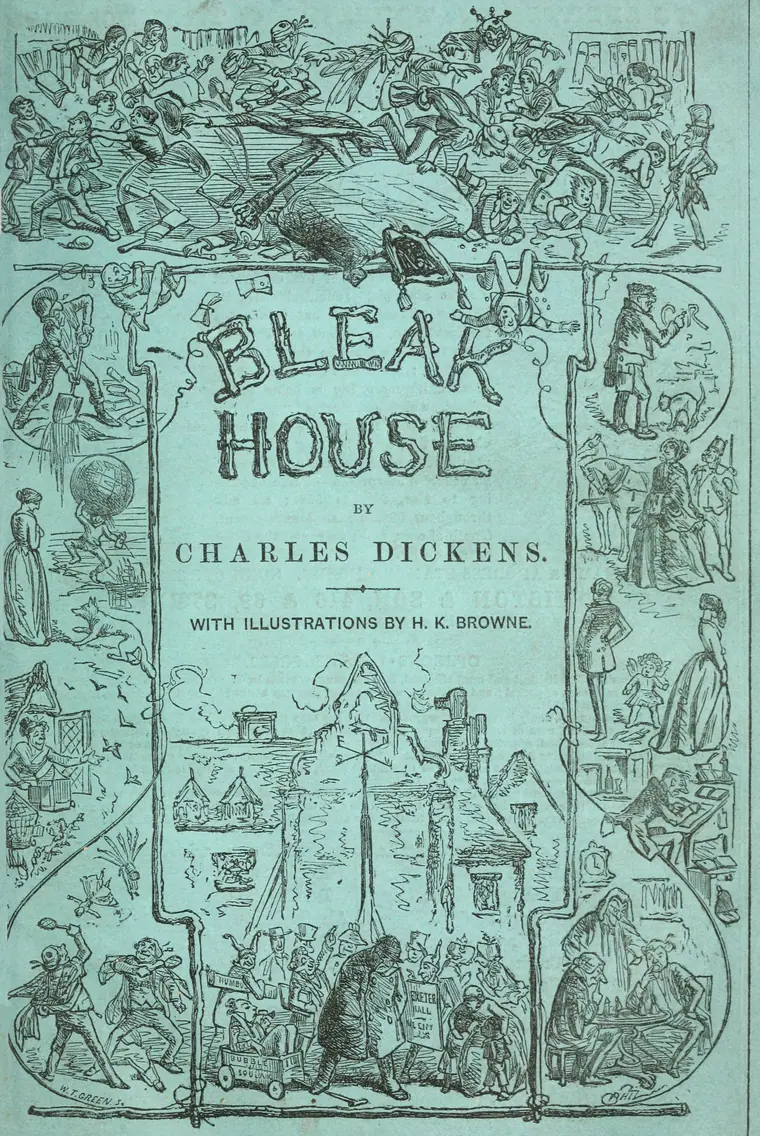
Every archive of estate disasters needs the one that is not real, because it is the one everybody already knows.
Jarndyce and Jarndyce is the case at the centre of Charles Dickens's Bleak House, serialised across 1852 and 1853. It is a Chancery suit over a contested will, and it has been running so long when the novel opens that nobody involved can any longer explain what it is about. Solicitors have inherited it from their fathers. Parties have been born into it, grown up in it, gone mad in it, and died in it.
It ends — and this is the reason the name became a byword rather than a plot point — when the court announces that the entire estate has been absorbed in costs. There is nothing left to distribute. The suit stops not because anyone wins but because the money runs out.
Dickens was not exaggerating for effect. He was reporting.
Dickens named his sources in the preface
In the preface to Bleak House, Dickens answered the objection he knew was coming — that no real court could possibly be this bad — by pointing at two live examples.
He described a Chancery suit begun nearly twenty years earlier in which costs of some £70,000 had already been incurred, and which remained undecided. And he described another, commenced before the close of the previous century, in which more than double that sum had been swallowed in costs, and which was likewise unfinished.
The case most often identified with Jarndyce is Thellusson v Woodford. Peter Thellusson, a wealthy London merchant, died in 1797 having directed that his fortune accumulate during the lives of his living sons and grandsons, and only then pass to the eldest male descendant. The family sued. Litigation over the will and its accumulations ran, on and off, until around 1859 — sixty-two years — and by the time the fortune was finally distributed, the legal costs had consumed the great bulk of everything the accumulation had earned.
Parliament was sufficiently alarmed by the scheme itself to pass the Accumulations Act 1800, still known as the Thellusson Act, limiting how long income may be piled up rather than paid out. One man's will produced a statute.
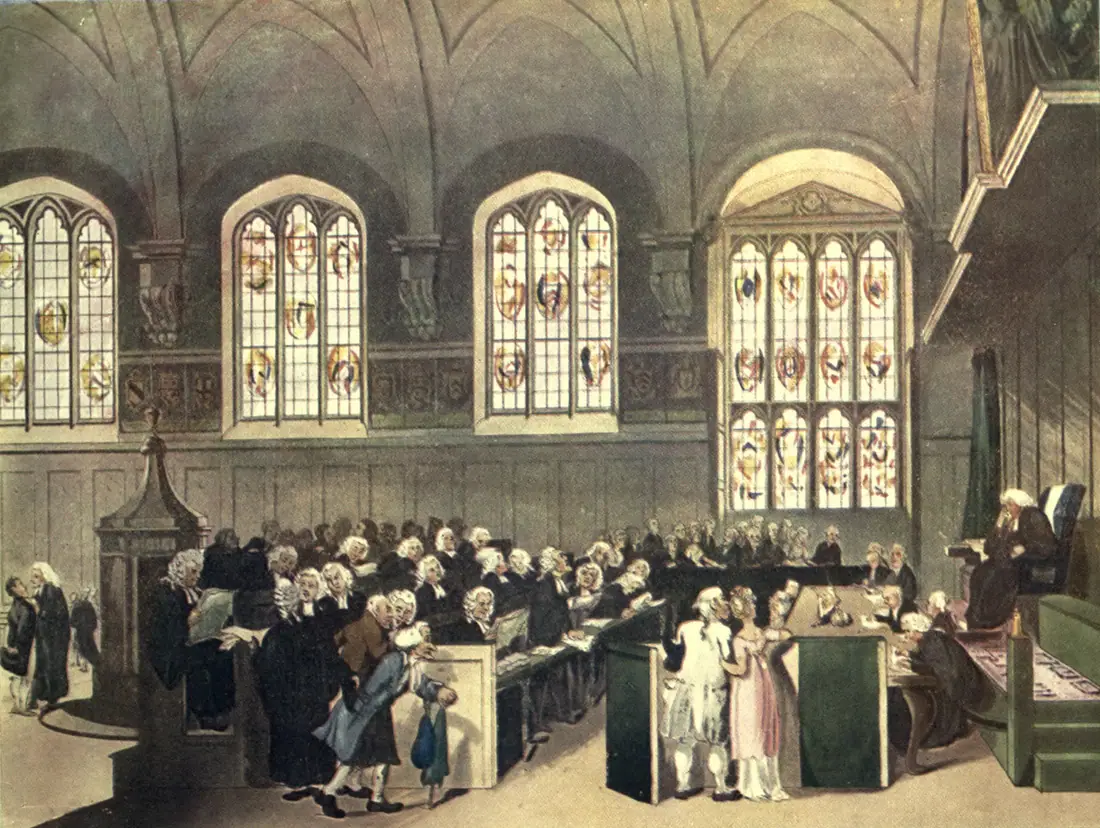
How a case eats an estate
The Chancery machinery that made this possible is worth understanding, because the modern version of it is not as different as anyone would like.
Costs came out of the fund. Every party's solicitors were paid from the estate itself, not from the party who lost. So litigating was, for each individual heir, free — while being ruinous for the collective. Nobody had a financial reason to stop.
Delay was profitable to everyone except the parties. Clerks, masters, and solicitors were compensated by the step. More steps meant more fees.
There was no proportionality rule. No mechanism said a £20,000 estate does not justify £40,000 of process.
Nobody owned the ending. No single judge was responsible for moving the case to a conclusion.
That combination — costs from the fund, fees by the step, no proportionality, no case management — is a machine that converts inheritances into legal fees. It is not a metaphor. It is an incentive structure, and it worked exactly as designed.
What the novel actually caused
Bleak House landed in the middle of a reform argument and effectively ended it. The Court of Chancery Act 1852 was passed the same year serialisation began. The Court of Probate Act 1857 stripped testamentary jurisdiction from the ecclesiastical courts and created a dedicated Court of Probate. The Judicature Acts of 1873–75 finally merged law and equity and abolished the separate Court of Chancery altogether.
Nine centuries of probate had run through church courts and then through Chancery. It took roughly twenty-five years, and a novelist, to dismantle it.
The name survived everything. Lawyers on both sides of the Atlantic still say a case has gone Jarndyce when the fees have outrun the fund. It is the only piece of Victorian fiction that functions as a term of art.
Timeline
- 1797Peter Thellusson dies, directing his fortune to accumulate through the lives of his living sons and grandsons. His family begins litigating.
- 1800Parliament passes the Accumulations Act — the Thellusson Act — limiting accumulation periods in response to the will.
- 1852The Court of Chancery Act passes. Serialisation of Bleak House begins.
- 1852–53Bleak House runs in monthly parts. Jarndyce and Jarndyce ends when the costs consume the estate entirely.
- 1857The Court of Probate Act removes testamentary jurisdiction from the ecclesiastical courts, ending roughly six centuries of church control over probate.
- c. 1859Thellusson v Woodford finally concludes, sixty-two years after the will was read, with costs having absorbed most of the accumulated growth.
- 1873–75The Judicature Acts merge law and equity and abolish the separate Court of Chancery.
What actually went wrong
- Costs paid from the fund rather than by the losing party. Litigating was free to each heir and ruinous to all of them. This single design choice explains most of Chancery.
- Fees earned by the step, not by the result. Everyone whose income depended on the case had an interest in it continuing.
- No proportionality. Nothing in the system compared the value of the estate to the cost of fighting over it.
- No case management. No judge owned the file or was accountable for finishing it.
- An over-clever will. Thellusson's accumulation scheme was so aggressive that Parliament legislated against it. Complexity for its own sake is what starts these cases.
Would it have gone that way in Florida?
Florida has the tool Chancery lacked: the court can make a litigant pay from their own share.
The Jarndyce problem was never the length. It was who paid. Fix that and the machine stops.
Florida fixed it. Fla. Stat. §733.106 governs attorney's fees in probate proceedings, and subsection (4) contains the sentence that would have ended Jarndyce in a year: when costs and attorney's fees are to be paid from the estate, the court may direct from what part of the estate they shall be paid — including, expressly, that they may be charged against a particular beneficiary's share, or entered as a judgment against that beneficiary personally.
That converts a free-to-litigate structure into one where a beneficiary who drags an estate through unnecessary litigation may find the bill deducted from their own inheritance. The trust equivalent is §736.1004, which gives the court the same latitude in trust proceedings, and §736.0802 and §736.1001 address a trustee's breach and remedies.
Three other Florida features cut the same way:
Rule 5.025, Fla. Prob. R. designates certain matters as adversary proceedings, pulling them into the Rules of Civil Procedure with pleadings, discovery limits, and judicial case management. There is no open-ended Chancery drift.
§733.702 puts a hard outer limit on creditor claims, and the Probate Code sets deadlines throughout, so a Florida estate has a shape and an expected end rather than an indefinite existence.
Mediation is routine and, in most circuits, ordered early in contested estate and trust matters. The great majority of Florida will contests settle at mediation, which is the modern answer to a case that could otherwise run for decades.
And a genuine counterweight worth naming honestly. Florida makes contests easier to bring than most states, because §732.517 and §736.1108 render no-contest clauses unenforceable — a beneficiary can challenge and, if they lose, still keep what they were left. That is a deliberate policy choice favouring scrutiny over silence. §733.106(4) is the balance to it: you may challenge without forfeiting your bequest, but you may end up paying for the challenge out of it.
The practical version. If you are administering an estate and one beneficiary is litigating for the sake of it, the remedy is not to absorb the cost as an administration expense. It is to ask the court to charge those fees to that beneficiary's share under §733.106(4). Ask early. That request is the reason Florida does not have a Jarndyce.
What people ask us about this.

Further reading
Third-party sites. Not ours, not endorsed, not kept current by us — just the places worth going next.
Sources
- Jarndyce and Jarndyce — Wikipedia
- Jarndyce v. Jarndyce — Oxford Reference
- Law meets literature: Bleak House and the British Court of Chancery — Mimi Matthews
- Bleak House — Project Gutenberg
- Court of Probate — Wikipedia
- Fla. Stat. §733.106 — Costs and attorney fees — The Florida Senate
If this is your situation
Free 30-minute consult. Plain English. No pressure.
Nearly every case in this archive turned on something ordinary — an unwitnessed page, a stale beneficiary line, a document nobody could find. Those are cheap to fix while you're alive and expensive to fix afterward.