Franz Kafka's papers
Kafka left written instructions that his friend Max Brod destroy every manuscript, diary and letter without reading them. Brod published all of it. Ninety-two years later the Supreme Court of Israel decided who owned the pile — and the question underneath is one Florida answers every week.
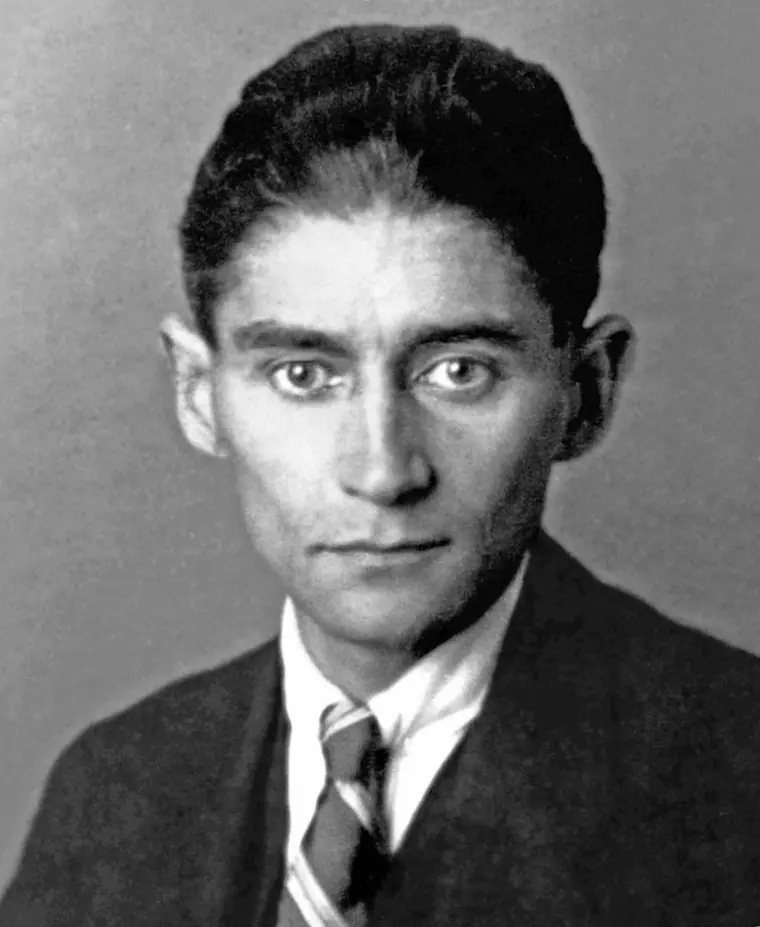
Franz Kafka died of tuberculosis on June 3, 1924, at a sanatorium in Kierling outside Vienna. He was 40. He had published a handful of short pieces. Almost everything he is now famous for was unpublished, in drafts, in a drawer.
Max Brod, his closest friend, found two notes. Both instructed Brod to destroy everything Kafka had written — the diaries, the manuscripts, the letters, the sketches — and to do it without reading any of it. One went further and asked that Brod recover and burn material held by others.
Brod did not do it. He published The Trial in 1925, The Castle in 1926, and Amerika in 1927, and spent the rest of his life as Kafka's editor, biographer and advocate. Modern literature has a Kafka because someone ignored a dead man's written instructions.
Everything that followed — three Israeli court decisions, a Swiss court decision, safe-deposit boxes in two countries and ninety-two years of argument — flows from that refusal.
Was the instruction enforceable at all?
Almost certainly not, and not for a subtle reason.
The notes were not a will. They were personal notes to a friend, not documents executed with the formalities any European or American jurisdiction requires to dispose of property at death. A note that fails as a will does not become a binding command simply because the person who wrote it died.
Even if the instruction had been in a properly executed will, it would have been a direction to an individual rather than a devise to anyone. In Anglo-American terms that is precatory — an expression of a wish, not a gift and not a legally enforceable obligation. Courts distinguish constantly between I give X to Y and I request that Y do Z, and only the first creates rights anyone can enforce.
And there was nobody with an incentive to enforce it. Enforcement requires a party with standing who wants the thing done. Kafka's heirs did not want the papers burned. His publishers did not. Brod certainly did not. An unenforced wish and an unenforceable one look identical from the outside.
So the honest answer to should Brod have burned them is a question about loyalty and friendship. The answer to could anyone have made him is: no.
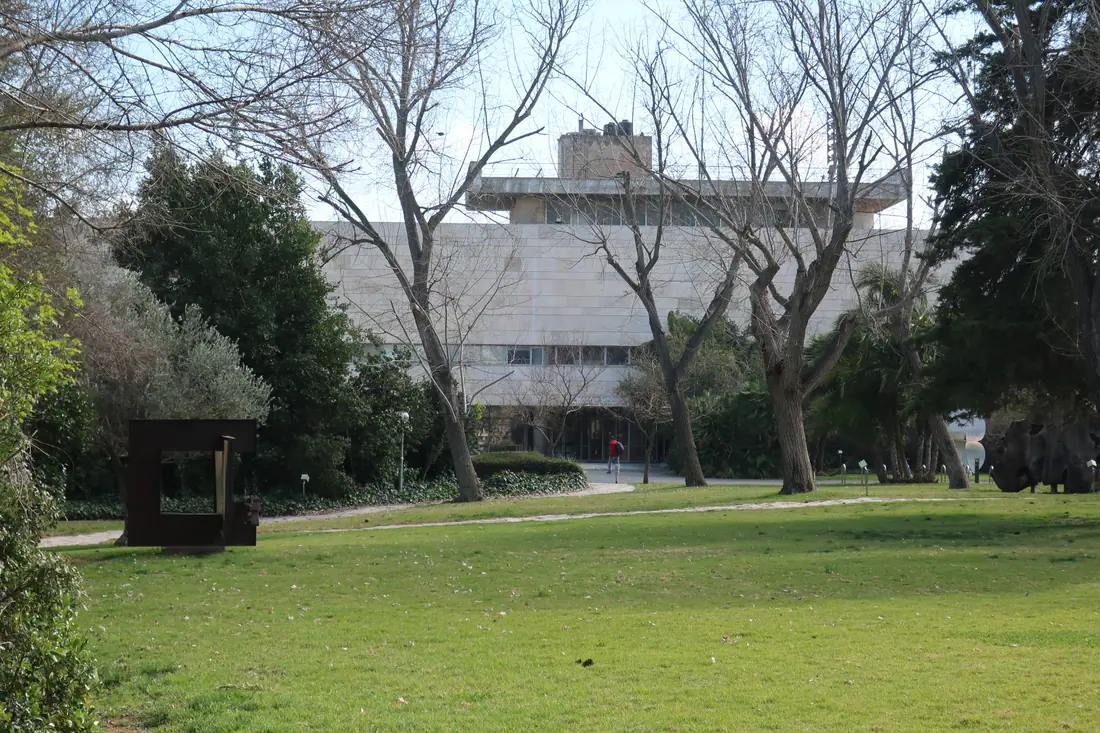
Brod left instructions too. They also went wrong.
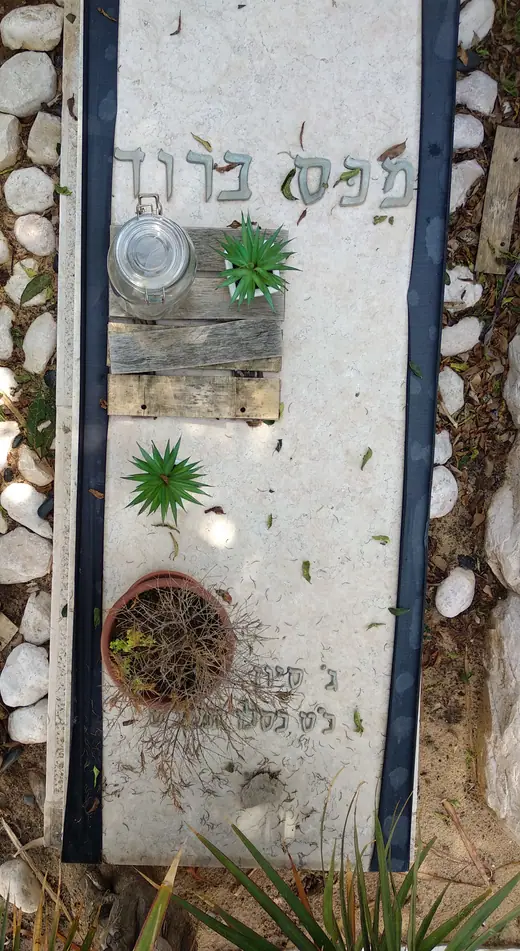
In 1939, days before the Germans entered Prague, Brod left with a suitcase of Kafka's manuscripts and reached Palestine. He lived in Tel Aviv until his death in 1968.
His will, dated June 7, 1961, named his secretary Ilse Ester Hoffe and directed that his literary estate — Kafka's papers included — be placed in the library of the Hebrew University in Jerusalem, the Municipal Library of Tel Aviv, or another public archive in Israel or abroad, with the choice left to Hoffe.
That sentence is the whole problem. It gave Hoffe a task and a discretion, and it did not clearly say whether she also owned the papers in the meantime. Israeli courts spent years on precisely that ambiguity: was she a beneficiary who inherited the archive, or an executor holding it for a purpose she was obliged to carry out?
She did not place the papers in a public archive. She kept them, in her Tel Aviv apartment and in bank vaults in Israel and Switzerland. In 1988 she sold the manuscript of The Trial at auction; it went to the German Literature Archive at Marbach for a sum reported at about $2 million. She died in 2007, aged 101, leaving what remained to her daughters Eva Hoffe and Ruth Wiesler.
The courts decide where the papers belong
When Esther Hoffe's estate was opened, the National Library of Israel intervened, contending that Brod's will had directed the archive to a public institution and that the papers were never Hoffe's to keep or sell.
In October 2012 the Tel Aviv Family Court, Judge Talia Pardo Kopelman, ruled for the library. A three-judge panel of the Tel Aviv District Court affirmed on June 29, 2015. The Supreme Court of Israel decided the final appeal in June 2016 and published the judgment on August 8, 2016, holding that the National Library was where the material belonged.
The reasoning across the three decisions came back to Brod's own document: he had expressed a clear intention that his literary estate go to a public archive, and Hoffe's role under the will was to select which one, not to decide whether. Eva Hoffe's position throughout was that the archive had been a gift from Brod to her mother and was the family's property. She died on August 4, 2018.
Some of the material was in Swiss safe-deposit boxes and therefore outside Israeli jurisdiction. In April 2019 a district court in Zurich upheld the Israeli judgments and ordered the boxes opened and their contents sent to Jerusalem. The archive was reunited at the National Library of Israel and has since been digitised and put online.
Can you order your own things destroyed?
Kafka's is the most famous version of a request lawyers see regularly in less literary form: burn the letters, shred the diaries, delete the drive, demolish the house.
Anglo-American law is more hostile to it than people expect. The leading case is not about manuscripts at all. In Eyerman v. Mercantile Trust Co., 524 S.W.2d 210 (Mo. App. 1975), a St Louis testator directed her executor to raze her house and sell the empty lot. The house was worth about $40,000; the vacant lot about $5,000, less roughly $4,350 to demolish. The Missouri Court of Appeals enjoined the demolition, holding that a purely destructive and wasteful direction that damaged neighbouring property owners was void as against public policy.
That is the shape of the rule. Courts will enforce a great deal of eccentricity in a will. They become notably less willing when the instruction produces destruction of value for no purpose, and less willing again when someone other than the estate is harmed by it.
There is also a mechanical point people miss. Destroying the physical object does not destroy the copyright, which is separate property that passes through the estate and lasts for decades after death. Burn the manuscript and the estate still owns the work, and any surviving copy remains publishable by whoever holds the rights.
Timeline
- Jun 3, 1924Kafka dies of tuberculosis at Kierling, aged 40, leaving notes instructing Max Brod to burn all his writing unread.
- 1925–1927Brod publishes The Trial, The Castle and Amerika from the manuscripts he was told to destroy.
- Mar 1939Brod leaves Prague ahead of the German occupation carrying a suitcase of Kafka's papers, and settles in Tel Aviv.
- Jun 7, 1961Brod signs a will directing his literary estate to a public archive — the Hebrew University library, the Tel Aviv municipal library, or another — with the choice left to his secretary Esther Hoffe.
- 1968Brod dies in Tel Aviv. Hoffe takes possession of the archive; it is never deposited in a public institution.
- 1988Hoffe sells the manuscript of The Trial at auction. It goes to the German Literature Archive at Marbach for a reported ~$2 million.
- Sep 2, 2007Esther Hoffe dies at 101. Her estate is opened; the National Library of Israel contests the family's claim to the archive.
- Oct 2012The Tel Aviv Family Court rules that the Brod archive belongs in the National Library of Israel.
- Jun 29, 2015The Tel Aviv District Court affirms.
- Aug 8, 2016The Supreme Court of Israel publishes its judgment, ending the Israeli litigation in the library's favour.
- Apr 2019A Zurich district court upholds the Israeli rulings and orders the Swiss safe-deposit boxes opened and the contents sent to Jerusalem.
What actually went wrong
- The instruction was not in a will. Two personal notes to a friend, however clear, carry no testamentary force anywhere. If you want something done with your property after death, it goes in an executed document.
- A request is not a command. Even inside a valid will, I ask that you destroy these is precatory. It creates a moral obligation and no legal one, and nobody can be compelled to perform it.
- Brod's own will handed a public purpose to a private person with no oversight. He named the destination and then gave one individual possession, discretion and no deadline. The papers stayed in an apartment and in bank vaults for four decades.
- Nobody was named to enforce it. A direction with no fiduciary accountable for carrying it out, and no institution with standing to ask, is unenforceable in practice long before it is unenforceable in law.
- The physical object and the rights got separated. Selling one manuscript out of an archive that was supposed to go to a public library is exactly the failure mode an unsupervised discretion produces.
Would it have gone that way in Florida?
A wish, not a command. In Florida a bare instruction to destroy is precatory and unenforceable — and if you put it in a trust to give it teeth, §736.0404 is waiting.
Florida would reach Brod's result, by a cleaner route, and the reasoning is worth having in front of you if you are thinking about a burn instruction of your own.
A note is not a will. Fla. Stat. §732.502 requires a will to be signed by the testator at the end and by two attesting witnesses, each signing in the testator's presence and in the presence of each other. Kafka's notes fail that on their face. Florida also does not recognise a holographic will — an unwitnessed handwritten one — and §732.502(2) carves holographic and nuncupative wills out even when they were validly made somewhere else. There is no version of those notes that operates as a Florida testamentary instrument.
And a request inside a valid will is still only a request. §732.6005 makes the testator's intent control the construction of a will, which cuts both ways: a court looks for whether the language was meant to impose a duty or express a hope. Words of desire, wish or request addressed to a person who is not being given the property are ordinarily precatory and do not bind. What binds is a gift with conditions, or a fiduciary duty imposed on a named fiduciary.
So people try to give it teeth by using a trust. That is where §736.0404 applies: a trust may be created only to the extent its purposes are lawful, not contrary to public policy, and possible to achieve. A trust whose only function is the pointless destruction of valuable property is the paradigm of a purpose a court can refuse, and Eyerman is the classic illustration from another state — a testamentary direction to demolish a sound house, struck down as wasteful and contrary to public policy. Florida also has §736.04113, which lets a court modify a trust where continuing it as written would be impracticable, wasteful, or would defeat the settlor's purpose. Between §736.0404 and §736.04113 there is a great deal of room for a court to decline to burn anything.
One thing you truly cannot destroy: the will itself. §732.901 requires the custodian of a will to deposit it with the clerk of court within 10 days of learning of the death, and it applies to whoever is holding it. If a will is destroyed or goes missing, §733.207 allows it to be established anyway — by the testimony of two disinterested witnesses, or by a correct copy plus one disinterested witness. Destroying the paper does not repeal the document.
The honest caveat. None of this means a personal representative or trustee must publish your diaries. A fiduciary's duty is to the estate and its beneficiaries, and where private papers have no market value and no beneficiary wants them, disposing of them quietly may be entirely proper. The line falls between destroying something worthless to the estate and destroying something valuable because the document said so. The first is administration. The second is where the public-policy objection lives.
The practical instruction. If there is material you genuinely do not want to survive you, destroy it yourself while you are alive. That is the only method with a guaranteed outcome. If you cannot, do not rely on a sentence in a will: give the specific items outright to a named person you trust and say plainly in the document that they take them absolutely and may do as they wish — a gift is enforceable in a way a request is not. And if the material has real value, say what should happen to it and name the institution, the deadline, and the person accountable for delivering it, because Max Brod's mistake was not the instruction. It was leaving nobody to check.
What people ask us about this.
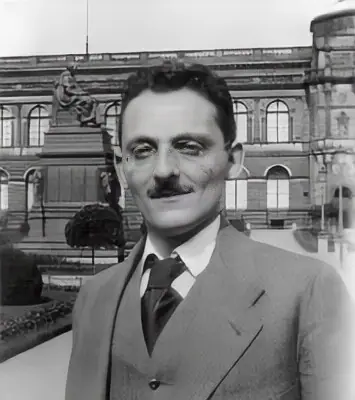
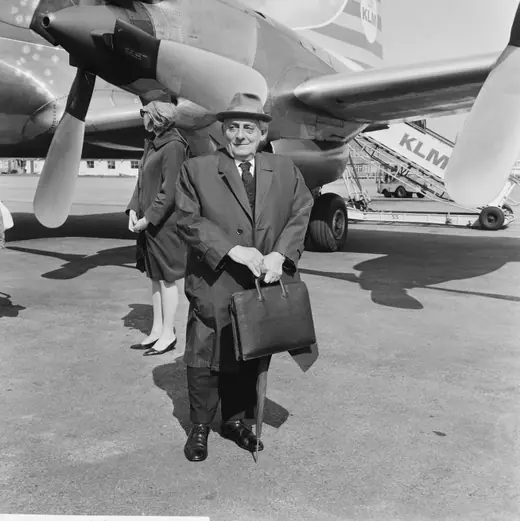
Further reading
Third-party sites. Not ours, not endorsed, not kept current by us — just the places worth going next.
Sources
- Franz Kafka papers moving to Israel's national library — Jewish Telegraphic Agency, Aug 2016
- After years of contention, Israel's National Library gains Kafka collection — Publishing Perspectives, Aug 2016
- Swiss court rules unpublished Kafka papers transferred to Israel — The Forward, 2019
- Esther Hoffe — Wikipedia
- Max Brod — Wikipedia
- Protracted battle over Kafka's legacy ends in Jerusalem — Canadian Friends of the Hebrew University
- Eyerman v. Mercantile Trust Co., 524 S.W.2d 210 (Mo. App. 1975) — Justia
- Fla. Stat. §736.0404 — Trust purposes — The Florida Senate
- Fla. Stat. §733.207 — Establishment and probate of lost or destroyed will — The Florida Senate
If this is your situation
Free 30-minute consult. Plain English. No pressure.
Nearly every case in this archive turned on something ordinary — an unwitnessed page, a stale beneficiary line, a document nobody could find. Those are cheap to fix while you're alive and expensive to fix afterward.