J. Seward Johnson Sr.
The Johnson & Johnson heir signed a will leaving essentially everything to his third wife — a Polish immigrant who had entered the household as domestic staff — and died five and a half weeks later at 87. His six children spent fifteen weeks in a Manhattan courtroom trying to undo it.

Barbara Piasecka left Poland in 1968 with a master's degree in art history from Wrocław University and, by the account she gave for the rest of her life, about $100. She was hired into the household of J. Seward Johnson Sr. — son of a Johnson & Johnson founder — first as a cook, then as a chambermaid, and then, once her eye for attribution became obvious, as curator of his art collection.
In 1971 they married. He was 76. She was 34. None of his six children were invited.
On April 14, 1983, Johnson signed a new will leaving essentially the entire fortune to her. On May 23, 1983, he died at 87 of prostate cancer. Thirty-nine days.
The estate was reported at roughly $400 million, and the amount that passed to his widow under the will has been reported at $402,824,971.59 — a figure precise enough to have been counted by somebody who was very annoyed.
Six children, three theories
Johnson's children — four from his marriage to Ruth Dill and two from his marriage to Esther Underwood — filed objections to probate. Their case, as put by counsel at trial, was that Johnson did not understand what he was doing when he signed the will six weeks before he died, and that his wife had procured the document.
The response was that the will said exactly what Johnson wanted it to say; that he had been estranged from most of his children for years; and that the objections were about money rather than mental state.
Neither theory was ever tested to verdict. Nothing in this case was ever found by a jury, which is worth stating plainly, because the case is often described as though undue influence had been proven. It was alleged, litigated, and settled.
The trial opened in Manhattan Surrogate's Court on February 27, 1986, before Surrogate Marie M. Lambert, and ran for roughly fifteen weeks. It was, by the standards of the mid-1980s tabloid ecosystem, an event. Lambert later said she had received “threats of physical violence” and that it took “personal courage” to sit through it.
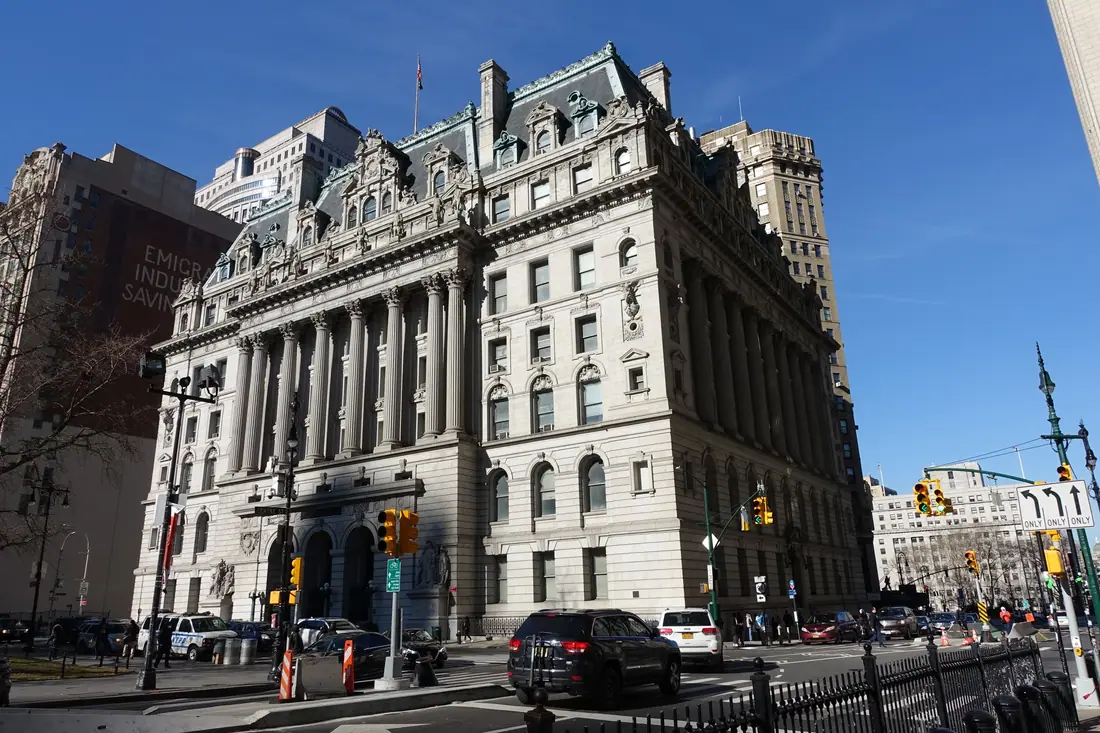
June 1986, before the jury got it
On June 2–3, 1986, with the case nearly at the jury, the parties settled. The reported terms:
- Barbara Piasecka Johnson kept roughly $300 million — the great majority of the estate.
- The six children divided $42.5 million, about 12% of the fortune.
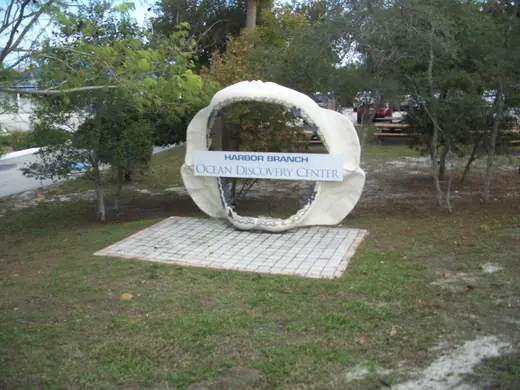
- Harbor Branch Oceanographic Institution received $20 million. Johnson had founded it in Fort Pierce, Florida, in 1971; it is now part of Florida Atlantic University.
- Mrs. Johnson agreed to pay $10 million toward the children's legal fees as part of the agreement.
A settlement is not a finding. It is a price. Both sides bought certainty — she bought the end of a jury's discretion over $400 million, and they bought the end of a case they might have lost entirely.
The cost of getting there was enormous even measured against the numbers involved. David Margolick's 1993 account of the litigation, Undue Influence: The Epic Battle for the Johnson & Johnson Fortune, remains the standard treatment, and its thesis is in the subtitle: the fight itself became the estate's principal activity for three years.
Barbara Piasecka Johnson spent the rest of her life as one of the world's significant private collectors of Old Masters. Her collection was displayed in Monaco from 1995, and sold at Christie's in July 2014. She died on April 1, 2013, in Poland, at 76.
What a deathbed will actually signals
There is nothing unlawful about leaving your estate to your spouse, and nothing unlawful about doing it late. An 87-year-old with capacity may execute a will on a Tuesday and die on a Thursday, and the will stands.
But timing is evidence, and so is who arranged it. Courts do not ask whether a bequest was generous or fair. They ask whether the testator's own volition produced the document, and they look at a familiar cluster of circumstances: how recently the instrument was changed, how ill the testator was, who selected the lawyer, who was present at the signing, who held the power of attorney, who kept the original, and whether the change is a departure from a long-settled pattern of gifts.
The Johnson will hit almost every item on that list. It might still have been upheld. Once it hit them all, however, it was going to be litigated — and the litigation, not the will, is what consumed three years and tens of millions of dollars.
The defence against this is built before the signing, not after. A contemporaneous physician's capacity assessment. A lawyer engaged by the testator rather than by the beneficiary. A signing without the beneficiary in the room. A letter of explanation in the file saying, in the testator's own words, why. Each of those is cheap. Together they are the difference between a will that is questioned and a will that is overturned.
The second-order lesson belongs to the beneficiary rather than the testator, and it is the one most people miss. Barbara Piasecka Johnson kept about three-quarters of what the will gave her and spent three years and an enormous sum defending it. A beneficiary who suspects the gift will be challenged has as much interest in the procedural hygiene of the signing as the person making it — arguably more, because they are the one who will be cross-examined about it.
Which points at the structural answer, the one this archive keeps arriving at from different directions. A late, unequal, contested disposition is exactly what a funded revocable trust established years earlier is for. It moves the decision to a moment when nobody is ill, removes the public docket that a contest needs, shortens the limitation periods, and — most usefully — puts a long, boring, unremarkable history of the same arrangement into the record. A document that has said the same thing for a decade is very hard to attack. A document signed thirty-nine days before death is not.
Timeline
- 1968Barbara Piasecka arrives in the United States from Poland, and is hired into the Johnson household — first as a cook, then as chambermaid, and later as curator of the art collection.
- 1971She marries J. Seward Johnson Sr. He is 76; she is 34. He also founds the Harbor Branch Oceanographic Institution in Fort Pierce, Florida.
- Apr 14, 1983Johnson signs a will leaving essentially the entire fortune to his wife.
- May 23, 1983Johnson dies at 87 of prostate cancer, 39 days after signing.
- 1983–1985His six children file objections to probate, alleging he lacked capacity and that the will was procured. Pre-trial litigation runs for more than two years.
- Feb 27, 1986Trial opens in Manhattan Surrogate's Court before Surrogate Marie M. Lambert.
- Jun 2–3, 1986After roughly fifteen weeks, and before the case reaches the jury, the parties settle: about $300 million to the widow, $42.5 million divided among the six children, $20 million to Harbor Branch, and $10 million toward the children's legal fees.
- 1993David Margolick publishes Undue Influence: The Epic Battle for the Johnson & Johnson Fortune.
- Apr 1, 2013Barbara Piasecka Johnson dies in Poland at 76. Her Old Master collection is sold at Christie's the following July.
What actually went wrong
- The will was changed 39 days before death. Not unlawful. Not even unusual. But it converts every other fact in the file into evidence, and it is the single most common feature of contested wills in this archive.
- The principal beneficiary occupied a confidential relationship. Spouse, carer, and curator of the assets at once. Where a beneficiary is also the person managing the testator's affairs, courts in most states — Florida included — will examine the circumstances of the signing rather than take the document at face value.
- No contemporaneous capacity evidence. The most valuable document in a contested estate is a dated medical opinion from the week of execution. It costs a few hundred dollars during life and is unobtainable afterwards.
- Six children and no explanation. A will that departs sharply from a long pattern, with nothing in the file saying why, invites the family to supply the reason themselves. A signed letter of explanation is not legally operative and is often decisive in practice.
- Nobody priced the litigation. Three years, fifteen weeks of trial, and a reported $10 million in the other side's fees alone. Contest risk is a cost of the plan, and it should be estimated before signing rather than discovered after.
Would it have gone that way in Florida?
Florida would have made the children's case easier to run — not because the will is more likely void here, but because our law hands the burden of proof to the beneficiary far more readily than most states do.
Start with the substantive rule. Fla. Stat. §732.5165 provides that a will, or any part of one, procured by fraud, duress, mistake, or undue influence is void. Undue influence in Florida means over-persuasion sufficient to destroy the testator's free agency and substitute someone else's will for his own. It is not the same as unfairness, and a Florida court will not rewrite an unequal will simply because it is unequal.
Now the part that makes Florida distinctive. In In re Estate of Carpenter, 253 So. 2d 697 (Fla. 1971), the Supreme Court held that a presumption of undue influence arises where a substantial beneficiary who occupied a confidential relationship with the decedent was active in procuring the will. Carpenter lists the non-exclusive markers of active procurement, and the Johnson facts read like the list: presence at the execution, presence when the testator expressed his wishes, recommendation of the attorney, knowledge of the contents before execution, giving instructions to the drafting lawyer, securing the witnesses, and safekeeping the executed will.
Fla. Stat. §733.107(2) then does the heavy lifting. Where that presumption applies, it is a presumption shifting the burden of proof under §90.304 of the Evidence Code — meaning the beneficiary must establish by a preponderance of the evidence that the will was not procured by undue influence. In most states the presumption merely shifts the burden of producing evidence and evaporates once any is produced. In Florida it stays, and the beneficiary carries it to the end. In a case with these facts, that difference is very likely worth a great deal of money.
Two Florida rules cut the other way, in the beneficiary's favour. First, a surviving spouse who was left everything is in the strongest possible position on the alternative claim: even if the will fell, §732.102 gives an intestate spouse the entire estate where all surviving descendants are also descendants of that spouse — though that is not this case, since Johnson's children were from earlier marriages, so an intestacy here would have split the estate roughly half to the spouse and half to the children. Second, §732.517 makes no-contest clauses unenforceable in Florida, so a contestant risks fees rather than an inheritance. That is a genuine double-edged rule: it protects legitimate challenges and it lowers the cost of speculative ones.
On fees, Florida gives the court a tool that surprises people. §733.106(4) allows the court, when it awards costs and attorney fees, to direct from what part of the estate they are to be paid — including by charging a particular beneficiary's share. A Florida judge confronted with a $10 million fee negotiation like the one in the Johnson settlement has the authority to allocate rather than simply spread the cost across the residue.
The honest caveat: none of this makes a late will invalid. Florida upholds deathbed wills every year, including wills that disinherit adult children, because Florida has no forced heirship for adult children and testamentary freedom is real. What Florida law does is decide who has to prove what, and that is usually the whole ballgame.
The practical instruction, for anyone making a substantially unequal will or a late one. Have the lawyer engaged by you, not by the person who benefits. Sign it without that person in the building. Get a physician to record capacity in writing on or near the day. Keep the original with the lawyer or with the clerk under §732.901. And put a short, dated, signed statement in the file explaining the reasons in your own words — the document that costs nothing and does more work than any other page in the folder.
What people ask us about this.


Further reading
Third-party sites. Not ours, not endorsed, not kept current by us — just the places worth going next.
Sources
- Settlement ends Johnson & Johnson estate battle — UPI Archives, Jun 3 1986
- A bitter battle over the Johnson & Johnson fortune — UPI Archives, Jun 2 1986
- Court fight begins over $400 million estate — UPI Archives, Feb 27 1986
- Children of multimillionaire J. Seward Johnson contest his will — University of Virginia Law Library, Dengrove Collection
- Barbara Piasecka Johnson — Wikipedia (biography and settlement summary)
- John Seward Johnson I — Wikipedia (will dated Apr 14, 1983; estate figures)
- Fla. Stat. §732.5165 — Effect of fraud, duress, mistake, and undue influence — The Florida Senate
- Fla. Stat. §733.107 — Burden of proof in contests — The Florida Senate
If this is your situation
Free 30-minute consult. Plain English. No pressure.
Nearly every case in this archive turned on something ordinary — an unwitnessed page, a stale beneficiary line, a document nobody could find. Those are cheap to fix while you're alive and expensive to fix afterward.