Brooke Astor
Nearly every case in this archive ends in a settlement, because civil courts divide money and rarely assign blame. This one ended differently. A Manhattan jury convicted her only son of looting her estate, an appellate court affirmed, and at 89 he reported to state prison.
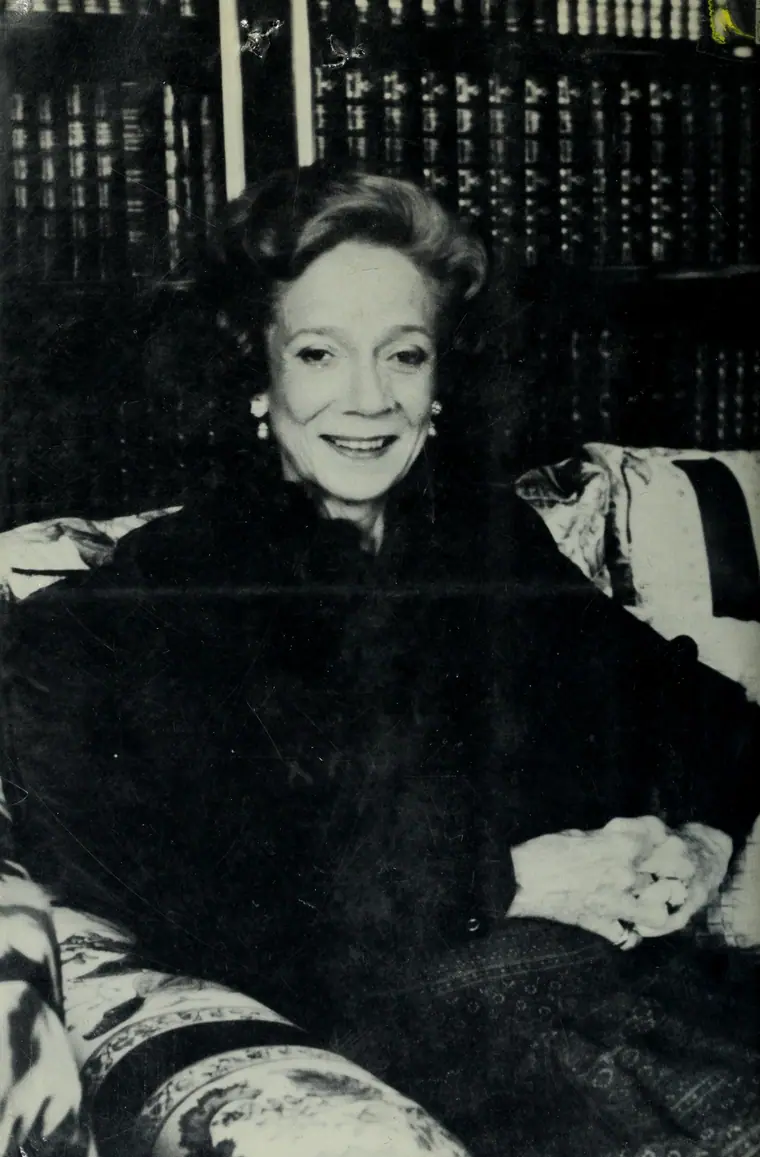
Brooke Astor gave away close to $200 million over four decades — to the New York Public Library, Central Park, the Metropolitan Museum, Carnegie Hall, the Bronx Zoo, and several hundred smaller places that never made the newspapers. She was the closest thing New York had to an institution with a pulse.
She died on August 13, 2007, at 105, at her house in Briarcliff Manor. She had been diagnosed with Alzheimer's disease.
The estate fight had already been running for a year by then, and it had started in the least usual way possible: her grandson sued his own father.
July 2006: a grandson goes to court
On July 26, 2006, Philip Marshall — Astor's grandson, and the son of her only child, Anthony Marshall — filed a guardianship petition in New York seeking to remove his father from control of her affairs. The petition alleged that his grandmother was being kept in deteriorating conditions and that her son was benefiting financially from her assets.
The court acted the same day. It appointed Annette de la Renta as her personal guardian and JPMorgan Chase as property guardian. Anthony Marshall was displaced.
Note what that petition was: not a will contest, which can only be brought after a death, but a guardianship proceeding, which can be brought while the person is alive and which puts a neutral in charge immediately. It is the fastest tool in this area and the least used, because bringing it means accusing a family member in public while the subject is still alive to read about it.
The documents, and who signed them
In November 2007, three months after Astor's death, the Manhattan District Attorney indicted Anthony Marshall on 16 counts, and his co-defendant Francis X. Morrissey Jr., an estates lawyer, on six.
The core allegation was that Marshall had used his mother's cognitive decline to move her money and her property to himself, and that her 2002 will had been amended by codicils executed in 2003 and 2004 that redirected the residuary estate away from charity and toward him.
The transactions at the centre of the case included the sale of a Childe Hassam painting from her collection, on which Marshall took a reported $2 million commission, and substantial increases in his own compensation for managing her affairs.
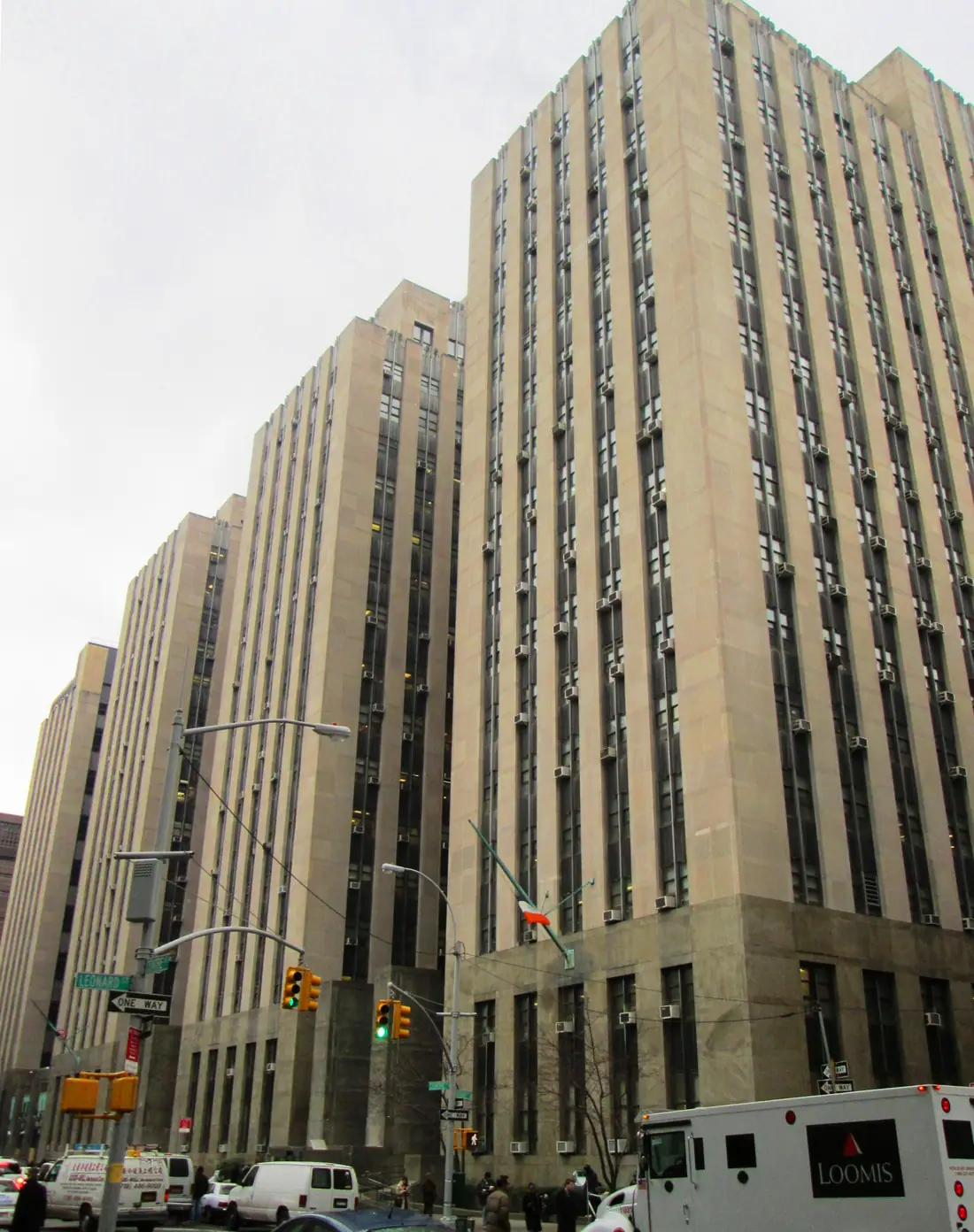
The trial opened in March 2009 and ran nearly six months in Manhattan Supreme Court.
October 8, 2009: guilty on 14 of 16
The jury convicted Marshall on 14 of 16 counts, including grand larceny in the first degree — a class B felony carrying a mandatory state prison sentence under New York law — along with scheme to defraud, criminal possession of stolen property, offering a false instrument for filing, and conspiracy. He was acquitted on two counts.
Francis Morrissey was convicted of forgery, for forging Brooke Astor's signature on a will amendment.
On December 21, 2009, Marshall was sentenced to one to three years. He was 85. He remained free on bail while he appealed.
The appeal ran three and a half years. On March 26, 2013, the Appellate Division, First Department, decided People v. Marshall, 106 A.D.3d 1 — vacating one second-degree grand larceny count as against the weight of the evidence and dismissing it, and otherwise affirming. The court held that the record amply supported the jury's determination that Marshall had committed a series of larcenous acts. The mandatory-prison count stood.
On June 21, 2013, at 89, he reported to prison. He was granted medical parole on August 22, 2013, after about eight weeks, on the basis of Parkinson's disease and congestive heart failure. He died on November 30, 2014, at 90.
March 2012: the charities get the money
The civil side settled first. On March 28, 2012, the New York Attorney General announced a settlement approved by the Westchester County Surrogate's Court that resolved the estate.
The settlement was built on Astor's 2002 will, and gave no effect to the later amendments that favoured Marshall. He took $14.5 million instead of the roughly $31 million the amended documents would have given him, and he and his wife lost the power to direct which charities received the estate's charitable gifts.
Roughly $100 million that had been frozen for five years went to the institutions Astor had spent her life funding — the New York Public Library, the Metropolitan Museum, Central Park and Prospect Park, Carnegie Hall, the Morgan Library, the Wildlife Conservation Society, Rockefeller University, and others — plus about $30 million into a new fund for New York City education, modelled on a provision from her 1997 will.
Five years of litigation to arrive at the will she signed in 2002. That is what the amendments cost.
Timeline
- 2002Astor executes the will that governs the eventual settlement, leaving the bulk of the estate to charity.
- 2003–2004Codicils are executed amending the will in ways that benefit her son, Anthony Marshall.
- Jul 26, 2006Philip Marshall petitions to remove his father as his grandmother's guardian. The court appoints Annette de la Renta as personal guardian and JPMorgan Chase as property guardian the same day.
- Aug 13, 2007Brooke Astor dies at 105, having been diagnosed with Alzheimer's disease.
- Nov 27, 2007Anthony Marshall is indicted on 16 counts; estates lawyer Francis X. Morrissey Jr. on six.
- Mar–Oct 2009Trial in Manhattan Supreme Court.
- Oct 8, 2009Marshall convicted on 14 of 16 counts, including first-degree grand larceny. Morrissey convicted of forging Astor's signature.
- Dec 21, 2009Marshall sentenced to one to three years; released on bail pending appeal.
- Mar 28, 2012Westchester County Surrogate's Court approves a settlement built on the 2002 will. Marshall takes $14.5M rather than roughly $31M; about $100M flows to charity, including a $30M education fund.
- Mar 26, 2013People v. Marshall, 106 A.D.3d 1: the Appellate Division vacates one count and otherwise affirms.
- Jun 21 – Aug 22, 2013Marshall, 89, reports to state prison and is granted medical parole after about eight weeks.
What actually went wrong
- The person managing the money was the person inheriting it. Marshall held authority over his mother's finances and was the principal beneficiary of the changes made to her documents. No structural check sat between those two roles.
- Late amendments during cognitive decline. Codicils signed in 2003 and 2004 redirected the residuary estate at a time when her diagnosis was known. Where capacity is declining, every new document is a new exhibit.
- No independent counsel and no capacity assessment. A contemporaneous evaluation by a physician with no stake in the outcome, and a lawyer taking instructions from her alone, would have made the amendments far harder to attack — or would have stopped them.
- Nobody was watching the accounts. The conduct ran for years before a family member forced the issue. Regular accountings to a neutral third party are the single cheapest control available, and almost nobody uses them.
- Family carried the whole burden of detection. It took a grandson willing to sue his own father in public. That is an enormous thing to ask of anyone, and it is why so much elder financial exploitation is never addressed at all.
Would it have gone that way in Florida?
Florida takes this seriously enough to have written a dedicated crime for it — and a civil action with fee-shifting that a family can bring without waiting for a prosecutor.
Florida approaches financial exploitation of an older adult from three directions at once, and a family should understand all three because they run on different clocks.
Criminally. Fla. Stat. §825.103 defines exploitation of an elderly person or disabled adult to include knowingly obtaining or using, or endeavouring to obtain or use, their funds, assets, or property with intent to deprive them of the benefit — where the person stands in a position of trust or confidence, or knows or should know the victim lacks the capacity to consent. It is graded by amount: a first-degree felony at $50,000 or more, second-degree at $10,000 or more, third-degree below that. Florida did not need a general larceny statute to reach this conduct; it wrote one aimed at it.
Civilly, immediately. §415.1111 gives a vulnerable adult — or a guardian, a person acting on their behalf, or the personal representative of their estate after death — a cause of action against any perpetrator for abuse, neglect, or exploitation, with actual and punitive damages and reasonable attorney's fees and costs available to a prevailing party. That fee provision matters enormously in practice: it is the difference between a case a family can afford to bring and one they cannot.
Through the probate court. If the documents themselves are the problem, §732.5165 makes a will void to the extent its execution was procured by fraud, duress, mistake, or undue influence. In re Estate of Carpenter, 253 So. 2d 697 (Fla. 1971), raises a presumption of undue influence where a substantial beneficiary in a confidential relationship was active in procuring the instrument — with active procurement measured by factors including instructing the drafter, being present at execution, knowing the contents beforehand, and keeping the document afterward. And §733.107(2) makes that presumption shift the burden of proof onto the beneficiary, which is stronger than the rule in most states. §732.517 removes the deterrent on the other side: no-contest clauses are unenforceable in Florida, so a family member risks nothing by asking the question.
And, as here, there is the option that does not wait for a death. Chapter 744 allows a petition to determine incapacity and appoint a guardian while the person is alive, with an examining committee of three and a court directed to the least restrictive alternative. Florida also offers a faster interim step: an emergency temporary guardian may be appointed where there is imminent danger to the person's health, safety, or property. That is the analogue of what happened in New York in July 2006, and it is the tool that actually stops ongoing conduct.
The honest caveat: none of this is easy from the outside. Banks and advisers are not required to report suspicions to you, family members are not entitled to see an elderly relative's accounts, and a court will not intervene on a hunch. What works is set up in advance.
So, the practical instruction. Never give one person unsupervised control of an ageing parent's money. Name a co-agent or require an annual accounting to a named third party in the power of attorney. Keep the health care surrogate and the financial agent as different people. And if you suspect exploitation is already underway, the Florida number to call is the Department of Children and Families Elder Abuse Hotline, 1-800-96-ABUSE, and the court remedy is a Chapter 744 petition — not a will contest you will have to wait years to bring.
What people ask us about this.
Further reading
Third-party sites. Not ours, not endorsed, not kept current by us — just the places worth going next.
Sources
- People v Marshall, 106 A.D.3d 1 (1st Dep't, Mar 26 2013) — New York Official Reports
- Anthony Marshall, heir to Astor fortune, loses appeal — Christian Science Monitor / AP, Mar 27 2013
- Octogenarian heir to Astor fortune begins prison term — NPR, Jun 21 2013
- Anthony Marshall, convicted of raiding mother's fortune, dies at 90 — NPR, Dec 2 2014
- A.G. Schneiderman obtains settlement in Brooke Astor estate matter — New York State Attorney General, Mar 28 2012
- Battle over Brooke Astor's $100 million estate settled — NBC News / AP, Mar 2012
- The Brooke Astor case: an interview with expert witness Alex Forger — American Bar Association, Voice of Experience
- Fla. Stat. §825.103 — Exploitation of an elderly person or disabled adult — The Florida Senate
- Fla. Stat. §415.1111 — Civil actions — The Florida Senate
If this is your situation
Free 30-minute consult. Plain English. No pressure.
Nearly every case in this archive turned on something ordinary — an unwitnessed page, a stale beneficiary line, a document nobody could find. Those are cheap to fix while you're alive and expensive to fix afterward.