In re Estate of Carpenter
A Florida widow signed a will four days before she died, leaving everything to the daughter who had arranged it and nothing to her three sons. The Supreme Court of Florida used the case to write the list of warning signs that every Florida will contest has been argued around ever since.
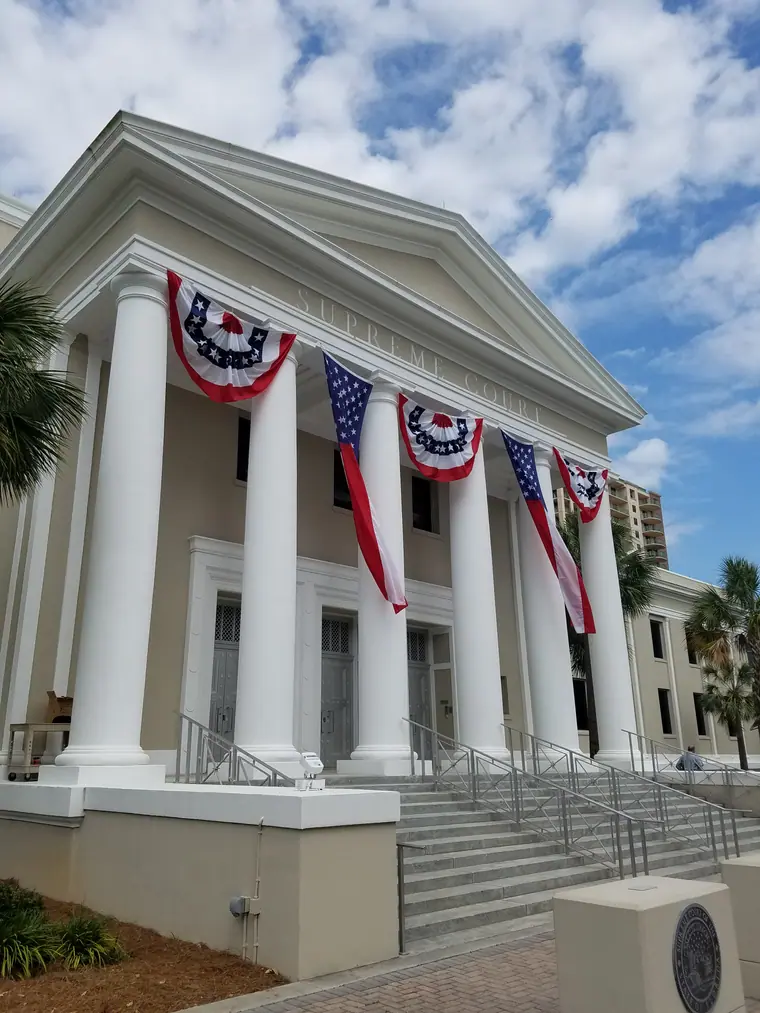
If you are ever in a Florida will contest, this is the case both lawyers will cite. Not the celebrity estates, not the Supreme Court of the United States — a widow from Winter Garden who died at 52 in a Daytona Beach hospital in September 1966.
Coketine Bray Carpenter left four grown children: a daughter, Mary, and three sons, Ben, Sam, and Bill. On September 1, 1966 she signed a will leaving her entire estate outright to Mary. It gave the sons nothing. Four days later she died.
Ben and Bill contested. The County Judge's Court of Orange County found the will had been procured by undue influence and refused it probate. The Fourth District reversed. The Supreme Court of Florida took the case because Florida's own decisions could not agree on one question — and answered it in an opinion that has structured every Florida undue-influence case since.
Four days, one telephone call, and a stranger's lawyer
The county judge's findings, quoted at length in the Supreme Court's opinion, are worth reading because they are the anatomy of the problem.
Mrs. Carpenter had been widowed since 1953 and lived alone in Winter Garden, handling her own business and household affairs. In the summer of 1966 she developed cirrhosis of the liver. The judge found that she was gravely ill, depressed, and mentally impaired, that she had been drinking heavily for some time and that the cause of her death was the breakdown of her body from excessive alcohol consumption, and that she was being given barbiturates from before the will was ordered until she died. Three days before the will was signed, her physician had concluded she was terminal.
The judge also found that she had repeatedly said she intended to leave her estate equally to her four children, that no event had intervened to change that, that she had never made any other will, and that intestacy would have divided the estate four ways — a fact she was presumed to know.
Mary was a schoolteacher in Daytona Beach. She arranged her mother's admission to a Daytona Beach hospital on August 28. On August 30 she telephoned her own attorney in Orlando to say her mother wanted a will naming Mary as sole beneficiary and executrix. On August 31 she called again to press the urgency. The lawyer drove to Daytona Beach the next day.
The lawyer did his job carefully. He questioned Mrs. Carpenter out of Mary's presence, satisfied himself she understood that her three sons were being excluded, then arranged two witnesses — one a physician — read the will aloud, questioned her again, and kept the executed document himself. None of the other children learned the will existed until at or shortly before their mother's death.
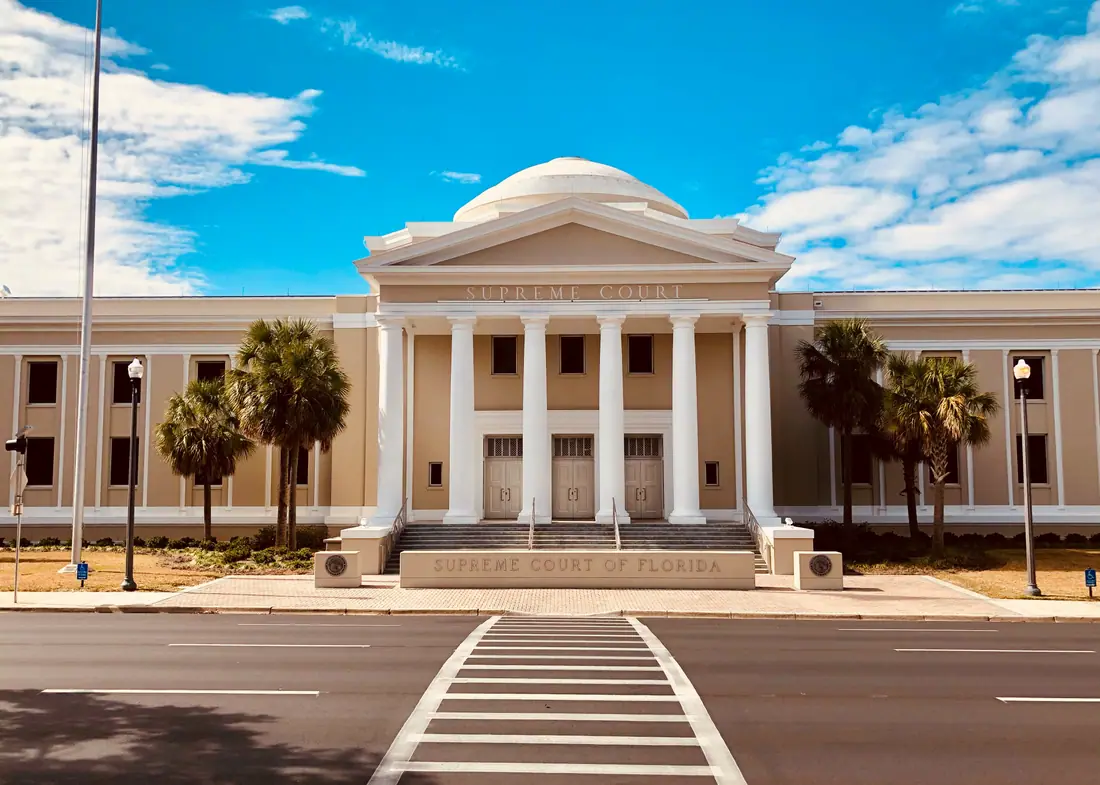
The seven active-procurement factors
Florida law already held that a presumption of undue influence arises when a substantial beneficiary under a will occupies a confidential relationship with the testator and was active in procuring the will. What nobody had written down was what “active in procuring” looks like.
The Court set out seven criteria drawn from the earlier Florida cases:
- (a) Presence at the execution. Was the beneficiary in the room when the will was signed?
- (b) Presence when the testator expressed a desire to make a will.
- (c) Recommending the attorney who drew the will.
- (d) Knowing the contents of the will before it was executed.
- (e) Giving instructions on preparation of the will to the drafting attorney.
- (f) Securing the witnesses to the will.
- (g) Safekeeping the will after execution.
The Court was careful about what the list is. The criteria are not exclusive, contestants are not required to prove all of them, and the Court expected that it would be “the rare case in which all the criteria will be present.” It set them out, in its own words, “primarily in the hope that they will aid trial judges in looking for those warning signals pointing to active procurement of a will by beneficiary.”
On the facts, at least four were present: Mrs. Carpenter expressed her wish to Mary, Mary secured the attorney, Mary instructed him on the contents, Mary put it on an urgent footing, and Mary was present for part of the questioning. The Fourth District had thought Mary's role was “primarily as a messenger on behalf of her mother.” The Supreme Court's answer was jurisdictional rather than factual: that interpretation was the trial court's to make, not the reviewing court's.
On the confidential relationship, the Court leaned on Quinn v. Phipps (1927): the term is very broad, the origin of the confidence is immaterial, and it reaches informal relations “wherever one man trusts in and relies upon another.” Mary's own testimony that her mother relied on her heavily was enough.
What the presumption actually does
The reason the Supreme Court took the case was a genuine contradiction in Florida law. Its own earlier decisions said the presumption shifted the burden of proof to the will's proponent. The general Florida rule on presumptions, from Leonetti v. Boone, said a presumption shifts only the burden of going forward and never the risk of nonpersuasion. And the statute then in force, §732.31, put the burden of proof on the contestant once execution and attestation were proved.
The Court chose the general rule. Shifting the burden of proof, it reasoned, would raise the presumption “virtually to conclusive status”, because disproving undue influence is as hard as proving it — and that would take the weighing of evidence away from the trial judge, which is the most valuable thing a trial judge does in a non-jury case.
So the rule it announced was this: the presumption shifts to the beneficiary only the burden of coming forward with a reasonable explanation for their active role. Give a credible explanation and the presumption vanishes, and the judge decides on the greater weight of the evidence. But — and this is the part practitioners still quote — the facts that raised the presumption are themselves evidence of undue influence and stay in the case, supporting a permissible inference either way.
Mary's testimony satisfied that burden. The presumption vanished. But the Fourth District had gone further and held the remaining evidence legally insufficient, and on that the Supreme Court disagreed and quashed. The case was sent back to the county judge to decide the question over again on the weight of the evidence, without the presumption doing the work.
Justice McCain wrote. Chief Justice Roberts and Justices Adkins and Boyd concurred; Justice Dekle agreed to the conclusion only. Rehearing was denied on November 4, 1971.
Timeline
- Summer 1966Mrs. Carpenter, widowed since 1953 and living alone in Winter Garden, develops cirrhosis of the liver.
- Aug 28, 1966Her daughter Mary arranges her admission to a hospital in Daytona Beach, where Mary lives and teaches.
- Aug 30–31, 1966Mary telephones her own Orlando attorney to have a will prepared naming her as sole beneficiary and executrix, then calls again to press the urgency.
- Sep 1, 1966The attorney drives to Daytona Beach, questions Mrs. Carpenter out of Mary's presence, and the will is executed before two witnesses, one of them a physician.
- Sep 5, 1966Mrs. Carpenter dies at 52. Her sons Ben and Bill learn of the will at or shortly before her death and contest it.
- 1968–69The County Judge's Court of Orange County finds the will was procured by undue influence and refuses it probate.
- 1970The Fourth District Court of Appeal reverses, 239 So. 2d 506, holding the presumption rebutted and the remaining evidence legally insufficient.
- Jun 9, 1971The Supreme Court of Florida sets out the seven active-procurement factors, holds the presumption shifts only the burden of coming forward, and remands for the trial judge to weigh the evidence.
- Nov 4, 1971Rehearing denied.
- 2002The Legislature adds §733.107(2): the presumption of undue influence shifts the burden of proof, reversing that half of Carpenter.
What actually went wrong
- The beneficiary's own lawyer drafted the will. Mary called her attorney, not her mother's. That single fact hits factors (c) and (e) and is the most avoidable item on the list.
- The instructions came from the beneficiary. The lawyer took the terms of the will from the person who would receive everything under it. He verified them with the testatrix, which mattered — but the chain started in the wrong place.
- Four days before death, in a hospital, on barbiturates. Timing is not a legal element, but it is the fact that makes a judge look twice, and it compounds every other fact in the file.
- The other children were not told. The county judge specifically found the execution was kept secret from Ben and Bill. Secrecy converts a surprising will into a suspicious one.
- A complete reversal of a stated plan, unexplained. The judge found she had repeatedly said she would divide the estate equally, and that nothing had happened to change her mind. A sharp departure from a known intention, with no documented reason, is what a contest is built on.
Would it have gone that way in Florida?
This IS the Florida rule — with one correction. The seven factors are still the law. Since 2002 the presumption shifts the burden of proof, not merely the burden of explanation.
Carpenter is not a comparison case. It is the framework a Florida court applies, and it works in three steps.
Step one: who carries what. Under Fla. Stat. §733.107(1) the proponent must first establish prima facie the will's formal execution and attestation — a self-proving affidavit under §732.503 or an attesting witness's oath under §733.201(2) does this. Then the contestant carries the burden of establishing the ground of contest. If the ground is undue influence, §732.5165 supplies the consequence: a will whose execution was procured by fraud, duress, mistake, or undue influence is void, and a part so procured is void even if the rest stands.
Step two: the presumption. The contestant raises it by showing that a substantial beneficiary under the will occupied a confidential relationship with the decedent and was active in procuring the will. Quinn v. Phipps makes the relationship element easy — it covers any informal relation where one person trusts and relies on another, which describes most caregiving adult children. Active procurement is where the Carpenter factors do their work: presence at execution, presence when the will was discussed, recommending the lawyer, advance knowledge of the contents, giving the drafting instructions, securing the witnesses, and keeping the will afterwards. Not all seven are required, and the list is expressly non-exclusive.
Step three — and here is the change. Carpenter held that the presumption shifted only the burden of coming forward with a reasonable explanation, after which it vanished. §733.107(2), added in 2002, says otherwise: where the presumption applies it “implements public policy against abuse of fiduciary or confidential relationships and is therefore a presumption shifting the burden of proof” under §§90.301–90.304 of the Evidence Code. The practical consequence is the one the Carpenter Court worried about out loud — once the presumption is triggered, the beneficiary must actually disprove undue influence, and being unable to persuade the judge either way now loses.
The honest caveat. A presumption is not a finding. Beneficiaries rebut it regularly, and the ordinary reasons a person changes a will — one child provided years of care, another has been absent for a decade, there was a specific and documented falling-out — are exactly the reasonable explanations the courts contemplate. Mary Carpenter satisfied her burden on the rule as it then stood. And note the other half of Carpenter that survives: the facts that raised the presumption remain in evidence whatever happens to the presumption itself.
The practical instruction. If you are the child who will benefit most, remove yourself from every one of the seven factors. Do not pick the lawyer, do not give the instructions, do not sit in the meeting, do not arrange the witnesses, and do not keep the original. Have the testator engage independent counsel, meet alone, and — where illness or age is in the picture — obtain a contemporaneous capacity assessment from the treating physician on the day. If the plan really does depart from what the family expects, say so in writing while the person can still explain why. That memorandum is the cheapest evidence in the file and it is almost never made.
What people ask us about this.
Further reading
Third-party sites. Not ours, not endorsed, not kept current by us — just the places worth going next.
Sources
- In re Estate of Carpenter, 253 So. 2d 697 (Fla. 1971) — full opinion — CourtListener
- Fla. Stat. §733.107 — Burden of proof in contests; presumption of undue influence — The Florida Senate
- Fla. Stat. §732.5165 — Effect of fraud, duress, mistake, and undue influence — The Florida Senate
- Fla. Stat. §732.502 — Execution of wills — The Florida Senate
- Fla. Stat. §732.503 — Self-proof of will — The Florida Senate
If this is your situation
Free 30-minute consult. Plain English. No pressure.
Nearly every case in this archive turned on something ordinary — an unwitnessed page, a stale beneficiary line, a document nobody could find. Those are cheap to fix while you're alive and expensive to fix afterward.