Thomas Kinkade
Against a formal will, three codicils and a trust, his girlfriend produced two handwritten pages dated a month apart. They gave her the house and $10 million. The handwriting was close to illegible. His estranged wife — never divorced — was on the other side.
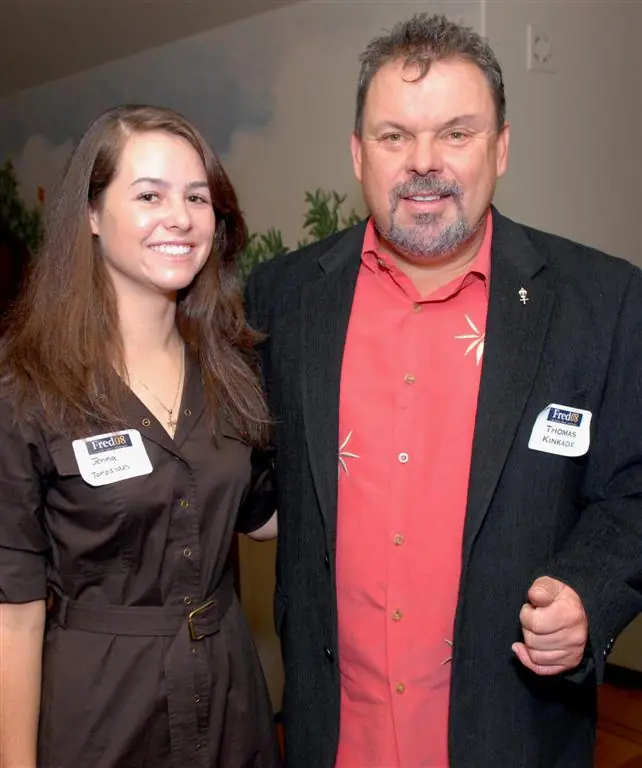
Thomas Kinkade — the self-styled “Painter of Light,” whose reproductions hung in more American living rooms than any other living artist's — died on April 6, 2012, at his home in Monte Sereno, California. He was 54. The coroner determined he died of acute intoxication from alcohol and diazepam.
He left a formal estate plan: a will, three codicils executed through 2007, and a trust. He and his wife of three decades, Nanette Kinkade, had separated in 2010 and had not divorced. Reporting put the estate somewhere between $60 million and $66 million.
In June 2012, his girlfriend of about eighteen months, Amy Pinto-Walsh, produced two handwritten pages.
November 11 and December 11, 2011
The two documents were dated a month apart and said substantially the same thing.
The first, dated November 11, 2011, purported to leave Pinto-Walsh $10 million — the wording referred to it coming from his corporate policy — together with his house and the adjacent property, described as being for her security.
The second, dated December 11, 2011, repeated the bequests and added a purpose: the $10 million was to fund a museum displaying his works.
The problem was legibility. Contemporary accounts of the documents were unanimous that the handwriting was extremely poor; a handwriting analyst quoted at the time said the writing indicated the author had been drinking heavily when it was produced.
Nanette Kinkade's lawyers challenged both documents, asserting them against the formal will and three codicils and alleging that they were the product of undue influence exercised at a time when Kinkade was drinking heavily. Pinto-Walsh's lawyers maintained the notes reflected his actual intentions, and that the couple's assets had already been divided at the 2010 separation.
Two women, one house, and $11,000 a month
The dispute ran on more than one front at once, which is normal and is also why these cases cost so much.
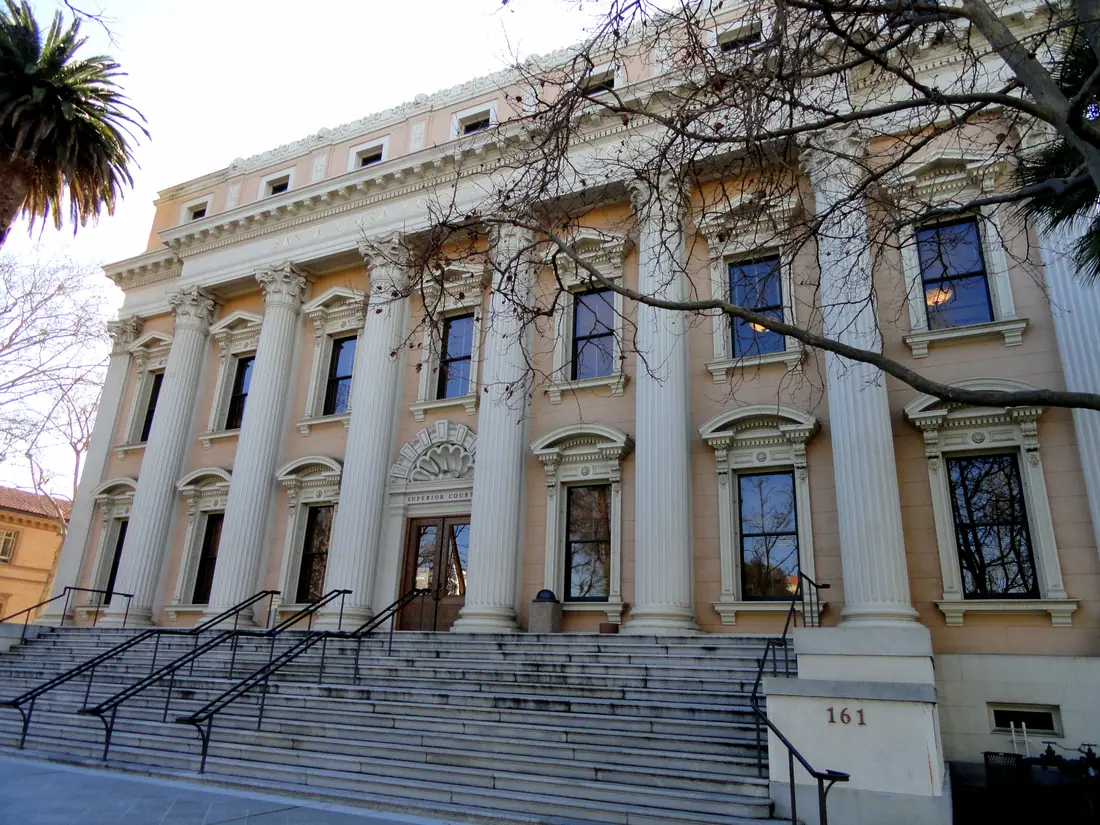
There was the probate contest itself, in Santa Clara County: were the handwritten documents valid holographic wills, was there testamentary capacity when they were written, and had they been procured by undue influence? Pinto-Walsh succeeded in having the matter heard in open court rather than in arbitration.
There was a separate confidentiality proceeding. After Kinkade's death, Nanette Kinkade sought a restraining order to prevent Pinto-Walsh from publicly releasing information and photographs concerning Kinkade, his marriage, his business, and his personal conduct.
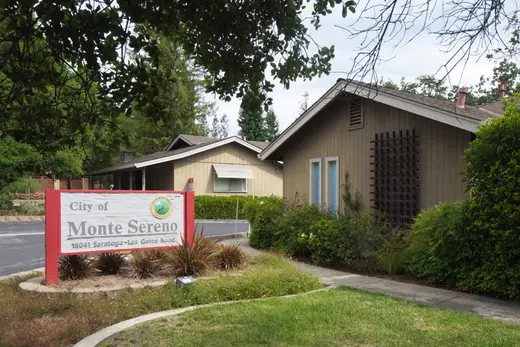
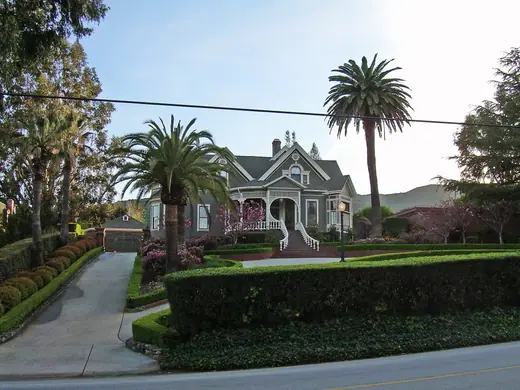
And there was the house. In September 2012 Pinto-Walsh was reported to have been ordered to pay $11,000 a month to remain living in the Monte Sereno property while the case ran.
In August 2012 the court took up who would administer the estate, and a full trial on the validity of the notes was projected to be six months to a year away.
It never happened. By December 2012 the two women announced they had reached a private agreement. The terms were not disclosed. As with almost every case in this archive, the question was never answered — it was purchased.
It does not have to win. It only has to be arguable.
Notice what the two notes actually achieved. They were never held valid. No court ever found that Kinkade had capacity when he wrote them, or that they were free of influence, or even that they could be read.
They achieved everything anyway, because a document that is merely arguable converts a distribution into a negotiation. The estate could not be closed. The house could not be sold. The trustee could not distribute. Every month of delay was a month of professional fees on both sides, and settlement value accumulates as a function of nuisance, not merit.
That is the actual risk of the handwritten note, and it is why the answer is never “don't worry, it wouldn't hold up.” The relevant question is not whether it would hold up. It is how much it costs to find out, and who has to spend it.
The second lesson is the separation. Nanette Kinkade was, at the moment of death, his wife — not his ex-wife. Two years of living apart changed nothing about her legal standing. Whatever the notes said, she was always going to be at the table, and she was always going to be at the table with the strongest possible claim.
Timeline
- Through 2007Kinkade executes a will and three codicils, alongside a trust.
- 2010Kinkade and Nanette Kinkade separate after three decades of marriage. They do not divorce.
- Nov 11, 2011The first handwritten note is dated: $10 million and the house to Amy Pinto-Walsh.
- Dec 11, 2011A second handwritten note repeats the bequests and directs that the $10 million fund a museum of his works.
- Apr 6, 2012Kinkade dies at his Monte Sereno home at 54. The coroner determines acute intoxication from alcohol and diazepam.
- Jun 2012Pinto-Walsh produces the two handwritten documents. Nanette Kinkade's lawyers challenge them; a separate proceeding seeks to restrain public disclosures.
- Aug 2012The Santa Clara County court takes up administration of the estate. Trial on the notes' validity is projected six months to a year out.
- Sep 2012Pinto-Walsh is reported to have been ordered to pay $11,000 a month to remain in the Monte Sereno house.
- Dec 2012The two women announce a private agreement. Terms are not disclosed and no court rules on whether the notes were valid.
What actually went wrong
- A formal plan that stopped being updated in 2007. Five years, a separation, and a new relationship all happened after the last codicil. The documents described a life that no longer existed.
- A separation without a divorce or a waiver. Living apart since 2010 gave the estranged spouse none of the disadvantages of divorce and all of the rights of marriage. Nothing in the file changed her status.
- Late handwritten documents in a state that accepts them. California recognises holographic wills, so the notes could not simply be discarded — they had to be litigated. The forum decided how expensive the argument was.
- Documents written in circumstances that invited a capacity challenge. Whatever their content, notes produced during a period of heavy drinking hand the other side its two best arguments — capacity and undue influence — before anyone reads a word.
- Nothing said what happened to the house. The single most contested asset was a specific property occupied by a specific person, and the resolution of that occupancy became its own litigation, at $11,000 a month.
Would it have gone that way in Florida?
Both notes would be void in Florida — and so would a perfectly executed California holographic will. Florida never accepts a handwritten will.
This is one of the few cases in the archive where Florida law gives a clean, short, unambiguous answer, and it is worth stating without hedging.
Fla. Stat. §732.502(1) requires that a will be signed at the end by the testator, in the presence of two attesting witnesses, who must sign in the presence of the testator and of each other. A page written and signed alone, in a house, at night, meets none of that. It is not a will. It has no effect at all.
And then §732.502(2) closes the door that people expect to be open. Florida will generally admit a will executed by a nonresident if it was valid where it was executed — except for a holographic will or a nuncupative (oral) one. So a handwritten will that is perfectly valid in California, Michigan, Texas, or twenty-odd other states is still void in Florida, both for a Florida testator and for a nonresident's Florida property. There is no exception for clear intent, no exception for tragedy, and no harmless-error doctrine. Florida has been asked and Florida has said no.
That answer is cleaner than it is comforting. It disposes of the notes; it does not dispose of the fight. The trust would still be there, the estranged wife would still be there, and there would still be a hearing about who is living in the house. Which brings in the rest of it.
The undue influence machinery. Had the documents been properly witnessed, §732.5165 voids any will procured by fraud, duress, mistake, or undue influence, and §733.107(2) does the decisive procedural work: once the presumption of undue influence arises, the burden of proof shifts to the proponent of the will. Under In re Estate of Carpenter, 253 So. 2d 697 (Fla. 1971), that presumption arises where a substantial beneficiary who stood in a confidential relationship with the decedent actively procured the document — with factors including presence at the execution, knowledge of the contents beforehand, involvement in obtaining witnesses, and safekeeping of the will. In Florida the person holding the late document is the one who has to prove it, not merely defend it.
The trust point, which almost nobody knows. Kinkade's plan included a trust, and a will does not automatically reach trust assets. Under §736.0602(3), a settlor revokes or amends a revocable trust by substantial compliance with the method stated in the trust itself; only where the trust supplies no method may a later will or codicil do it, and then only one that expressly refers to the trust or specifically devises property that would otherwise pass under it. A scrawled note that mentions neither would not touch the trust even if it were a valid will.
And the spouse. Under §732.507(2), provisions for a spouse are voided only by dissolution or annulment — separation does nothing. A Florida Nanette Kinkade would have remained a surviving spouse with a 30% elective share under §732.2035, plus homestead and exempt-property rights, unless she had signed a waiver under §732.702.
The instruction, and it is the shortest in this archive. In Florida, a handwritten will is not a weak will. It is not a will. If you want to change something, change it properly — two witnesses, a notary for the self-proving affidavit, and, if a trust holds the assets, an amendment executed the way the trust itself requires. And if you are separated, sign a waiver or finish the divorce, because until one of those happens the law does not know you have gone.
What people ask us about this.
Further reading
Third-party sites. Not ours, not endorsed, not kept current by us — just the places worth going next.
Sources
- Did artist Thomas Kinkade change his will while drunk? — Forbes, Jul 2012
- Widow, girlfriend square off in legal battle over dead artist's estate — ABA Journal, 2012
- Thomas Kinkade's girlfriend to pay $11,000 a month to stay in artist's mansion — East Bay Times, Sep 2012
- Secret deal ends girlfriend-wife feud over painter Thomas Kinkade's estate — Mercury News, Dec 2012
- Thomas Kinkade's wife, girlfriend head to court — New Haven Register / AP
- Alcohol, drugs killed Thomas Kinkade: autopsy — NBC Bay Area, 2012
- Fla. Stat. §732.502 — Execution of wills — The Florida Senate
- Fla. Stat. §736.0602 — Revocation or amendment of revocable trust — The Florida Senate
If this is your situation
Free 30-minute consult. Plain English. No pressure.
Nearly every case in this archive turned on something ordinary — an unwitnessed page, a stale beneficiary line, a document nobody could find. Those are cheap to fix while you're alive and expensive to fix afterward.