Joan Crawford
She adopted four children and left two of them nothing, in eleven words that gave no reason and started a two-year fight. The disinherited pair objected to probate on capacity and undue influence. The estate paid $55,000 to make it stop.
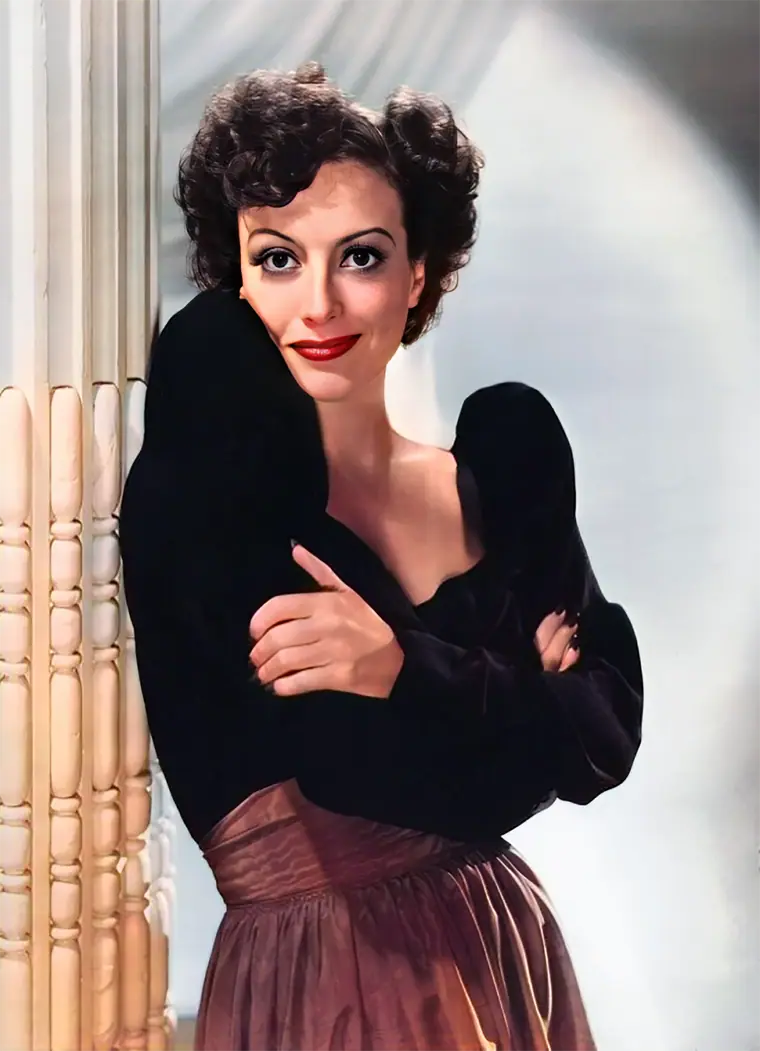
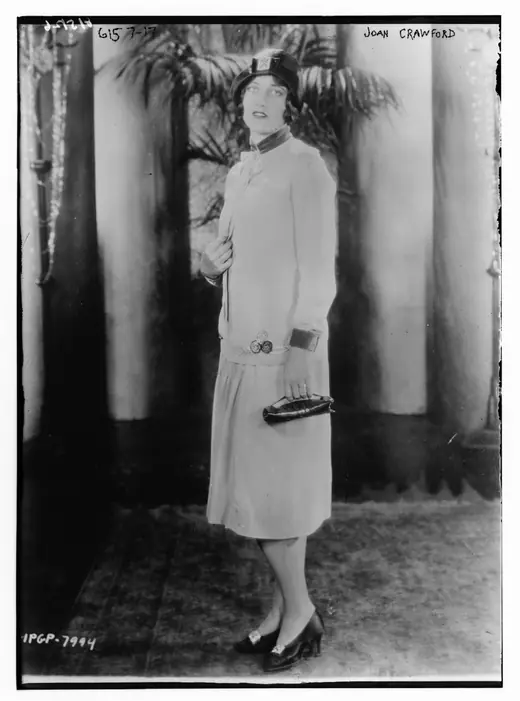
Joan Crawford died at her Manhattan apartment on May 10, 1977. She had adopted four children — Christina in 1940, Christopher in 1943, and the twins Cathy and Cynthia in 1947 — and she had signed her last will seven months before she died, on October 28, 1976.
The will was not improvised. It set up graduated trusts for Cathy and Cynthia: $77,500 apiece, released in stages — $5,000 at thirty, $15,000 at thirty-five, $30,000 at forty, $45,000 at forty-five, the balance at fifty — with a trustee holding and distributing the rest in the meantime. It made bequests to friends and household staff. It named two executors, J. Lincoln Morris and Edward S. Cowen. It divided the entire residue into eight equal shares for charity: three to the Motion Picture Country Home and Hospital, one each to the Muscular Dystrophy Association, the American Cancer Society, the American Heart Association, the Wiltwyck School for Boys, and the USO of New York City.
And then it contained one sentence that did more work than all of that combined: “It is my intention to make no provision herein for my son Christopher or my daughter Christina for reasons which are well known to them.”
Pain, alcohol, and the sister's husband
Christina Crawford and Christopher Crawford filed an objection to probate in the Surrogate's Court in New York County in the fall of 1977. Accounts of the filing date differ — the objection itself is dated October 24, 1977, and contemporaneous reporting places it in November.
They raised the two claims that almost always travel together in a disinheritance case.
- Testamentary capacity. The objection alleged the will was “the direct result of a mind and will distorted by intense pain and/or alcohol.” Crawford's drinking was not a secret, and the objectors put it at the centre of the pleading.
- Undue influence. They alleged the document reflected “the importunities and blandishments” of their sister Cathy's husband, Jerome LaLonde, and his wife — the theory being that the beneficiaries who did well had helped decide who did badly.
Neither claim was ever tried. On July 13, 1979, the parties settled. Christina and Christopher received $55,000 between them, reported as tax-free and split evenly — $27,500 each. The will was admitted. The charities kept the residue.
Read that arithmetic against the will. The two children Crawford said she was leaving nothing walked away with more than a third of what each of the twins was left, and they got it faster and without the trust conditions. A settlement is not a finding about anybody. It is a price the estate paid for certainty.
The memoir, and why it is not part of the case
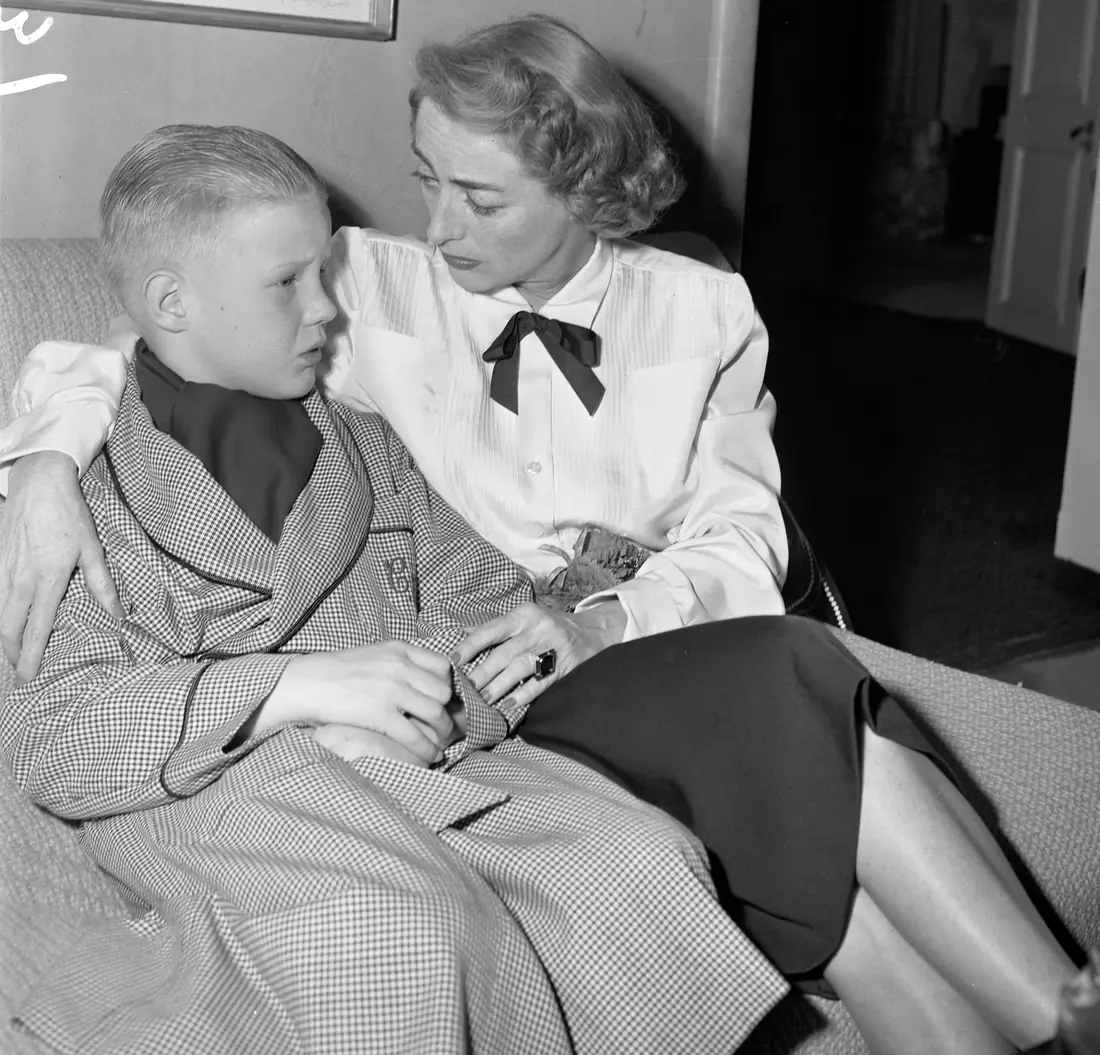
In November 1978 — after the objection was filed and eight months before it settled — Christina Crawford published Mommie Dearest, a memoir of her upbringing. It became a bestseller and, in 1981, a film. Members of the family and defenders of the estate disputed the account then and have disputed it since. This archive is not the place to referee that, and does not.
What matters here is narrower and entirely legal: the book is not evidence of anything the will did. The will was signed in 1976, two years before publication. The disinheritance clause had, by several accounts, appeared in Crawford's wills since the 1960s and been carried forward through each rewrite. Nothing in the probate file turns on the memoir.
That sequence is the opposite of what happened twelve years later with Bette Davis, whose daughter published a memoir in 1985 and was written out of a will signed after it. Same industry, same decade, two very different orders of operations — and the order matters, because a disinheritance that predates the grievance is much harder to characterise as anything other than deliberate.
Eleven words, two years, and a payment
Crawford's clause is often described as brutal. Legally it is something less interesting: incomplete. It names the two children, which is the part that works. It then gestures at a reason it declines to give, which is the part that does nothing at all.
A disinheritance clause has exactly one job — to prove the omission was intentional rather than an oversight, so nobody can later argue the testator forgot a child existed. Naming the child does that. Adding “for reasons which are well known to them” adds no legal weight, and it hands the omitted child a grievance to open with.
The estate spent roughly twenty-one months in a contested probate and paid $55,000 to end it. There is no version of this file in which those eleven words earned their keep.
Timeline
- 1940–1947Crawford adopts four children: Christina, Christopher, and twins Cathy and Cynthia.
- 1960sA clause disinheriting Christina and Christopher first appears in Crawford's will, and is carried forward through subsequent rewrites.
- Oct 28, 1976Crawford signs her last will: staged trusts of $77,500 each for Cathy and Cynthia, the residue in eight shares to six charities, and nothing for Christina or Christopher.
- May 10, 1977Crawford dies at her Manhattan apartment. The will goes to the Surrogate's Court, New York County.
- Oct 1977Christina and Christopher file an objection to probate alleging lack of capacity and undue influence. The objection is dated October 24; some reporting places the filing in November.
- Nov 1978Christina Crawford publishes Mommie Dearest. The account is disputed by others in the family. It postdates the will by two years.
- Jul 13, 1979The parties settle. Christina and Christopher receive $55,000 between them; the will is admitted and the charitable residue stands.
- 1981The film adaptation is released, fixing the phrase “Mommie Dearest” in the language and the estate fight in public memory.
What actually went wrong
- A reason withheld instead of a reason omitted. “For reasons which are well known to them” invites the reply “no they aren't.” Naming the child is the legal act; the editorial is pure downside.
- No contemporaneous capacity record. The objection led with pain and alcohol. A physician's letter or an attorney's memorandum from the day of signing costs almost nothing and answers that claim before it is made.
- Beneficiaries in the room. Alleging that a benefiting family member procured the will is the standard undue-influence theory. Keeping the people who inherit out of the drafting and the signing removes the allegation's foundation.
- No structure to absorb a challenge. Everything hung on one instrument. A funded revocable trust created years earlier, administered without a court, gives an objector far less to attack and no free forum to attack it in.
- A nominal gift was never considered. Crawford gave the two children exactly nothing, so they had nothing to lose by objecting. Whether a small bequest would have changed the calculus is unknowable — but in Florida, at least, the no-contest clause that usually enforces such a bargain is unenforceable anyway.
Would it have gone that way in Florida?
Same outcome — Florida lets you disinherit an adult child completely. It also gives that child a free shot at your will, and there is nothing you can put in the document to stop it.
Start with the part that surprises people: Florida has no forced share for children. A surviving spouse is protected — Fla. Stat. §732.2035 gives them an elective share of 30% of the elective estate, and that estate reaches revocable trusts, pay-on-death accounts, and joint property, so it is very hard to plan around. Adult children are protected by nothing. Crawford could have signed the same will in Sarasota and it would stand.
Adoption changes none of this in either direction. §732.108 makes an adopted child a descendant of the adopting parent for all purposes of intestate succession, and a stranger to the natural family. All four Crawford children were adopted; in Florida all four would have been her children in law, and two of them would still have received nothing, because being a child is not the same as having a claim.
The one statute that ever rescues an omitted child is §732.302, the pretermitted-child rule, and it is narrower than its reputation. It applies only to a child born or adopted after the will was executed, who is not provided for and not intentionally omitted. Crawford's children were adopted decades before the 1976 will and were named in it. Nothing to pretermit. This is exactly why a disinheritance clause names names — it forecloses the argument that the testator simply forgot.
Now the part Florida does differently, and it cuts against the estate. §732.517 makes a no-contest clause unenforceable — you cannot write a penalty for challenging your will, and §736.1108 says the same for trusts. In Florida the disinherited child may file, lose, and keep whatever you left them. So the usual American technique for buying peace — leave the child a meaningful sum, then threaten to take it away if they sue — simply does not function here.
That leaves the merits, and the merits are where Florida is genuinely sharp. §733.107(2) provides that once the presumption of undue influence arises, it shifts the burden of proof to the person who benefited — not just a burden to produce some evidence, but the burden of persuasion. The presumption is triggered by the Carpenter factors from In re Estate of Carpenter, 253 So. 2d 697 (Fla. 1971): a substantial beneficiary, in a confidential relationship, who was active in procuring the will — present at the signing, involved in selecting the lawyer, knowing the contents in advance, safekeeping the document. On the Crawford allegations, a Florida objector would have been aiming straight at that list.
The instruction: if you are disinheriting an adult child, do three things. Name the child in the document and say plainly that the omission is intentional — then stop; no reasons, no editorial, no “well known to them.” Keep every beneficiary out of the drafting, the lawyer selection, and the signing room. And create the plan while your capacity is beyond argument, then leave it alone — a document signed years before anyone was sick is worth more than any clause you could add to a document signed months before you died.
What people ask us about this.
Further reading
Third-party sites. Not ours, not endorsed, not kept current by us — just the places worth going next.
Sources
- The last will and testament of Joan Crawford — full text — joancrawfordbest.com
- 1977: Christina Crawford's contest of the will — christinacrawfordlied.com
- The Concluding Chapter of Crawford — 1977 and after — theconcludingchapterofcrawford.com
- Joan Crawford: the best of everything — Law Offices of DuPont and Blumenstiel
- Joan Crawford cut two of her kids from her will “for reasons they knew” — Cheat Sheet
- Christina Crawford — Wikipedia
- Joan Crawford — Wikipedia
- Fla. Stat. §733.107 — Burden of proof in contests; presumption of undue influence — The Florida Senate
If this is your situation
Free 30-minute consult. Plain English. No pressure.
Nearly every case in this archive turned on something ordinary — an unwitnessed page, a stale beneficiary line, a document nobody could find. Those are cheap to fix while you're alive and expensive to fix afterward.