Cryonics contracts
Cryonics is not a bequest and it is not a burial. It is a contract signed while you are alive, funded by a life insurance policy that names the organisation as beneficiary, with the long-term costs held in a separate trust. The legal problems are all in the paperwork.
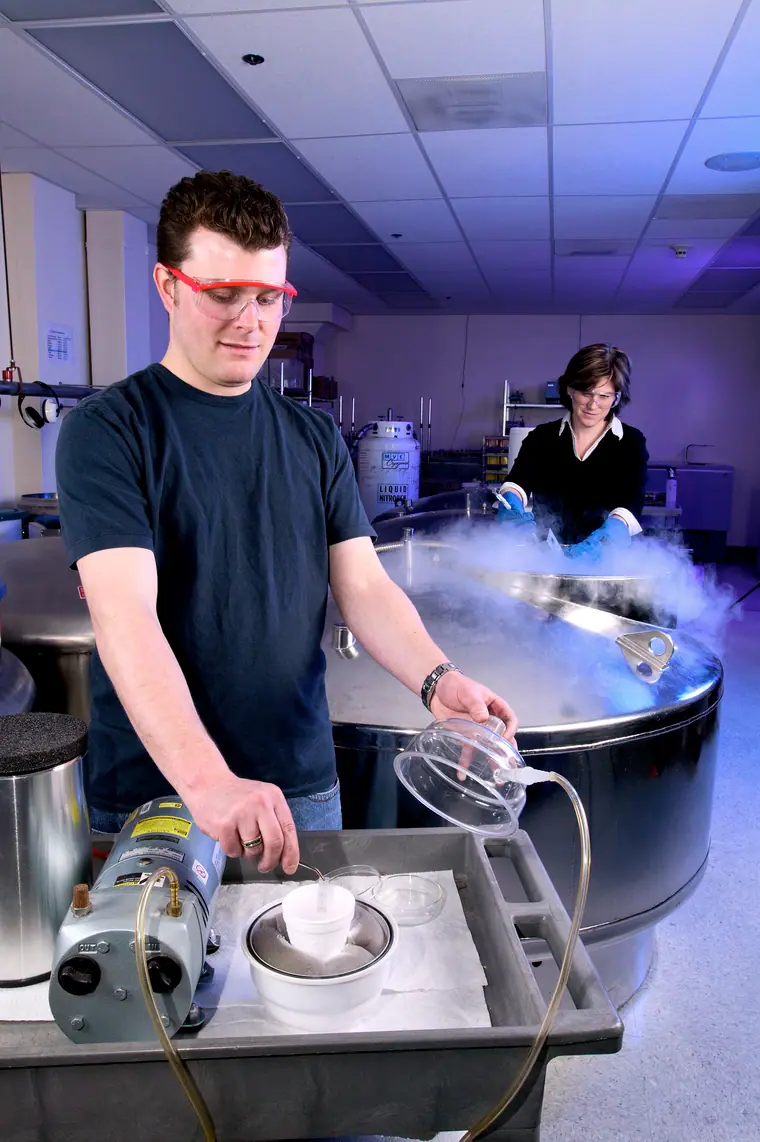
The mistake almost everyone makes about cryonics is to treat it as an instruction in a will. It is not, and it cannot be, for a reason that has nothing to do with science: a will is not read until after the moment when anything could be done. Probate takes weeks. Cryopreservation is a procedure measured in hours.
So the industry built something else. A cryonics arrangement in the United States is a bundle of three documents, executed while the member is alive and healthy, and none of them is a testamentary instrument.
First, a membership and cryopreservation agreement with the organisation — a contract, signed by a competent adult, setting out what will be attempted, what is not promised, and what happens if the organisation cannot perform. Second, a funding instrument, in practice almost always a life insurance policy naming the organisation as beneficiary, or prepayment. Third, a long-term care fund — Alcor holds it in a Patient Care Trust — because the storage obligation runs indefinitely and cannot be paid for out of a one-time procedure fee.
For the story of what happens when a family disagrees after the fact, the archive has a separate entry: Ted Williams. This one is about the documents.
What the two American organisations actually charge
The two long-established US organisations publish their requirements, and the difference between them is instructive.
- Alcor Life Extension Foundation (Scottsdale, Arizona) sets minimum funding of $200,000 for whole-body cryopreservation — allocated as $60,000 to the procedure, $25,000 to its CMS fund, and $115,000 to the Patient Care Trust — and $80,000 for neurocryopreservation, allocated $30,000, $25,000, and $25,000 respectively. Membership dues are age-based, calculated for 2025 by multiplying the member's age by an annual multiplier of $15. Alcor states that minimum funding requirements may change on 90 days' written notice.
- The Cryonics Institute (Michigan) offers lifetime membership at a $1,250 one-time fee with a cryopreservation cost of $28,000, or annual membership at a $200 initiation fee plus $120 a year with a cryopreservation cost of $35,000. A non-member post-mortem arrangement is $1,250 plus $45,000.
- Neither price includes getting there. The Cryonics Institute notes separately that its prices exclude local funeral director and shipping costs, ranging from nothing in Michigan to around $3,000 on the US west coast and more overseas, and that standby assistance ranges from $500 to $100,000 depending on distance and options.
- Both are funded the same way. The Cryonics Institute states plainly that fees and additional costs “are usually paid by life insurance policies that make the Cryonics Institute the beneficiary.”
The allocation is the part worth noticing. More than half of Alcor's whole-body minimum goes not to the procedure but into a trust for indefinite storage. That is an honest structure for an obligation with no end date, and it is the same problem — how do you fund a promise that outlives everyone who made it — that perpetual charitable trusts and pet trusts run into. It is a trust law question wearing a laboratory coat.
Has anyone ever enforced one?
The reported litigation has not been about compelling a reluctant family to honour a signed agreement. It has been about permits and permission, which turns out to be where the friction actually is.
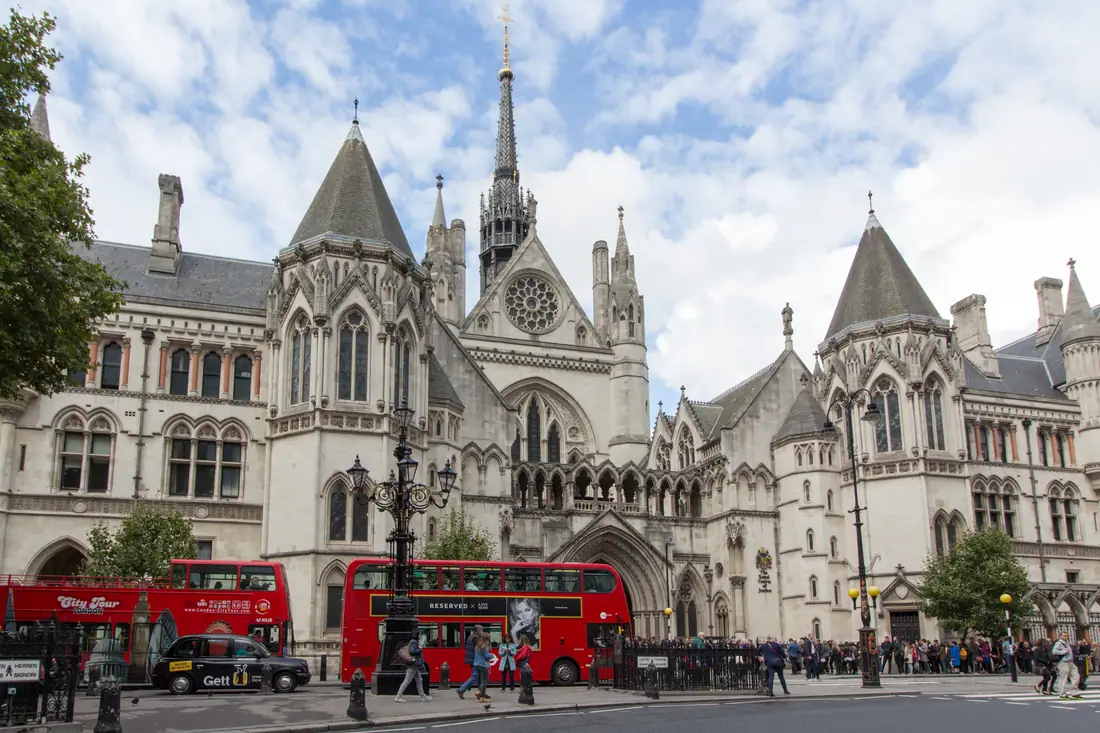
Alcor Life Extension Foundation, Inc. v. Mitchell, 7 Cal. App. 4th 1287, decided June 10, 1992, is the case to know. The California Department of Health Services had refused to issue death certificates and disposition permits for bodies passing to Alcor under the Uniform Anatomical Gift Act. California's Health and Safety Code identified three permissible dispositions for permit purposes — interment in a cemetery, cremation, and burial at sea — and the department had recognised “scientific use” under the UAGA as a fourth. It then issued a handbook instructing local registrars that cryonic suspension does not constitute “scientific use” within the meaning of the Act. The Court of Appeal affirmed an injunction against the department and compelled it to issue the certificates.
That is the whole American legal foundation, and it is narrower than it sounds: a state agency was told it could not, by handbook, write cryonics out of a statute. It is not a holding that a cryonics contract is specifically enforceable.
Re JS (Disposal of Body) [2016] EWHC 2859 (Fam), decided 10 November 2016 by Mr Justice Peter Jackson, is the other landmark and comes from England. JS was a 14-year-old girl with a terminal illness who wished to be cryopreserved. Her parents were divorced; her mother supported her wish, and her father — who had not had face-to-face contact with her since 2008 — initially opposed it and later agreed subject to conditions. Because a child cannot make a will, and because the dispute was between the people who would otherwise decide, the court used a specific issue order under the Children Act to determine who could make arrangements for the disposal of her body. The court made the order in favour of the mother. JS died shortly afterwards.
Peter Jackson J was careful to say what the court was and was not deciding: not whether cryonics works, and not whether it should be permitted, but who decides. That framing is exactly right and is the one American probate courts would use as well.
Regulation, meanwhile, has arrived sideways rather than by statute. Michigan ultimately licensed and regulated the Cryonics Institute as a cemetery — a category that fits imperfectly, and which exists because there was no better one.
What a Florida resident would actually have to do
Florida has no cryonics statute. It has a disposition-of-remains hierarchy, a licensing chapter for everyone who handles a body, a permit requirement for moving one, and an anatomical gift act — and a Florida arrangement has to satisfy all four, in the right order, in the first day.
The single most important provision is §497.005, which defines the legally authorized person who may direct the disposition of remains. The decedent's own written directions rank first. That is the sentence a Florida cryonics member is relying on, and it is the reason the paperwork must be signed, findable, and unambiguous — not stored in a safe deposit box that opens after a court order.
Then the practical chain. Under §382.006, a burial-transit permit is issued by the department or the local registrar of the district where the death occurred, must generally be obtained before final disposition, and must accompany the body when it is transported to a point outside the state. It cannot issue until a complete and satisfactory death certificate is filed, with narrow hardship exceptions. Since neither American cryonics organisation is in Florida, every Florida case is an out-of-state transport case.
Layer on Chapter 406 where it applies: if the death falls within a category requiring the district medical examiner's involvement, the examiner's jurisdiction comes first and nothing moves until it is released. And Chapter 497 licenses funeral establishments, direct disposers, and removal services — so the person who takes custody in Florida is a licensee, whoever the member has contracted with elsewhere.
Timeline
- 1962Robert Ettinger publishes The Prospect of Immortality, which introduces the idea to a general audience.
- 1972Fred and Linda Chamberlain found the organisation in California that becomes the Alcor Life Extension Foundation.
- Apr 4, 1976Robert Ettinger founds the Cryonics Institute near Detroit, Michigan.
- Jun 10, 1992Alcor Life Extension Foundation, Inc. v. Mitchell, 7 Cal. App. 4th 1287: the California Court of Appeal affirms an injunction compelling the Department of Health Services to issue death and disposition certificates.
- 1994Alcor relocates from California to Scottsdale, Arizona.
- 2000sFollowing publicity around an unrelated case, Michigan regulators move against and then license the Cryonics Institute as a cemetery — the closest existing category.
- Nov 10, 2016Re JS (Disposal of Body) [2016] EWHC 2859 (Fam): Peter Jackson J makes a specific issue order allowing a 14-year-old girl's mother to arrange her cryopreservation. The court decides who decides, not whether it works.
- Jul 1, 2022Florida's statutory rule against perpetuities period extends to 1,000 years for trusts created on or after this date — the outer limit for any Florida trust designed to outlast the settlor by centuries.
What actually went wrong
- The instruction was put in the will. A will is read after probate opens. Cryopreservation has to begin within hours. The instruction has to be in a document that is findable and effective immediately — in Florida, written directions under §497.005.
- The funding was left to the estate. An estate pays creditors first, pays late, and can be contested. A life insurance policy naming the organisation as beneficiary pays directly and outside probate — which is why every organisation asks for one.
- Nobody told the family, or the doctor, or the hospital. The people who need the document are the ones present at the moment of death, and none of them will be reading the will.
- The long-term cost was ignored. Storage is an indefinite obligation. Alcor's structure sends more than half its whole-body minimum to a Patient Care Trust for exactly that reason; an arrangement that funds only the procedure is funding the first day of a permanent commitment.
- The transport chain was never checked. In Florida a burial-transit permit under §382.006 must accompany a body out of the state, and it cannot issue until the death certificate is filed. If the medical examiner has jurisdiction under Chapter 406, nothing moves until release.
Would it have gone that way in Florida?
Legal to arrange, and entirely dependent on documents that operate before probate. Florida's §497.005 puts your own written directions first — but only if the people in the room can find them within hours.
Start with who decides. Fla. Stat. §497.005 defines the legally authorized person entitled to direct the disposition of remains, and the decedent's own written directions rank first in that hierarchy. Everything else in a Florida cryonics arrangement depends on that one placement. Written directions that exist and are produced beat a family member's contrary preference; written directions locked in a bank box do not, because they will not be produced in time.
Then the licensed chain. Chapter 497 licenses funeral establishments, direct disposers, and removal services in Florida, so whoever takes custody must be a Florida licensee coordinating with the out-of-state organisation. §382.006 requires a burial-transit permit issued by the department or the local registrar of the district where the death occurred; it must be obtained before final disposition and must accompany the body when transported outside Florida, and it cannot issue until a complete death certificate is filed. Chapter 406 governs where the district medical examiner has jurisdiction; in those cases nothing happens until the examiner releases the body, which is the single most common reason a time-sensitive plan fails.
Then the anatomical gift question, which is genuinely unsettled. Alcor v. Mitchell was decided under California's Uniform Anatomical Gift Act, and Florida has its own version in Chapter 765, Part V — a framework built around gifts for transplantation, therapy, research, and education, with §765.513 setting out permitted donees and purposes. Whether a cryonics organisation fits within that framework is not a question a Florida court has answered. A Florida arrangement should therefore rest primarily on §497.005 written directions rather than on an anatomical gift theory.
Then the money, and here Florida is helpful. §222.13 keeps life insurance proceeds with the named beneficiary and out of the reach of the insured's creditors — unless the estate is named as beneficiary, in which case the proceeds fall into probate. So the organisation, not the estate, should be the named beneficiary, and the designation should be checked after every divorce, remarriage, or policy replacement, because a stale beneficiary form is the most common single point of failure in this entire structure.
And the very long horizon. §689.225, Florida's statutory rule against perpetuities, permits a 1,000-year period for trusts created on or after July 1, 2022 (360 years for trusts created between 2000 and that date). Florida is therefore one of the few states where a trust intended to hold assets for a person who may or may not be revived can be drafted with a horizon that matches the premise. The limits are elsewhere: §736.0404 requires that a trust's purposes be lawful, possible to achieve, and not contrary to public policy, and a court retains authority to modify or terminate trusts under §736.04113 and §736.04115. A “revival trust” is a real drafting exercise, not a fantasy — and also not a guarantee.
What to actually do, in this order. (1) Sign the organisation's membership and cryopreservation agreement, and sign separate written directions for disposition of your remains naming it, so §497.005 puts you first. (2) Fund it with a life insurance policy naming the organisation as beneficiary — never your estate — and verify the designation with the insurer in writing. (3) Give copies to your health care surrogate, your personal representative, and your primary physician, and carry the organisation's card. (4) Tell your family before it matters; Re JS is a case about a family that disagreed, and the court's job was to decide who decides. (5) Ask the organisation, in writing, what happens to your funding if it ceases operations — the trust behind the promise is the part of the arrangement that has to outlive everybody.
What people ask us about this.
Further reading
Third-party sites. Not ours, not endorsed, not kept current by us — just the places worth going next.
Sources
- Alcor Life Extension Foundation, Inc. v. Mitchell, 7 Cal. App. 4th 1287 (1992) — Justia — California Court of Appeal
- JS (Disposal of Body), Re [2016] EWHC 2859 (Fam) — BAILII — High Court of Justice, Family Division
- Required costs and cryopreservation funding minimums — Alcor / Cryonics Archive
- Membership dues and pricing — Alcor Life Extension Foundation
- Membership options and cryopreservation costs — The Cryonics Institute
- Teenage girl wins battle to have body frozen — CNN, Nov 2016
- Fla. Stat. §497.005 — definitions, legally authorized person — The Florida Senate
- Fla. Stat. §382.006 — Burial-transit permit — The Florida Senate
If this is your situation
Free 30-minute consult. Plain English. No pressure.
Nearly every case in this archive turned on something ordinary — an unwitnessed page, a stale beneficiary line, a document nobody could find. Those are cheap to fix while you're alive and expensive to fix afterward.