Dale Earnhardt
He died on the last lap of the 2001 Daytona 500. Within six weeks his widow had gone to a Volusia County courtroom, then to the Florida Legislature, and Florida had a new public-records law with his family's name on it. It still governs every death in the state.
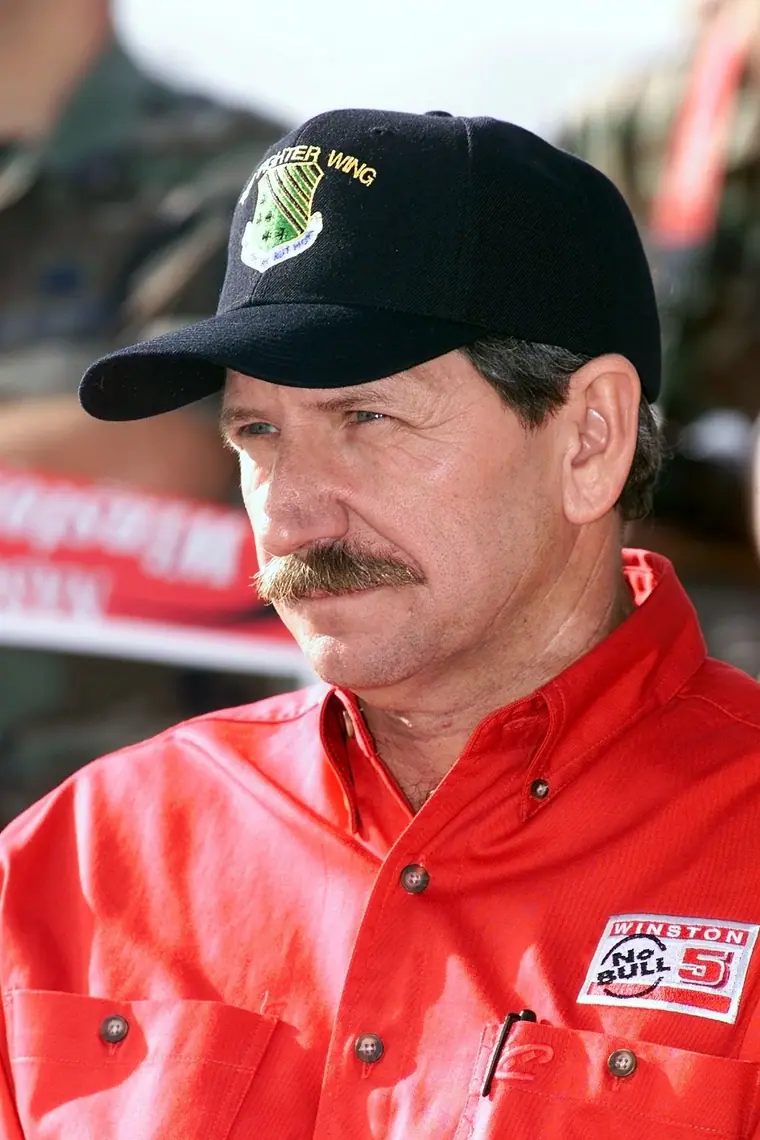
Dale Earnhardt was killed on February 18, 2001, in a crash in the final turn of the final lap of the Daytona 500. He was 49. He had won seven Winston Cup championships and had finally won the Daytona 500 itself in 1998, on his twentieth attempt.
Because it was an accidental death in Florida, the medical examiner for Volusia County performed an autopsy the next day. Thirty-three photographs were taken by an assistant medical examiner. That is routine, and under Florida law as it then stood, those photographs were public records.
What happened over the next five weeks is one of the fastest, most consequential pieces of lawmaking in modern Florida history — and it happened not over money, not over a will, but over images.
A newspaper, a widow, and a Volusia County injunction
The dispute began with a genuine safety question, which is worth stating clearly because it explains why serious journalists wanted the photographs.
A NASCAR-retained physician had reviewed the autopsy images and offered a public account of how Earnhardt died. The Orlando Sentinel wanted an independent expert to look at the same images and say whether the fatal basilar skull fracture came from an impact with the steering column or from the head whipping forward — a distinction with direct consequences for whether head-and-neck restraints should be mandatory in the sport. Four drivers had died of similar injuries in the preceding months.
Teresa Earnhardt, his widow, filed suit in Volusia County to stop the medical examiner from releasing the photographs. The Sentinel intervened to assert its access rights under Florida's public-records law.
They settled. Under the agreement, a court-appointed independent expert would examine the images before they were sealed permanently, and the newspaper could question him on the cause of death. The mediator selected Dr. Barry S. Myers, a Duke University physician with a degree in mechanical engineering who specialized in neck-injury research. Myers spent about two hours at the Volusia County medical examiner's office with slides, digital images, and the reports. On April 10, 2001, he reported that the fatal fracture resulted from the head whipping forward rather than from contact with the steering column.
The newspaper got its answer. The public never saw the photographs. That is, in retrospect, a fairly elegant outcome — and it was already obsolete by the time it happened, because the Legislature had moved faster.

Five weeks from crash to law
The bill moved through the 2001 session at a speed that is essentially unheard of. It cleared the Senate unanimously. Governor Jeb Bush signed it on March 29, 2001, with Teresa Earnhardt standing beside him. It became Chapter 2001-1, Laws of Florida — the first act of that session — and is codified as Fla. Stat. §406.135.
The Legislature made a formal finding of public necessity: that photographs and video and audio recordings of an autopsy be made confidential and exempt from §119.07(1) and from Article I, §24(a) of the Florida Constitution, the state's constitutional right of access to public records.
What the statute does:
- Autopsy photographs and video and audio recordings are confidential and exempt from the public-records law. The written autopsy report is not — it stays public.
- A surviving spouse may view and copy them. If there is no spouse, surviving parents. If neither, adult children.
- Anyone else needs a court order on a showing of good cause. The court must weigh whether disclosure is necessary for public evaluation of governmental performance, whether it is the least intrusive means available, and whether comparable information exists in other public records.
- Willful and knowing violation is a third-degree felony.
It applies to everyone. That is the part people miss when they hear the nickname. The Earnhardt Family Protection Act protects the family of every person who dies in Florida, famous or not, and it was drafted that way from the start.
Campus Communications v. Earnhardt
The statute was tested almost immediately, and by a student newspaper.
Campus Communications, Inc., which publishes the Independent Florida Alligator at the University of Florida, argued that §406.135 was unconstitutionally overbroad and could not be applied retroactively to a records request made before it was enacted.
On July 12, 2002, the Fifth District Court of Appeal rejected both arguments in Campus Communications, Inc. v. Earnhardt, 821 So. 2d 388 (Fla. 5th DCA 2002). On overbreadth, the court held the exemption narrow: it reaches photographs and recordings only, not the written report, and the good-cause mechanism preserves access where it is genuinely needed. On retroactivity, the court held the statute remedial in nature and directed at a legitimate public necessity, and held that the right to inspect public records is a public right subject to legislative exemption — not a private vested right that attaches to whoever filed the request first.
The Fifth District certified the questions to the Supreme Court of Florida. In July 2003, the court declined to take the case, 4–3. The Fifth District's decision stands. The photographs remain sealed.
The law outlived the case
Twenty-five years on, §406.135 is invoked constantly, almost always for people no one has heard of. When it does surface publicly, the pattern is identical.
In February 2022, after Bob Saget was found dead in an Orlando hotel room, his wife and three daughters filed suit in Orange County to block release of photographs, video, audio, and autopsy information gathered by the sheriff's office and the medical examiner. Circuit Judge Vincent Chiu granted a temporary injunction on February 16, 2022, finding the family would suffer severe mental anguish otherwise, and made the seal permanent the following month.
There is a second Earnhardt afterlife worth noting, and it belongs to a different body of law. In Earnhardt v. Kerry Earnhardt, Inc. (Fed. Cir., July 27, 2017), Teresa Earnhardt opposed registration of the mark EARNHARDT COLLECTION by a company co-founded by Kerry Earnhardt, Dale Earnhardt's son. The Federal Circuit vacated the Trademark Trial and Appeal Board's ruling and remanded for a closer analysis of whether the mark is primarily merely a surname.
A name, it turns out, is an asset. So is a likeness. Both survive the person, both are governed by rules that have nothing to do with a will, and both are the sort of thing families end up litigating for decades.
Timeline
- Feb 18, 2001Dale Earnhardt is killed in a crash on the final lap of the Daytona 500. He is 49.
- Feb 19, 2001The Volusia County medical examiner performs the autopsy required for an accidental death. Thirty-three photographs are taken.
- Feb 2001Teresa Earnhardt sues in Volusia County to block release of the photographs. The Orlando Sentinel intervenes asserting public-records rights.
- Mar 2001The parties settle: a court-appointed independent expert may examine the images before they are sealed. Dr. Barry S. Myers of Duke is selected.
- Mar 29, 2001Governor Jeb Bush signs the Earnhardt Family Protection Act — Ch. 2001-1, Laws of Florida — with Teresa Earnhardt present. It becomes Fla. Stat. §406.135.
- Apr 10, 2001Myers reports that the fatal basilar skull fracture resulted from the head whipping forward, not from impact with the steering column.
- Jul 12, 2002The Fifth DCA upholds §406.135 in Campus Communications, Inc. v. Earnhardt, 821 So. 2d 388, and certifies the questions to the Supreme Court of Florida.
- Jul 2003The Supreme Court of Florida declines review, 4–3. The photographs stay sealed.
- Feb–Mar 2022Bob Saget's wife and daughters obtain a temporary and then permanent injunction in Orange County sealing photographs, recordings, and autopsy information relating to his death.
What actually went wrong
- No written direction from the decedent. Everything in this fight was decided by other people, in court, about a person who had left no instructions on the point. Florida gives the decedent's own written wishes first priority on disposition of remains — but only if they exist.
- A public-records default nobody had thought about. Until March 29, 2001, autopsy photographs of every Florida decedent were open records available to anyone who asked. Most families learn this the week it matters.
- A safety question and a privacy question tangled together. The Sentinel's interest was not prurient; four drivers had died of similar injuries. The settlement solved that. The statute, passed in parallel, went much further and permanently.
- A permanent constitutional exemption enacted in five weeks. The speed is the point of the story either way — as proof that Florida can act when a family is harmed, or as a caution about legislating at peak emotion. The Fifth DCA held it constitutional; three justices of the Supreme Court wanted to hear the question.
Would it have gone that way in Florida?
This IS the Florida rule — and it is the only statute in this archive named after the family that produced it.
Fla. Stat. §406.135 makes autopsy photographs and video and audio recordings confidential and exempt from Florida's public-records law. The written autopsy report remains public. That distinction does most of the work: the cause of death stays available for scrutiny; the images do not.
Access runs in a fixed order. A surviving spouse may view and copy. If there is no spouse, surviving parents. If neither, adult children. A government agency may obtain them for official purposes on written request. Anyone else must get a court order, and the court must find good cause after weighing whether disclosure is necessary for public evaluation of governmental performance, whether it is the least intrusive means, and whether the same information is available elsewhere. Willful and knowing violation is a third-degree felony.
The statute survived constitutional attack in Campus Communications, Inc. v. Earnhardt, 821 So. 2d 388 (Fla. 5th DCA 2002), against claims of overbreadth and improper retroactive application, and the Supreme Court of Florida declined review in 2003.
Now the part a planning client can actually use. Florida answers the other death-and-dignity questions with different statutes, and the theme running through all of them is the same: your own writing outranks everyone else's opinion.
Under §497.005, the person authorized to direct the disposition of your remains is determined by a statutory ranking — and the decedent's own written directions rank first, ahead of a spouse, an adult child, or a parent. Under Chapter 765, a designated health care surrogate and an advance directive control medical decisions and can address anatomical gifts. Under §540.08, Florida protects the commercial use of your name, portrait, or likeness for 40 years after death, enforceable by a surviving spouse, children, or a person to whom you assigned the right — which is why a name like Earnhardt is a probate asset and not merely a memory.
The honest caveat on §406.135: it protects images, not information. A written autopsy report, a death certificate's cause-of-death line, and a sheriff's investigative narrative may still become public. If total privacy is what a family wants, no Florida statute delivers it.
The practical instruction: put your wishes for your body, your funeral, and your remains in a separate signed writing that names the person you want to carry them out, and give a copy to that person now. Do not bury it in the will. A will is frequently not read until well after the funeral, which is precisely too late for the only decisions that cannot be undone.
What people ask us about this.

Further reading
Third-party sites. Not ours, not endorsed, not kept current by us — just the places worth going next.
Sources
- Florida Supreme Court allows Earnhardt's autopsy photos to remain sealed — Student Press Law Center, Jul 2003
- Earnhardt's autopsy photos stay sealed — Student Press Law Center, Aug 2003
- Earnhardt law reverses access to open records — Reporters Committee for Freedom of the Press, Spring 2001
- Campus Communications, Inc. v. Earnhardt, 821 So. 2d 388 (Fla. 5th DCA 2002) — FindLaw Caselaw, Jul 12 2002
- The Earnhardt Family Protection Act's impact on confidentiality — Pumphrey Law Firm
- Expert views Earnhardt autopsy photos — CBC News, 2001
- Earnhardt v. Kerry Earnhardt, Inc., No. 16-1939 (Fed. Cir. 2017) — Justia, Jul 27 2017
- Judge grants permanent block of records in Bob Saget death — News 6 / ClickOrlando, Mar 14 2022
- Fla. Stat. §406.135 — The Florida Senate
If this is your situation
Free 30-minute consult. Plain English. No pressure.
Nearly every case in this archive turned on something ordinary — an unwitnessed page, a stale beneficiary line, a document nobody could find. Those are cheap to fix while you're alive and expensive to fix afterward.