Elvis & Lisa Marie Presley
A one-page amendment nobody witnessed removed Elvis's widow as trustee of his daughter's trust — and spelled her name wrong. Eleven months after the settlement, a stranger published a notice in a Memphis paper announcing the foreclosure sale of Graceland.
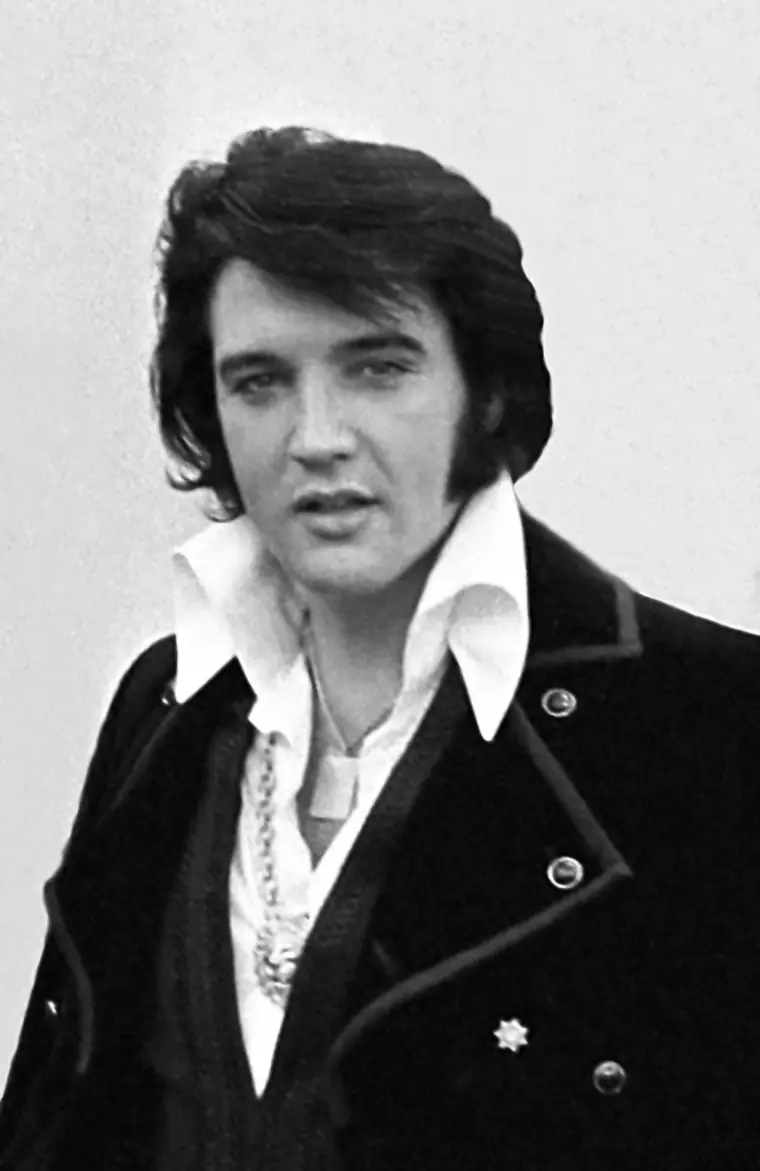
Elvis Presley died at Graceland on August 16, 1977. His will named his father, Vernon Presley, as executor and trustee, and left everything in trust for three people: his grandmother Minnie Mae, his father, and his only child, Lisa Marie, who was nine. She would take the estate outright on her twenty-fifth birthday.
That birthday came on February 1, 1993. The estate had been managed in the interim — largely under Priscilla Presley's direction — and had grown from a struggling inheritance into a nine-figure business. Lisa Marie promptly put her interest into a revocable trust of her own: the Promenade Trust, with Priscilla Presley and business manager Barry Siegel as co-trustees.
For twenty-three years, nothing about that arrangement was in dispute. Then Lisa Marie died on January 12, 2023, at 54. The Los Angeles County medical examiner attributed the death to a small bowel obstruction, a consequence of earlier bariatric surgery.
And a document dated 2016 surfaced that nobody outside the household appeared to have seen.
One page, no notary, one misspelling
The 2016 document removed Priscilla Presley and Barry Siegel as successor co-trustees of the Promenade Trust and named Lisa Marie's two eldest children — Riley Keough and Benjamin Keough — in their place. Benjamin Keough died in July 2020, which left Riley Keough as the only surviving successor trustee the document named.
In late January 2023, Priscilla Presley filed a petition in Los Angeles County Superior Court asking the court to hold the 2016 amendment invalid. The petition raised the kind of grounds that sound trivial until a judge has to weigh them:
- It was never delivered. The trust's own terms required that an amendment be delivered to the trustee during the settlor's lifetime. The petition alleged that never happened.
- No original. Only a copy was produced.
- No notary, no witnesses. California does not require either for a trust amendment, which is precisely why the absence of both leaves nothing to authenticate.
- Her name was misspelled on a document removing her.
- The signature was inconsistent with Lisa Marie's other signatures, the petition alleged.
None of those allegations was ever tested. There was no trial and no finding that the document was or was not genuine — a distinction worth holding onto, because a settlement is not a verdict.
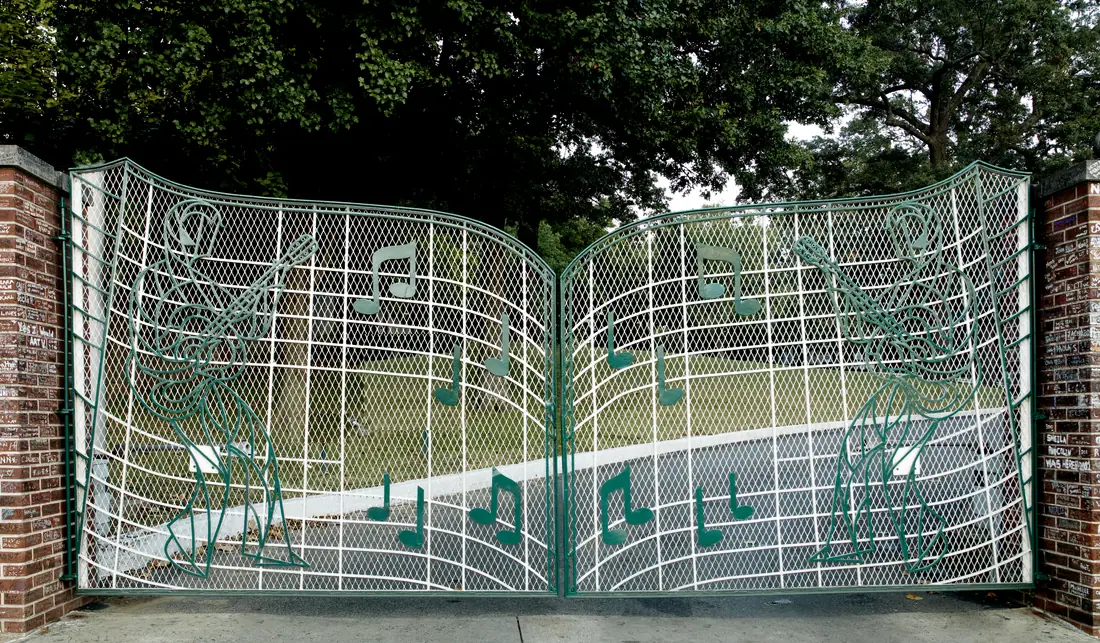
May 2023, approved that October
The parties reached terms in May 2023, four months after the death. Riley Keough became sole trustee of the Promenade Trust. Judge Lynn Scaduto of Los Angeles County Superior Court approved the agreement on October 30, 2023.
The reported terms were straightforward and unusually humane for a case that had been running in the tabloids:
- A $1 million lump sum to Priscilla Presley, funded from a $25 million life insurance policy.
- $100,000 a year for a non-fiduciary role as special adviser to the trust.
- Up to $400,000 of her legal fees.
- A confirmed right to be buried in the Meditation Garden at Graceland, near Elvis.
That last term is the one estate lawyers notice. A burial place is not an asset, cannot be valued, and is frequently the thing a family will spend six figures fighting about. Writing it into the deal is how a settlement actually ends a dispute rather than pausing it.
Nine months of litigation, resolved. Which brings us to the part nobody planned for.
A notice in a Memphis newspaper
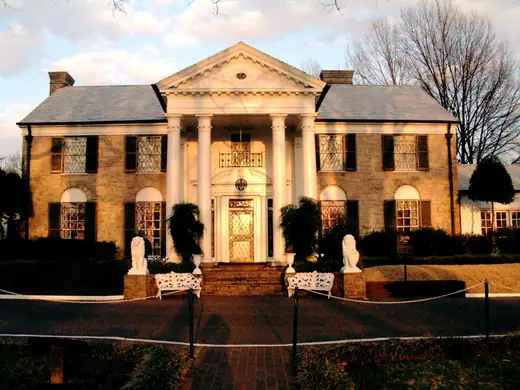
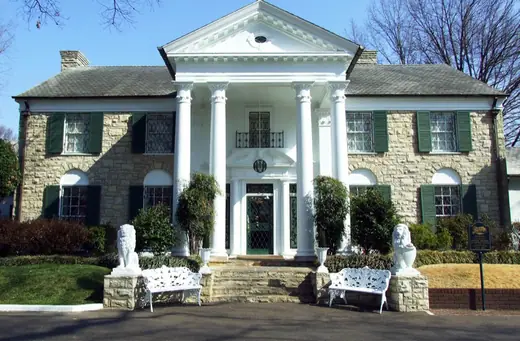
In May 2024 a public notice appeared in a Memphis paper announcing a foreclosure auction of the thirteen-acre Graceland property. It stated that the Promenade Trust had borrowed $3.8 million in 2018 from an entity called Naussany Investments and Private Lending LLC, pledging Graceland as collateral, and had defaulted. The filings gave the lender a Florida address.
No such loan existed. The documents were fabricated.
Riley Keough sued in Shelby County Chancery Court. On May 22, 2024 — the day before the scheduled auction — Chancellor JoeDae Jenkins entered a temporary injunction blocking the sale, keeping in place a restraining order already obtained. Within a day, someone purporting to represent the entity announced it was dropping the claim.
In August 2024 federal prosecutors in the Western District of Tennessee charged Lisa Jeanine Findley of Kimberling City, Missouri. In February 2025 she pleaded guilty to mail fraud; an aggravated identity theft count was dismissed under the plea agreement. On September 23, 2025, U.S. District Judge John T. Fowlkes Jr. sentenced her to 57 months in prison and three years of supervised release. Prosecutors described a scheme in which she posed as three different people connected to the fictitious lender, fabricated loan documents, and demanded a $2.85 million settlement to make the foreclosure go away.
Two fights, one lesson
The two episodes look unrelated. They are the same problem seen twice: a document nobody could immediately authenticate.
In 2023 it was an amendment with no witness, no notary, no original, and no delivery — a page that might have been exactly what Lisa Marie wanted and could not be proved to be. In 2024 it was a deed of trust that was simply invented, and it got as far as a published auction notice before anyone stopped it.
Graceland has been owned through trusts since 1977 and open to the public since 1982. Riley Keough remains trustee of the Promenade Trust. The estate is intact. It cost a nine-month court fight, a settlement funded by life insurance, an emergency injunction, and a federal prosecution to keep it that way.
Timeline
- Aug 16, 1977Elvis Presley dies at Graceland. His will names his father Vernon Presley executor and trustee, with Lisa Marie the ultimate beneficiary at 25.
- Feb 1, 1993Lisa Marie Presley turns 25 and inherits. She places her interest in the Promenade Trust, naming Priscilla Presley and Barry Siegel co-trustees.
- 2016A document dated 2016 removes Priscilla Presley and Siegel as successor co-trustees and names Riley and Benjamin Keough.
- Jul 2020Benjamin Keough dies, leaving Riley Keough as the only surviving successor trustee named in the 2016 document.
- Jan 12, 2023Lisa Marie Presley dies at 54. The medical examiner attributes the death to a small bowel obstruction following earlier bariatric surgery.
- Late Jan 2023Priscilla Presley petitions Los Angeles County Superior Court to invalidate the 2016 amendment — no delivery, no original, no notary, misspelled name, questioned signature.
- May 2023The parties settle. Riley Keough becomes sole trustee of the Promenade Trust.
- Oct 30, 2023Judge Lynn Scaduto approves the settlement: $1M lump sum, $100,000 a year as special adviser, up to $400,000 in fees, and burial rights in the Meditation Garden.
- May 22, 2024Shelby County Chancellor JoeDae Jenkins blocks the Graceland foreclosure auction scheduled for the next day, after Riley Keough sues.
- Sep 23, 2025Lisa Jeanine Findley, who pleaded guilty to mail fraud in February 2025, is sentenced to 57 months in federal prison.
What actually went wrong
- An amendment that could not authenticate itself. No witnesses, no notary, no original, and no delivery to the trustee the trust required it be delivered to. Every one of those is a five-minute step.
- Nobody was told. A trustee who learns she has been removed only after the settlor's death has no way to ask the settlor about it — and every reason to ask a court.
- A misspelled name on a legal instrument. Trivial in isolation. Corroborating in a stack of other irregularities. Proofreading is a legal control.
- No trust protector, no neutral. There was no named third party with authority to confirm an amendment or resolve a trustee dispute without a courthouse.
- A famous, identifiable, unencumbered property. Graceland's fame is exactly what made a fabricated lien plausible enough to publish. Title monitoring is cheap; an emergency injunction is not.
Would it have gone that way in Florida?
Different question entirely. Florida asks whether the amendment followed the trust's own instructions — and, for anything testamentary, whether two witnesses watched.
California lets you amend a revocable trust with a signature and nothing else. No witnesses, no notary, no filing. That is why Priscilla Presley's petition had to attack delivery, spelling, and handwriting — there was no execution formality to point at, because California does not impose one.
Florida does. Two of them.
First, Fla. Stat. §736.0602(3)(a): a settlor revokes or amends a revocable trust by substantial compliance with a method provided in the terms of the trust. If the Promenade Trust said an amendment must be delivered to the trustee during the settlor's lifetime, that is not a technicality in Florida — that is the statute's own test, and failing it is the end of the analysis. Only where the trust specifies no method does §736.0602(3)(b) open the door to a later will or any other method showing the settlor's intent by clear and convincing evidence.
Second, and this is the Florida rule out-of-state lawyers regularly miss: Fla. Stat. §736.0403(2)(b) provides that the testamentary aspects of a revocable trust — the provisions disposing of trust property at or after the settlor's death to anyone other than the settlor's estate — executed by a Florida domiciliary are invalid unless executed with the formalities required for a will. That means signed at the end before two attesting witnesses under §732.502. An unwitnessed page changing who inherits from a Florida trust is not a weak amendment. It is not an amendment.
The honest caveat: the 2016 document changed trustees, not beneficiaries, and a trustee-succession clause is generally not a testamentary disposition. So §736.0403(2)(b) would not automatically void it. §736.0602(3)(a) would still be the fight — and in Florida that fight is about the trust's own words rather than about handwriting experts.
Two more Florida provisions would have changed the temperature. §736.0813 imposes a duty on a trustee to keep qualified beneficiaries reasonably informed, which is the structural answer to a family learning about a change only at a funeral. And §736.1108 makes no-contest clauses unenforceable in Florida trusts — so a Florida beneficiary who thinks a document is wrong can say so in court without forfeiting anything. Florida would rather have the question asked than have it suppressed.
The practical instruction: amend your trust the way your trust tells you to. Read the amendment clause before you sign anything, sign in front of two witnesses and a notary even where the state does not demand it, keep the original somewhere a successor trustee can find it, and hand a copy to the person you are removing. Every one of the five defects alleged in this case is preventable in a single afternoon.
What people ask us about this.
Does a Florida trust amendment need witnesses?+−
My trust says amendments must be delivered to the trustee. Does that actually matter?+−
Can I be disinherited for challenging a trust in Florida?+−
Can someone foreclose on Florida property with fake loan documents?+−
Can I put my burial wishes in a legally binding form?+−
Further reading
Third-party sites. Not ours, not endorsed, not kept current by us — just the places worth going next.
Sources
- Lisa Marie Presley's trust papers challenged by mother Priscilla Presley — NBC News, Jan 2023
- Priscilla Presley's challenge to daughter Lisa Marie's living trust — University of Washington School of Law, 2023
- Priscilla Presley's settlement with Riley Keough approved by judge — Rolling Stone, Oct 2023
- Lisa Marie Presley estate settlement approved by judge — CNN, Oct 31 2023
- Graceland foreclosure sale halted as Presley estate's lawsuit moves forward — Associated Press via Baltimore Sun, May 22 2024
- Woman who tried to sell Elvis Presley's Graceland sentenced to over 4 years in federal prison — CBS News, Sep 2025
- Missouri woman is sentenced in brazen and blundering attempt to steal Graceland — NBC News, Sep 2025
- Missouri woman sentenced in scheme to fraudulently foreclose on Graceland — US Attorney's Office, W.D. Tenn., Sep 2025
- The estate of Elvis Presley / the Elvis Presley Trust — Graceland
If this is your situation
Intake reopens late October 2026. The archive stays free.
Nearly every case in this archive turned on something ordinary — an unwitnessed page, a stale beneficiary line, a document nobody could find. Those are cheap to fix while you're alive and expensive to fix afterward.