Presidential papers
For nearly two centuries a president's papers were his personal property, to keep, sell, seal, or burn. A widow with a furnace, a son with a safe, and one former president with 3,700 hours of tape changed that — and it took an Act of Congress and $18 million to finish the argument.
Every estate has one asset nobody knows how to value: the paper. The letters, the diaries, the drafts, the recordings, the things the decedent said in private about people who are still alive.
For most families that asset is worth nothing and causes half the fighting. For presidents it was worth a great deal, and for 190 years the law's answer was startlingly simple: the papers belonged to the president personally. He could take them home. He could sell them. He could seal them for a century. He could put them in a furnace. Nobody had a legal right to stop him, and after he died, the decision passed to whoever inherited.
It took a widow, a son, a break-in, and a resignation to change that.
What actually happened to the papers, and what people say happened
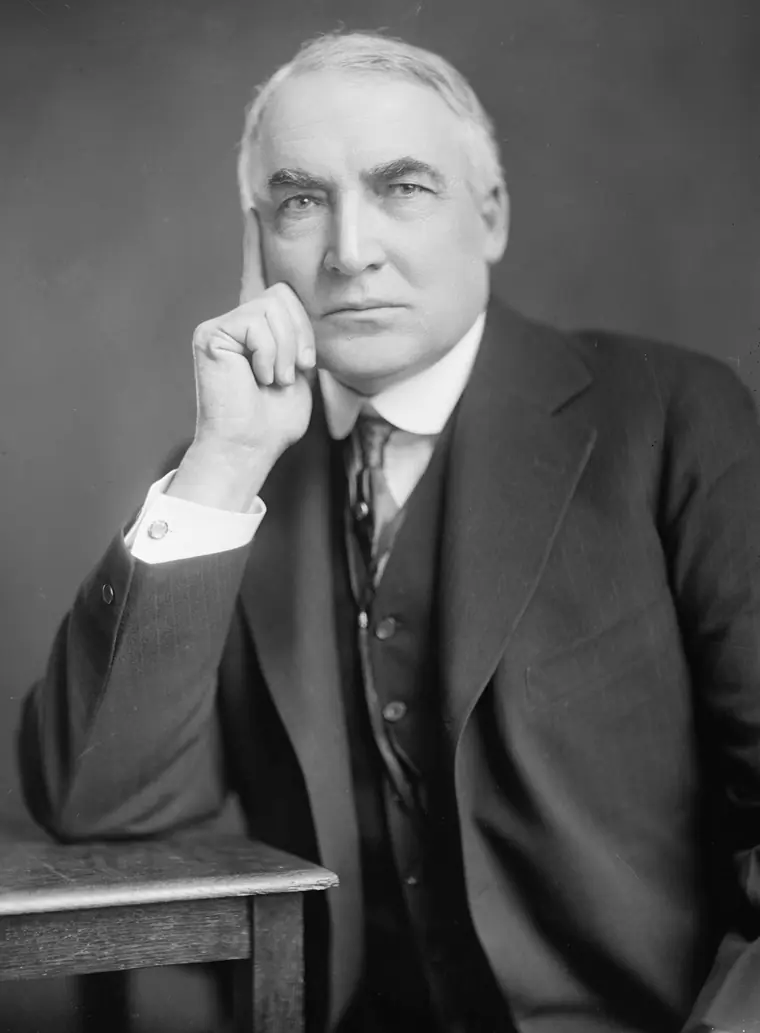
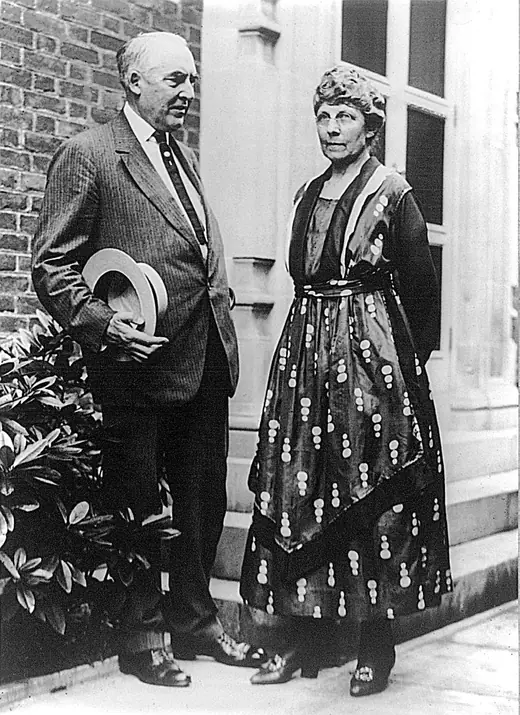
Warren G. Harding died in office on August 2, 1923. The story everyone tells is that his widow, Florence Harding, burned the presidential papers.
The record is more specific and more interesting. Over the winter of 1923–24, Florence went through boxes of her husband's personal correspondence at the offices of the Marion Star, the newspaper he had owned, and had a trusted employee burn them in the furnace — family letters, notes among Star employees and friends. The presidential papers she willed, along with the Marion house and its contents, to the Harding Memorial Association.
They sat with the Association for nearly four decades. In the early 1960s the Ohio Historical Society negotiated their transfer, and in April 1964 the Harding presidential papers were opened to researchers for the first time — forty-one years after his death.
One more file stayed shut much longer. Harding's correspondence with Carrie Phillips was placed under a fifty-year restriction and did not open at the Library of Congress until July 2014, ninety-one years after he died.
Every step of that was lawful, and none of it required anyone's permission. The papers were property, and property is disposed of by whoever owns it.

Sealed until twenty-one years after the son died
Robert Todd Lincoln held his father's papers for over half a century. In 1919 he deposited them with the Library of Congress, and on January 23, 1923 he deeded them over.
The deed carried a condition: the papers were to remain sealed until twenty-one years after his own death.
He died in 1926. At one minute past midnight on July 26, 1947, after a dinner for Lincoln scholars hosted by the Librarian of Congress, the safe was opened. Some 40,550 documents. Eighty-two years after the assassination.
That is a private individual, using nothing but a deed of gift, controlling public access to the internal record of the Civil War presidency for two generations. It was entirely within his rights, and it is the clearest illustration in American history of what a restriction attached to a gift can actually do.
The agreement that would have allowed the tapes to be destroyed
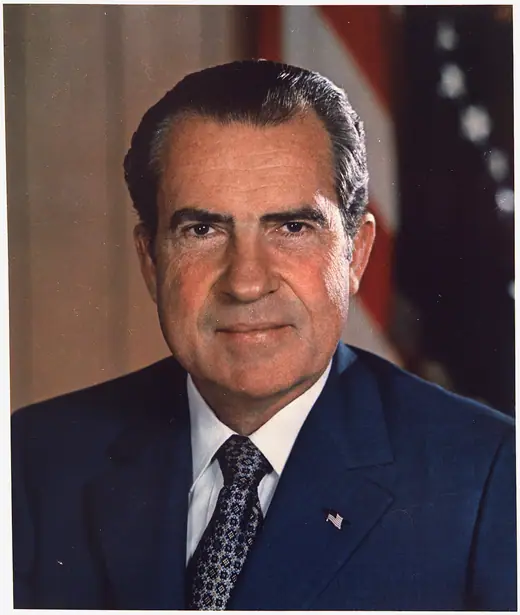
Richard Nixon resigned on August 9, 1974. In September, he and the Administrator of General Services signed an agreement covering his presidential materials — roughly 42 million pages of documents and about 3,700 hours of tape recordings. Under its terms Nixon retained ownership and control, and the tapes were to be destroyed on a schedule.
Congress responded in three months. The Presidential Recordings and Materials Preservation Act, introduced in September, passed in December and signed by President Ford on December 19, 1974, directed the government to take custody of the materials and to make provision for public access.
Nixon sued, arguing the statute was an unconstitutional bill of attainder singling him out for punishment, and that it violated separation of powers, executive privilege, and his personal privacy. In Nixon v. Administrator of General Services, 433 U.S. 425 (1977), the Supreme Court upheld the Act 7–2, holding it was not punitive and that the historical importance of the materials justified treating them separately.
But the Court did not say the papers had never been his. That left the other question — whether the government had taken his property and owed him for it — and that question took another twenty-three years. In June 2000 the United States settled with the Nixon estate for $18 million.
So the constitutional answer and the property answer came out in opposite directions. The public got the tapes. The estate got paid. Both of those things follow from the same premise: the papers had been personal property in the first place.
1978, and the end of a two-century default
The Presidential Records Act of 1978, 44 U.S.C. §§2201–2209, settled it prospectively. Presidential records created or received in the course of official duties are the property of the United States. They pass into the legal custody of the Archivist when the administration ends. The Act took effect on January 20, 1981, which means every president from Reagan forward is covered and every president before is not.
That is a genuinely unusual thing for American law to do: it took a category of property that had been private since 1789 and made it public going forward, without disturbing what came before. Harding's widow was within her rights. Robert Lincoln was within his. Nixon was within his, and got paid.
The general lesson is not about presidents. It is that information behaves differently from every other asset in an estate. It cannot be appraised, it cannot be split, it does not stop mattering, and the person best placed to destroy it is usually the person most interested in what it says.
Timeline
- 1919Robert Todd Lincoln deposits his father's papers at the Library of Congress; he deeds them over on January 23, 1923, sealed until 21 years after his own death.
- Winter 1923–24Warren G. Harding having died in office on August 2, 1923, Florence Harding has boxes of his personal correspondence burned at the Marion Star. She wills the presidential papers to the Harding Memorial Association.
- Jul 26, 1947At 12:01 a.m., the Lincoln Papers are unsealed at the Library of Congress — about 40,550 documents.
- Apr 1964The Harding presidential papers, transferred to the Ohio Historical Society, open to researchers for the first time.
- Aug 9, 1974Richard Nixon resigns. A September agreement with the Administrator of General Services would leave him control of 42 million pages and 3,700 hours of tape, with the tapes to be destroyed on a schedule.
- Dec 19, 1974President Ford signs the Presidential Recordings and Materials Preservation Act, directing government custody of the materials.
- 1977Nixon v. Administrator of General Services, 433 U.S. 425 — the Supreme Court upholds the Act 7–2.
- Nov 1978The Presidential Records Act makes presidential records the property of the United States, effective January 20, 1981.
- Jun 2000The United States settles the Nixon estate's compensation claim for $18 million. Fourteen years later, in July 2014, Harding's sealed correspondence with Carrie Phillips opens at the Library of Congress.
What actually went wrong
- The most consequential asset had no custodian. For 190 years nothing in law required a president's papers to be preserved, catalogued, or handed to anyone. Preservation happened when a family felt like it.
- A widow with sole discretion and a furnace. Florence Harding did nothing unlawful. That is exactly the problem: where no instrument names a custodian and no statute imposes a duty, the person holding the boxes decides what history gets.
- Restrictions with no expiry anyone could live to see. A seal measured from the donor's death rather than a fixed date meant nobody knew, at the moment of the gift, when the papers would open. It turned out to be 1947.
- An agreement that provided for destruction. The 1974 Nixon–GSA arrangement was a lawful contract about lawfully owned property. It took an Act of Congress passed in three months to displace it.
- Two questions that never got asked together. Who may see the papers, and who owns them, are different questions with different answers. The 1977 opinion resolved the first. The second cost the government $18 million and took until 2000.
Would it have gone that way in Florida?
Florida already made these choices, and split them: your will becomes public the day it is filed, your inventory is confidential by statute, and your emails are governed by a different chapter entirely.
Florida's answers to the presidential-papers problem are unusually clear, because Florida has actually legislated each piece separately.
First, the will is public — immediately, and by force of statute. Under Fla. Stat. §732.901, the custodian of a will must deposit it with the clerk of the circuit court within 10 days of learning of the death, whether or not anyone intends to probate it. Once filed, it is a court record, and Florida court records are public under Chapter 119 and Art. I, §24(a) of the Florida Constitution. There is no reading ceremony because there is no need for one: anybody can walk into the clerk's office, or pull it up online, and read it. Sealing a Florida probate record requires a court order and a showing that fits one of the narrow grounds — it is not something a family can simply request.
Second, and much less well known: the inventory is not public. Fla. Stat. §733.604(1) makes any estate inventory filed with the clerk — initial, amended, or supplementary — confidential and expressly exempt from §119.07(1) and Art. I, §24(a). It may be examined by the personal representative, the personal representative's attorney, any interested person as defined in §731.201, and anyone else only on a court order for good cause. So Florida has drawn a line most people get backwards: what you said is public, what you owned is not.
Third, the modern version of “papers.” Almost nobody now leaves a box of letters; they leave an email account, a phone, twenty years of photographs, and a cloud drive. Florida governs that under Chapter 740, the Florida Fiduciary Access to Digital Assets Act. Two provisions matter most. §740.003 gives an online tool — the provider's own legacy-contact or inactive-account setting — priority over your will: a direction given through that tool overrides a contrary direction in a will, trust, or power of attorney. And §740.006 allows a personal representative to obtain the content of electronic communications of a deceased user only where the user consented, and then only on production of the death certificate, letters of administration, and evidence of the account. §740.004 preserves terms-of-service limits — your fiduciary gets no more access than you had.
Fourth, the split that catches everyone. Owning the letters is not owning the words. The physical documents are tangible personal property and pass under the will. The copyright in unpublished writings is a separate asset that belongs to the author and outlives him, and it does not automatically follow the paper. If your estate contains manuscripts, correspondence, recordings, or photographs of any value, the will has to dispose of the copyright as its own item, or you will have handed one person the box and another person the right to use what is in it.
The instruction, and it has three parts. Say who gets the physical papers, say separately who gets the copyright, and — most urgently — set the online tools now. Google's Inactive Account Manager and Apple's Legacy Contact take about ten minutes each, and under §740.003 they beat whatever your will says. That is the single highest-leverage estate task most people have never done.
What people ask us about this.
Further reading
Third-party sites. Not ours, not endorsed, not kept current by us — just the places worth going next.
Sources
- Nixon v. Administrator of General Services, 433 U.S. 425 (1977) — Supreme Court of the United States, via Justia
- The Presidential Records Act of 1978 — US National Archives and Records Administration
- U.S. to pay Nixon estate $18-million for papers, tapes — Tampa Bay Times / AP, Jun 2000
- Nixon estate settles government suit — CBS News, 2000
- What is the real story about WGH's papers? — Harding Presidential Sites, Sep 2022
- Abraham Lincoln Papers at the Library of Congress — about this collection — Library of Congress
- President Harding's letters open to the public — Library of Congress blog, Jul 2014
- Fla. Stat. §733.604 — Inventory; confidentiality — The Florida Senate
- Fla. Stat. Chapter 740 — Florida Fiduciary Access to Digital Assets Act — The Florida Senate
If this is your situation
Free 30-minute consult. Plain English. No pressure.
Nearly every case in this archive turned on something ordinary — an unwitnessed page, a stale beneficiary line, a document nobody could find. Those are cheap to fix while you're alive and expensive to fix afterward.